

Recensione di erwin: Pro, Contro, Caratteristiche e Guida ai Prezzi
Scopri perché penso che erwin si distingua per la modellazione dei dati: funzionalità potenti, una curva di apprendimento ripida e una scalabilità che lo rende un serio concorrente per la progettazione dati aziendale nel 2026.

Recensiamo gli strumenti in modo indipendente e le commissioni ci aiutano a finanziare i nostri test. Consulta la nostra politica sulla trasparenza, la nostra metodologia, oppure suggerisci uno strumento.
erwin is a database design tool built for teams that need to model, document, and manage complex data architectures across multiple database platforms. If you're deciding between erwin and a general diagramming tool like Lucidchart, erwin is the stronger choice when your team needs more than visuals—it gives you forward and reverse engineering, schema generation, and physical model management that diagram-first tools aren't built to handle.
erwin Evaluation Summary

4.2/5
- From $3,405.92/unit
- Free trial + free demo available
Perché fidarsi dei nostri consigli sui software
6,700+
Reviews
20
Industry experts
16+
Evaluation factors
14
Years
Il nostro team testa e recensisce software dal 2012. In quanto leader tecnologici noi stessi, sappiamo quanto sia difficile — e importante — scegliere il software giusto.
Per questa guida, abbiamo valutato gli strumenti attraverso test praticie ricerche indipendenti, assegnando un punteggio agli strumenti in base ai nostri criteri di selezione.
Le nostre recensioni riflettono il nostro giudizio editoriale umano, non un discorso di vendita.
Revisori esperti:
- Paulo Gardini MiguelDirettore tecnico
 Tim FisherVP dell'IA
 Gabriel RosasTech Lead e architetto software
 Christhian GruhnTech Lead e architetto della piattaforma

erwin Overview
In my opinion, erwin stands out with deep modeling features, strong database integration options, and advanced automation that can save you time. Its interface and onboarding process feel dated compared to others, but if you’re judging tools for large-scale, regulated environments, erwin sets the bar high for functionality. Pricing is premium, but I’d choose it for teams managing enterprise data complexity or governance demands. For example, erwin’s reverse engineering and detailed reporting lead the pack, but casual users might find the learning curve steep.
Pros
- Supports complex data modeling, governance, and standardization workflows.
- Powerful model comparison and synchronization capabilities built-in.
- Repository-based collaboration with version control and governance.
Cons
- User interface feels outdated compared to modern tools.
- Workgroup setup requires significant infrastructure and administration.
- Steep learning curve for new or casual users.
Is erwin Right For Your Needs?
Who Would be a Good Fit for erwin?
erwin is ideal for large enterprises, regulated industries, and teams managing intricate, multi-platform data environments. It excels where organizations require rigorous data governance, standardized definitions, and managed change processes. Data architects, DBAs, and governance teams benefit from erwin, especially when bridging legacy and cloud systems or collaborating via shared model repositories.
- Data Governance TeamsDefine standards, enforce rules, and manage controlled, auditable data modeling workflows.
- Data Architecture TeamsDesign and maintain complex models across multiple platforms with version control and standardization.
- Database Administrators (DBAs)Reverse engineer existing databases, compare schemas, and manage synchronization across environments.
- Data Migration and Modernization TeamsPlan and execute migrations from legacy systems to cloud platforms with model comparison and transformation.
- Enterprise IT and Platform TeamsManage large, heterogeneous data environments spanning relational, NoSQL, and cloud systems.
- Cross-Functional Data TeamsShare models with business stakeholders through read-only access and web-based collaboration tools, aiding reporting layers and dashboards.
Who Would be a Bad Fit for erwin?
erwin is less suitable for small businesses, teams needing fast and simple diagrams, or groups with modest budgets and less complex requirements. Startups, freelancers, and agile teams often find the cost, complexity, and learning curve excessive, and organizations with minimal governance needs rarely require erwin’s advanced capabilities.
- Small BusinessesCost and complexity of erwin outweigh needs for basic data modeling.
- Startup TeamsSteep learning curve and dense feature set are unnecessary for lean, fast-moving teams.
- Agile Project Teamserwin’s workflow is slow and heavy for teams needing rapid iterations and lightweight models.
- Marketing Departmentserwin offers little value for teams that don’t need granular modeling or governance.
- Freelance ConsultantsHigh licensing fees and enterprise focus make erwin excessive for solo practitioners.
- Light Data AnalysisGroups with limited modeling requirements won’t benefit from erwin’s advanced feature set.
La Nostra Metodologia di Recensione
Come Testiamo e Valutiamo gli Strumenti
Abbiamo trascorso anni a costruire, perfezionare e migliorare il nostro sistema di testing e valutazione del software. Il nostro schema è progettato per cogliere le sfumature della selezione software e cosa rende efficace uno strumento, focalizzandosi sugli aspetti critici del processo decisionale.
Di seguito, puoi vedere esattamente come funziona il nostro testing e punteggio su sette criteri. Ci permette di offrire una valutazione imparziale del software basata su funzionalità principali, caratteristiche distintive, facilità d’uso, onboarding, assistenza clienti, integrazioni, recensioni dei clienti e rapporto qualità-prezzo.
Funzionalità Principali (25% del punteggio finale)
Il punto di partenza della nostra valutazione è sempre la funzionalità principale dello strumento. Ha le funzioni e caratteristiche base che ci si aspetta? Alcune di queste caratteristiche sono limitate ai piani tariffari superiori? Fondamentalmente, ci aspettiamo che uno strumento regga il confronto rispetto alle capacità di base dei concorrenti.
Caratteristiche Distintive (25% del punteggio finale)
Successivamente, valutiamo le caratteristiche distintive e non comuni che vanno oltre la funzionalità base tipicamente trovata negli strumenti di questa categoria. Un punteggio alto riflette funzionalità specializzate o uniche che rendono il prodotto più veloce, efficiente o offrono ulteriore valore all’utente.
Valutiamo inoltre quanto sia semplice integrare altri strumenti tipicamente utilizzati nell’infrastruttura tecnologica per espandere la funzionalità e l’utilità del software. Gli strumenti che offrono numerose integrazioni native, connessioni di terze parti e accesso API per creare integrazioni personalizzate ottengono i punteggi migliori.
Facilità d’Uso (10% del punteggio finale)
Consideriamo quanto sia rapido e semplice svolgere i compiti definiti nella funzionalità principale utilizzando lo strumento. Il software con punteggio alto è ben progettato, intuitivo da usare, offre app mobili, fornisce modelli e rende semplici attività relativamente complesse.
Onboarding (10% del punteggio finale)
Sappiamo quanto sia importante l’adozione rapida da parte del team per una nuova piattaforma, quindi valutiamo quanto sia facile imparare e utilizzare uno strumento con formazione minima. Valutiamo quanto velocemente un membro del team possa iniziare a usare lo strumento anche senza esperienza. Soluzioni con punteggio alto indicano che sono richiesti pochi o nessun supporto.
Assistenza Clienti (10% del punteggio finale)
Esaminiamo quanto sia veloce e facile ricevere assistenza e risolvere problemi tramite telefono, live chat o knowledge base. Gli strumenti e le aziende che garantiscono supporto in tempo reale ottengono il miglior punteggio, mentre i chatbot ottengono il peggiore.
Recensioni dei Clienti (10% del punteggio finale)
Oltre ai nostri test e valutazioni, prendiamo in considerazione il net promoter score dei clienti attuali e passati. Valutiamo la probabilità che, data la scelta, selezionerebbero nuovamente lo strumento per la funzionalità principale. Un software con punteggio alto riflette un alto net promoter score da parte dei clienti attuali o passati.
Rapporto Qualità-Prezzo (10% del punteggio finale)
Infine, considerando tutti gli altri criteri, analizziamo il prezzo medio dei piani base rispetto alle funzionalità principali e consideriamo il valore degli altri criteri di valutazione. Il software che offre di più a meno otterrà un punteggio più alto.
Core Features
Visual Data Modeling
Build and edit logical and physical data models with drag-and-drop diagrams. Visualize relationships and dependencies across complex databases, which can later support business intelligence workflows.
Reverse Engineering
Automatically generate models from existing databases or data sources. Spot inconsistencies and validate schema accuracy in large environments.
Model Comparison and Synchronization
Compare two models or a model and a database to identify differences. Sync changes easily to keep systems up-to-date.
Collaboration and Version Control
Share models, comment, and track changes in team environments. Support for model check-in/check-out helps manage concurrent edits.
Automated Documentation
Generate detailed, customizable documentation of data models and metadata. Keep audit trails and data dictionaries up to date for compliance needs.
Standardization and Governance
Implement global naming standards, data types, and governance rules across all models. Improve consistency and control with built-in data governance features.
Ease of Use
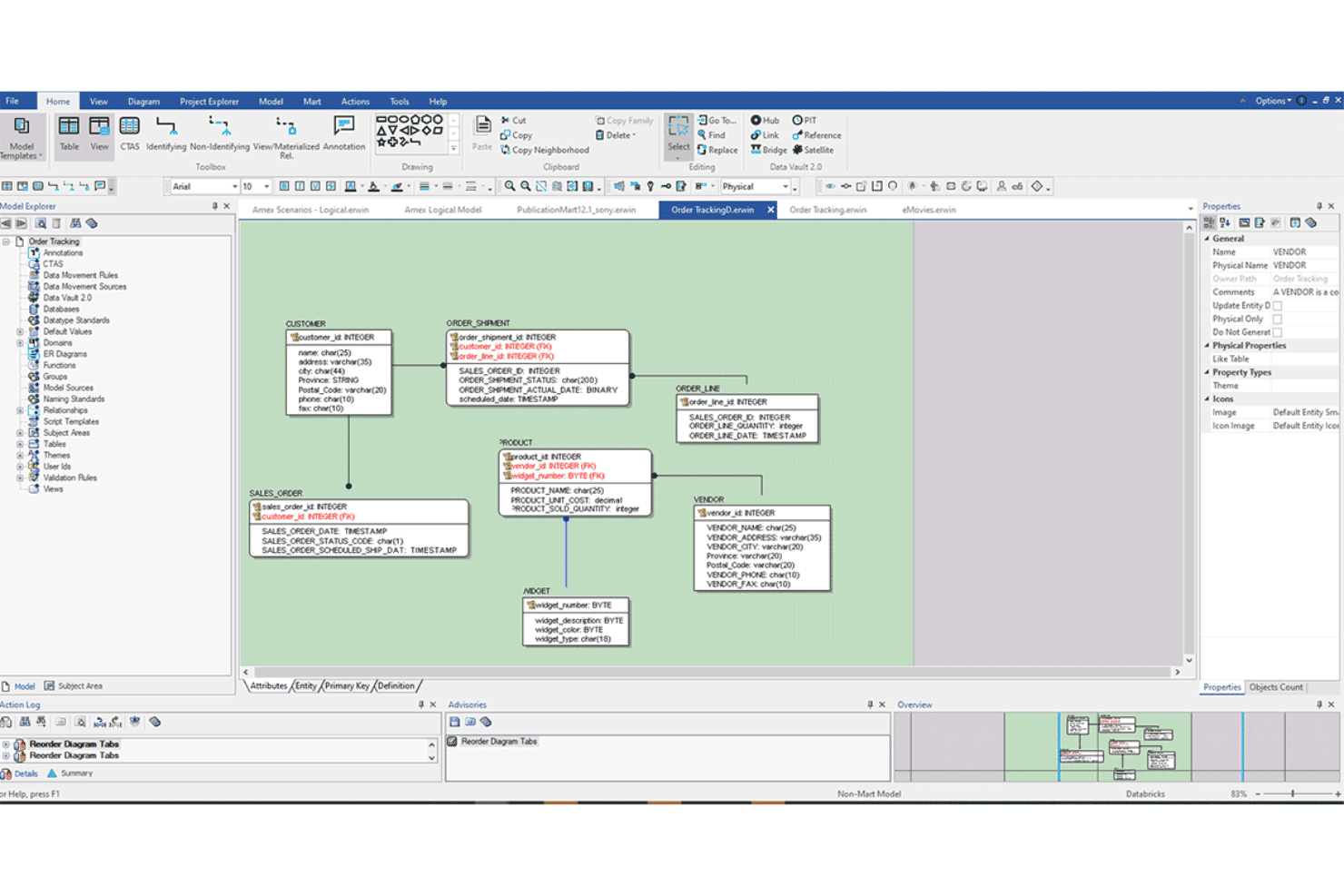
erwin’s interface feels dated and can overwhelm new users with dense menus and options, making onboarding challenging for those unfamiliar with enterprise modeling. However, I think advanced users appreciate the depth of available tools, such as granular model validation and batch editing, which speed up complex modeling tasks once you’re acclimated.

Integrations
erwin integrates with Oracle, MySQL, Microsoft SQL Server, PostgreSQL, MongoDB, Snowflake, IBM DB2, Apache Cassandra, MariaDB, and Apache Hive, among others.
erwin also provides an API and supports integration with third-party tools for extended connectivity.

erwin Specs
- 2-Factor Authentication: No
- Access Management: No
- Anti-Virus: No
- API: Yes
- Audit Trail: No
- Bug Tracking: No
- Calendar Management: No
- Customer Management: No
- Dashboard: Yes
- Data Export: Yes
- Data Import: Yes
- Data Visualization: Yes
- Email Integration: No
- External Integrations: Yes
- File Sharing: No
- File Transfer: No
- Firewall: No
- Google Apps Integration: No
- Inventory Tracking: No
- Malware Protection: No
- Multi-User: Yes
- Network Device Performance Monitoring: No
- Network Traffic Monitoring: No
- Network Visualization: No
- Notifications: No
- Project Management: No
- Remote Access: No
- Risk Assessment: No
- SAP Integration: No
- Scheduling: No
- Software Integration: Yes
- Third-Party Plugins/Add-Ons: Yes
- Ticket Management: No


