

Recensione Mobot 2026: Pro, Contro, Caratteristiche e Prezzi
Mobot si distingue utilizzando veri robot per il testing di app mobile, offrendo un'accuratezza impareggiabile per scenari complessi, ma potrebbe non essere adatto a team che necessitano di automazione rapida e a basso costo.

Recensiamo gli strumenti in modo indipendente e le commissioni ci aiutano a finanziare i nostri test. Consulta la nostra politica sulla trasparenza, la nostra metodologia, oppure suggerisci uno strumento.
Mobot is a mobile testing tool that uses physical robots to run automated tests on real mobile devices. If your team keeps hitting failures that only appear on real hardware, that's exactly where Mobot fits. Unlike Appium, which relies on emulators and requires significant scripting investment, Mobot handles testing on physical phones without demanding deep automation engineering resources.
Mobot Evaluation Summary
0/5
- Pricing upon request
- Free trial + free demo available
Perché fidarsi dei nostri consigli sui software
6,700+
Reviews
20
Industry experts
16+
Evaluation factors
14
Years
Il nostro team testa e recensisce software dal 2012. In quanto leader tecnologici noi stessi, sappiamo quanto sia difficile — e importante — scegliere il software giusto.
Per questa guida, abbiamo valutato gli strumenti attraverso test praticie ricerche indipendenti, assegnando un punteggio agli strumenti in base ai nostri criteri di selezione.
Le nostre recensioni riflettono il nostro giudizio editoriale umano, non un discorso di vendita.
Revisori esperti:
- Paulo Gardini MiguelDirettore tecnico
 Tim FisherVP dell'IA
 Gabriel RosasTech Lead e architetto software
 Christhian GruhnTech Lead e architetto della piattaforma

Mobot Overview
Mobot’s use of real robots for device testing sets it apart, delivering unmatched accuracy for hardware-specific bugs and complex user flows. Its intuitive interface and responsive support make onboarding straightforward, though pricing may be higher than some alternatives. While integrations and automation depth are strong, teams needing rapid, high-volume test cycles may find it less flexible than pure software-based options.
If you’re judging tools for reliability in real-world scenarios—like biometric authentication or device rotation—Mobot is a top contender, especially for QA teams in regulated or high-stakes environments.
Pros
- Reduces manual test maintenance for QA teams.
- Automates complex user flows with physical robots.
- Detects real device issues missed by emulators.
Cons
- Limited flexibility for rapid, high-volume test cycles.
- Test execution speed is slower than virtual solutions.
- Higher pricing than most software-based tools.
Is Mobot Right For Your Needs?
Who Would be a Good Fit for Mobot?
Mobot is best suited for organizations where real device accuracy and complex user flows are essential, especially in industries with strict compliance or high user expectations. Teams that need to validate hardware integrations, biometric authentication, or device-specific behaviors will find Mobot’s physical robot approach valuable.
It’s a strong choice for regulated sectors, large QA teams, and companies where mobile app reliability directly impacts business outcomes.
- Biometric Security AppsEnsures fingerprint and facial recognition work across real devices.
- Mobile Gaming StudiosTests real-world gestures and device orientation for immersive experiences.
- Consumer ElectronicsValidates hardware integrations and device-specific features reliably.
- Enterprise QA TeamsMobot reduces manual test maintenance for large-scale, complex apps.
- Fintech StartupsPhysical robots catch device-specific bugs critical for secure mobile transactions.
- Regulated HealthcareMobot’s real device testing helps meet strict compliance and patient safety requirements.
Who Would be a Bad Fit for Mobot?
Mobot is less suitable for teams prioritizing rapid, high-volume automation or those with limited budgets. Companies that rely on frequent, iterative releases or only need basic UI validation may find Mobot’s physical approach slower and more costly than virtual solutions. It’s not ideal for small startups, web-only teams, or those with minimal device diversity.
- Minimal Device DiversityTeams with limited device requirements won’t leverage Mobot’s full value.
- Agencies With Tight DeadlinesTest execution speed may not meet rapid client turnaround times.
- Basic UI ValidationOverkill for teams only needing simple interface checks.
- High-Volume AutomationPhysical robots can’t match the speed of virtualized test farms.
- Web-Only TeamsNo support for browser or desktop app testing.
- Small StartupsMobot’s pricing and slower test cycles may exceed budget and needs.
La Nostra Metodologia di Recensione
Come Testiamo e Valutiamo gli Strumenti
Abbiamo trascorso anni a costruire, perfezionare e migliorare il nostro sistema di testing e valutazione del software. Il nostro schema è progettato per cogliere le sfumature della selezione software e cosa rende efficace uno strumento, focalizzandosi sugli aspetti critici del processo decisionale.
Di seguito, puoi vedere esattamente come funziona il nostro testing e punteggio su sette criteri. Ci permette di offrire una valutazione imparziale del software basata su funzionalità principali, caratteristiche distintive, facilità d’uso, onboarding, assistenza clienti, integrazioni, recensioni dei clienti e rapporto qualità-prezzo.
Funzionalità Principali (25% del punteggio finale)
Il punto di partenza della nostra valutazione è sempre la funzionalità principale dello strumento. Ha le funzioni e caratteristiche base che ci si aspetta? Alcune di queste caratteristiche sono limitate ai piani tariffari superiori? Fondamentalmente, ci aspettiamo che uno strumento regga il confronto rispetto alle capacità di base dei concorrenti.
Caratteristiche Distintive (25% del punteggio finale)
Successivamente, valutiamo le caratteristiche distintive e non comuni che vanno oltre la funzionalità base tipicamente trovata negli strumenti di questa categoria. Un punteggio alto riflette funzionalità specializzate o uniche che rendono il prodotto più veloce, efficiente o offrono ulteriore valore all’utente.
Valutiamo inoltre quanto sia semplice integrare altri strumenti tipicamente utilizzati nell’infrastruttura tecnologica per espandere la funzionalità e l’utilità del software. Gli strumenti che offrono numerose integrazioni native, connessioni di terze parti e accesso API per creare integrazioni personalizzate ottengono i punteggi migliori.
Facilità d’Uso (10% del punteggio finale)
Consideriamo quanto sia rapido e semplice svolgere i compiti definiti nella funzionalità principale utilizzando lo strumento. Il software con punteggio alto è ben progettato, intuitivo da usare, offre app mobili, fornisce modelli e rende semplici attività relativamente complesse.
Onboarding (10% del punteggio finale)
Sappiamo quanto sia importante l’adozione rapida da parte del team per una nuova piattaforma, quindi valutiamo quanto sia facile imparare e utilizzare uno strumento con formazione minima. Valutiamo quanto velocemente un membro del team possa iniziare a usare lo strumento anche senza esperienza. Soluzioni con punteggio alto indicano che sono richiesti pochi o nessun supporto.
Assistenza Clienti (10% del punteggio finale)
Esaminiamo quanto sia veloce e facile ricevere assistenza e risolvere problemi tramite telefono, live chat o knowledge base. Gli strumenti e le aziende che garantiscono supporto in tempo reale ottengono il miglior punteggio, mentre i chatbot ottengono il peggiore.
Recensioni dei Clienti (10% del punteggio finale)
Oltre ai nostri test e valutazioni, prendiamo in considerazione il net promoter score dei clienti attuali e passati. Valutiamo la probabilità che, data la scelta, selezionerebbero nuovamente lo strumento per la funzionalità principale. Un software con punteggio alto riflette un alto net promoter score da parte dei clienti attuali o passati.
Rapporto Qualità-Prezzo (10% del punteggio finale)
Infine, considerando tutti gli altri criteri, analizziamo il prezzo medio dei piani base rispetto alle funzionalità principali e consideriamo il valore degli altri criteri di valutazione. Il software che offre di più a meno otterrà un punteggio più alto.
Core Features
Physical Robot Testing
Mobot uses real mechanical robots to interact with actual mobile devices, capturing bugs that emulators and simulators miss.
Automated Complex User Flows
Automate multi-step scenarios like biometric authentication, device rotation, and deep linking for true end-to-end coverage.
Visual and Functional Validation
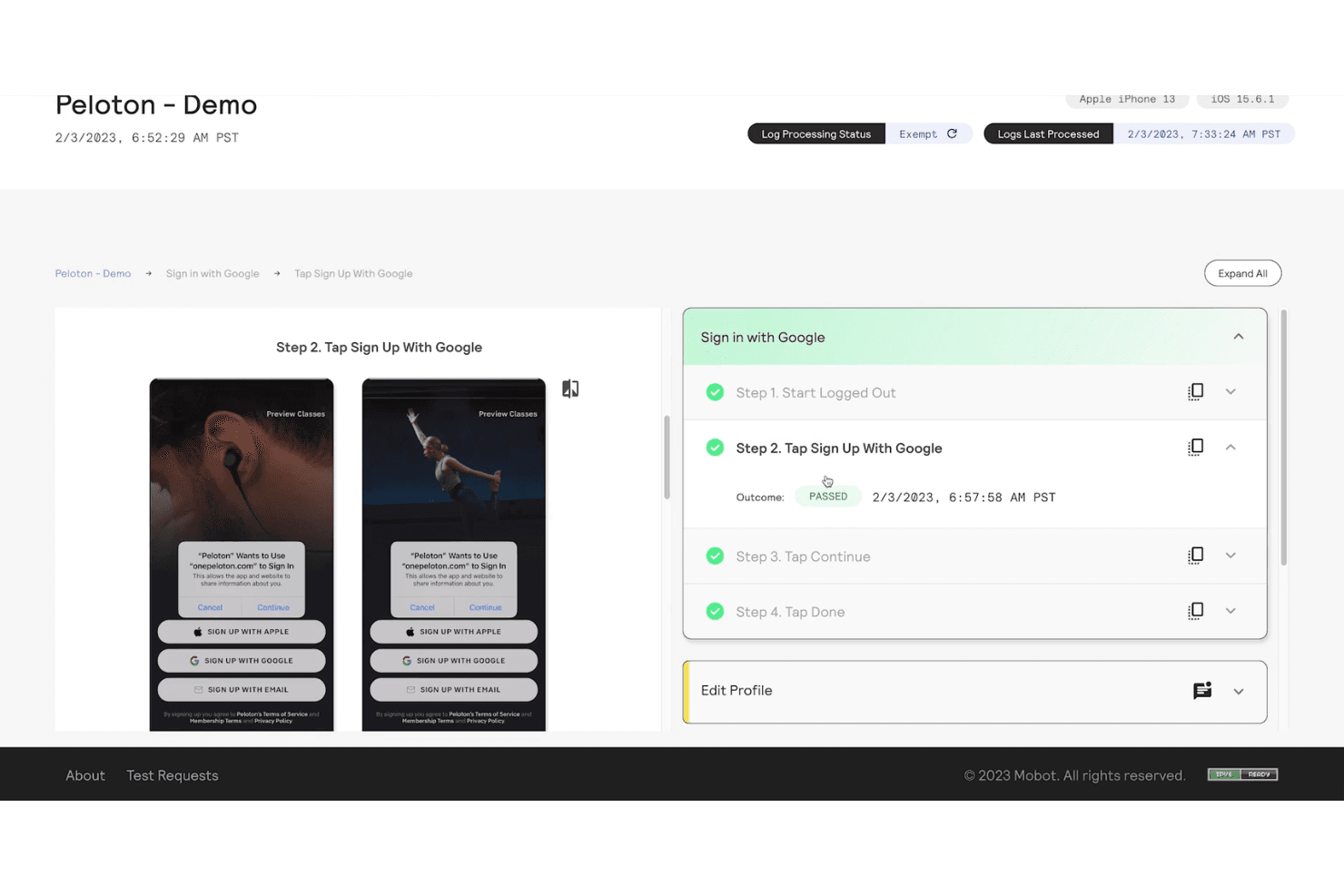
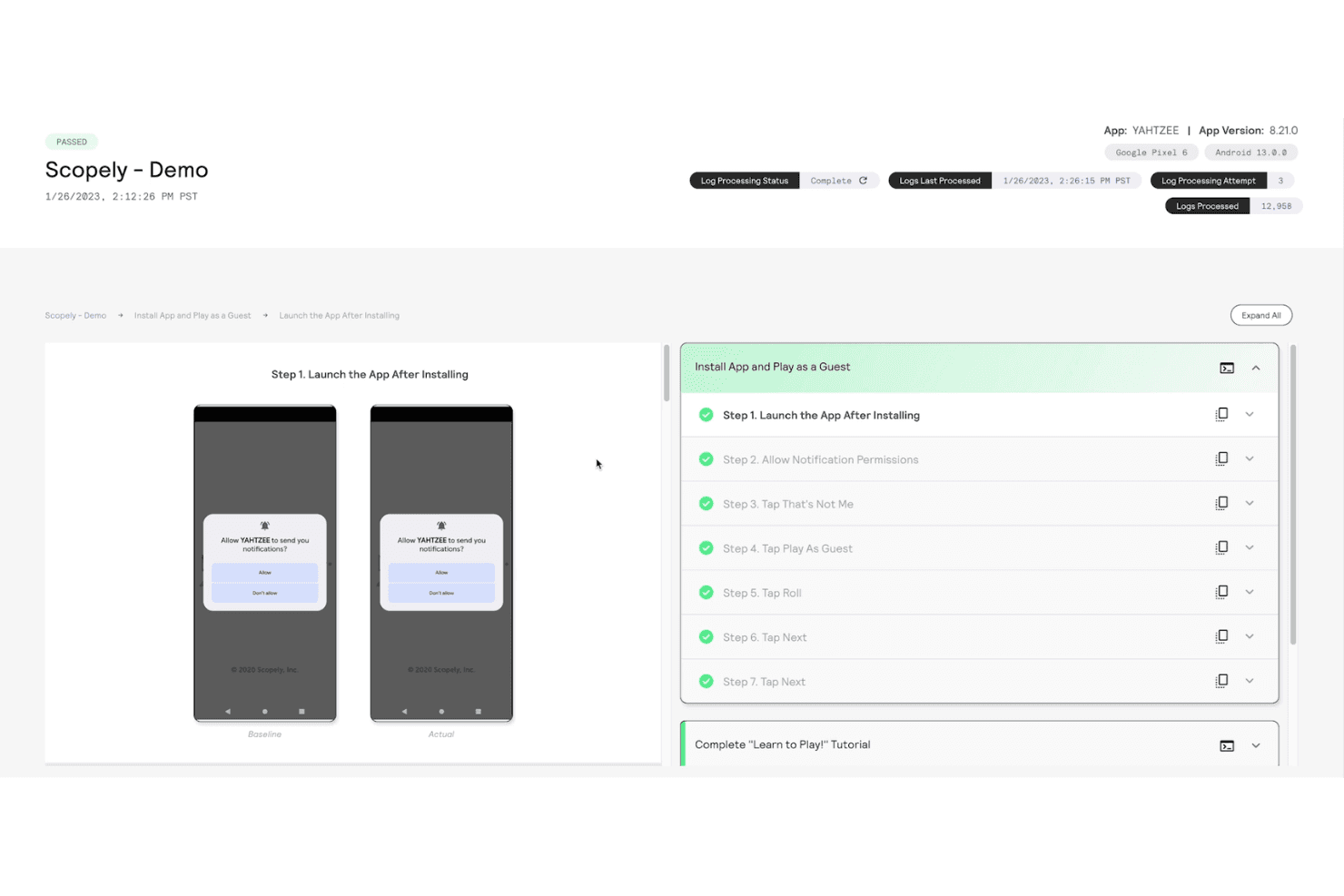
Mobot checks both UI appearance and app functionality, ensuring screens render correctly and workflows behave as expected.
Test Maintenance Reduction
The platform minimizes flaky tests and reduces manual upkeep, freeing QA teams from constant script updates.
Full Device Coverage
Mobot supports a wide range of iOS and Android devices, helping teams test across the fragmented mobile landscape.
Detailed Reporting and Insights
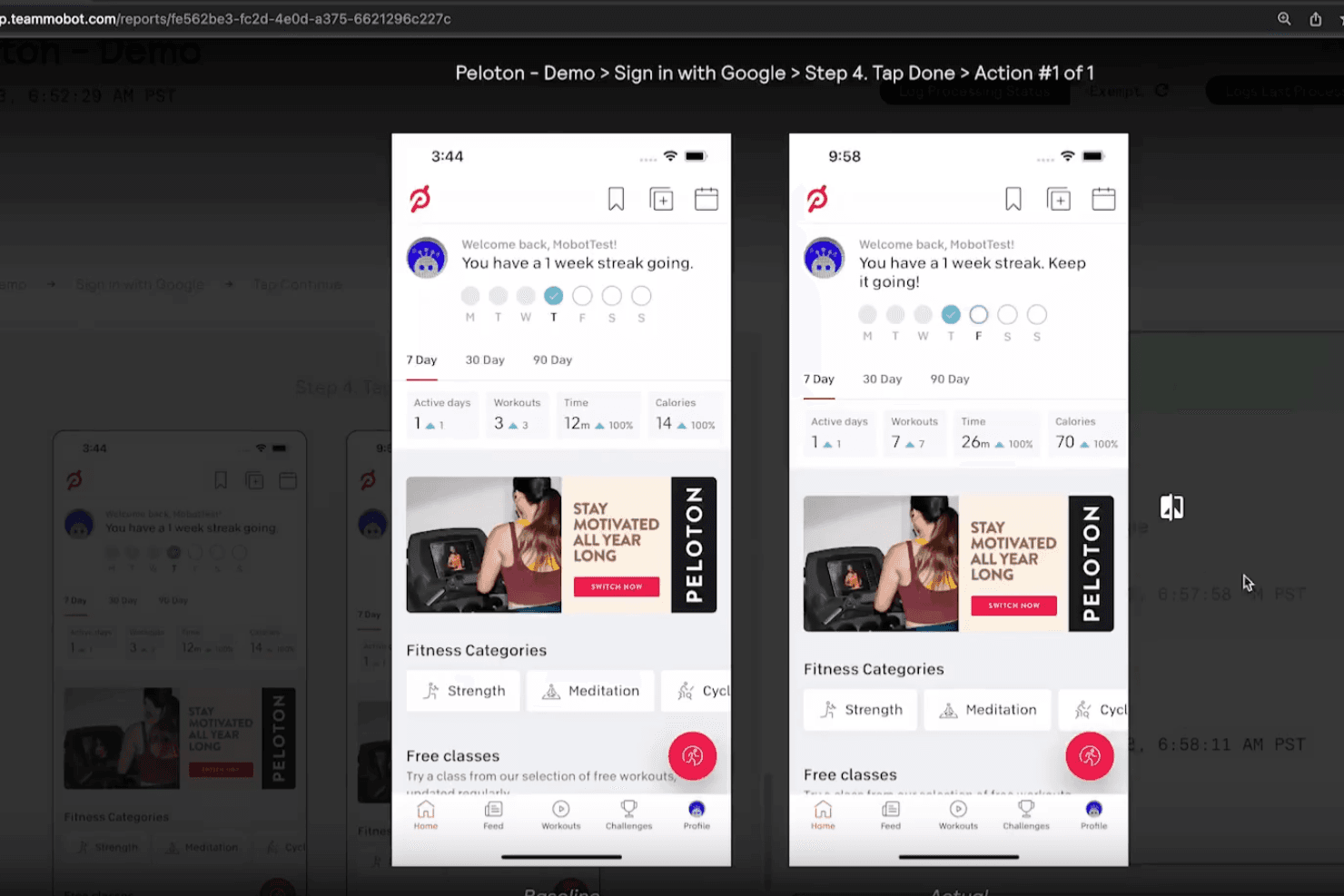
Get actionable reports with screenshots, logs, and analytics to quickly diagnose and resolve issues.
Ease of Use
Mobot is generally praised for its intuitive interface and guided onboarding, making it accessible even for teams new to automated mobile testing. Users highlight the clear test setup process and responsive support, which help reduce friction during adoption.
While managing physical devices adds some complexity, Mobot’s dashboard and workflow design keep test creation and results review straightforward. This balance of advanced capability and usability sets it apart in a space often dominated by technical barriers.
Integrations
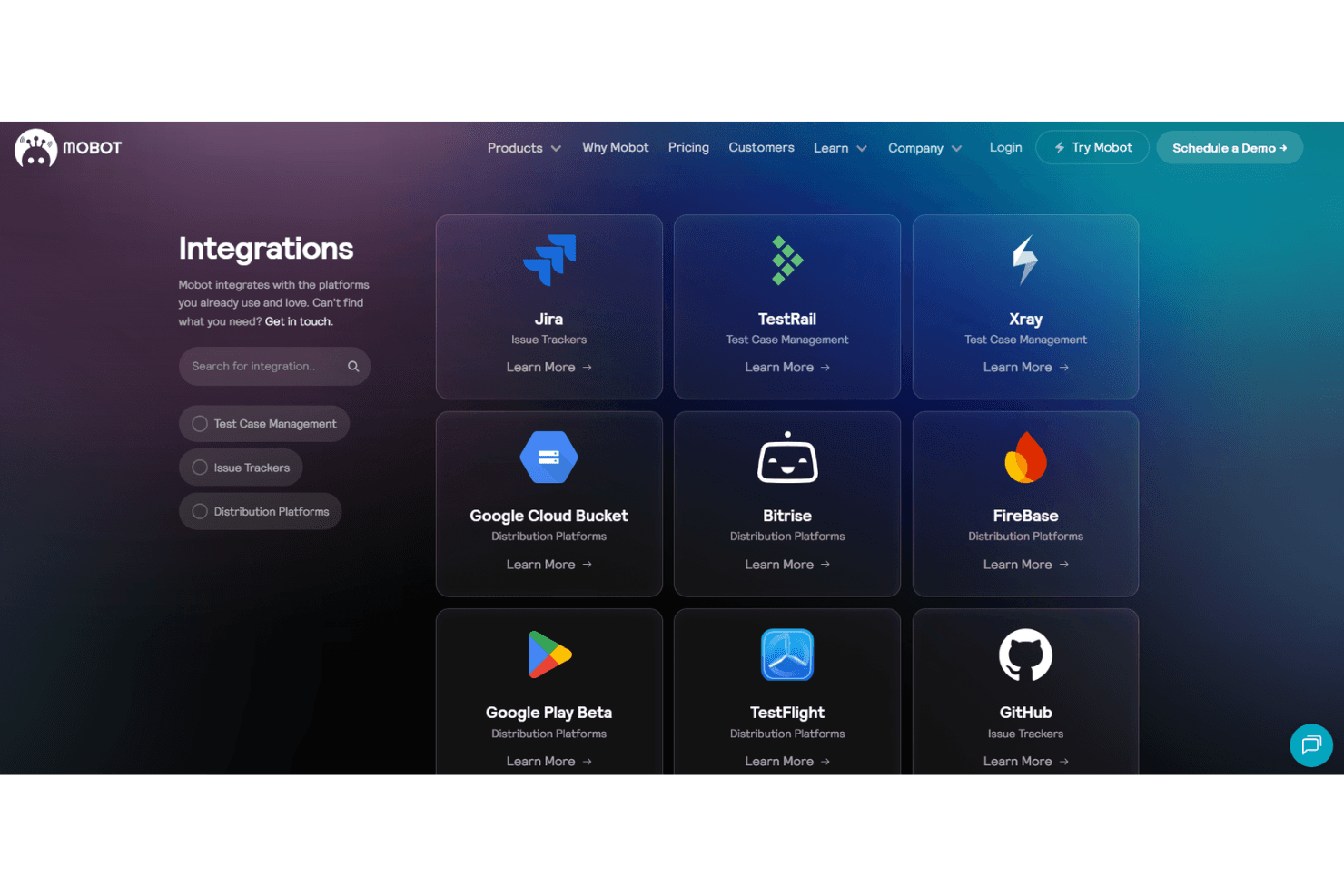
Mobot integrates with Jira, TestRail, Xray, Google Cloud Bucket, Bitrise, Firebase, Google Play Beta, TestFlight, GitHub, and Linear, among others.
Mobot also offers an API and supports connections with third-party integration tools.
Mobot Specs
- A/B Testing: No
- API: Yes
- Automated Testing: Yes
- Bug Tracking: Yes
- CI/CD Integration: Yes
- Custom Reports: Yes
- Dashboard: Yes
- Data Export: Yes
- Data Import: No
- Data Visualization: No
- Developer Tools: No
- External Integrations: Yes
- Local Deployment: No
- Manual Testing: Yes
- Multi-User: Yes
- Network Device Performance Monitoring: No
- Notifications: Yes
- Performance Testing: No
- Regression Testing: Yes
- Scheduling: Yes
- Static Analysis: No
- Test Case Library: Yes
- Test Management: Yes
- Third-Party Plugins/Add-Ons: No
- Workflow Management: Yes


