

Recensione di Kaspersky: Pro, Contro, Caratteristiche e Prezzi
Kaspersky offre un'interfaccia utente pulita e funzionalità potenti, rendendolo una delle scelte principali per chi cerca sicurezza internet e protezione antivirus affidabile.

Recensiamo gli strumenti in modo indipendente e le commissioni ci aiutano a finanziare i nostri test. Consulta la nostra politica sulla trasparenza, la nostra metodologia, oppure suggerisci uno strumento.
Kaspersky is an internet security software for individuals and organizations that need multi-layered device protection—covering malware detection, web filtering, VPN, and password management from a single platform. I'd consider it a strong pick if you want more granular threat detection controls than Norton delivers, without paying for enterprise-grade features your setup doesn't actually need.
Kaspersky Evaluation Summary
4.4/5
- From £14.99/year
- Free demo available
Perché fidarsi dei nostri consigli sui software
6,700+
Reviews
20
Industry experts
16+
Evaluation factors
14
Years
Il nostro team testa e recensisce software dal 2012. In quanto leader tecnologici noi stessi, sappiamo quanto sia difficile — e importante — scegliere il software giusto.
Per questa guida, abbiamo valutato gli strumenti attraverso test praticie ricerche indipendenti, assegnando un punteggio agli strumenti in base ai nostri criteri di selezione.
Le nostre recensioni riflettono il nostro giudizio editoriale umano, non un discorso di vendita.
Revisori esperti:
- Paulo Gardini MiguelDirettore tecnico
 Tim FisherVP dell'IA
 Gabriel RosasTech Lead e architetto software
 Christhian GruhnTech Lead e architetto della piattaforma

Kaspersky Overview
In my opinion, Kaspersky offers reliable security with a user-friendly interface, making it a solid choice for IT teams needing powerful antivirus protection. It excels in independent testing by labs such as AV-TEST and AV-Comparatives, earning strong detection rate scores, though onboarding could be smoother. Compared to competitors like Bitdefender, McAfee, Avast, Avira, and ESET, Kaspersky stands out for its straightforward pricing, excellent functionality, and effective threat protection. It's suitable for industries like finance and healthcare, where data security is critical. If you're evaluating the best antivirus software, Kaspersky's strong performance in essential areas makes it worth considering.
Pros
- It offers strong protection against various cyber threats.
- The interface is user-friendly and easy to navigate, with clear notifications.
- You get reliable customer support when needed.
Cons
- Onboarding can be a bit challenging for new users.
- It may slow down system performance during a full scan.
- Some advanced features require a learning curve.
Is Kaspersky Right For Your Needs?
Who Would be a Good Fit for Kaspersky?
Kaspersky is ideal for businesses in finance and healthcare where data security is crucial. It offers strong web protection, malware scanning, and an intuitive interface, which makes it suitable for IT departments needing reliable defense against cyber threats. If your team values dependable customer support and easy navigation, Kaspersky's antivirus products align well with your security needs.
- Finance IndustryKaspersky provides excellent protection for sensitive financial data and online transactions with its advanced capabilities, such as Safe Money.
- Healthcare SectorIt's a good fit for healthcare organizations due to its ability to secure patient information and prevent data leaks.
- Small to Medium EnterprisesKaspersky's straightforward interface offers built-in optimization tools that help small to medium businesses manage security without a dedicated IT staff.
- IT DepartmentsIt offers robust tools for IT teams to handle cyber threats efficiently, including quick scan options for minimal disruption.
- Data Protection OfficersKaspersky aids in maintaining data integrity with its comprehensive security options and data collection controls.
- Educational InstitutionsKaspersky secures networks and protects student data, making it suitable for schools and universities.
Who Would be a Bad Fit for Kaspersky?
The Kaspersky antivirus software may not be ideal for startups or small businesses with limited IT resources due to its onboarding complexity. Businesses that require high-speed operations may find Kaspersky's system performance during full scans a hindrance. If your team needs advanced features without a learning curve, Kaspersky's complexity could pose a challenge.
- StartupsKaspersky's onboarding might be too complex for startups lacking a dedicated IT team.
- Graphic Design FirmsThe potential slowdown during scans could disrupt high-speed graphic rendering processes.
- FreelancersFreelancers might find Kaspersky's advanced functionality unnecessary compared to simpler free versions, such as Windows Defender.
- Retail BusinessesRetail operations needing fast transactions may be affected by Kaspersky's system performance impact.
- Tech-Savvy TeamsTeams seeking cutting-edge options may find Kaspersky's offerings too basic or limiting.
- NonprofitsOrganizations with tight budgets might struggle with the resources needed for effective Kaspersky implementation.
La Nostra Metodologia di Recensione
Come Testiamo e Valutiamo gli Strumenti
Abbiamo trascorso anni a costruire, perfezionare e migliorare il nostro sistema di testing e valutazione del software. Il nostro schema è progettato per cogliere le sfumature della selezione software e cosa rende efficace uno strumento, focalizzandosi sugli aspetti critici del processo decisionale.
Di seguito, puoi vedere esattamente come funziona il nostro testing e punteggio su sette criteri. Ci permette di offrire una valutazione imparziale del software basata su funzionalità principali, caratteristiche distintive, facilità d’uso, onboarding, assistenza clienti, integrazioni, recensioni dei clienti e rapporto qualità-prezzo.
Funzionalità Principali (25% del punteggio finale)
Il punto di partenza della nostra valutazione è sempre la funzionalità principale dello strumento. Ha le funzioni e caratteristiche base che ci si aspetta? Alcune di queste caratteristiche sono limitate ai piani tariffari superiori? Fondamentalmente, ci aspettiamo che uno strumento regga il confronto rispetto alle capacità di base dei concorrenti.
Caratteristiche Distintive (25% del punteggio finale)
Successivamente, valutiamo le caratteristiche distintive e non comuni che vanno oltre la funzionalità base tipicamente trovata negli strumenti di questa categoria. Un punteggio alto riflette funzionalità specializzate o uniche che rendono il prodotto più veloce, efficiente o offrono ulteriore valore all’utente.
Valutiamo inoltre quanto sia semplice integrare altri strumenti tipicamente utilizzati nell’infrastruttura tecnologica per espandere la funzionalità e l’utilità del software. Gli strumenti che offrono numerose integrazioni native, connessioni di terze parti e accesso API per creare integrazioni personalizzate ottengono i punteggi migliori.
Facilità d’Uso (10% del punteggio finale)
Consideriamo quanto sia rapido e semplice svolgere i compiti definiti nella funzionalità principale utilizzando lo strumento. Il software con punteggio alto è ben progettato, intuitivo da usare, offre app mobili, fornisce modelli e rende semplici attività relativamente complesse.
Onboarding (10% del punteggio finale)
Sappiamo quanto sia importante l’adozione rapida da parte del team per una nuova piattaforma, quindi valutiamo quanto sia facile imparare e utilizzare uno strumento con formazione minima. Valutiamo quanto velocemente un membro del team possa iniziare a usare lo strumento anche senza esperienza. Soluzioni con punteggio alto indicano che sono richiesti pochi o nessun supporto.
Assistenza Clienti (10% del punteggio finale)
Esaminiamo quanto sia veloce e facile ricevere assistenza e risolvere problemi tramite telefono, live chat o knowledge base. Gli strumenti e le aziende che garantiscono supporto in tempo reale ottengono il miglior punteggio, mentre i chatbot ottengono il peggiore.
Recensioni dei Clienti (10% del punteggio finale)
Oltre ai nostri test e valutazioni, prendiamo in considerazione il net promoter score dei clienti attuali e passati. Valutiamo la probabilità che, data la scelta, selezionerebbero nuovamente lo strumento per la funzionalità principale. Un software con punteggio alto riflette un alto net promoter score da parte dei clienti attuali o passati.
Rapporto Qualità-Prezzo (10% del punteggio finale)
Infine, considerando tutti gli altri criteri, analizziamo il prezzo medio dei piani base rispetto alle funzionalità principali e consideriamo il valore degli altri criteri di valutazione. Il software che offre di più a meno otterrà un punteggio più alto.
Core Features
Real-Time Protection: Kaspersky continuously monitors your system to detect and block malware, ransomware, keyloggers, and spyware.
Firewall Protection: It acts as a barrier between your network and potential cyber threats, blocking unauthorized access and protecting connected webcam devices.
Anti-Phishing: Kaspersky identifies and blocks phishing attempts to protect your sensitive information.
Web Control: This restricts access to harmful sites and manages internet usage. Kaspersky includes an optional ad blocker and browser extension to ensure that your team stays productive and secure online.
Automatic Updates: Kaspersky keeps your software updated with the latest security patches, ensuring that your protection is always current and effective.
Parental Controls: It lets you manage and monitor internet use for children using Kaspersky Safe Kids.

Ease of Use
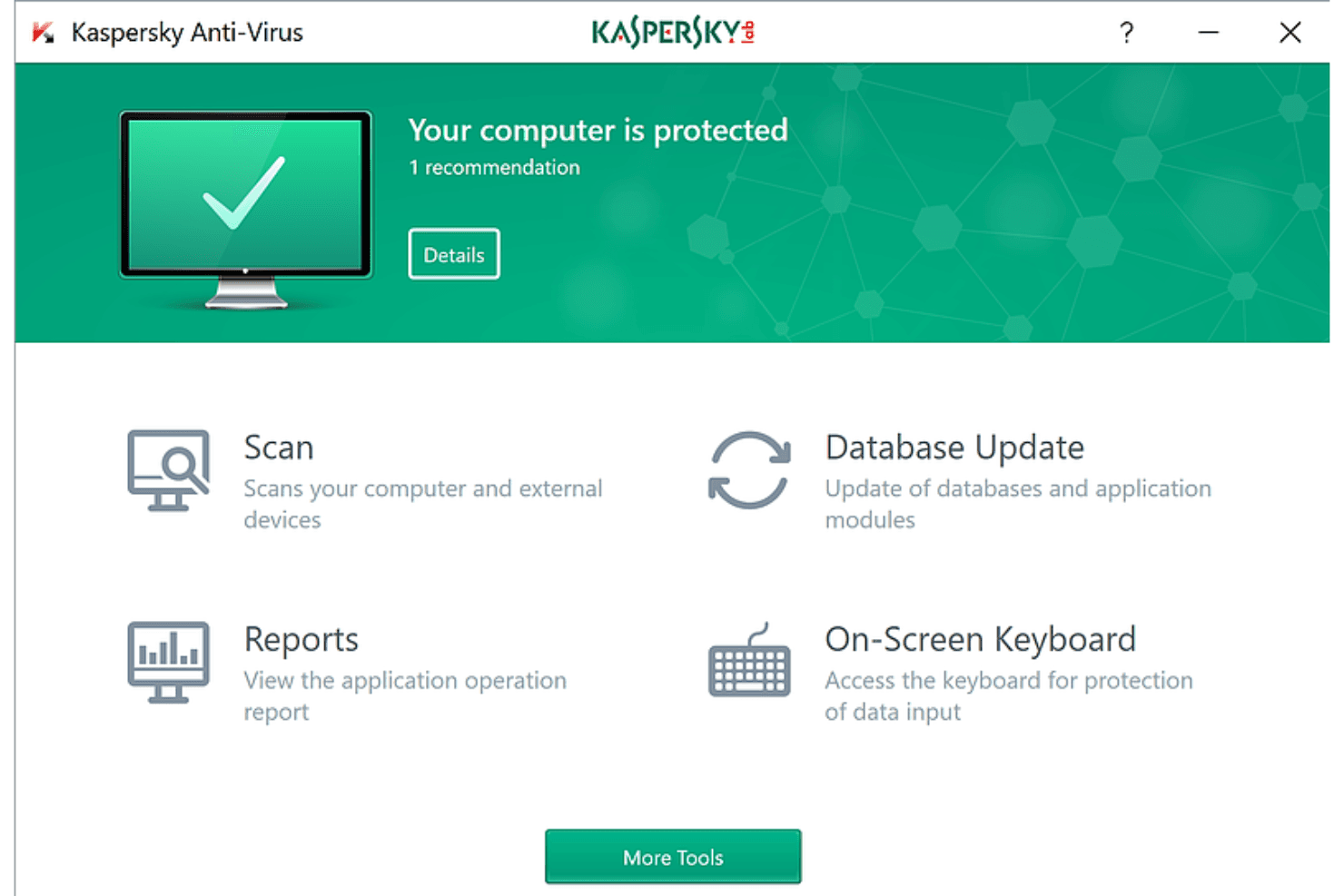
The Kaspersky security software is generally user-friendly, with an interface that's easy to navigate across Windows, macOS, Android, and iOS devices. You can quickly access its core features, like real-time protection and firewall settings, without getting lost in complex menus. However, some users mention that onboarding initially feels challenging, especially for those new to security software. Once you're familiar with its layout, managing your internet security becomes straightforward and efficient, allowing your team to focus on their work without constant interruptions.

Integrations
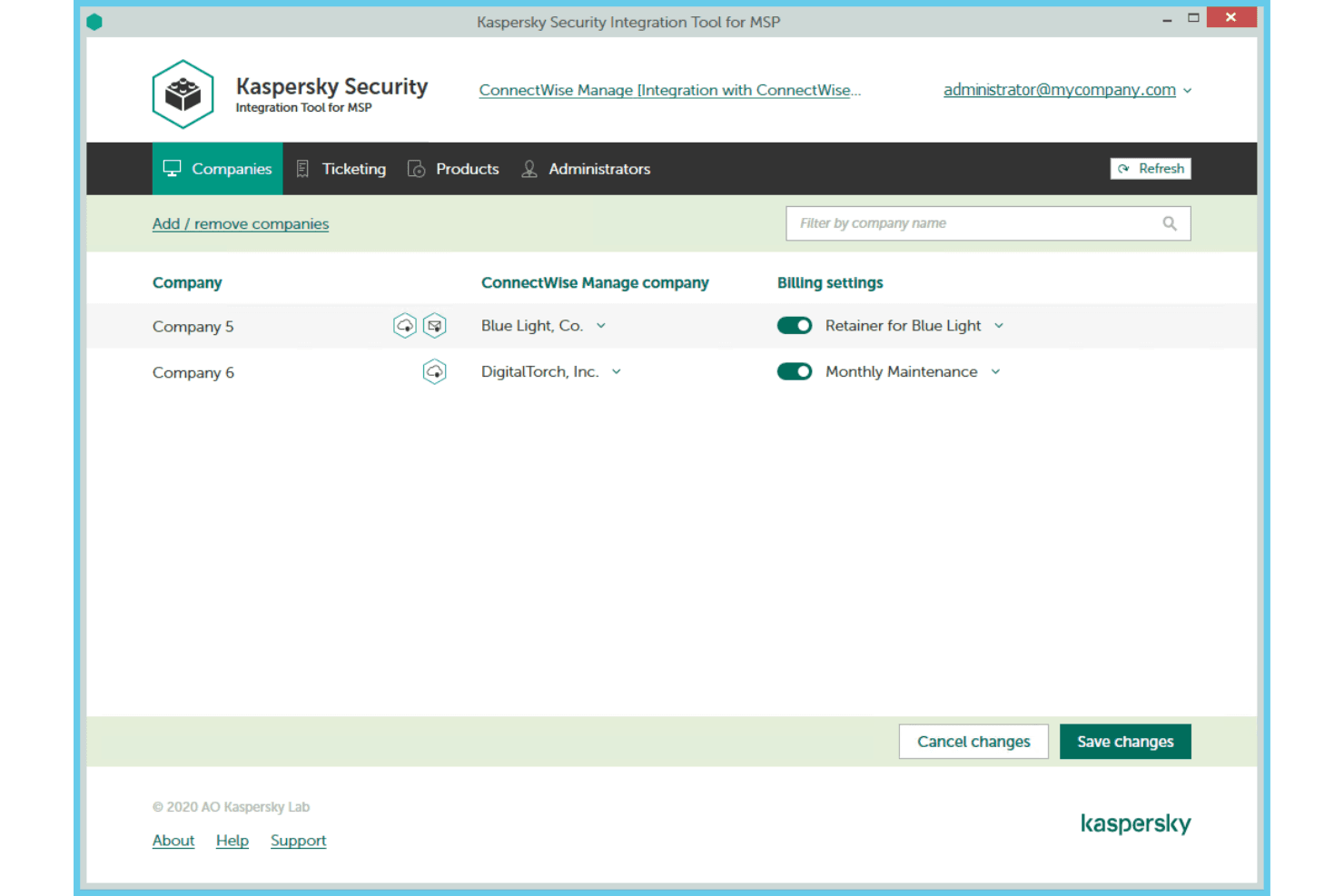
Kaspersky integrates with SolarWinds, SIEM, ThreatConnect, N-able, ConnectWise Manage, Autotask, Cortex XSOAR, and other Kaspersky products, such as its Automated Security Awareness Platform.
It also offers an API for custom integrations and connects with third-party integration tools.
Kaspersky Specs
- 2-Factor Authentication: Yes
- Access Management: Yes
- Anti-Virus: Yes
- API: Yes
- Audit Management: Yes
- Audit Trail: Yes
- Batch Permissions & Access: Yes
- Compliance Tracking: Yes
- Dashboard: Yes
- Data Export: Yes
- Data Import: Yes
- DDoS Protection: Yes
- External Integrations: Yes
- File Sharing: Yes
- File Transfer: Yes
- Firewall: Yes
- Incident Management: Yes
- Malware Protection: Yes
- Multi-User: Yes
- Notifications: Yes
- Password & Access Management: Yes
- Policy Management: Yes
- Real-time Alerts: Yes
- Report & Compliance: Yes
- Risk Assessment: Yes
- Security Migration: Yes
- Threat Detection: Yes
- Workflow Management: Yes
Alternatives to Kaspersky


Kaspersky FAQs
Cosa succede dopo?