

Recensione Elastic: Pro, Contro, Caratteristiche e Prezzi
Elastic eccelle per le sue capacità di ricerca scalabili, rendendolo una scelta ideale per i team guidati dai dati che necessitano di analisi approfondite nel contesto DataOps.

Recensiamo gli strumenti in modo indipendente e le commissioni ci aiutano a finanziare i nostri test. Consulta la nostra politica sulla trasparenza, la nostra metodologia, oppure suggerisci uno strumento.
Elastic is a DataOps tool built around search, log management, and real-time analytics across infrastructure, application, and security data. I'd primarily consider it if your team needs to query and monitor high-volume data without locking into a proprietary platform. Compared to Splunk, Elastic gives you more flexibility over your data pipeline and lower licensing costs at scale. That tradeoff matters most when ingestion volumes are high and your team has the technical depth to manage the stack.
Elastic Evaluation Summary
0/5
- From $0.07/GB data ingested
- Free trial + free demo available
Perché fidarsi dei nostri consigli sui software
6,700+
Reviews
20
Industry experts
16+
Evaluation factors
14
Years
Il nostro team testa e recensisce software dal 2012. In quanto leader tecnologici noi stessi, sappiamo quanto sia difficile — e importante — scegliere il software giusto.
Per questa guida, abbiamo valutato gli strumenti attraverso test praticie ricerche indipendenti, assegnando un punteggio agli strumenti in base ai nostri criteri di selezione.
Le nostre recensioni riflettono il nostro giudizio editoriale umano, non un discorso di vendita.
Revisori esperti:
- Paulo Gardini MiguelDirettore tecnico
 Tim FisherVP dell'IA
 Gabriel RosasTech Lead e architetto software
 Christhian GruhnTech Lead e architetto della piattaforma

Elastic Overview
In my opinion, Elastic is a solid choice for teams looking for scalable data management solutions. It shines with its powerful search capabilities and flexibility across different environments, making it a strong contender against other DataOps tools. However, some users might find the onboarding process a bit challenging. It's best suited for data-intensive industries like finance or healthcare, where handling large datasets is crucial. If you're evaluating DataOps tools, Elastic should be on your shortlist due to its comprehensive feature set and competitive pricing.
Pros
- Handles large volumes of data with scalable search capabilities.
- Fits well across on-premise and cloud environments.
- Near real-time observability with sub-second query latency.
- Rich AI and ML capabilities.
Cons
- The onboarding process may be a bit complex.
- Steep learning curve requiring expertise in Query DSL and cluster operations.
- High resource demand for RAM and CPU.
- Customer support response times could be improved.
Is Elastic Right For Your Needs?
Who Would be a Good Fit for Elastic?
Elastic is well-suited for data-intensive industries like finance, healthcare, and e-commerce, where handling large datasets is crucial. If your team needs scalable search capabilities and flexibility in data management, Elastic is a strong option. It’s particularly beneficial for businesses that require robust data analysis tools to make informed decisions quickly. Elastic's functionalities allow you to process and search through vast amounts of data efficiently, making it a valuable tool for data engineering and operations teams aiming to enhance their data handling capabilities.
- Finance TeamsElastic is ideal for finance teams needing to analyze large datasets for insights and forecasting.
- E-commerce BusinessesProvides superior, relevance-scored full-text search (handling synonyms, misspellings, and AI-powered vector search) crucial for product discovery and improving customer support portals.
- Healthcare ProvidersHealthcare providers benefit from Elastic's ability to handle vast amounts of patient data securely and effectively.
- Large EnterprisesElastic's scalable architecture makes it a good fit for large enterprises with extensive data operations.
- Data Engineering DepartmentsData engineering departments can leverage Elastic for its powerful data processing and search capabilities.
- Analytics TeamsAnalytics teams will find Elastic valuable for its ability to provide deep insights through robust data analysis features. The security analytics team use it for high-speed security incident and event management (SIEM), applying AI/ML to detect anomalies and behavioral deviations within massive security datasets.
Who Would be a Bad Fit for Elastic?
Elastic is often not the best fit for small businesses or early-stage teams with limited data workloads, since its distributed architecture and open-source codebase require meaningful engineering investment. Organizations without in-house expertise may find the onboarding, cluster tuning, and mapping configuration too complex, especially compared to managed tools like Splunk that offer faster time-to-value. Elastic’s slower support response times can also be a challenge for teams needing immediate assistance. In such cases, simpler monitoring or search platforms with more guided workflows and quicker support are typically a better operational fit.
- Small StartupsSmall startups may find Elastic's robust features excessive for their limited data needs. The operational complexity of managing a distributed cluster, even in the cloud, is overkill and too costly for simple data storage or search requirements.
- Non-Technical TeamsThe required expertise in sharding, mapping, and JVM tuning mandates specialized DevOps or Data Engineering expertise. It is not an out-of-the-box solution for non-technical users.
- Retail ShopsRetail shops with minimal data operations could find Elastic's capabilities more than they need.
- Artisanal BusinessesArtisanal businesses typically don't require the extensive data analysis features Elastic offers.
- Local Service ProvidersAs a document database, it does not support ACID transactions or complex SQL-style joins, making it fundamentally unsuitable as the primary data store for relational or transactional applications.
- Solo EntrepreneursSolo entrepreneurs could find Elastic's setup and management too complex for their simple data tasks.
La Nostra Metodologia di Recensione
Come Testiamo e Valutiamo gli Strumenti
Abbiamo trascorso anni a costruire, perfezionare e migliorare il nostro sistema di testing e valutazione del software. Il nostro schema è progettato per cogliere le sfumature della selezione software e cosa rende efficace uno strumento, focalizzandosi sugli aspetti critici del processo decisionale.
Di seguito, puoi vedere esattamente come funziona il nostro testing e punteggio su sette criteri. Ci permette di offrire una valutazione imparziale del software basata su funzionalità principali, caratteristiche distintive, facilità d’uso, onboarding, assistenza clienti, integrazioni, recensioni dei clienti e rapporto qualità-prezzo.
Funzionalità Principali (25% del punteggio finale)
Il punto di partenza della nostra valutazione è sempre la funzionalità principale dello strumento. Ha le funzioni e caratteristiche base che ci si aspetta? Alcune di queste caratteristiche sono limitate ai piani tariffari superiori? Fondamentalmente, ci aspettiamo che uno strumento regga il confronto rispetto alle capacità di base dei concorrenti.
Caratteristiche Distintive (25% del punteggio finale)
Successivamente, valutiamo le caratteristiche distintive e non comuni che vanno oltre la funzionalità base tipicamente trovata negli strumenti di questa categoria. Un punteggio alto riflette funzionalità specializzate o uniche che rendono il prodotto più veloce, efficiente o offrono ulteriore valore all’utente.
Valutiamo inoltre quanto sia semplice integrare altri strumenti tipicamente utilizzati nell’infrastruttura tecnologica per espandere la funzionalità e l’utilità del software. Gli strumenti che offrono numerose integrazioni native, connessioni di terze parti e accesso API per creare integrazioni personalizzate ottengono i punteggi migliori.
Facilità d’Uso (10% del punteggio finale)
Consideriamo quanto sia rapido e semplice svolgere i compiti definiti nella funzionalità principale utilizzando lo strumento. Il software con punteggio alto è ben progettato, intuitivo da usare, offre app mobili, fornisce modelli e rende semplici attività relativamente complesse.
Onboarding (10% del punteggio finale)
Sappiamo quanto sia importante l’adozione rapida da parte del team per una nuova piattaforma, quindi valutiamo quanto sia facile imparare e utilizzare uno strumento con formazione minima. Valutiamo quanto velocemente un membro del team possa iniziare a usare lo strumento anche senza esperienza. Soluzioni con punteggio alto indicano che sono richiesti pochi o nessun supporto.
Assistenza Clienti (10% del punteggio finale)
Esaminiamo quanto sia veloce e facile ricevere assistenza e risolvere problemi tramite telefono, live chat o knowledge base. Gli strumenti e le aziende che garantiscono supporto in tempo reale ottengono il miglior punteggio, mentre i chatbot ottengono il peggiore.
Recensioni dei Clienti (10% del punteggio finale)
Oltre ai nostri test e valutazioni, prendiamo in considerazione il net promoter score dei clienti attuali e passati. Valutiamo la probabilità che, data la scelta, selezionerebbero nuovamente lo strumento per la funzionalità principale. Un software con punteggio alto riflette un alto net promoter score da parte dei clienti attuali o passati.
Rapporto Qualità-Prezzo (10% del punteggio finale)
Infine, considerando tutti gli altri criteri, analizziamo il prezzo medio dei piani base rispetto alle funzionalità principali e consideriamo il valore degli altri criteri di valutazione. Il software che offre di più a meno otterrà un punteggio più alto.
Core Features
Scalable Search Capabilities: Enables semantic search and superior relevance scoring by combining traditional BM25 text search with vector embeddings from its integrated vector database.
Flexible Data Management: You can manage data across various environments, whether on-premise or in the cloud, giving your team the flexibility it needs. Elastic adapts to different setups, ensuring smooth operations.
Powerful Data Analysis: Your team can perform deep analyses of data to make informed decisions. Elastic's tools offer detailed insights that are crucial for strategic planning.
Real-Time Data Processing: With Elastic, you process data as it comes in, which is essential for time-sensitive operations. This feature ensures that your data is always up-to-date.
Security Features: Provides advanced security features necessary for large organizations, including role-based access control (RBAC), SSO, and audit logging (often requiring a proprietary license).
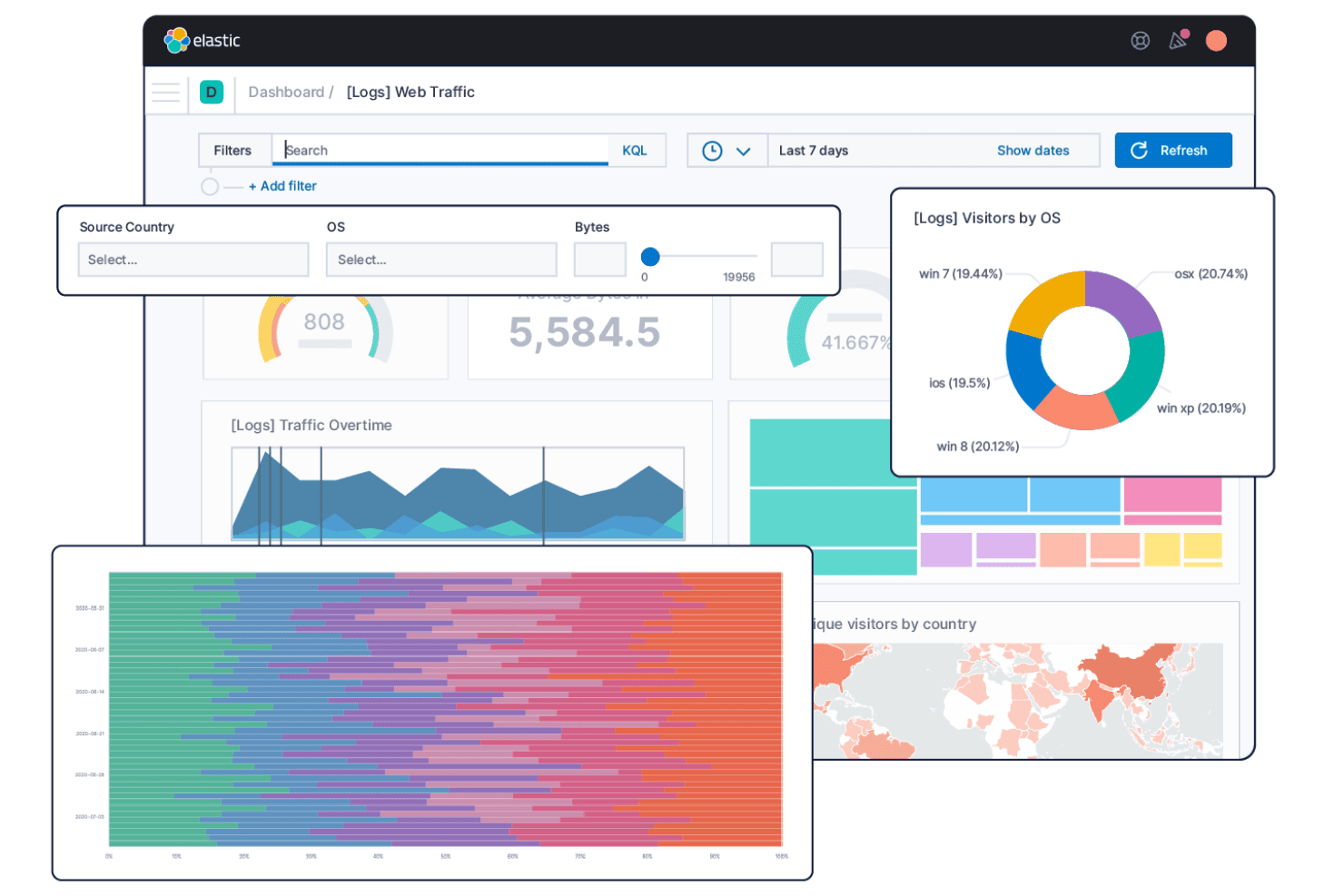
Customizable Dashboards: Leverages Kibana to provide a feature-rich, customizable interface for building dashboards. This feature helps in presenting data clearly and effectively.
Ease of Use
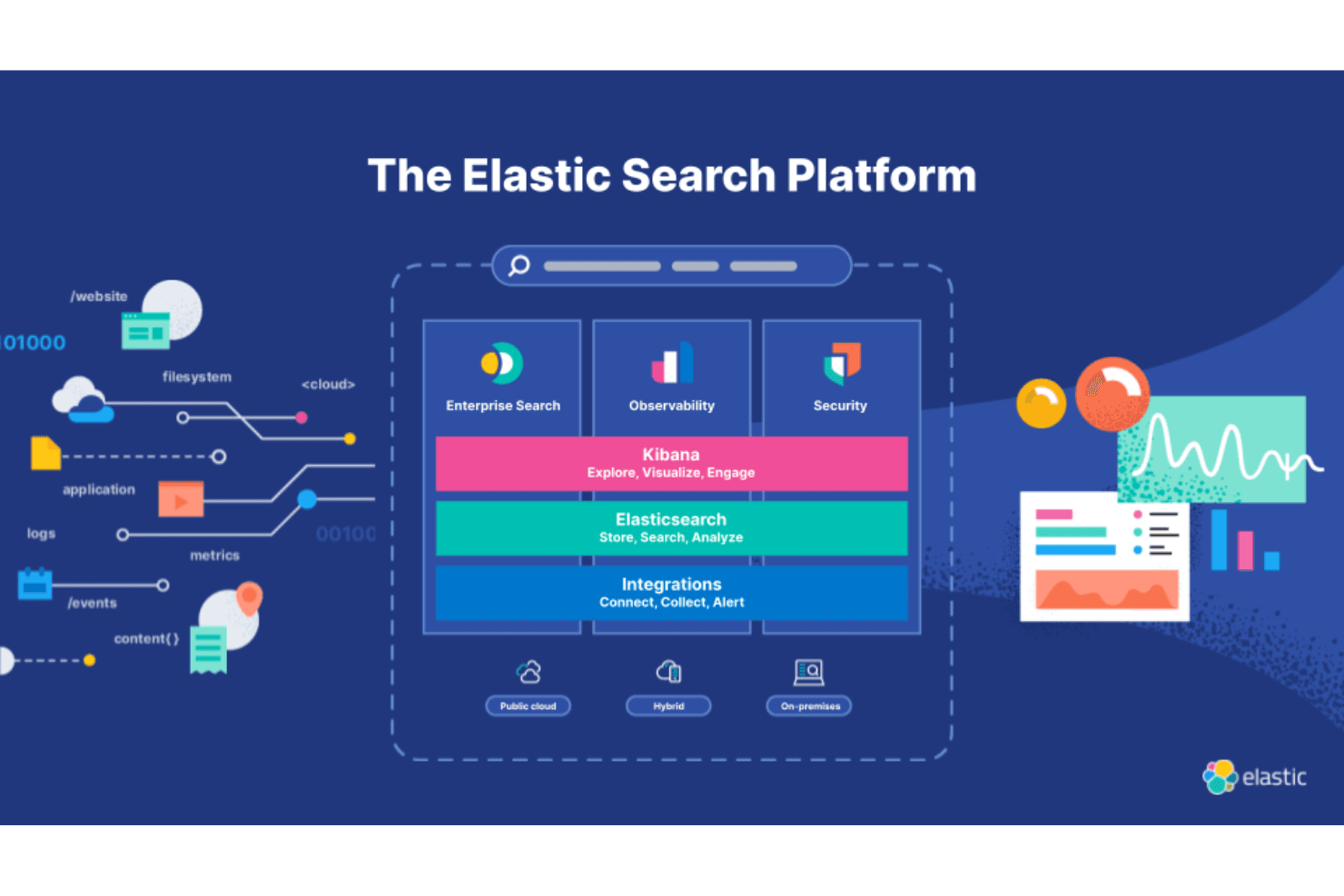
Elastic’s usability varies by user role. Kibana is mature and intuitive for software engineers, analysts and security teams, but the operational learning curve is steep for administrators who must configure mapping schemas, JVM heap settings, and cluster parameters. Many users report that the initial setup feels complex and the UI can be confusing compared to managed search or observability platforms.
Integrations
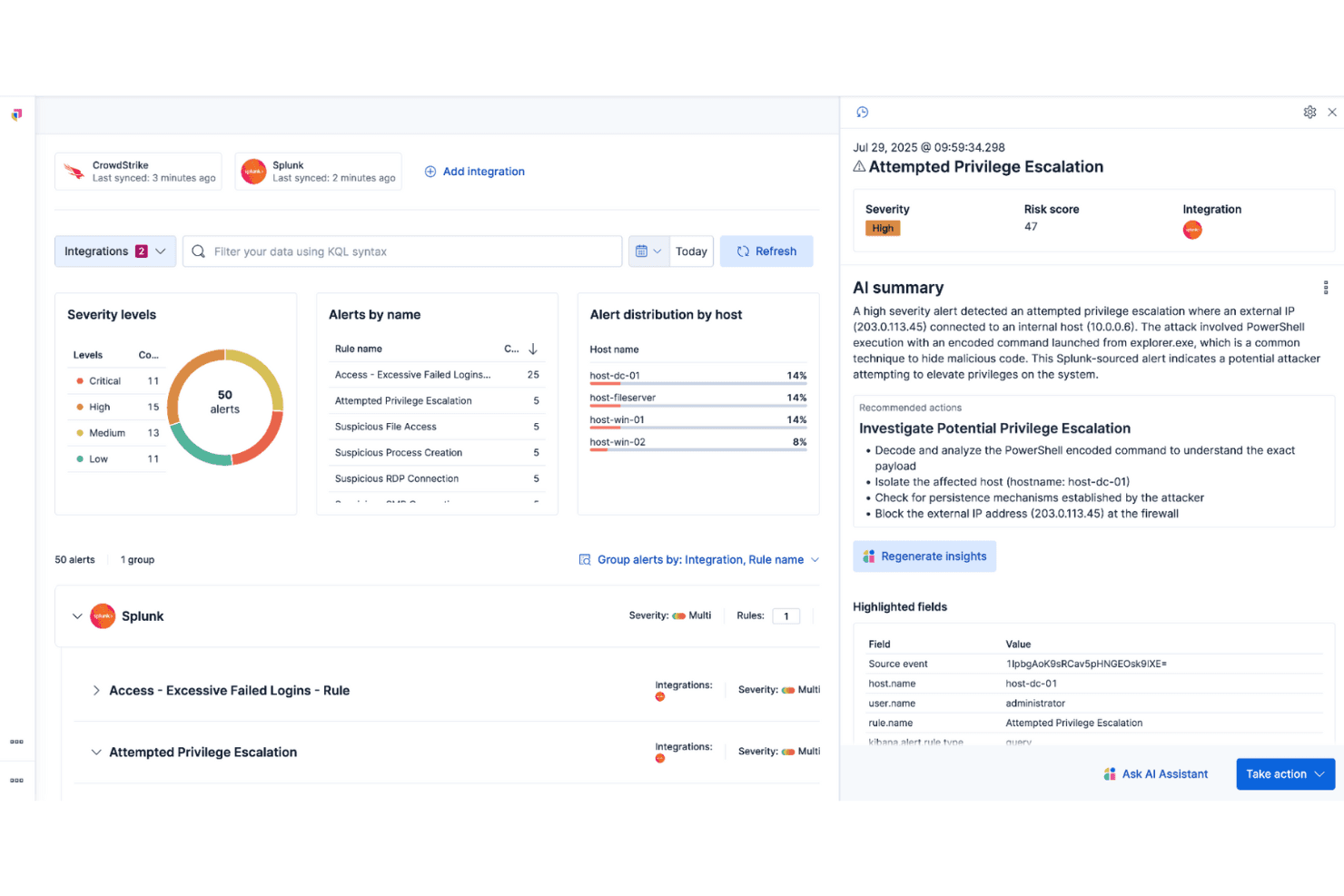
Elastic integrates with AWS, Azure, Google Cloud, Active Directory, Jira, Microsoft 365, Docker, Kubernetes, Apache, and PostgreSQL.
Elastic also offers an API and connects with third-party integration tools for expanded functionality.
.png&w=3840&q=75)
Elastic Specs
- A/B Testing: No
- API: Yes
- Collaboration Support: Yes
- Custom Data Forms: No
- Dashboard: Yes
- Dashboards: No
- Data Export: Yes
- Data Import: Yes
- Developer Tools: Yes
- External Integrations: Yes
- Feedback Management: No
- Gantt Charts: No
- Google Apps Integration: No
- Multi-User: Yes
- Notifications: Yes
- Prioritization: No
- Product Catalog: No
- Release Management: No
- Reports: Yes
- Resource Management: No
- Review Monitoring: No
- Roadmapping: No
- Scheduling: Yes
- Task Scheduling/Tracking: No


