
Avis sur QA Wolf : Avantages, Inconvénients, Fonctionnalités et Tarifs Expliqués
QA Wolf est une solution de test de bout en bout alimentée par l'IA qui combine la création, l'exécution et la maintenance automatisées de tests avec un service QA entièrement géré.

Nous évaluons les outils indépendamment ; les commissions aident à financer nos tests. Consultez notre politique de transparence et notre méthodologie.
QA Wolf is an end to end testing tool built for engineering teams that need automated test coverage without the overhead of writing and maintaining a test suite in-house. If your team keeps deprioritizing QA because no one has the bandwidth to own it, QA Wolf is worth a close look. Unlike Cypress, which requires your team to write and manage tests themselves, QA Wolf handles test creation and maintenance for you—making it the stronger choice when engineering capacity is the real constraint.
QA Wolf Evaluation Summary
4.9/5
- From 1¢/AI credit
- Free demo available
Pourquoi faire confiance à nos recommandations de logiciels
6,700+
Reviews
20
Industry experts
16+
Evaluation factors
14
Years
Notre équipe teste et évalue des logiciels depuis 2012. En tant que leaders technologiques nous-mêmes, nous savons à quel point il est difficile — et important — de choisir le bon logiciel.
Pour ce guide, nous avons évalué les outils grâce à des tests pratiques et une recherche indépendante, en notant les outils selon nos critères de sélection.
Nos avis reflètent notre jugement éditorial humain, et non un argumentaire de vente.
Réviseurs experts:
- Paulo Gardini MiguelDirecteur technique
 Tim FisherVP de l'IA
 Gabriel RosasTech Lead et architecte logiciel
 Christhian GruhnTech Lead et architecte plateforme

QA Wolf Overview
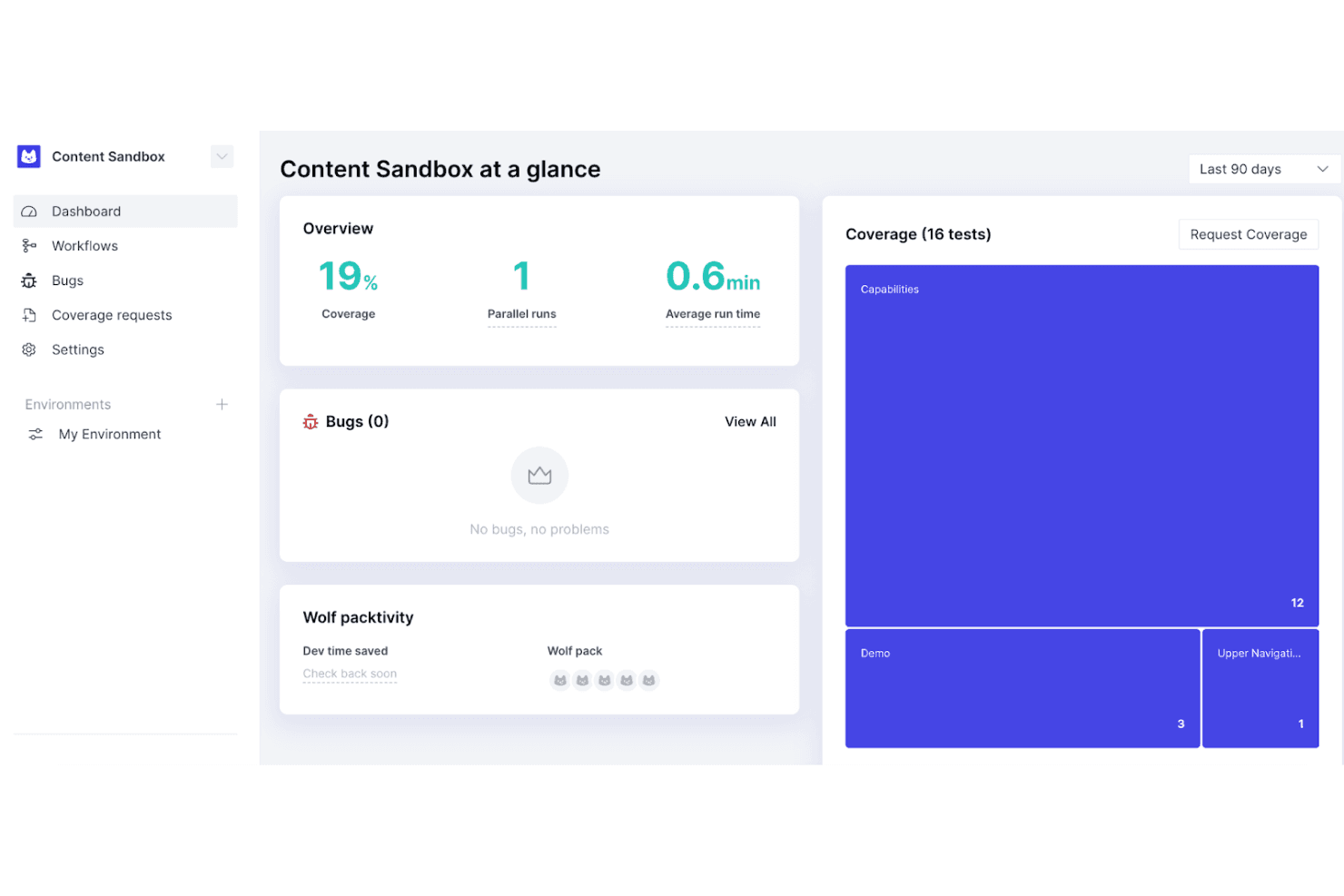
What makes QA Wolf stand out isn’t just that it goes beyond automated testing: It combines AI, infrastructure, and human QA into a single system. Its platform uses AI agents to map user flows, generate production-grade Playwright and Appium test cases, and continuously maintain them as your product changes. Those tests run in fully parallel environments, delivering results in minutes instead of hours.
On top of that, QA Wolf layers in a dedicated QA team that monitors failures, reproduces bugs with detailed logs and video, and updates tests on your behalf. This “coverage-as-a-service” model means that on top of a tool, you’re outsourcing the most time-consuming parts of QA while still retaining visibility and control through integrations with your CI/CD pipeline, Slack, and issue tracker.
Pros
- AI generates and maintains tests, reducing manual testing and QA workload significantly.
- 100% parallel test execution delivers fast results within minutes.
- Platform-enabled service eliminates the need for in-house automation expertise.
Cons
- Less control over test logic compared to fully in-house frameworks.
- Requires trust in the external team to manage critical QA processes.
- Onboarding may require coordination and an initial knowledge transfer effort.
Is QA Wolf Right For Your Needs?
Who Would be a Good Fit for QA Wolf?
QA Wolf is a strong fit for teams that want to eliminate the ongoing burden of test automation and get reliable end-to-end coverage without building and maintaining it themselves. Its combination of AI-driven test creation, fully parallel execution, and dedicated QA engineers makes it especially valuable for teams that ship frequently and can’t afford slow QA cycles or flaky tests. If your current test suite is unreliable—or you don’t have one at all—QA Wolf can help you move faster while maintaining confidence in every release.
- High-Growth SaaS TeamsRapid release cycles benefit from fast, parallel test execution and continuous maintenance across evolving product features.
- Product-Led Companies Shipping FrequentlyRun full regression suites on every deploy without slowing down engineering velocity or delaying feature rollouts.
- Teams Struggling with Flaky or Broken TestsQA Wolf handles ongoing test maintenance, eliminating common reliability issues and reducing debugging time for engineers.
- Companies Without Dedicated QA Automation EngineersOffload test creation, debugging, and maintenance to a fully managed QA team without hiring specialized resources.
- Multi-Platform Products (Web + Mobile)Supports complex workflows across web, iOS, and Android with shared coverage and consistent testing across environments.
- Engineering TeamsReduce QA time from hours to minutes with fully parallel test infrastructure and faster feedback loops for developers.
Who Would be a Bad Fit for QA Wolf?
QA Wolf isn’t a great fit for teams that want full ownership of their testing stack or need highly customized, self-managed workflows. Because it’s a platform-enabled service, you’re trading flexibility and control for speed and convenience. If your team requires on-prem infrastructure, strict data controls, or deep customization of test frameworks, QA Wolf’s managed approach may feel limiting.
- Large EnterprisesTeams with established automation frameworks may prefer maintaining full control and internal workflows.
- Security- or Compliance-Heavy IndustriesStrict data residency or infrastructure requirements may conflict with QA Wolf’s cloud-based execution model.
- Teams Requiring Full Control Over Test LogicHighly customized testing frameworks and bespoke scripts may be harder to implement or manage.
- On-Premises EnvironmentsQA Wolf is designed for cloud execution, not fully isolated or on-prem setups.
- Cost-Sensitive or Early-Stage ProjectsThe managed service model may be expensive compared to open-source or DIY solutions.
- In-House QA Ownership NeedsOrganizations wanting to build internal quality assurance expertise may prefer keeping testing fully in-house.
Notre méthodologie d'évaluation
Comment nous testons et notons les outils
Nous avons passé des années à développer, affiner et améliorer notre système de test et de notation des logiciels. Cette grille d’évaluation est conçue pour saisir les subtilités de la sélection des logiciels et ce qui rend un outil efficace, en se concentrant sur les aspects critiques du processus de décision.
Vous trouverez ci-dessous le détail de notre processus de test et de notation sur sept critères. Cela nous permet de fournir une évaluation impartiale du logiciel basée sur les fonctionnalités principales, les caractéristiques distinctives, la facilité d’utilisation, l’intégration, l’accompagnement lors de la prise en main, le support client, les avis utilisateurs et le rapport qualité-prix.
Fonctionnalité principale (25% de la note finale)
Le point de départ de notre évaluation est toujours la fonctionnalité principale de l’outil. Possède-t-il les fonctions de base auxquelles un utilisateur s’attend ? Certaines de ces fonctionnalités principales sont-elles limitées à des forfaits plus chers ? Nous attendons d’un outil qu’il soit au moins à la hauteur des capacités de base de ses concurrents.
Fonctionnalités remarquables (25% de la note finale)
Ensuite, nous évaluons les fonctionnalités exceptionnelles qui dépassent la fonctionnalité de base habituellement trouvée dans ce type d’outil. Un score élevé reflète des fonctionnalités spécialisées ou uniques rendant le produit plus rapide, plus efficace ou apportant une valeur ajoutée à l’utilisateur.
Nous évaluons aussi la facilité d’intégration avec d’autres outils courants dans la pile technologique pour élargir les fonctionnalités et l’utilité du logiciel. Les outils dotés de nombreuses intégrations natives, de connexions tierces et d’un accès API facilitant des intégrations personnalisées obtiennent les meilleurs scores.
Facilité d’utilisation (10% de la note finale)
Nous considérons la rapidité et la simplicité d’exécution des tâches principales avec l’outil. Les logiciels les mieux notés sont bien conçus, intuitifs, proposent des applications mobiles, offrent des modèles et rendent des tâches relativement complexes très simples.
Accompagnement lors de la prise en main (10% de la note finale)
Nous savons que l’adoption rapide d’une nouvelle plateforme au sein d’une équipe est cruciale. Nous évaluons donc la facilité avec laquelle un nouvel utilisateur peut apprendre et utiliser un outil avec un minimum de formation. Les meilleures solutions permettent une mise en route rapide, sans nécessité de support.
Support client (10% de la note finale)
Nous analysons la facilité et la rapidité avec lesquelles il est possible d’obtenir de l’aide par téléphone, chat en direct ou base de connaissances. Les outils et entreprises offrant une assistance en temps réel obtiennent les meilleurs scores, tandis que les chatbots sont moins bien notés.
Avis utilisateurs (10% de la note finale)
Au-delà de nos propres tests et évaluations, nous tenons compte du net promoter score des utilisateurs actuels et passés. Nous regardons la probabilité qu’ils choisiraient à nouveau l’outil pour ses fonctionnalités principales. Un logiciel bien noté reflète un net promoter score élevé.
Rapport qualité-prix (10% de la note finale)
Enfin, en tenant compte de tous les autres critères, nous examinons le prix moyen des forfaits d’entrée de gamme par rapport aux fonctionnalités principales et à la valeur des autres critères. Un logiciel offrant plus, pour moins cher, obtiendra un meilleur score.
Core Features
Fully Managed Test Creation
QA Wolf’s QA engineers build, run, and continuously update your end-to-end tests. This removes the need for in-house automation expertise and eliminates ongoing maintenance overhead.
Unlimited Test Runs
Run your entire test suite simultaneously with no limits on executions. This dramatically reduces QA time and enables fast, continuous deployments.
Zero-Flake Testing with Human Verification
QA Wolf combines AI detection with human review to separate real bugs from flaky tests. This ensures reliable, actionable results without false positives.
Open Source Test Code
All tests are written in Playwright or Appium and are fully exportable. You retain ownership of your test suite with no vendor lock-in.
Fast Onboarding and Coverage
QA Wolf delivers 80% automated test coverage for web and mobile apps in just weeks. This helps team members quickly reach high confidence in releases.
Human-Verified Bug Reports
Every failure is investigated and reproduced by QA engineers before being reported. Bug reports include clear steps, logs, and video playback.
Ease of Use
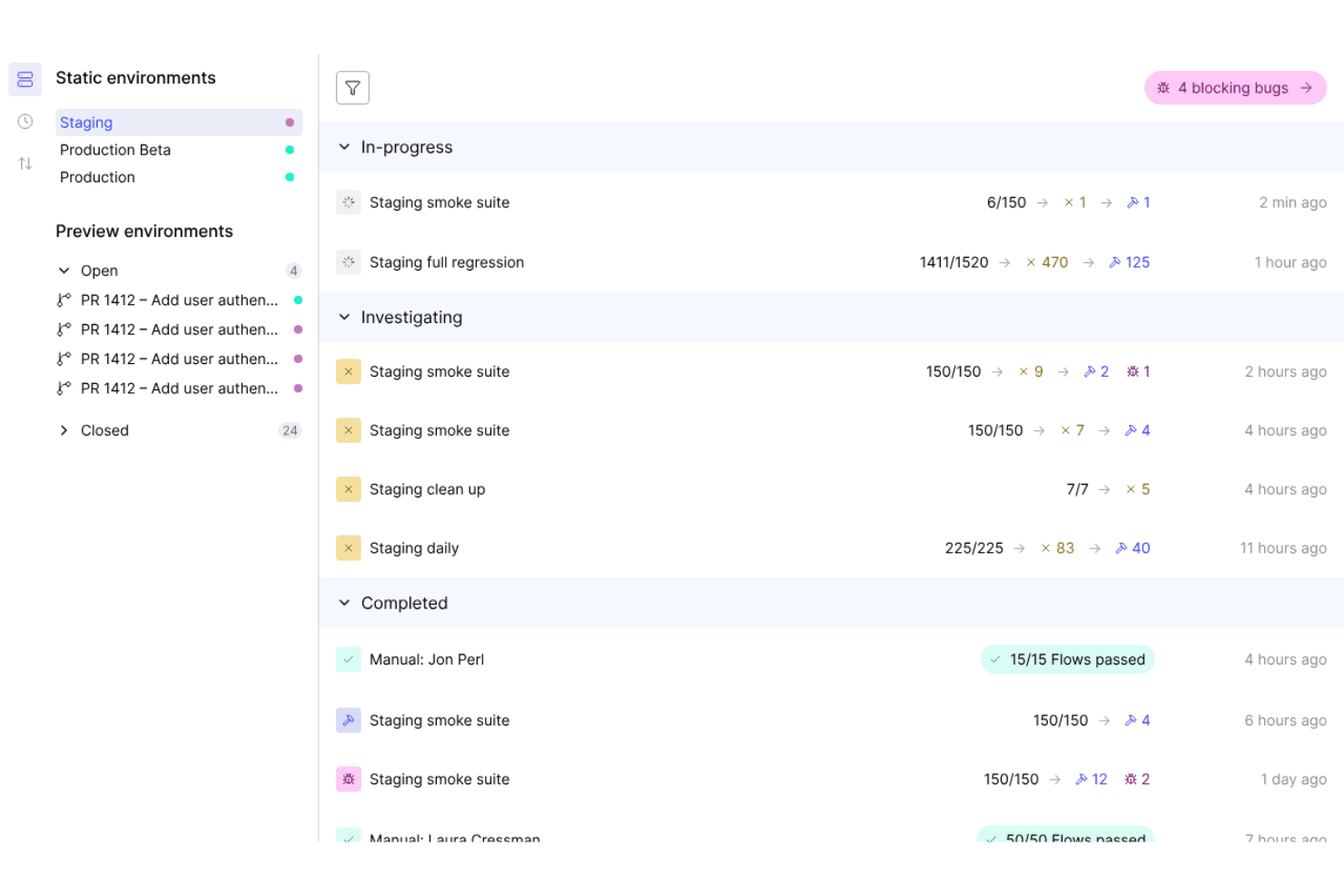
QA Wolf is easy to adopt because it removes most of the hands-on work typically required for test automation. Instead of learning a new framework or maintaining test scripts, your team works directly with QA Wolf’s engineers through a shared Slack or Teams channel. The platform itself is clean and transparent, but most interactions happen through collaboration—reviewing test results, requesting coverage, and triaging bugs. This makes it accessible to both technical and non-technical stakeholders, while still giving developers full visibility into test code and failures.
Integrations
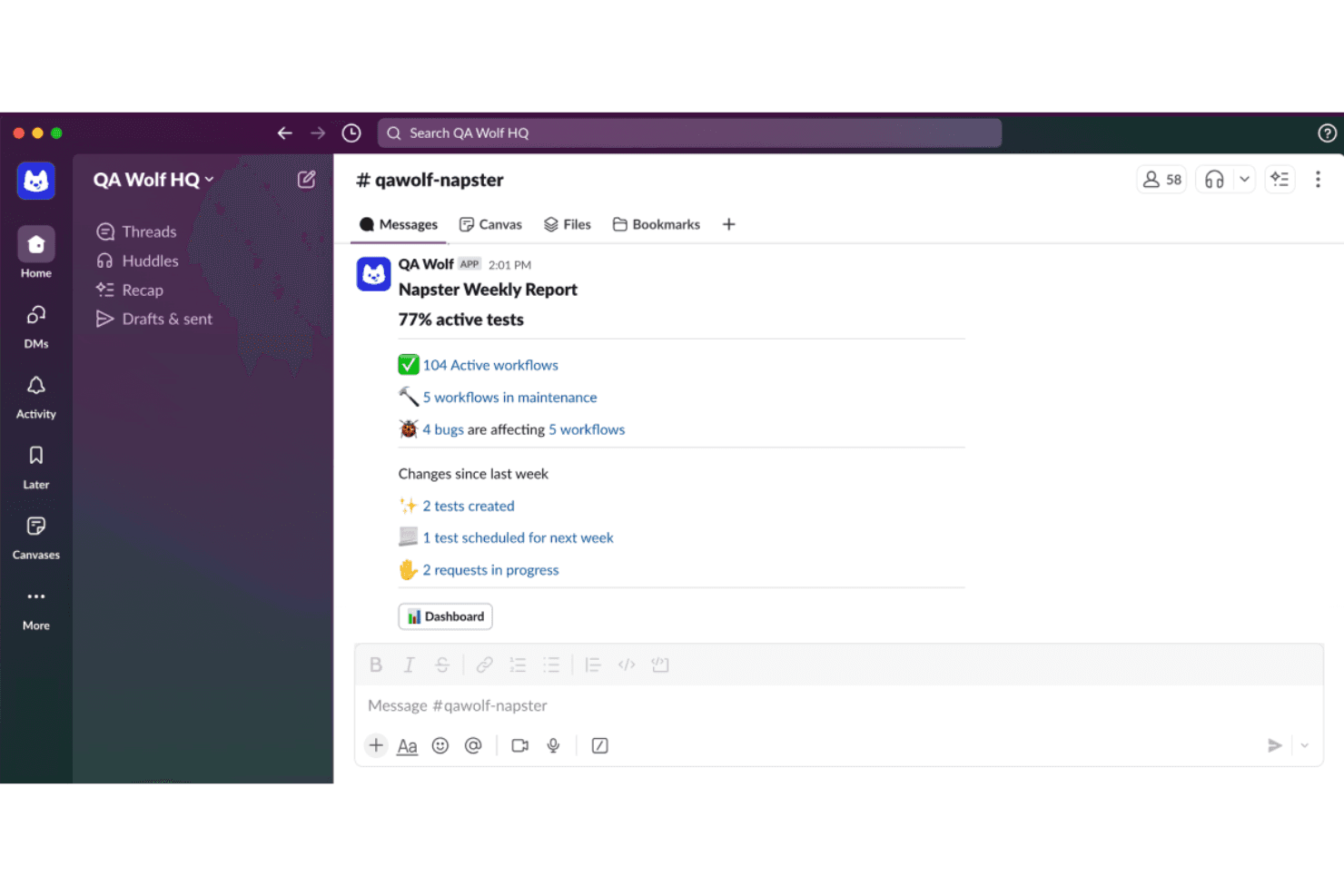
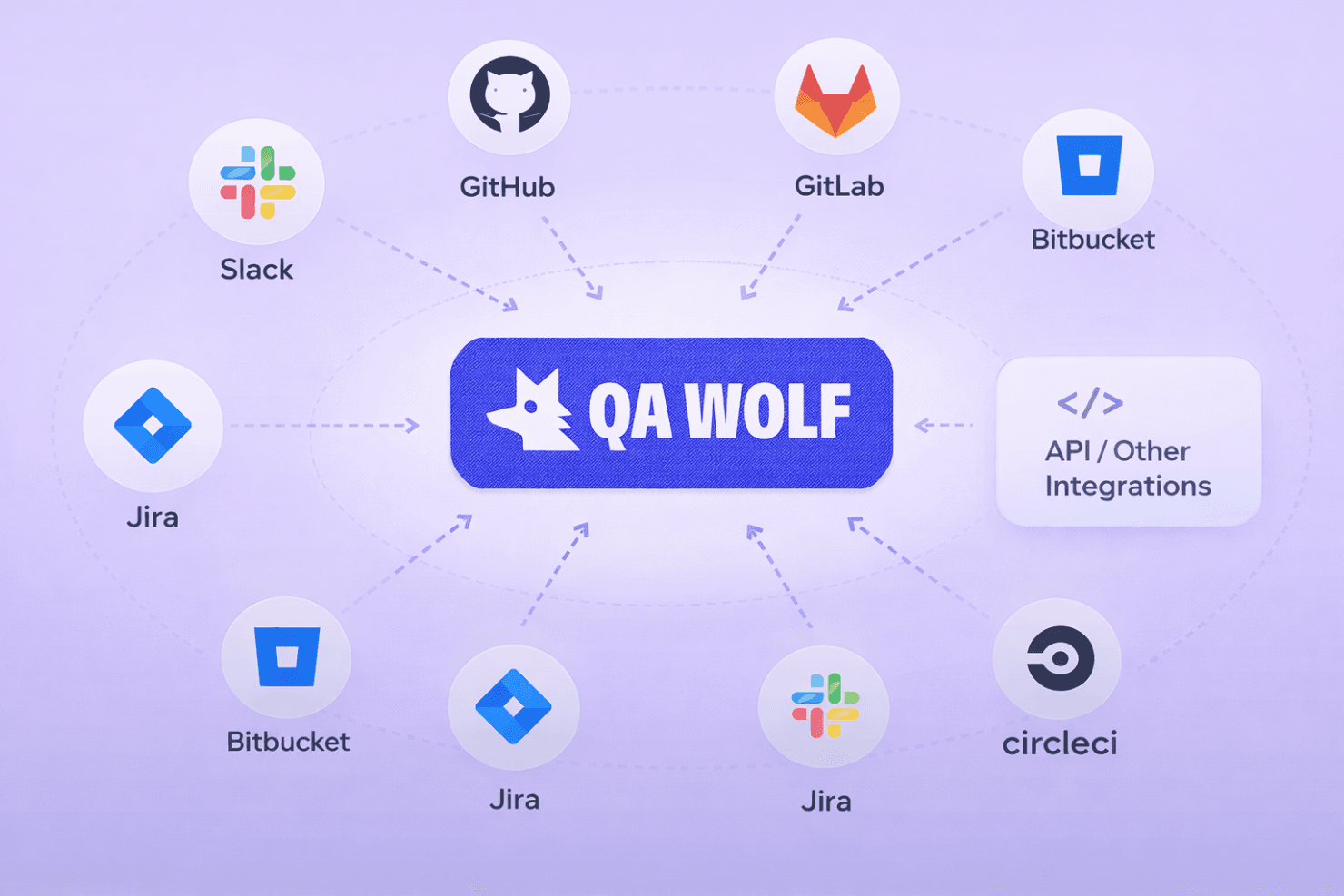
QA Wolf integrates with GitHub, GitLab, Bitbucket, Slack, Jira, CircleCI, and other CI/CD tools..
They also offer an API and support connections with third-party integration tools.
QA Wolf Specs
- A/B Testing: No
- API: Yes
- Automated Testing: No
- Browser Compatibility Testing: No
- Bug Tracking: Yes
- Calendar Management: Yes
- CI/CD Integration: No
- Dashboard: Yes
- Data Export: Yes
- Data Import: Yes
- Data Visualization: Yes
- Developer Tools: No
- External Integrations: Yes
- History/Version Control: No
- Manual Testing: No
- Multi-User: Yes
- Notifications: Yes
- Performance Testing: No
- Regression Testing: No
- Scheduling: Yes
- Status Notifications: No
- Third-Party Plugins/Add-Ons: Yes


