

Codeium-arvostelu: hyvät ja huonot puolet, ominaisuudet ja hinnoittelu
Codeium on kehittäjille ihanteellinen ilmainen tekoälytyökalupaketti, joka tarjoaa nopeutta ja joustavuutta sekä tuen yli 70 ohjelmointikielelle.

We review tools independently, and commissions help fund our testing. See our transparency policy, our methodology, or suggest a tool.
Codeium is an AI software for development teams that need in-editor code completion, AI chat, and codebase search across dozens of IDEs and languages. I'd consider it over GitHub Copilot if you want capable AI coding assistance without the per-seat licensing cost, particularly for larger engineering teams where budget per developer is a real constraint.
Codeium Evaluation Summary

4.2/5
- From $15/ per user/ per month
- Free plan available
Why Trust Our Software Recommendations
6,700+
Reviews
20
Industry experts
16+
Evaluation factors
14
Years
Our team has been testing and reviewing software since 2012. As tech leaders ourselves, we know how difficult—and important—it is to choose the right software.
For this guide, we evaluated tools using hands-on testing and independent research, scoring tools using our selection criteria.
Our reviews reflect our human editorial judgment, not a sales pitch.
Expert reviewers:
- Paulo Gardini MiguelTech Director
 Tim FisherVP of AI
 Gabriel RosasTech Lead & Software Architect
 Christhian GruhnTech Lead & Platform Architect

Codeium Overview
In my opinion, Codeium is a solid AI software choice for developers and IT teams seeking a free, flexible coding assistant. Its support for over 70 programming languages is impressive, making it suitable for a diverse range of coding environments. When weighed against other AI coding assistants, its value for money and ease of use stand out, although onboarding and customer support could improve slightly. Codeium is best suited for tech-savvy teams in startups or established tech firms where efficient code generation is a priority. If you're determining the right AI tool for your development team, Codeium's flexibility and language support make it worth considering, especially with its natural language coding capabilities and helpful refactoring suggestions, similar to modern coding tools like GitHub Copilot.
Pros
- Supports over 70 programming languages
- User interface is intuitive with easy navigation.
- Free tier available.
Cons
- Onboarding can be a bit challenging for new users.
- Customer support response times might not meet your expectations.
- Certain advanced features are lacking compared to competitors.
Is Codeium Right For Your Needs?
Who Would be a Good Fit for Codeium?
Codeium is perfect for tech startups and IT departments where coding efficiency is crucial. If your team works with multiple programming languages, Codeium’s support for over 70 languages, including Python, Java, JavaScript, TypeScript, and SQL, can boost productivity. Its intuitive interface makes it a great fit for teams needing a quick learning curve with helpful autocomplete for boilerplate code. Developers seeking a cost-effective tool without compromising functionality will find Codeium’s free version valuable. For environments that prioritize flexibility and adaptability in coding projects, Codeium’s versatility stands out, with its integration across major IDE platforms and Microsoft tools.
- Tech StartupsCodeium's language support and free version are ideal for startups needing a cost-effective coding solution that integrates easily with modern frameworks.
- IT DepartmentsYour team can benefit from Codeium's intuitive interface and multi-language support to enhance coding efficiency. Teams with specific infrastructure needs can even deploy a self-hosted instance for higher control.
- Freelance DevelopersIf you’re a freelancer, Codeium offers a flexible and budget-friendly coding assistant that works across different development environments.
- Educational InstitutionsSchools and universities can use Codeium for teaching multiple programming languages with ease.
- Software Development FirmsDevelopment firms can leverage Codeium’s versatility to handle diverse coding projects efficiently.
- Open Source ProjectsContributors to open source projects will appreciate Codeium’s free access and multi-language capabilities.
Who Would be a Bad Fit for Codeium?
Codeium might not be the best choice for large enterprises needing extensive customer support and tailored onboarding services. If your team relies heavily on advanced features that competitors offer, you might find Codeium lacking. Teams that need rapid customer support response times might face challenges, as Codeium’s support isn't the fastest. If you're in an organization where extensive training and customization are required, Codeium's onboarding process may not meet your expectations.
- Large EnterprisesYour enterprise might need more robust customer support and onboarding than Codeium provides.
- Advanced Feature UsersIf your team relies on specific advanced features, you might find Codeium lacking compared to competitors.
- Heavily Regulated IndustriesIndustries needing strict compliance features might find Codeium's offerings insufficient.
- Customization-Heavy TeamsIf your work requires deep customization, Codeium's capabilities might not align with your needs.
- Customer Support-Dependent TeamsTeams needing rapid support responses might struggle with Codeium's slower support times.
- Training-Focused OrganizationsIf extensive onboarding is crucial, Codeium's process may not meet your training expectations.
Our Review Methodology
How We Test & Score Tools
We’ve spent years building, refining, and improving our software testing and scoring system. The rubric is designed to capture the nuances of software selection and what makes a tool effective, focusing on critical aspects of the decision-making process.
Below, you can see exactly how our testing and scoring works across seven criteria. It allows us to provide an unbiased evaluation of the software based on core functionality, standout features, ease of use, onboarding, customer support, integrations, customer reviews, and value for money.
Core Functionality (25% of final scoring)
The starting point of our evaluation is always the core functionality of the tool. Does it have the basic features and functions that a user would expect to see? Are any of those core features locked to higher-tiered pricing plans? At its core, we expect a tool to stand up against the baseline capabilities of its competitors.
Standout Features (25% of final scoring)
Next, we evaluate uncommon standout features that go above and beyond the core functionality typically found in tools of its kind. A high score reflects specialized or unique features that make the product faster, more efficient, or offer additional value to the user.
We also evaluate how easy it is to integrate with other tools typically found in the tech stack to expand the functionality and utility of the software. Tools offering plentiful native integrations, 3rd party connections, and API access to build custom integrations score best.
Ease of Use (10% of final scoring)
We consider how quick and easy it is to execute the tasks defined in the core functionality using the tool. High scoring software is well designed, intuitive to use, offers mobile apps, provides templates, and makes relatively complex tasks seem simple.
Onboarding (10% of final scoring)
We know how important rapid team adoption is for a new platform, so we evaluate how easy it is to learn and use a tool with minimal training. We evaluate how quickly a team member can get set up and start using the tool with no experience. High scoring solutions indicate little or no support is required.
Customer Support (10% of final scoring)
We review how quick and easy it is to get unstuck and find help by phone, live chat, or knowledge base. Tools and companies that provide real-time support score best, while chatbots score worst.
Customer Reviews (10% of final scoring)
Beyond our own testing and evaluation, we consider the net promoter score from current and past customers. We review their likelihood, given the option, to choose the tool again for the core functionality. A high scoring software reflects a high net promoter score from current or past customers.
Value for Money (10% of final scoring)
Lastly, in consideration of all the other criteria, we review the average price of entry level plans against the core features and consider the value of the other evaluation criteria. Software that delivers more, for less, will score higher.
Core Features
Multi-Language Support: Codeium supports over 70 programming languages, giving your team the flexibility to work on diverse projects without switching tools.
Code Completion: It provides intelligent, context-aware suggestions as you type, helping you generate code quickly and reducing the chance of errors.
Syntax Highlighting: This feature highlights code syntax, making your code more readable and easier to debug.
Code Snippets: Codeium allows you to save and reuse code snippets, which helps streamline repetitive coding tasks and boosts productivity.
Team Collaboration: Codeium supports team workflows through shared AI context and analytics, helping maintain coding standards and consistency across projects, even for distributed teams.
Version Control Integration: Codeium integrates with version control systems, ensuring your code changes are tracked and managed efficiently.
Ease of Use
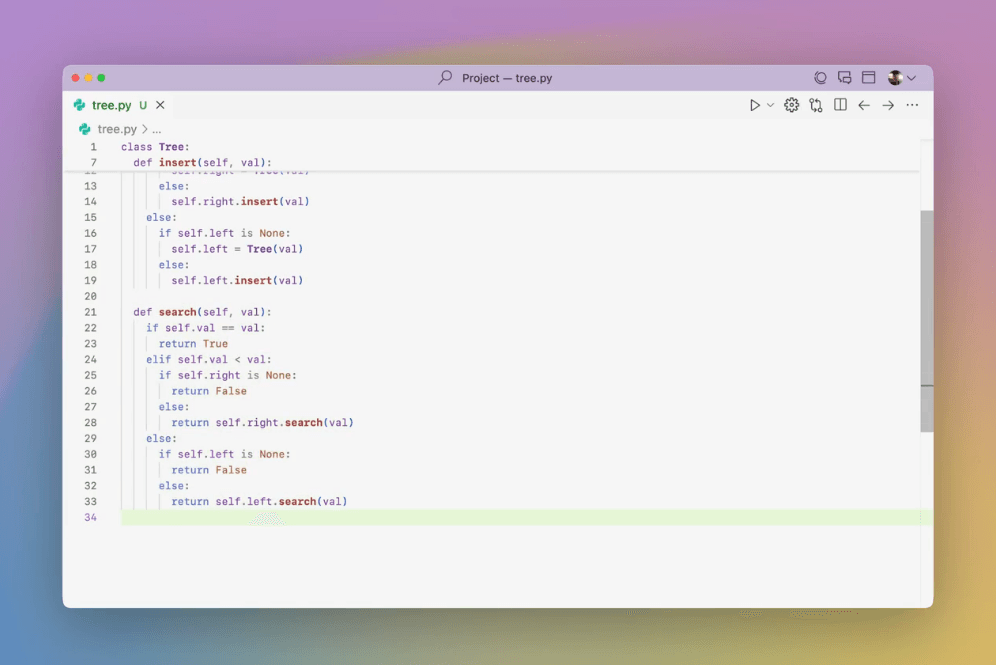
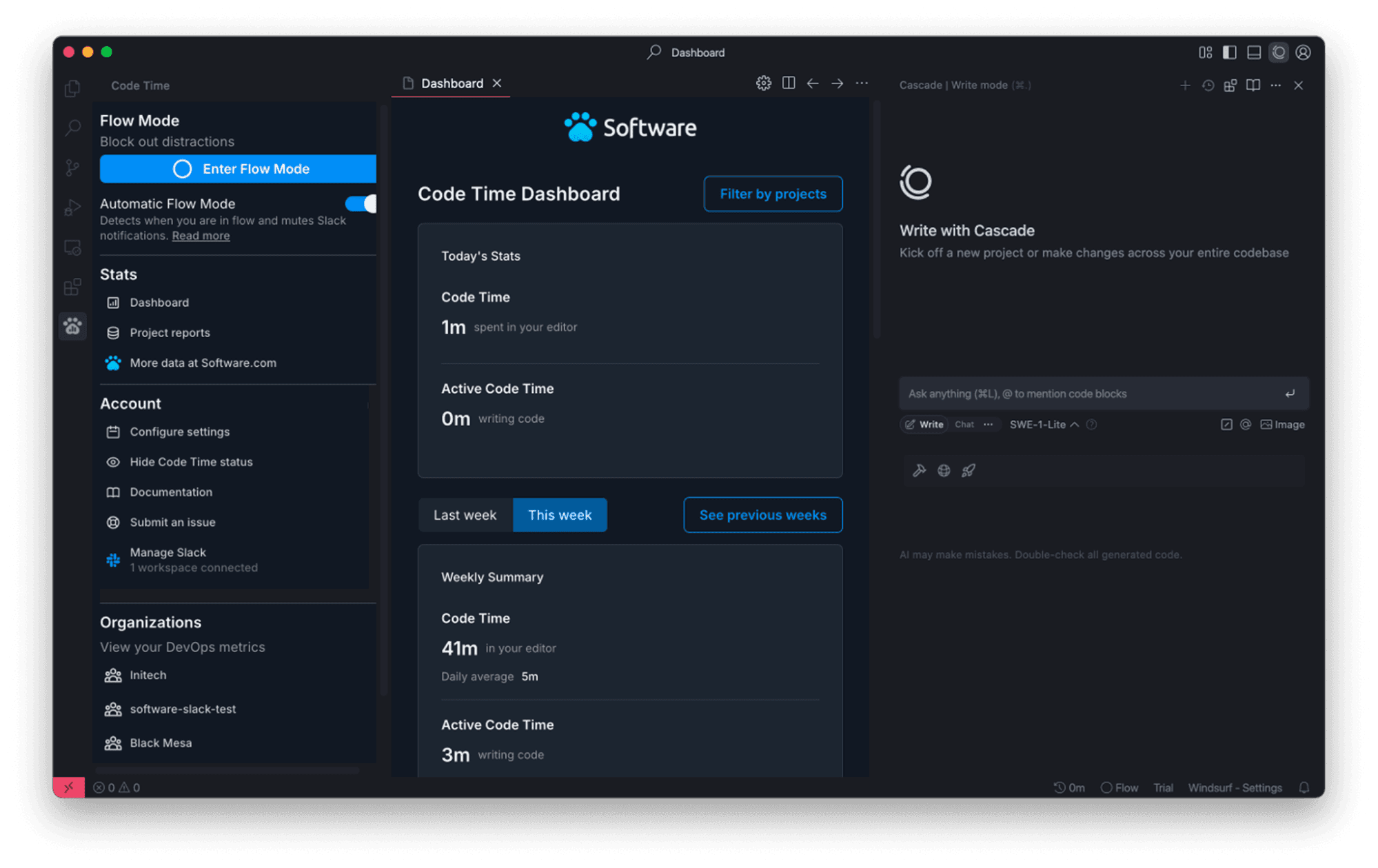
Codeium is user-friendly, thanks to its intuitive interface that lets you focus on coding rather than navigating menus. Its ease of use is enhanced by features like intelligent code autocomplete and syntax highlighting, which simplify your work. Compared to other AI software, users appreciate how quickly they can adapt to Codeium without extensive training. If your team values a straightforward, efficient coding experience, Codeium's design and functionality make it an appealing choice.
Integrations
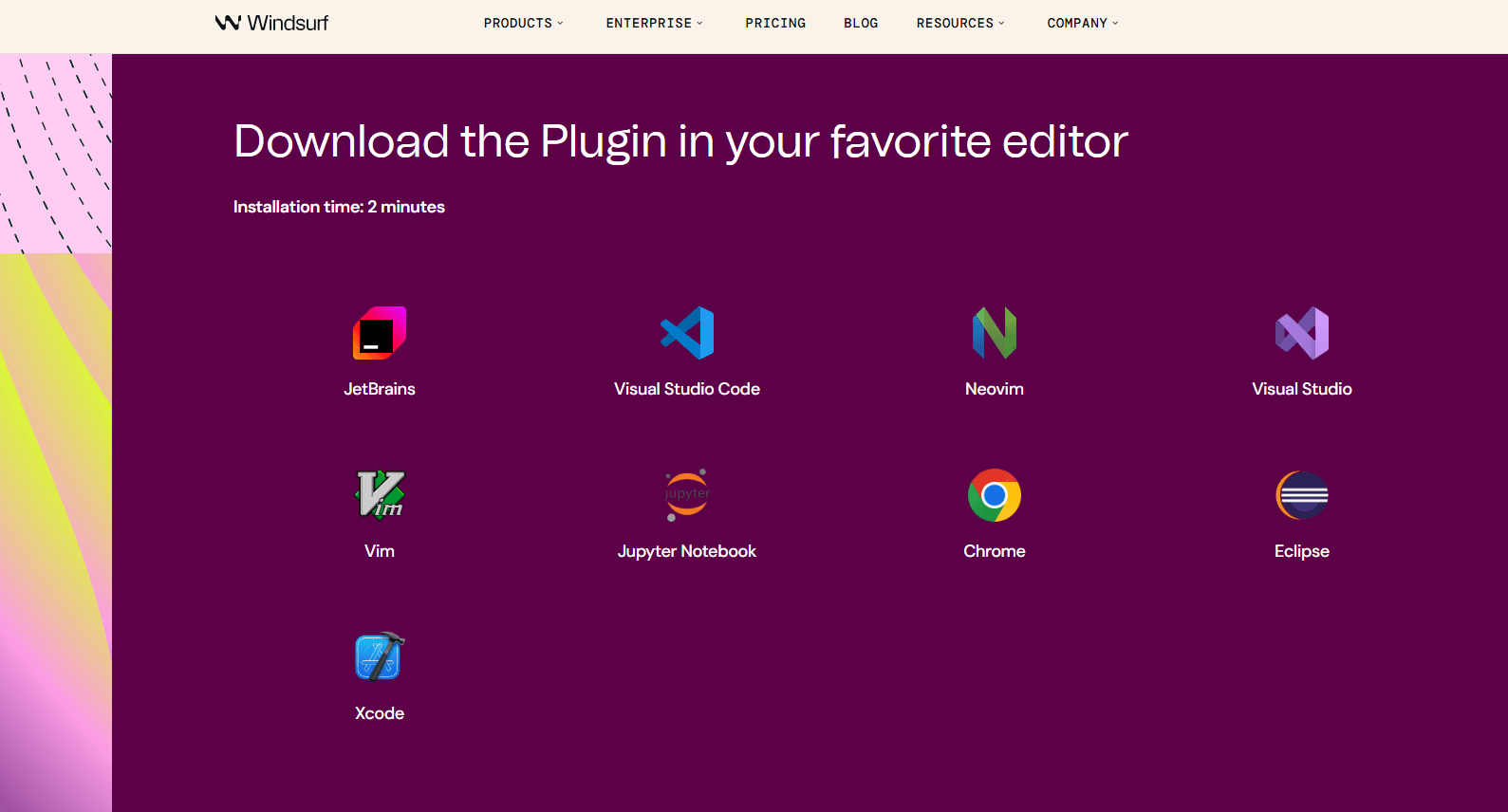
Codeium integrates with Visual Studio, Eclipse, VSCode, JetBrains, Emacs, Vim/Neovim, Jupyter, and Colab notebooks.
Codeium also offers an API for further integration possibilities.
Codeium Specs
- API: No
- Bug Tracking: No
- CI/CD Integration: No
- Cloud Deployment: No
- Code Review: Yes
- Code Transformation: Yes
- Collaboration Support: No
- Data Export: No
- Data Import: No
- Developer Tools: Yes
- External Integrations: Yes
- Git Integration: Yes
- History/Version Control: Yes
- IDE Plugins: Yes
- Local Deployment: No
- Multi-User: Yes
- Notifications: Yes
- Project Management: No
- Release Management: No
- Static Analysis: Yes
- Task Scheduling/Tracking: No
- Testing: No


