
Reseña de QA Wolf: Ventajas, desventajas, características y precios explicados
QA Wolf es una solución de pruebas de extremo a extremo impulsada por IA que combina la creación, ejecución y mantenimiento automático de pruebas con un servicio de QA completamente gestionado.

Revisamos herramientas de forma independiente y las comisiones ayudan a financiar nuestras pruebas. Consulta nuestra política de transparencia, nuestra metodología o sugiere una herramienta.
QA Wolf is an end to end testing tool built for engineering teams that need automated test coverage without the overhead of writing and maintaining a test suite in-house. If your team keeps deprioritizing QA because no one has the bandwidth to own it, QA Wolf is worth a close look. Unlike Cypress, which requires your team to write and manage tests themselves, QA Wolf handles test creation and maintenance for you—making it the stronger choice when engineering capacity is the real constraint.
QA Wolf Evaluation Summary
4.9/5
- From 1¢/AI credit
- Free demo available
Por qué confiar en nuestras recomendaciones de software
6,700+
Reviews
20
Industry experts
16+
Evaluation factors
14
Years
Nuestro equipo lleva probando y evaluando software desde 2012. Como líderes tecnológicos, sabemos lo difícil —y lo importante— que es elegir el software adecuado.
Para esta guía, evaluamos las herramientas mediante pruebas prácticas e investigación independiente, puntuando las herramientas según nuestros criterios de selección.
Nuestras reseñas reflejan nuestro criterio editorial humano, no un discurso de ventas.
Revisores expertos:
- Paulo Gardini MiguelDirector técnico
 Tim FisherVP de IA
 Gabriel RosasTech Lead y arquitecto de software
 Christhian GruhnTech Lead y arquitecto de plataforma

QA Wolf Overview
What makes QA Wolf stand out isn’t just that it goes beyond automated testing: It combines AI, infrastructure, and human QA into a single system. Its platform uses AI agents to map user flows, generate production-grade Playwright and Appium test cases, and continuously maintain them as your product changes. Those tests run in fully parallel environments, delivering results in minutes instead of hours.
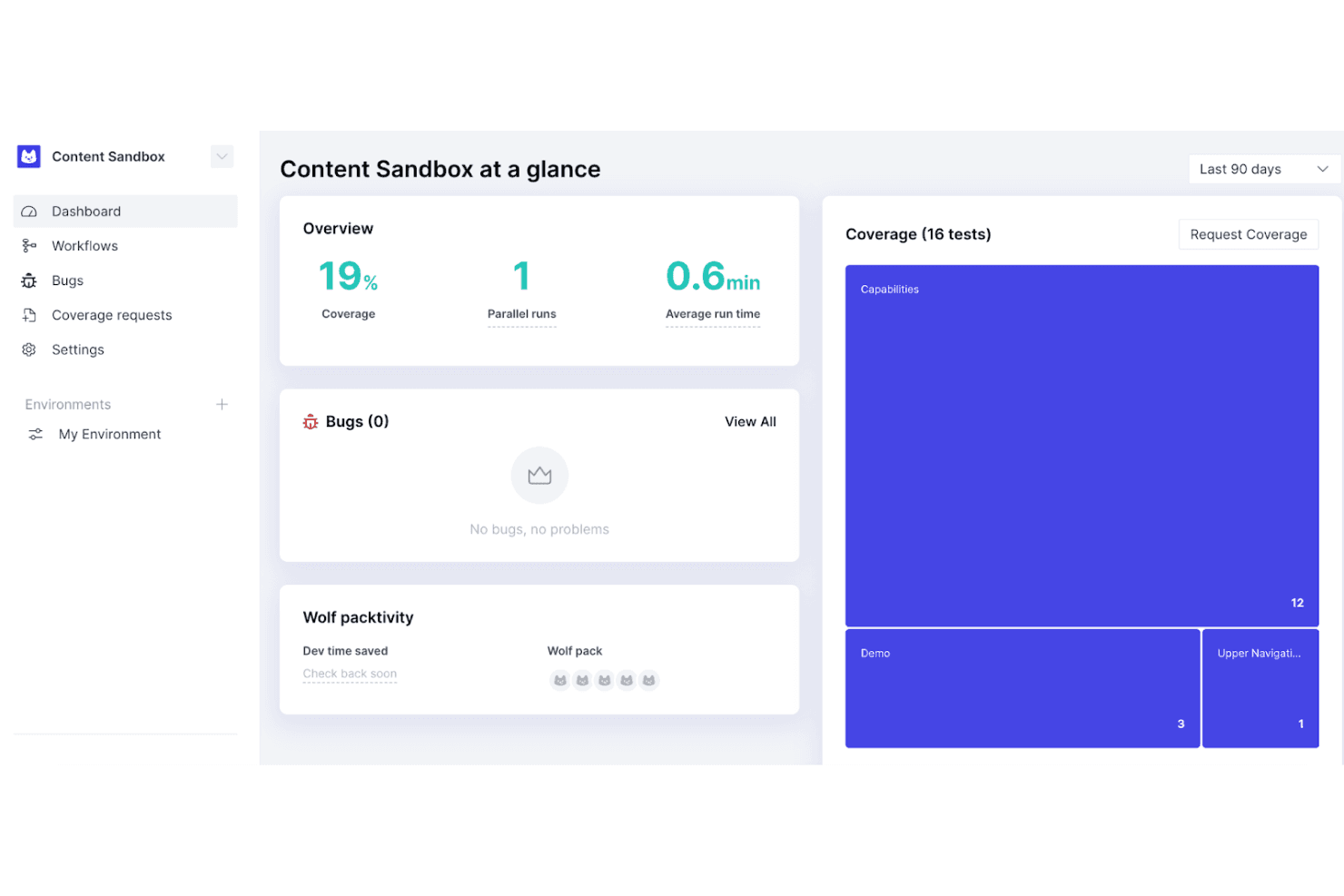
On top of that, QA Wolf layers in a dedicated QA team that monitors failures, reproduces bugs with detailed logs and video, and updates tests on your behalf. This “coverage-as-a-service” model means that on top of a tool, you’re outsourcing the most time-consuming parts of QA while still retaining visibility and control through integrations with your CI/CD pipeline, Slack, and issue tracker.
Pros
- AI generates and maintains tests, reducing manual testing and QA workload significantly.
- 100% parallel test execution delivers fast results within minutes.
- Platform-enabled service eliminates the need for in-house automation expertise.
Cons
- Less control over test logic compared to fully in-house frameworks.
- Requires trust in the external team to manage critical QA processes.
- Onboarding may require coordination and an initial knowledge transfer effort.
Is QA Wolf Right For Your Needs?
Who Would be a Good Fit for QA Wolf?
QA Wolf is a strong fit for teams that want to eliminate the ongoing burden of test automation and get reliable end-to-end coverage without building and maintaining it themselves. Its combination of AI-driven test creation, fully parallel execution, and dedicated QA engineers makes it especially valuable for teams that ship frequently and can’t afford slow QA cycles or flaky tests. If your current test suite is unreliable—or you don’t have one at all—QA Wolf can help you move faster while maintaining confidence in every release.
- High-Growth SaaS TeamsRapid release cycles benefit from fast, parallel test execution and continuous maintenance across evolving product features.
- Product-Led Companies Shipping FrequentlyRun full regression suites on every deploy without slowing down engineering velocity or delaying feature rollouts.
- Teams Struggling with Flaky or Broken TestsQA Wolf handles ongoing test maintenance, eliminating common reliability issues and reducing debugging time for engineers.
- Companies Without Dedicated QA Automation EngineersOffload test creation, debugging, and maintenance to a fully managed QA team without hiring specialized resources.
- Multi-Platform Products (Web + Mobile)Supports complex workflows across web, iOS, and Android with shared coverage and consistent testing across environments.
- Engineering TeamsReduce QA time from hours to minutes with fully parallel test infrastructure and faster feedback loops for developers.
Who Would be a Bad Fit for QA Wolf?
QA Wolf isn’t a great fit for teams that want full ownership of their testing stack or need highly customized, self-managed workflows. Because it’s a platform-enabled service, you’re trading flexibility and control for speed and convenience. If your team requires on-prem infrastructure, strict data controls, or deep customization of test frameworks, QA Wolf’s managed approach may feel limiting.
- Large EnterprisesTeams with established automation frameworks may prefer maintaining full control and internal workflows.
- Security- or Compliance-Heavy IndustriesStrict data residency or infrastructure requirements may conflict with QA Wolf’s cloud-based execution model.
- Teams Requiring Full Control Over Test LogicHighly customized testing frameworks and bespoke scripts may be harder to implement or manage.
- On-Premises EnvironmentsQA Wolf is designed for cloud execution, not fully isolated or on-prem setups.
- Cost-Sensitive or Early-Stage ProjectsThe managed service model may be expensive compared to open-source or DIY solutions.
- In-House QA Ownership NeedsOrganizations wanting to build internal quality assurance expertise may prefer keeping testing fully in-house.
Nuestra metodología de revisión
Cómo probamos y puntuamos las herramientas
Hemos invertido años construyendo, refinando y mejorando nuestro sistema de pruebas y puntuación de software. La rúbrica está diseñada para captar los matices de la selección de software y lo que hace a una herramienta efectiva, enfocándose en aspectos críticos del proceso de toma de decisiones.
A continuación, puedes ver exactamente cómo nuestro sistema de prueba y puntuación funciona a través de siete criterios. Esto nos permite ofrecer una evaluación imparcial del software basada en funcionalidad central, características destacadas, facilidad de uso, incorporación, soporte al cliente, integraciones, reseñas de clientes y relación calidad-precio.
Funcionalidad principal (25% de la puntuación final)
El punto de partida de nuestra evaluación siempre es la funcionalidad central de la herramienta. ¿Tiene las características y funciones básicas que un usuario esperaría encontrar? ¿Alguna de esas funciones principales está limitada a planes de precios superiores? Esperamos que una herramienta esté a la altura de las capacidades básicas de sus competidores.
Características destacadas (25% de la puntuación final)
Luego, evaluamos las características poco comunes y sobresalientes que van más allá de la funcionalidad principal que normalmente se encuentra en herramientas de su tipo. Una puntuación alta refleja características especializadas o únicas que hacen el producto más rápido, eficiente o que ofrecen valor adicional al usuario.
También evaluamos qué tan fácil es integrar con otras herramientas que normalmente forman parte del ecosistema tecnológico para expandir la funcionalidad y utilidad del software. Las herramientas que ofrecen abundantes integraciones nativas, conexiones de terceros y acceso API para crear integraciones personalizadas obtienen la mejor puntuación.
Facilidad de uso (10% de la puntuación final)
Consideramos cuán rápido y sencillo es ejecutar las tareas definidas por la funcionalidad principal usando la herramienta. El software con mejor puntuación está bien diseñado, es intuitivo, ofrece aplicaciones móviles, proporciona plantillas y hace que tareas relativamente complejas parezcan sencillas.
Incorporación (10% de la puntuación final)
Sabemos lo importante que es la adopción rápida por parte del equipo para una nueva plataforma, por lo que evaluamos cuán fácil es aprender y usar una herramienta con entrenamiento mínimo. Evaluamos cuán rápido un miembro del equipo puede configurarla y comenzar a utilizarla sin experiencia previa. Las soluciones con mayor puntuación requieren poco o ningún soporte.
Soporte al cliente (10% de la puntuación final)
Revisamos qué tan rápido y sencillo es resolver dudas y encontrar ayuda por teléfono, chat en vivo o base de conocimientos. Las herramientas y compañías que proporcionan soporte en tiempo real obtienen la mejor puntuación, mientras que los chatbots obtienen la peor.
Reseñas de clientes (10% de la puntuación final)
Además de nuestras pruebas y evaluaciones, consideramos la puntuación neta de promotores por parte de clientes actuales y anteriores. Revisamos la probabilidad de que elijan la herramienta de nuevo para la funcionalidad principal. Una puntuación alta refleja una alta puntuación neta de promotores actuales o pasados.
Relación calidad-precio (10% de la puntuación final)
Por último, considerando todos los demás criterios, revisamos el precio promedio de los planes de nivel básico comparado con las funciones principales y consideramos el valor de los demás criterios de evaluación. El software que ofrezca más, por menos, obtendrá una puntuación mayor.
Core Features
Fully Managed Test Creation
QA Wolf’s QA engineers build, run, and continuously update your end-to-end tests. This removes the need for in-house automation expertise and eliminates ongoing maintenance overhead.
Unlimited Test Runs
Run your entire test suite simultaneously with no limits on executions. This dramatically reduces QA time and enables fast, continuous deployments.
Zero-Flake Testing with Human Verification
QA Wolf combines AI detection with human review to separate real bugs from flaky tests. This ensures reliable, actionable results without false positives.
Open Source Test Code
All tests are written in Playwright or Appium and are fully exportable. You retain ownership of your test suite with no vendor lock-in.
Fast Onboarding and Coverage
QA Wolf delivers 80% automated test coverage for web and mobile apps in just weeks. This helps team members quickly reach high confidence in releases.
Human-Verified Bug Reports
Every failure is investigated and reproduced by QA engineers before being reported. Bug reports include clear steps, logs, and video playback.
Ease of Use
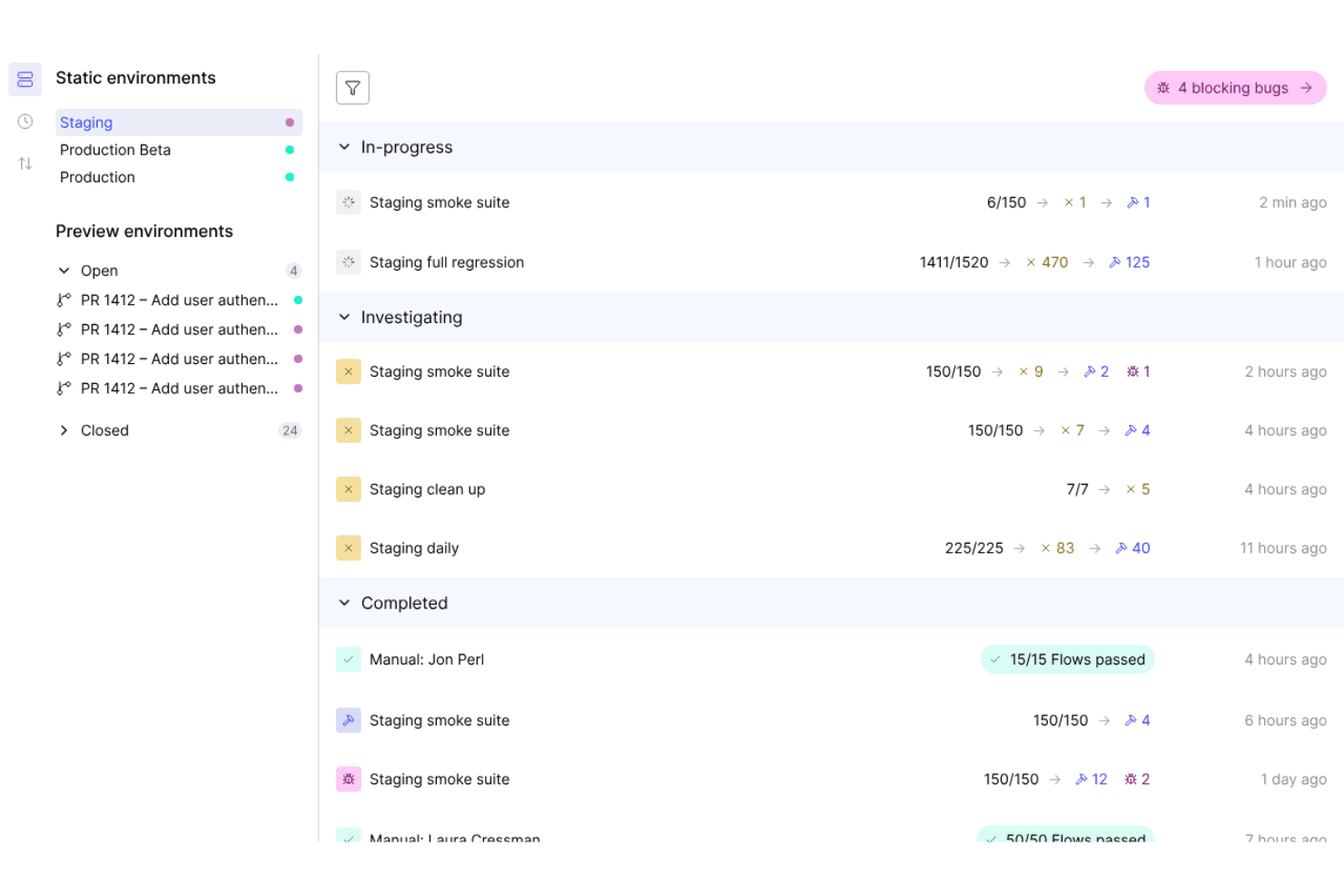
QA Wolf is easy to adopt because it removes most of the hands-on work typically required for test automation. Instead of learning a new framework or maintaining test scripts, your team works directly with QA Wolf’s engineers through a shared Slack or Teams channel. The platform itself is clean and transparent, but most interactions happen through collaboration—reviewing test results, requesting coverage, and triaging bugs. This makes it accessible to both technical and non-technical stakeholders, while still giving developers full visibility into test code and failures.
Integrations
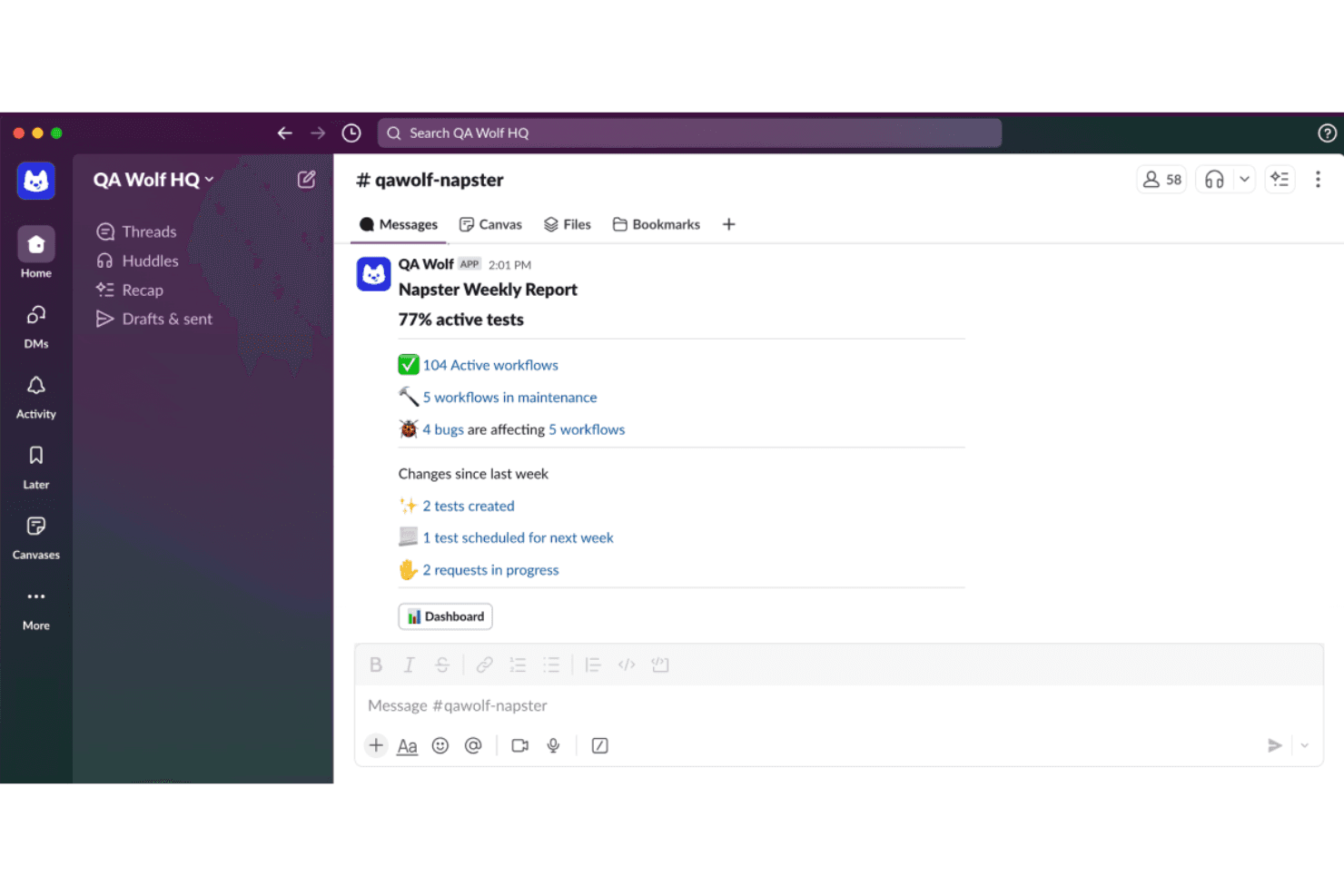
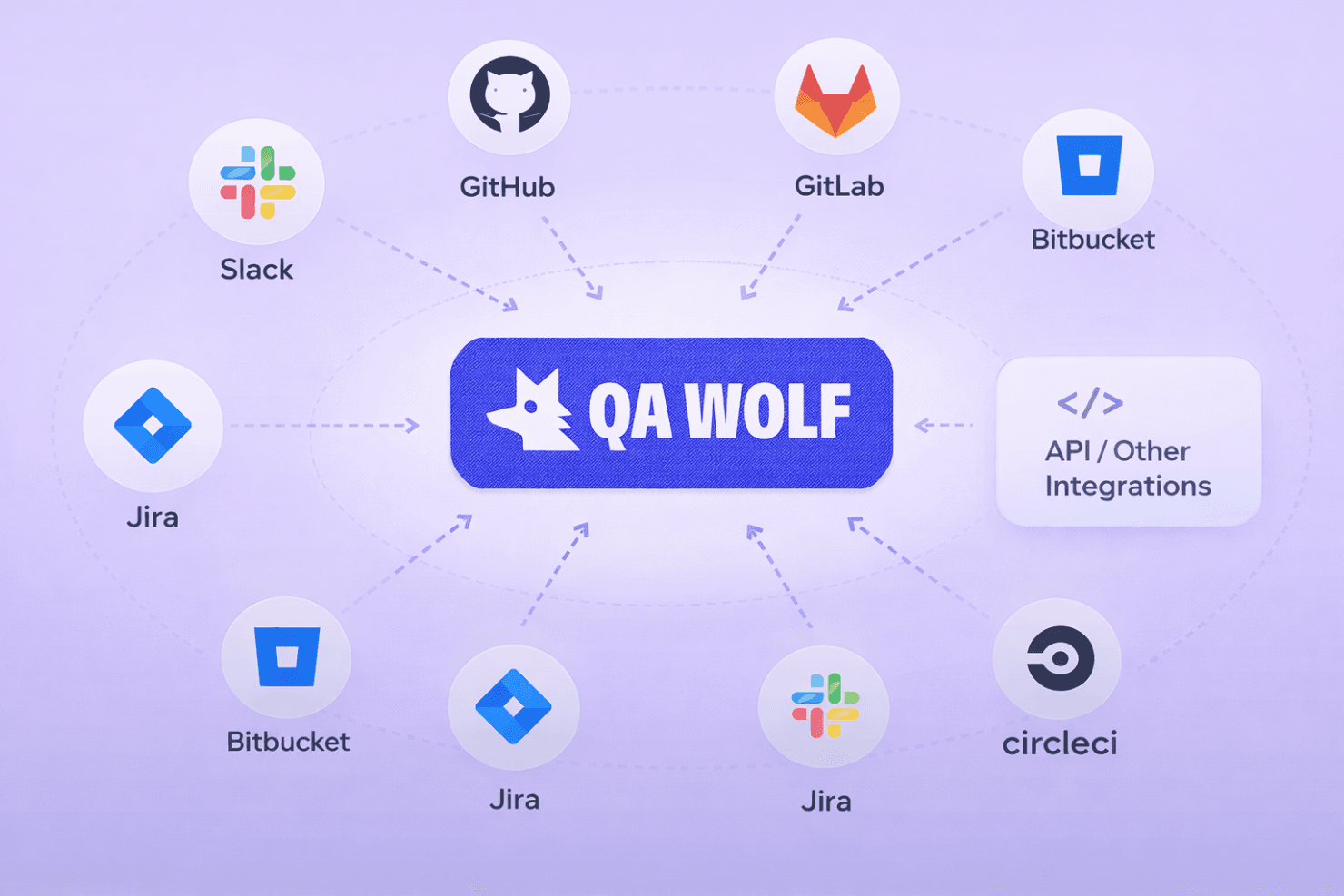
QA Wolf integrates with GitHub, GitLab, Bitbucket, Slack, Jira, CircleCI, and other CI/CD tools..
They also offer an API and support connections with third-party integration tools.
QA Wolf Specs
- A/B Testing: No
- API: Yes
- Automated Testing: No
- Browser Compatibility Testing: No
- Bug Tracking: Yes
- Calendar Management: Yes
- CI/CD Integration: No
- Dashboard: Yes
- Data Export: Yes
- Data Import: Yes
- Data Visualization: Yes
- Developer Tools: No
- External Integrations: Yes
- History/Version Control: No
- Manual Testing: No
- Multi-User: Yes
- Notifications: Yes
- Performance Testing: No
- Regression Testing: No
- Scheduling: Yes
- Status Notifications: No
- Third-Party Plugins/Add-Ons: Yes


