


QA.tech vs. QA Wolf: Comparación y Reseñas de Expertos para 2026
Comparo QA.tech y QA Wolf en cuanto a automatización, flujos de trabajo de pruebas y adaptación al equipo para ayudarte a decidir cuál solución de pruebas de extremo a extremo se adapta mejor a tus necesidades en 2026.

Revisamos herramientas de forma independiente y las comisiones ayudan a financiar nuestras pruebas. Consulta nuestra política de transparencia, nuestra metodología o sugiere una herramienta.
Keeping your test coverage reliable gets harder as applications grow and testing demands increase. The right testing platform should reduce manual maintenance while helping teams catch issues before they reach production.
If you're comparing end-to-end testing tools, QA.tech and QA Wolf both use AI to improve software testing, but they take different approaches. QA.tech uses autonomous AI agents that create and run tests based on application context, while QA Wolf combines AI-powered testing with a managed QA service that creates, runs, and maintains tests on your behalf.
In this comparison, I'll break down QA.tech and QA Wolf across features, pricing, security, usability, and use cases to help you decide which platform best fits your team's testing needs.
QA.tech
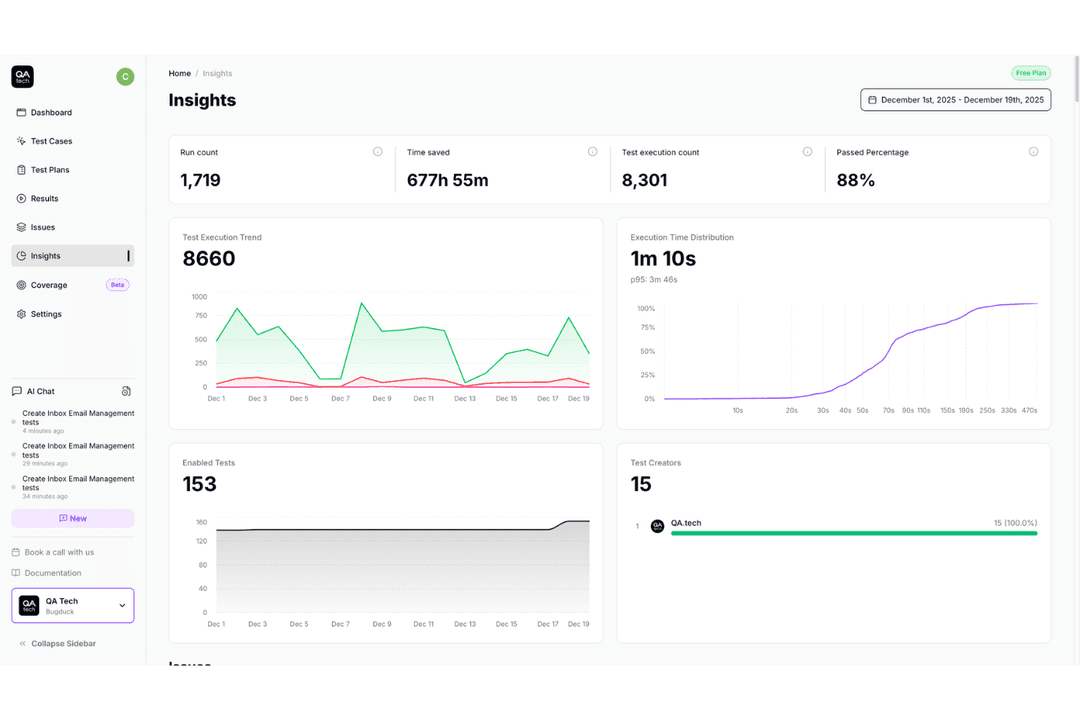
4.8/5
- Free demo available
- Pricing upon request
QA Wolf
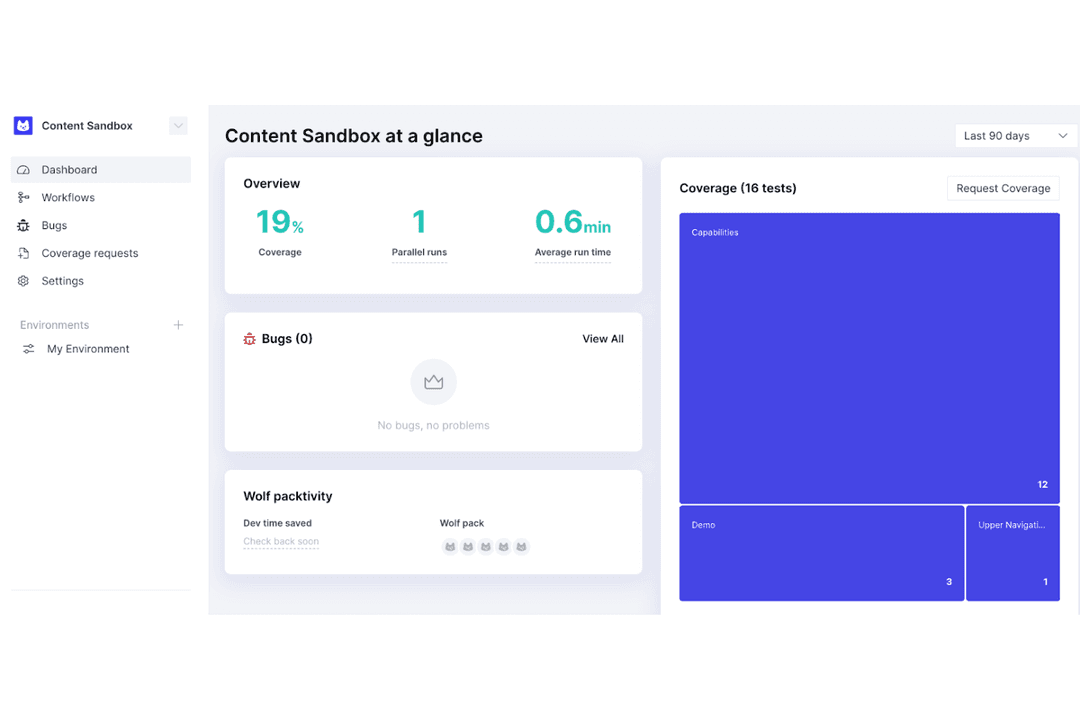
4.9/5
- Free demo available
- From 1¢/AI credit
Por qué confiar en nuestras recomendaciones de software
6,700+
Reviews
20
Industry experts
16+
Evaluation factors
14
Years
Nuestro equipo lleva probando y evaluando software desde 2012. Como líderes tecnológicos, sabemos lo difícil —y lo importante— que es elegir el software adecuado.
Para esta guía, evaluamos las herramientas mediante pruebas prácticas e investigación independiente, puntuando las herramientas según nuestros criterios de selección.
Nuestras reseñas reflejan nuestro criterio editorial humano, no un discurso de ventas.
Revisores expertos:
- Paulo Gardini MiguelDirector técnico
 Tim FisherVP de IA
 Gabriel RosasTech Lead y arquitecto de software
 Christhian GruhnTech Lead y arquitecto de plataforma

| QA.tech | QA Wolf | |
|---|---|---|
| Free Trial | Free demo available | Free demo available |
| Pricing | Pricing upon request | From 1¢/AI credit |
QA.tech Vs. QA Wolf: Precios y Costos Ocultos
QA.tech y QA Wolf utilizan precios basados en cotización, pero estructuran el valor de manera diferente. QA.tech ofrece planes Starter, Growth y Enterprise que escalan según usuarios, ejecuciones de pruebas en paralelo, entornos, integraciones, necesidades de seguridad y nivel de soporte. QA Wolf, por otro lado, utiliza un modelo de precios basado en cobertura vinculado a su servicio de QA gestionado, en el que el precio incluye la plataforma, la infraestructura de pruebas y el soporte de QA, en lugar de solo el acceso al software.
Al comparar los costos, considera cuánto control sobre las pruebas deseas que tenga tu equipo. QA.tech puede ser adecuado para equipos que buscan escalar pruebas impulsadas por IA dentro de su flujo de trabajo de ingeniería, mientras que el precio de QA Wolf refleja un modelo de servicio más gestionado. Ten en cuenta la frecuencia de lanzamientos, necesidades de cobertura, recursos internos de QA y requisitos de soporte antes de tomar una decisión.
| QA.tech | QA Wolf | |
|---|---|---|
| A/B Testing | No | No |
| API | Yes | Yes |
| Automated Testing | Yes | No |
| Browser Compatibility Testing | Yes | No |
| Bug Tracking | Yes | Yes |
| Calendar Management | No | Yes |
| CI/CD Integration | Yes | No |
| Dashboard | Yes | Yes |
| Data Export | Yes | Yes |
| Data Import | Yes | Yes |
| Data Visualization | Yes | Yes |
| Developer Tools | Yes | No |
| External Integrations | Yes | Yes |
| History/Version Control | Yes | No |
| Manual Testing | No | No |
| Multi-User | Yes | Yes |
| Notifications | Yes | Yes |
| Performance Testing | No | No |
| Regression Testing | Yes | No |
| Scheduling | Yes | Yes |
| Status Notifications | Yes | No |
| Third-Party Plugins/Add-Ons | Yes | Yes |
| Integración | QA.tech | QA Wolf |
|---|---|---|
| IntegraciónGitHub | QA.tech✅ | QA Wolf✅ |
| IntegraciónGitLab | QA.tech✅ | QA Wolf✅ |
| IntegraciónSlack | QA.tech✅ | QA Wolf✅ |
| IntegraciónJira | QA.tech✅ | QA Wolf✅ |
| IntegraciónCircleCI | QA.tech✅ | QA Wolf❌ |
| IntegraciónAzure DevOps | QA.tech✅ | QA Wolf✅ |
| IntegraciónMicrosoft Teams | QA.tech✅ | QA Wolf✅ |
| IntegraciónLinear | QA.tech✅ | QA Wolf✅ |
| IntegraciónTestRail | QA.tech❌ | QA Wolf✅ |
| IntegraciónAPI | QA.tech✅ | QA Wolf✅ |
Ambos, QA.tech y QA Wolf, se integran con las principales herramientas de desarrollo, colaboración y CI/CD para ayudar a los equipos a conectar las pruebas con sus flujos de trabajo existentes. QA.tech ofrece una cobertura de integración directa más amplia para pipelines de ingeniería y gestión de incidencias, mientras que QA Wolf se enfoca en conectar su flujo de pruebas gestionado con las herramientas que los equipos ya utilizan para hacer seguimiento de lanzamientos, bugs y el progreso del desarrollo.
| Factor | QA.tech | QA Wolf |
|---|---|---|
| FactorCifrado de datos | QA.techCifrado AES-256 en reposo y cifrado TLS 1.2/1.3 en tránsito. | QA WolfCifra los datos en reposo y en tránsito usando protocolos de seguridad modernos. |
| FactorCumplimiento normativo | QA.techCertificado SOC 2 Tipo II, cumple con GDPR, residencia de datos únicamente en la UE y con ISO 27001 en la hoja de ruta. | QA WolfCumple con SOC 2 Tipo II y HIPAA, con informes de auditoría disponibles. |
| FactorGarantía de disponibilidad | QA.techSoporte respaldado por SLA, ejecución paralela de pruebas gestionadas e ingeniería de fiabilidad empresarial. | QA WolfArquitectura de alta disponibilidad con conmutación por error automatizada y monitorización en tiempo real. |
| FactorControles de acceso | QA.techMFA obligatorio, SAML SSO, controles de acceso basados en roles y gestión de acceso a equipos. | QA WolfAcceso basado en roles, controles de mínimo privilegio, revisiones de usuarios y SSO mediante WorkOS. |
| FactorGestión de seguridad | QA.techSistema completo de gestión de seguridad de la información (ISMS), revisiones de seguridad y pruebas sin necesidad de acceso al código fuente. | QA WolfClasificación de datos, políticas de retención y procesos de respuesta ante brechas de seguridad. |
Ambas plataformas ofrecen bases sólidas de seguridad, incluyendo cifrado, controles de acceso, SSO y programas de cumplimiento. QA.tech destaca por su certificado SOC 2 Tipo II, cumplimiento con GDPR, residencia de datos solo en la UE y posibilidad de pruebas sin acceso al código fuente. QA Wolf combina el cumplimiento SOC 2 Tipo II y HIPAA con controles de privacidad de datos y prácticas de fiabilidad que respaldan su servicio de QA gestionado.
La mayoría de los equipos de software tendrán una cobertura de seguridad sólida con cualquiera de las dos plataformas. QA.tech puede ser la opción adecuada para equipos que priorizan las pruebas autónomas sin acceso al código fuente, mientras que QA Wolf puede ser mejor para equipos que buscan soporte de QA gestionado con altos requisitos de cumplimiento.
| Factor | QA.tech | QA Wolf |
|---|---|---|
| FactorInterfaz de usuario | QA.techEspacio de trabajo conversacional para crear, editar y administrar pruebas con agentes de IA. | QA WolfInterfaz de plataforma con colaboración continua a través de ingenieros de QA y canales compartidos. |
| FactorIncorporación | QA.techIncorporación guiada con ingenieros de soluciones, talleres y soporte de configuración. | QA WolfIncorporación guiada con ingenieros de QA que ayudan a construir la cobertura de pruebas y configurar los flujos de trabajo. |
| FactorMantenimiento de pruebas | QA.techAgentes de IA gestionan las pruebas según objetivos y contexto de la aplicación en lugar de scripts fijos. | QA WolfLas pruebas son creadas y mantenidas por el equipo de QA Wolf usando IA y supervisión humana. |
| FactorSoporte | QA.techCorreo electrónico, canales de Slack/Teams, ingenieros de soluciones y opciones de soporte Enterprise. | QA WolfEquipo de QA integrado que brinda soporte continuo y mantenimiento de pruebas. |
| FactorCurva de aprendizaje | QA.techRequiere que los equipos se adapten a dirigir agentes de IA en vez de crear manualmente las pruebas. | QA WolfModelo colaborativo con canales compartidos y apoyo continuo del equipo de QA. |
QA.tech y QA Wolf están diseñados para simplificar las pruebas end-to-end, pero lo hacen de maneras diferentes. QA.tech reduce el trabajo manual a través de agentes de IA autónomos que crean y mantienen pruebas según el contexto de la aplicación, mientras que QA Wolf disminuye el esfuerzo interno de QA combinando su plataforma con un equipo de QA dedicado.
Si buscas un enfoque guiado por agentes que mantenga las pruebas dentro del flujo de trabajo de tu equipo de ingeniería, QA.tech puede ser la opción más adecuada. Si prefieres un proceso de pruebas completamente gestionado y colaborativo, QA Wolf proporciona mayor soporte de ingenieros de QA.
QA.tech
- AI agents automate end-to-end test creation and execution
- Strong CI/CD integrations with automated pull request testing
- Parallel test execution speeds up regression testing workflows
- Limited cross-browser testing beyond Chromium
- Tests cannot be exported as code-based scripts
- Teams may need time to adapt to autonomous testing workflows
QA Wolf
- AI generates and maintains tests, reducing manual testing and QA workload significantly.
- 100% parallel test execution delivers fast results within minutes.
- Platform-enabled service eliminates the need for in-house automation expertise.
- Less control over test logic compared to fully in-house frameworks.
- Requires trust in the external team to manage critical QA processes.
- Onboarding may require coordination and an initial knowledge transfer effort.
QA.tech
- B2B SaaS CompaniesSaaS companies can use QA.tech to maintain test coverage across frequent product releases and changing application workflows.
- Software Development CompaniesDevelopment teams can automate end-to-end testing and integrate quality checks directly into CI/CD and pull request workflows.
- Fintech CompaniesFintech companies can validate critical user flows involving accounts, transactions, and complex authentication requirements.
- Healthtech PlatformsHealthtech platforms can automate regression testing as their applications, features, and user workflows continue to evolve.
- HR Tech and Recruiting PlatformsHR and recruiting platforms can test multi-step processes like onboarding, profiles, and user management across different roles.
- Ecommerce BusinessesEcommerce businesses can validate important customer journeys like account flows and checkout experiences during frequent updates.
QA Wolf
- High-Growth SaaS TeamsRapid release cycles benefit from fast, parallel test execution and continuous maintenance across evolving product features.
- Product-Led Companies Shipping FrequentlyRun full regression suites on every deploy without slowing down engineering velocity or delaying feature rollouts.
- Teams Struggling with Flaky or Broken TestsQA Wolf handles ongoing test maintenance, eliminating common reliability issues and reducing debugging time for engineers.
- Companies Without Dedicated QA Automation EngineersOffload test creation, debugging, and maintenance to a fully managed QA team without hiring specialized resources.
- Multi-Platform Products (Web + Mobile)Supports complex workflows across web, iOS, and Android with shared coverage and consistent testing across environments.
- Engineering TeamsReduce QA time from hours to minutes with fully parallel test infrastructure and faster feedback loops for developers.
¿Quién debería usar QA.tech y quién debería usar QA Wolf?
Si deseas escalar las pruebas end-to-end manteniendo los flujos de pruebas dentro de tu equipo de ingeniería, yo elegiría QA.tech. Es muy adecuado si ya utilizas pipelines CI/CD y deseas agentes autónomos de IA que comprendan el contexto de tu aplicación, creen pruebas a partir de objetivos de usuario y validen cambios sin depender de scripts de prueba tradicionales. Si tu objetivo es aumentar la cobertura de pruebas mientras reduces la creación y el mantenimiento manual de pruebas, QA.tech está bien alineado con esa meta.
QA Wolf es más apropiado si quieres un enfoque gestionado para la automatización de QA sin tener que construir todo el proceso de pruebas internamente. Su plataforma combina pruebas impulsadas por IA con un equipo dedicado de QA que crea, ejecuta, verifica y mantiene pruebas en tu nombre. Si prefieres un modelo orientado al servicio con supervisión humana y a la vez tener visibilidad de los resultados y la cobertura, QA Wolf se ajusta mejor a ese flujo de trabajo.
| QA.tech | QA Wolf | |
|---|---|---|
| Execution Model | QA.tech Runs agent-driven testing workflows with parallel execution and PR validation. | QA Wolf Provides fully managed cloud execution with parallel test runs and QA review. |
| Team Involvement | QA.tech Requires teams to define testing goals and guide AI agents as part of their workflow. | QA Wolf Reduces internal QA involvement by providing engineers who manage testing operations. |
| Test Authoring | QA.tech Uses autonomous AI agents that create and run tests based on user goals and application context. | QA Wolf Combines AI testing workflows with a managed QA team that creates and maintains tests. |
| Test Framework | QA.tech Tests are created and maintained through QA.tech’s agent-based testing system using application context. | QA Wolf Uses open-source Playwright and Appium tests that can be exported. |
| Test Ownership | QA.tech Teams guide AI agents and manage testing within their engineering workflows. | QA Wolf QA Wolf engineers handle test creation, verification, and ongoing maintenance. |
| Cloud-Based Platform | Both provide cloud-based test execution to help teams run and manage end-to-end testing workflows. |
|---|---|
| Development Integrations | Both connect with common development, CI/CD, and collaboration tools to support existing engineering workflows. |
| Parallel Test Runs | Both support parallel test execution to help teams shorten feedback cycles and speed up regression testing. |
| Security Controls | Both provide security features such as encryption, access management options, and SOC 2 compliance for managing testing data. |
| Test Reporting | Both provide test results, failure details, and reporting tools to help teams investigate issues and track testing outcomes. |