
QA Wolf Testbericht: Vorteile, Nachteile, Funktionen und Preise erklärt
QA Wolf ist eine KI-gestützte End-to-End-Testlösung, die automatisierte Testerstellung, -durchführung und -pflege mit einem vollständig verwalteten QA-Service kombiniert.

Wir bewerten Tools unabhängig; Provisionen helfen, unsere Tests zu finanzieren. Siehe unsere Transparenzrichtlinie und unsere Methodik.
QA Wolf is an end to end testing tool built for engineering teams that need automated test coverage without the overhead of writing and maintaining a test suite in-house. If your team keeps deprioritizing QA because no one has the bandwidth to own it, QA Wolf is worth a close look. Unlike Cypress, which requires your team to write and manage tests themselves, QA Wolf handles test creation and maintenance for you—making it the stronger choice when engineering capacity is the real constraint.
QA Wolf Evaluation Summary
4.9/5
- From 1¢/AI credit
- Free demo available
Warum Sie unseren Software-Empfehlungen vertrauen können
6,700+
Reviews
20
Industry experts
16+
Evaluation factors
14
Years
Unser Team testet und bewertet Software seit 2012. Als Tech-Führungskräfte wissen wir selbst, wie schwierig – und wichtig – es ist, die richtige Software auszuwählen.
Für diesen Leitfaden haben wir Tools mithilfe von praktischen Tests und unabhängiger Recherche bewertet und dabei unsere Bewertungskriterien angewendet.
Unsere Bewertungen spiegeln unser menschliches redaktionelles Urteilsvermögen wider, keine Verkaufsstrategie.
Expertenprüfer:
- Paulo Gardini MiguelTech-Direktor
 Tim FisherVP für KI
 Gabriel RosasTech Lead & Software-Architekt
 Christhian GruhnTech Lead & Plattform-Architekt

QA Wolf Overview
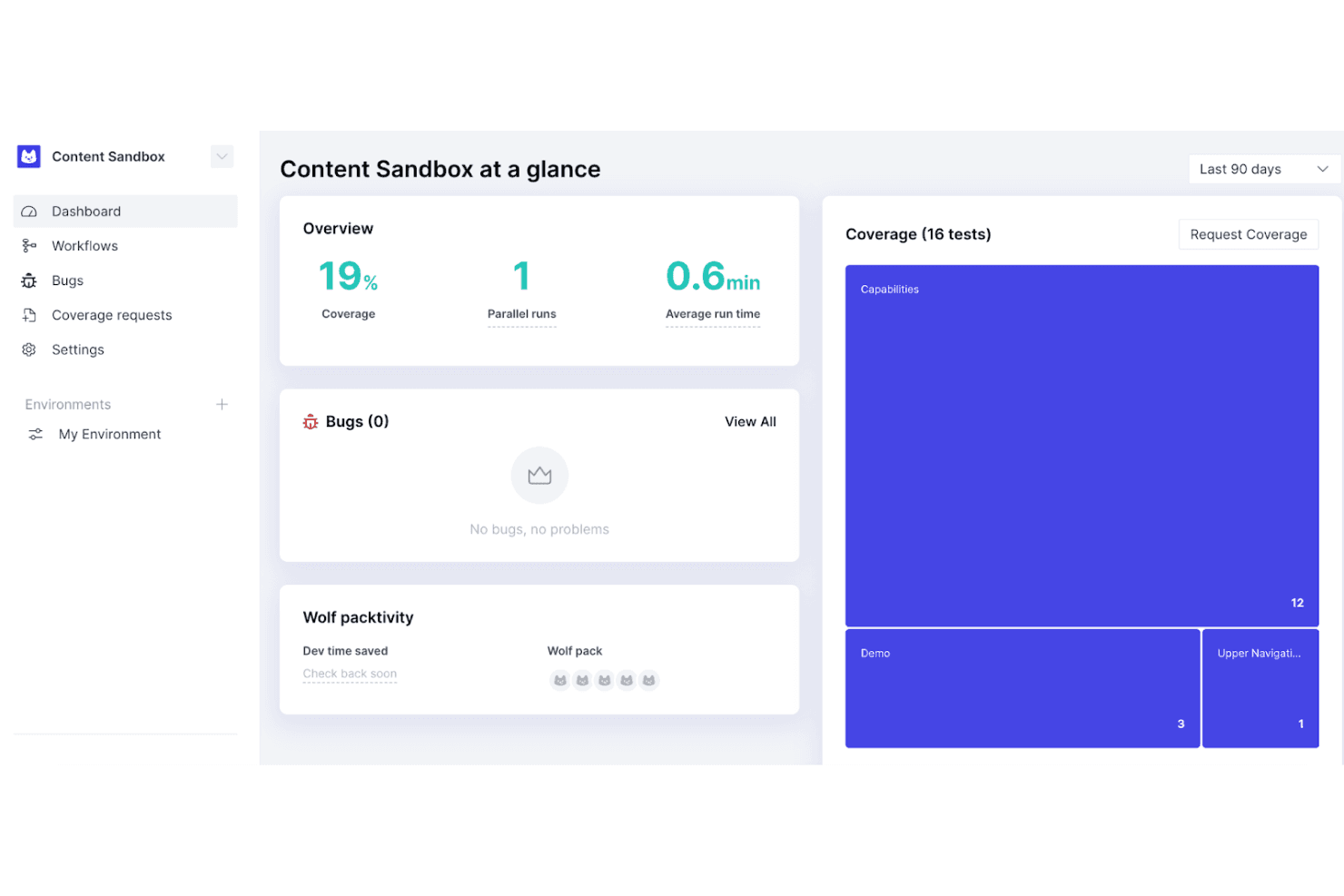
What makes QA Wolf stand out isn’t just that it goes beyond automated testing: It combines AI, infrastructure, and human QA into a single system. Its platform uses AI agents to map user flows, generate production-grade Playwright and Appium test cases, and continuously maintain them as your product changes. Those tests run in fully parallel environments, delivering results in minutes instead of hours.
On top of that, QA Wolf layers in a dedicated QA team that monitors failures, reproduces bugs with detailed logs and video, and updates tests on your behalf. This “coverage-as-a-service” model means that on top of a tool, you’re outsourcing the most time-consuming parts of QA while still retaining visibility and control through integrations with your CI/CD pipeline, Slack, and issue tracker.
Pros
- AI generates and maintains tests, reducing manual testing and QA workload significantly.
- 100% parallel test execution delivers fast results within minutes.
- Platform-enabled service eliminates the need for in-house automation expertise.
Cons
- Less control over test logic compared to fully in-house frameworks.
- Requires trust in the external team to manage critical QA processes.
- Onboarding may require coordination and an initial knowledge transfer effort.
Is QA Wolf Right For Your Needs?
Who Would be a Good Fit for QA Wolf?
QA Wolf is a strong fit for teams that want to eliminate the ongoing burden of test automation and get reliable end-to-end coverage without building and maintaining it themselves. Its combination of AI-driven test creation, fully parallel execution, and dedicated QA engineers makes it especially valuable for teams that ship frequently and can’t afford slow QA cycles or flaky tests. If your current test suite is unreliable—or you don’t have one at all—QA Wolf can help you move faster while maintaining confidence in every release.
- High-Growth SaaS TeamsRapid release cycles benefit from fast, parallel test execution and continuous maintenance across evolving product features.
- Product-Led Companies Shipping FrequentlyRun full regression suites on every deploy without slowing down engineering velocity or delaying feature rollouts.
- Teams Struggling with Flaky or Broken TestsQA Wolf handles ongoing test maintenance, eliminating common reliability issues and reducing debugging time for engineers.
- Companies Without Dedicated QA Automation EngineersOffload test creation, debugging, and maintenance to a fully managed QA team without hiring specialized resources.
- Multi-Platform Products (Web + Mobile)Supports complex workflows across web, iOS, and Android with shared coverage and consistent testing across environments.
- Engineering TeamsReduce QA time from hours to minutes with fully parallel test infrastructure and faster feedback loops for developers.
Who Would be a Bad Fit for QA Wolf?
QA Wolf isn’t a great fit for teams that want full ownership of their testing stack or need highly customized, self-managed workflows. Because it’s a platform-enabled service, you’re trading flexibility and control for speed and convenience. If your team requires on-prem infrastructure, strict data controls, or deep customization of test frameworks, QA Wolf’s managed approach may feel limiting.
- Large EnterprisesTeams with established automation frameworks may prefer maintaining full control and internal workflows.
- Security- or Compliance-Heavy IndustriesStrict data residency or infrastructure requirements may conflict with QA Wolf’s cloud-based execution model.
- Teams Requiring Full Control Over Test LogicHighly customized testing frameworks and bespoke scripts may be harder to implement or manage.
- On-Premises EnvironmentsQA Wolf is designed for cloud execution, not fully isolated or on-prem setups.
- Cost-Sensitive or Early-Stage ProjectsThe managed service model may be expensive compared to open-source or DIY solutions.
- In-House QA Ownership NeedsOrganizations wanting to build internal quality assurance expertise may prefer keeping testing fully in-house.
Unsere Bewertungsmethodik
Wie wir Werkzeuge testen & bewerten
Wir haben Jahre damit verbracht, unser System zur Softwareprüfung und -bewertung aufzubauen, zu verfeinern und zu verbessern. Das Bewertungsraster ist darauf ausgelegt, die Feinheiten der Softwareauswahl und Effektivität eines Tools einzufangen, wobei wir uns auf kritische Aspekte des Entscheidungsprozesses konzentrieren.
Nachfolgend sehen Sie genau, wie unser Test- und Bewertungssystem anhand von sieben Kriterien funktioniert. Es ermöglicht uns eine unparteiische Bewertung der Software basierend auf Grundfunktionalität, besonderen Funktionen, Benutzerfreundlichkeit, Onboarding, Kundensupport, Integrationen, Kundenbewertungen und Preis-Leistungs-Verhältnis.
Grundfunktionalität (25 % der Endbewertung)
Der Ausgangspunkt unserer Bewertung ist immer die Grundfunktionalität des Werkzeugs. Verfügt es über die grundlegenden Funktionen und Merkmale, die ein Benutzer erwarten würde? Sind grundlegende Funktionen auf höherpreisige Tarife beschränkt? Im Kern erwarten wir, dass ein Tool den Basisfähigkeiten seiner Konkurrenten standhält.
Besondere Features (25 % der Endbewertung)
Anschließend bewerten wir ungewöhnliche, herausragende Funktionen, die über die typische Grundfunktionalität von Tools dieser Art hinausgehen. Eine hohe Bewertung zeigt spezialisierte oder einzigartige Eigenschaften, die das Produkt schneller, effizienter oder für den Nutzer wertvoller machen.
Wir bewerten außerdem, wie einfach sich das Tool mit anderen üblichen Werkzeugen im Technologie-Stack integrieren lässt, um die Funktionalität und den Nutzen der Software zu erweitern. Tools mit vielen nativen Integrationen, Drittanbieter-Anbindungen und API-Zugang zur Erstellung kundenspezifischer Integrationen erhalten die besten Bewertungen.
Benutzerfreundlichkeit (10 % der Endbewertung)
Wir betrachten, wie schnell und einfach Aufgaben aus dem Bereich der Grundfunktionalität mit dem Tool erledigt werden können. Gut bewertete Software ist durchdacht gestaltet, intuitiv bedienbar, bietet mobile Apps, Vorlagen und lässt relativ komplexe Aufgaben einfach erscheinen.
Onboarding (10 % der Endbewertung)
Wir wissen, wie wichtig die schnelle Einführung eines neuen Tools für das Team ist, daher bewerten wir, wie leicht sich ein Werkzeug mit minimalem Training erlernen und nutzen lässt. Wir bewerten, wie schnell ein Teammitglied ohne Vorerfahrung anfangen kann. Hoch bewertete Lösungen benötigen wenig bis gar keine Unterstützung.
Kundensupport (10 % der Endbewertung)
Wir prüfen, wie schnell und einfach man bei Problemen Hilfe per Telefon, Live-Chat oder Wissensdatenbank erhält. Tools und Anbieter mit Echtzeit-Support werden besser bewertet, während Chatbots schlechter abschneiden.
Kundenbewertungen (10 % der Endbewertung)
Neben unserer eigenen Prüfung beziehen wir den Net Promoter Score aktueller und ehemaliger Kunden mit ein. Wir bewerten, wie wahrscheinlich es ist, dass sie sich erneut für das Werkzeug entscheiden würden. Hoch bewertete Software weist einen hohen Net Promoter Score auf.
Preis-Leistungs-Verhältnis (10 % der Endbewertung)
Abschließend vergleichen wir unter Berücksichtigung aller Kriterien den durchschnittlichen Preis der Einstiegspakete mit den Grundfunktionen und bewerten den Mehrwert aus den anderen Bewertungsbereichen. Software, die mehr fürs gleiche Geld bietet, schneidet besser ab.
Core Features
Fully Managed Test Creation
QA Wolf’s QA engineers build, run, and continuously update your end-to-end tests. This removes the need for in-house automation expertise and eliminates ongoing maintenance overhead.
Unlimited Test Runs
Run your entire test suite simultaneously with no limits on executions. This dramatically reduces QA time and enables fast, continuous deployments.
Zero-Flake Testing with Human Verification
QA Wolf combines AI detection with human review to separate real bugs from flaky tests. This ensures reliable, actionable results without false positives.
Open Source Test Code
All tests are written in Playwright or Appium and are fully exportable. You retain ownership of your test suite with no vendor lock-in.
Fast Onboarding and Coverage
QA Wolf delivers 80% automated test coverage for web and mobile apps in just weeks. This helps team members quickly reach high confidence in releases.
Human-Verified Bug Reports
Every failure is investigated and reproduced by QA engineers before being reported. Bug reports include clear steps, logs, and video playback.
Ease of Use
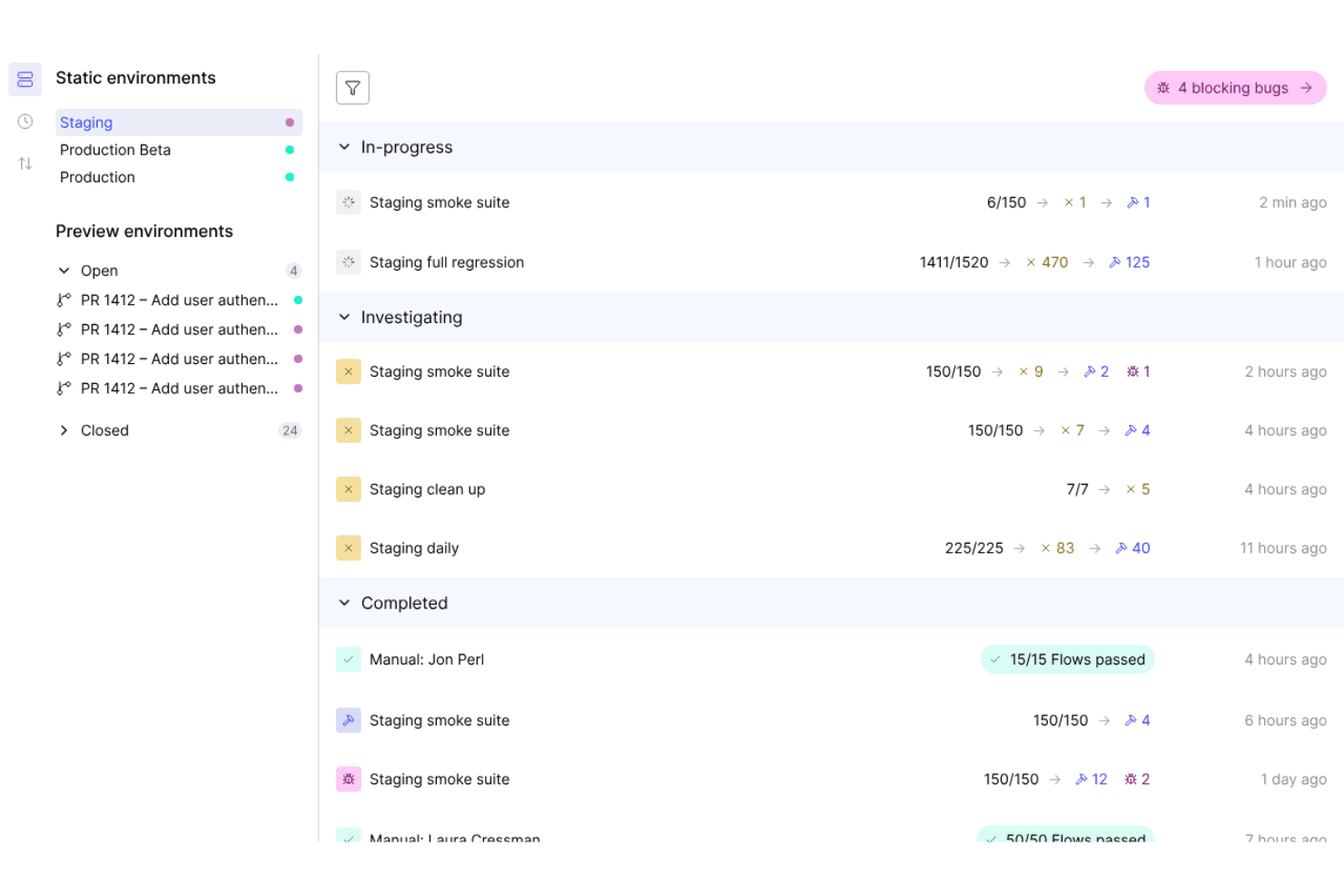
QA Wolf is easy to adopt because it removes most of the hands-on work typically required for test automation. Instead of learning a new framework or maintaining test scripts, your team works directly with QA Wolf’s engineers through a shared Slack or Teams channel. The platform itself is clean and transparent, but most interactions happen through collaboration—reviewing test results, requesting coverage, and triaging bugs. This makes it accessible to both technical and non-technical stakeholders, while still giving developers full visibility into test code and failures.
Integrations
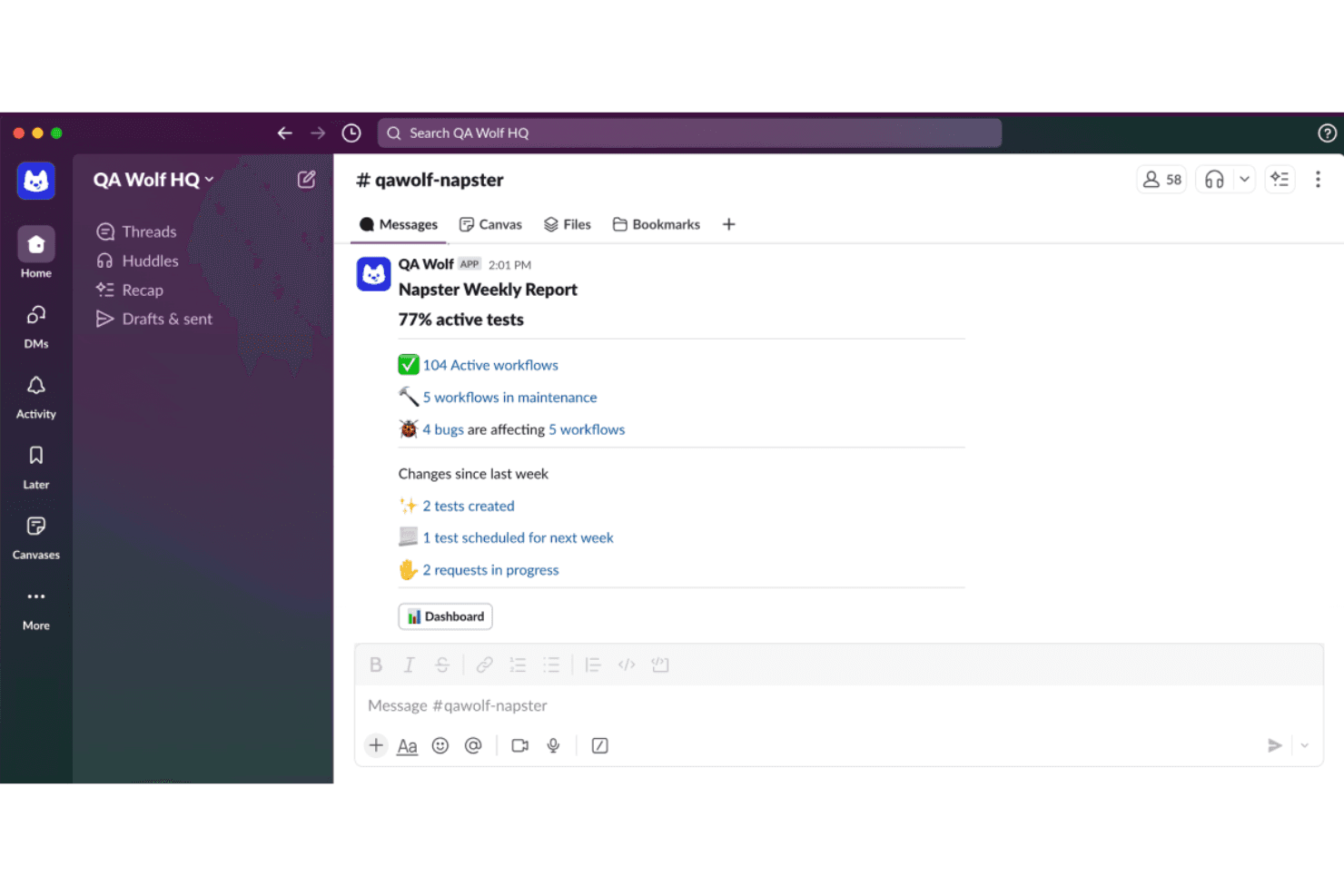
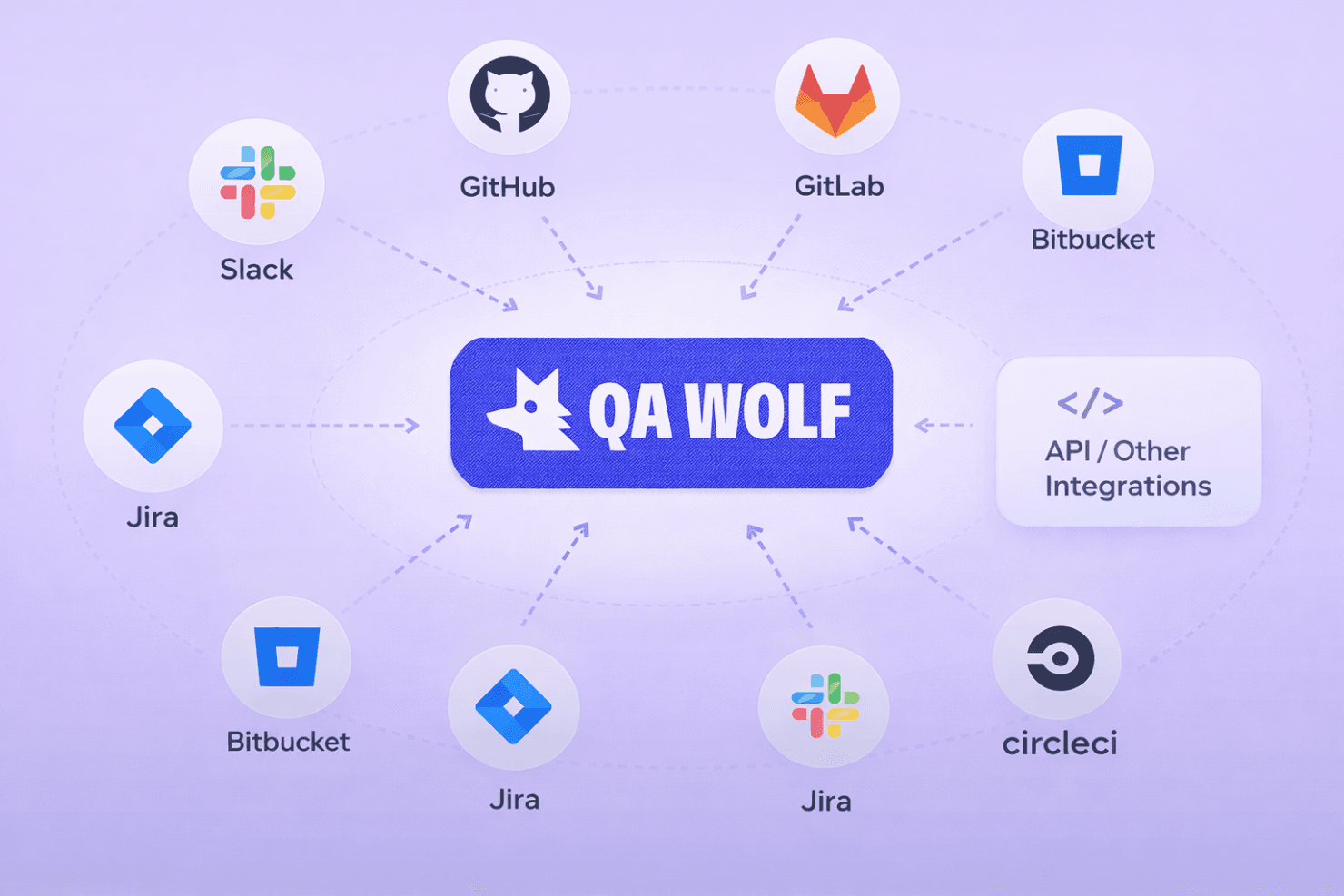
QA Wolf integrates with GitHub, GitLab, Bitbucket, Slack, Jira, CircleCI, and other CI/CD tools..
They also offer an API and support connections with third-party integration tools.
QA Wolf Specs
- A/B Testing: No
- API: Yes
- Automated Testing: No
- Browser Compatibility Testing: No
- Bug Tracking: Yes
- Calendar Management: Yes
- CI/CD Integration: No
- Dashboard: Yes
- Data Export: Yes
- Data Import: Yes
- Data Visualization: Yes
- Developer Tools: No
- External Integrations: Yes
- History/Version Control: No
- Manual Testing: No
- Multi-User: Yes
- Notifications: Yes
- Performance Testing: No
- Regression Testing: No
- Scheduling: Yes
- Status Notifications: No
- Third-Party Plugins/Add-Ons: Yes


