

Elastic Bewertung: Vorteile, Nachteile, Funktionen und Preise
Elastic überzeugt mit seinen skalierbaren Suchfunktionen und ist daher die erste Wahl für datengetriebene Teams, die eine umfassende Analyse im DataOps-Bereich benötigen.

Wir bewerten Tools unabhängig; Provisionen helfen, unsere Tests zu finanzieren. Siehe unsere Transparenzrichtlinie und unsere Methodik.
Elastic is a DataOps tool built around search, log management, and real-time analytics across infrastructure, application, and security data. I'd primarily consider it if your team needs to query and monitor high-volume data without locking into a proprietary platform. Compared to Splunk, Elastic gives you more flexibility over your data pipeline and lower licensing costs at scale. That tradeoff matters most when ingestion volumes are high and your team has the technical depth to manage the stack.
Elastic Evaluation Summary
0/5
- From $0.07/GB data ingested
- Free trial + free demo available
Warum Sie unseren Software-Empfehlungen vertrauen können
6,700+
Reviews
20
Industry experts
16+
Evaluation factors
14
Years
Unser Team testet und bewertet Software seit 2012. Als Tech-Führungskräfte wissen wir selbst, wie schwierig – und wichtig – es ist, die richtige Software auszuwählen.
Für diesen Leitfaden haben wir Tools mithilfe von praktischen Tests und unabhängiger Recherche bewertet und dabei unsere Bewertungskriterien angewendet.
Unsere Bewertungen spiegeln unser menschliches redaktionelles Urteilsvermögen wider, keine Verkaufsstrategie.
Expertenprüfer:
- Paulo Gardini MiguelTech-Direktor
 Tim FisherVP für KI
 Gabriel RosasTech Lead & Software-Architekt
 Christhian GruhnTech Lead & Plattform-Architekt

Elastic Overview
In my opinion, Elastic is a solid choice for teams looking for scalable data management solutions. It shines with its powerful search capabilities and flexibility across different environments, making it a strong contender against other DataOps tools. However, some users might find the onboarding process a bit challenging. It's best suited for data-intensive industries like finance or healthcare, where handling large datasets is crucial. If you're evaluating DataOps tools, Elastic should be on your shortlist due to its comprehensive feature set and competitive pricing.
Pros
- Handles large volumes of data with scalable search capabilities.
- Fits well across on-premise and cloud environments.
- Near real-time observability with sub-second query latency.
- Rich AI and ML capabilities.
Cons
- The onboarding process may be a bit complex.
- Steep learning curve requiring expertise in Query DSL and cluster operations.
- High resource demand for RAM and CPU.
- Customer support response times could be improved.
Is Elastic Right For Your Needs?
Who Would be a Good Fit for Elastic?
Elastic is well-suited for data-intensive industries like finance, healthcare, and e-commerce, where handling large datasets is crucial. If your team needs scalable search capabilities and flexibility in data management, Elastic is a strong option. It’s particularly beneficial for businesses that require robust data analysis tools to make informed decisions quickly. Elastic's functionalities allow you to process and search through vast amounts of data efficiently, making it a valuable tool for data engineering and operations teams aiming to enhance their data handling capabilities.
- Finance TeamsElastic is ideal for finance teams needing to analyze large datasets for insights and forecasting.
- E-commerce BusinessesProvides superior, relevance-scored full-text search (handling synonyms, misspellings, and AI-powered vector search) crucial for product discovery and improving customer support portals.
- Healthcare ProvidersHealthcare providers benefit from Elastic's ability to handle vast amounts of patient data securely and effectively.
- Large EnterprisesElastic's scalable architecture makes it a good fit for large enterprises with extensive data operations.
- Data Engineering DepartmentsData engineering departments can leverage Elastic for its powerful data processing and search capabilities.
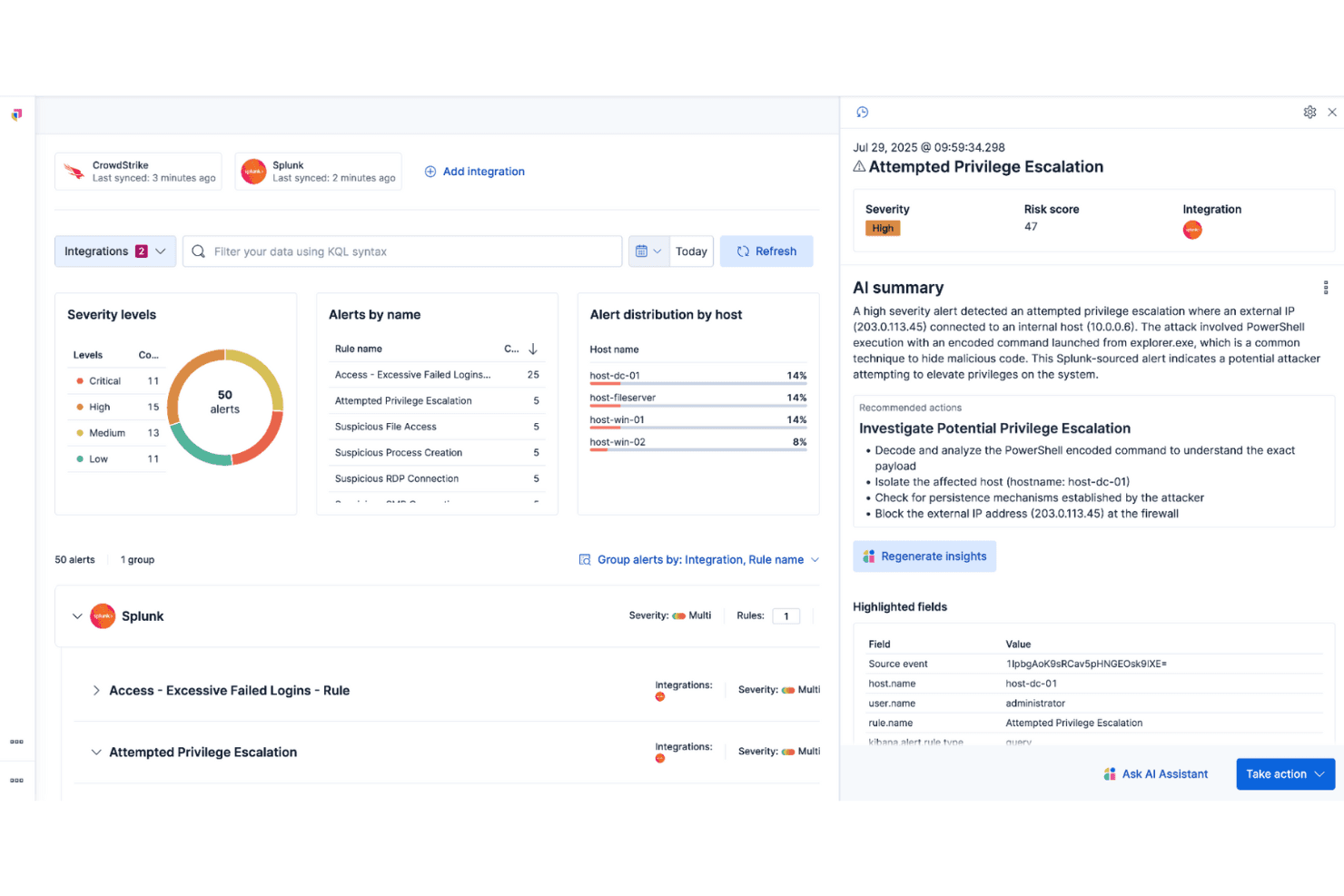
- Analytics TeamsAnalytics teams will find Elastic valuable for its ability to provide deep insights through robust data analysis features. The security analytics team use it for high-speed security incident and event management (SIEM), applying AI/ML to detect anomalies and behavioral deviations within massive security datasets.
Who Would be a Bad Fit for Elastic?
Elastic is often not the best fit for small businesses or early-stage teams with limited data workloads, since its distributed architecture and open-source codebase require meaningful engineering investment. Organizations without in-house expertise may find the onboarding, cluster tuning, and mapping configuration too complex, especially compared to managed tools like Splunk that offer faster time-to-value. Elastic’s slower support response times can also be a challenge for teams needing immediate assistance. In such cases, simpler monitoring or search platforms with more guided workflows and quicker support are typically a better operational fit.
- Small StartupsSmall startups may find Elastic's robust features excessive for their limited data needs. The operational complexity of managing a distributed cluster, even in the cloud, is overkill and too costly for simple data storage or search requirements.
- Non-Technical TeamsThe required expertise in sharding, mapping, and JVM tuning mandates specialized DevOps or Data Engineering expertise. It is not an out-of-the-box solution for non-technical users.
- Retail ShopsRetail shops with minimal data operations could find Elastic's capabilities more than they need.
- Artisanal BusinessesArtisanal businesses typically don't require the extensive data analysis features Elastic offers.
- Local Service ProvidersAs a document database, it does not support ACID transactions or complex SQL-style joins, making it fundamentally unsuitable as the primary data store for relational or transactional applications.
- Solo EntrepreneursSolo entrepreneurs could find Elastic's setup and management too complex for their simple data tasks.
Unsere Bewertungsmethodik
Wie wir Werkzeuge testen & bewerten
Wir haben Jahre damit verbracht, unser System zur Softwareprüfung und -bewertung aufzubauen, zu verfeinern und zu verbessern. Das Bewertungsraster ist darauf ausgelegt, die Feinheiten der Softwareauswahl und Effektivität eines Tools einzufangen, wobei wir uns auf kritische Aspekte des Entscheidungsprozesses konzentrieren.
Nachfolgend sehen Sie genau, wie unser Test- und Bewertungssystem anhand von sieben Kriterien funktioniert. Es ermöglicht uns eine unparteiische Bewertung der Software basierend auf Grundfunktionalität, besonderen Funktionen, Benutzerfreundlichkeit, Onboarding, Kundensupport, Integrationen, Kundenbewertungen und Preis-Leistungs-Verhältnis.
Grundfunktionalität (25 % der Endbewertung)
Der Ausgangspunkt unserer Bewertung ist immer die Grundfunktionalität des Werkzeugs. Verfügt es über die grundlegenden Funktionen und Merkmale, die ein Benutzer erwarten würde? Sind grundlegende Funktionen auf höherpreisige Tarife beschränkt? Im Kern erwarten wir, dass ein Tool den Basisfähigkeiten seiner Konkurrenten standhält.
Besondere Features (25 % der Endbewertung)
Anschließend bewerten wir ungewöhnliche, herausragende Funktionen, die über die typische Grundfunktionalität von Tools dieser Art hinausgehen. Eine hohe Bewertung zeigt spezialisierte oder einzigartige Eigenschaften, die das Produkt schneller, effizienter oder für den Nutzer wertvoller machen.
Wir bewerten außerdem, wie einfach sich das Tool mit anderen üblichen Werkzeugen im Technologie-Stack integrieren lässt, um die Funktionalität und den Nutzen der Software zu erweitern. Tools mit vielen nativen Integrationen, Drittanbieter-Anbindungen und API-Zugang zur Erstellung kundenspezifischer Integrationen erhalten die besten Bewertungen.
Benutzerfreundlichkeit (10 % der Endbewertung)
Wir betrachten, wie schnell und einfach Aufgaben aus dem Bereich der Grundfunktionalität mit dem Tool erledigt werden können. Gut bewertete Software ist durchdacht gestaltet, intuitiv bedienbar, bietet mobile Apps, Vorlagen und lässt relativ komplexe Aufgaben einfach erscheinen.
Onboarding (10 % der Endbewertung)
Wir wissen, wie wichtig die schnelle Einführung eines neuen Tools für das Team ist, daher bewerten wir, wie leicht sich ein Werkzeug mit minimalem Training erlernen und nutzen lässt. Wir bewerten, wie schnell ein Teammitglied ohne Vorerfahrung anfangen kann. Hoch bewertete Lösungen benötigen wenig bis gar keine Unterstützung.
Kundensupport (10 % der Endbewertung)
Wir prüfen, wie schnell und einfach man bei Problemen Hilfe per Telefon, Live-Chat oder Wissensdatenbank erhält. Tools und Anbieter mit Echtzeit-Support werden besser bewertet, während Chatbots schlechter abschneiden.
Kundenbewertungen (10 % der Endbewertung)
Neben unserer eigenen Prüfung beziehen wir den Net Promoter Score aktueller und ehemaliger Kunden mit ein. Wir bewerten, wie wahrscheinlich es ist, dass sie sich erneut für das Werkzeug entscheiden würden. Hoch bewertete Software weist einen hohen Net Promoter Score auf.
Preis-Leistungs-Verhältnis (10 % der Endbewertung)
Abschließend vergleichen wir unter Berücksichtigung aller Kriterien den durchschnittlichen Preis der Einstiegspakete mit den Grundfunktionen und bewerten den Mehrwert aus den anderen Bewertungsbereichen. Software, die mehr fürs gleiche Geld bietet, schneidet besser ab.
Core Features
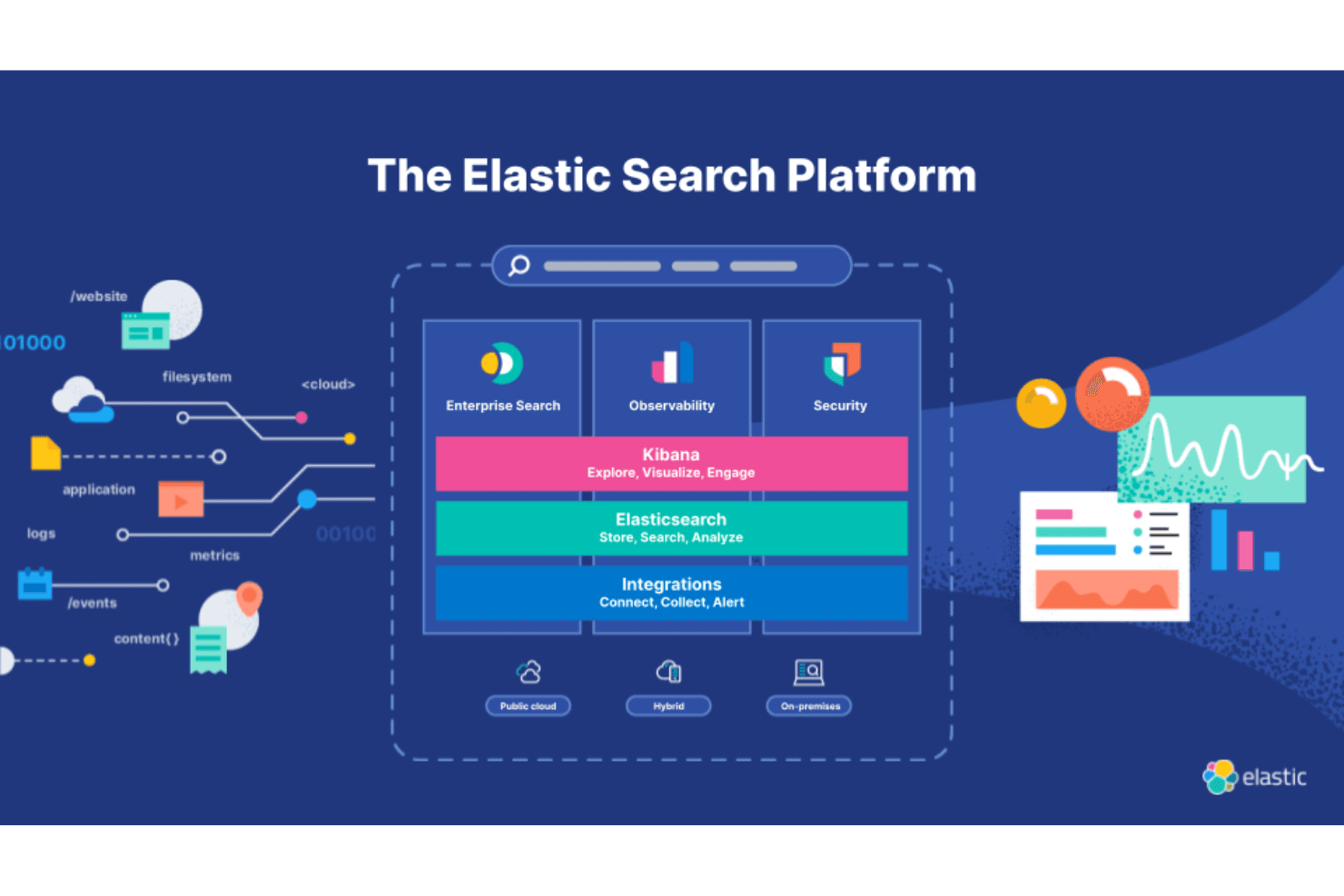
Scalable Search Capabilities: Enables semantic search and superior relevance scoring by combining traditional BM25 text search with vector embeddings from its integrated vector database.
Flexible Data Management: You can manage data across various environments, whether on-premise or in the cloud, giving your team the flexibility it needs. Elastic adapts to different setups, ensuring smooth operations.
Powerful Data Analysis: Your team can perform deep analyses of data to make informed decisions. Elastic's tools offer detailed insights that are crucial for strategic planning.
Real-Time Data Processing: With Elastic, you process data as it comes in, which is essential for time-sensitive operations. This feature ensures that your data is always up-to-date.
Security Features: Provides advanced security features necessary for large organizations, including role-based access control (RBAC), SSO, and audit logging (often requiring a proprietary license).
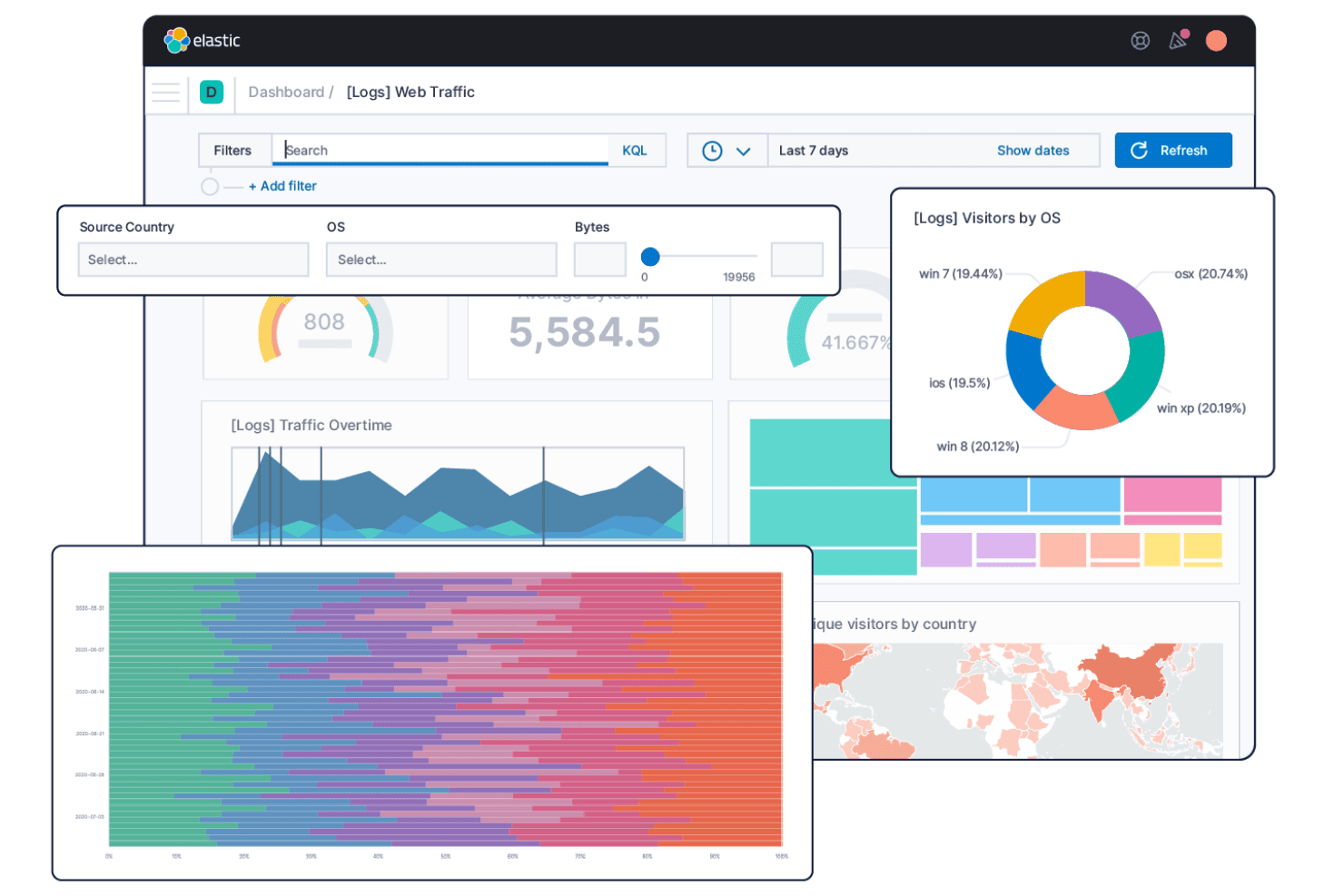
Customizable Dashboards: Leverages Kibana to provide a feature-rich, customizable interface for building dashboards. This feature helps in presenting data clearly and effectively.
Ease of Use
Elastic’s usability varies by user role. Kibana is mature and intuitive for software engineers, analysts and security teams, but the operational learning curve is steep for administrators who must configure mapping schemas, JVM heap settings, and cluster parameters. Many users report that the initial setup feels complex and the UI can be confusing compared to managed search or observability platforms.
Integrations
Elastic integrates with AWS, Azure, Google Cloud, Active Directory, Jira, Microsoft 365, Docker, Kubernetes, Apache, and PostgreSQL.
Elastic also offers an API and connects with third-party integration tools for expanded functionality.
.png&w=3840&q=75)
Elastic Specs
- A/B Testing: No
- API: Yes
- Collaboration Support: Yes
- Custom Data Forms: No
- Dashboard: Yes
- Dashboards: No
- Data Export: Yes
- Data Import: Yes
- Developer Tools: Yes
- External Integrations: Yes
- Feedback Management: No
- Gantt Charts: No
- Google Apps Integration: No
- Multi-User: Yes
- Notifications: Yes
- Prioritization: No
- Product Catalog: No
- Release Management: No
- Reports: Yes
- Resource Management: No
- Review Monitoring: No
- Roadmapping: No
- Scheduling: Yes
- Task Scheduling/Tracking: No


