

Elastic APM Testbericht: Vorteile, Nachteile, Funktionen und Preise
Elastic APM zeichnet sich als kosteneffizientes, flexibles Überwachungstool für Nutzer des Elastic Stack aus, erfordert jedoch etwas Verwaltungsexpertise.

Wir bewerten Tools unabhängig; Provisionen helfen, unsere Tests zu finanzieren. Siehe unsere Transparenzrichtlinie und unsere Methodik.
Elastic APM is an application monitoring software built into the Elastic Stack, giving teams distributed tracing, error tracking, and service performance metrics in one place. It's worth considering when you're already running Elasticsearch or Kibana, since the native integration means your traces, logs, and metrics all live in the same environment. If you're weighing it against Datadog, Elastic APM is the stronger fit for teams that want that unified observability layer without paying per-host pricing that scales against you.
Elastic APM Evaluation Summary
0/5
- Pricing upon request
Warum Sie unseren Software-Empfehlungen vertrauen können
6,700+
Reviews
20
Industry experts
16+
Evaluation factors
14
Years
Unser Team testet und bewertet Software seit 2012. Als Tech-Führungskräfte wissen wir selbst, wie schwierig – und wichtig – es ist, die richtige Software auszuwählen.
Für diesen Leitfaden haben wir Tools mithilfe von praktischen Tests und unabhängiger Recherche bewertet und dabei unsere Bewertungskriterien angewendet.
Unsere Bewertungen spiegeln unser menschliches redaktionelles Urteilsvermögen wider, keine Verkaufsstrategie.
Expertenprüfer:
- Paulo Gardini MiguelTech-Direktor
 Tim FisherVP für KI
 Gabriel RosasTech Lead & Software-Architekt
 Christhian GruhnTech Lead & Plattform-Architekt

Elastic APM Overview
In my opinion, Elastic APM is a solid choice for teams already invested in the Elastic Stack. Its open source APM agents offer flexibility, but they require a level of expertise to manage effectively. Compared to other APM software, it provides deep Elastic integration but might lag in user-friendliness for non-tech teams. Self-hosted users and those on lower-tier pricing plans might experience occasional slower support response times. This APM solution is best suited for businesses with technical teams ready to leverage its full potential, especially in environments with existing Elastic tools. If you're looking for a cost-effective solution with robust integration capabilities, Elastic APM could be the right fit for your team.
Pros
- You can customize it extensively to fit your team's specific needs.
- It offers real-time monitoring, visualization and insights, helping your team react quickly.
- It's part of the Elastic Stack, providing a unified ecosystem for data analysis.
Cons
- Your team might find the user interface less intuitive than other tools.
- It requires significant management expertise, which can be a hurdle for some teams.
- You might experience slower response times from customer support compared to competitors.
Is Elastic APM Right For Your Needs?
Who Would be a Good Fit for Elastic APM?
Elastic APM is a great choice for tech-savvy teams in industries like finance and e-commerce, where performance insights are vital. If your team is already using the Elastic Stack, you'll find the integration seamless, giving you a unified platform for monitoring and analysis. Its native OpenTelemetry instrumentation capabilities make it ideal for environments where quick detection and responses are crucial. Your team can customize it to fit specific needs, which is perfect for businesses with unique workflows or requirements.
- Tech StartupsYour team can benefit from Elastic APM's self-hosted open-source flexibility, adapting it to evolving needs without high initial costs.
- E-commerce PlatformsReal-time monitoring helps you keep track of customer experiences and optimize your online store's performance.
- Financial ServicesYou can rely on its detailed insights to maintain system integrity and quickly address any performance issues.
- DevOps TeamsElastic APM's customization options let your team tailor its full-stack observability and automation features to fit specific development and operational workflows.
- IT DepartmentsYour IT team can integrate it with existing Elastic tools to monitor backend applications, microservices, and other workloads.
- Digital AgenciesWith its flexible setup, you can use Elastic APM to monitor multiple client projects, ensuring high performance across the board.
Who Would be a Bad Fit for Elastic APM?
Elastic APM might not suit small businesses or non-technical teams lacking the expertise to manage its complexities. If your team needs a simple, out-of-the-box solution, you'll find its customization and management requirements overwhelming. Businesses that don't already use the Elastic Stack need more onboarding efforts compared to standalone application performance monitoring solutions.
- Small BusinessesYour team might find the setup and management too complex without dedicated IT resources.
- Non-Technical TeamsIf your team lacks technical expertise, you might struggle with its customization and configuration needs.
- Healthcare ProvidersYour team faces higher operational and governance overhead when working with Elastic APM’s open source agent.
- Educational InstitutionsYou might find its complexity and management requirements too demanding for limited IT departments.
- Retail ChainsIf you need a quick, simple monitoring solution, Elastic APM's setup might be too time-consuming.
- FreelancersYou likely need a straightforward tool, and Elastic APM's extensive features may be more than you need.
Unsere Bewertungsmethodik
Wie wir Werkzeuge testen & bewerten
Wir haben Jahre damit verbracht, unser System zur Softwareprüfung und -bewertung aufzubauen, zu verfeinern und zu verbessern. Das Bewertungsraster ist darauf ausgelegt, die Feinheiten der Softwareauswahl und Effektivität eines Tools einzufangen, wobei wir uns auf kritische Aspekte des Entscheidungsprozesses konzentrieren.
Nachfolgend sehen Sie genau, wie unser Test- und Bewertungssystem anhand von sieben Kriterien funktioniert. Es ermöglicht uns eine unparteiische Bewertung der Software basierend auf Grundfunktionalität, besonderen Funktionen, Benutzerfreundlichkeit, Onboarding, Kundensupport, Integrationen, Kundenbewertungen und Preis-Leistungs-Verhältnis.
Grundfunktionalität (25 % der Endbewertung)
Der Ausgangspunkt unserer Bewertung ist immer die Grundfunktionalität des Werkzeugs. Verfügt es über die grundlegenden Funktionen und Merkmale, die ein Benutzer erwarten würde? Sind grundlegende Funktionen auf höherpreisige Tarife beschränkt? Im Kern erwarten wir, dass ein Tool den Basisfähigkeiten seiner Konkurrenten standhält.
Besondere Features (25 % der Endbewertung)
Anschließend bewerten wir ungewöhnliche, herausragende Funktionen, die über die typische Grundfunktionalität von Tools dieser Art hinausgehen. Eine hohe Bewertung zeigt spezialisierte oder einzigartige Eigenschaften, die das Produkt schneller, effizienter oder für den Nutzer wertvoller machen.
Wir bewerten außerdem, wie einfach sich das Tool mit anderen üblichen Werkzeugen im Technologie-Stack integrieren lässt, um die Funktionalität und den Nutzen der Software zu erweitern. Tools mit vielen nativen Integrationen, Drittanbieter-Anbindungen und API-Zugang zur Erstellung kundenspezifischer Integrationen erhalten die besten Bewertungen.
Benutzerfreundlichkeit (10 % der Endbewertung)
Wir betrachten, wie schnell und einfach Aufgaben aus dem Bereich der Grundfunktionalität mit dem Tool erledigt werden können. Gut bewertete Software ist durchdacht gestaltet, intuitiv bedienbar, bietet mobile Apps, Vorlagen und lässt relativ komplexe Aufgaben einfach erscheinen.
Onboarding (10 % der Endbewertung)
Wir wissen, wie wichtig die schnelle Einführung eines neuen Tools für das Team ist, daher bewerten wir, wie leicht sich ein Werkzeug mit minimalem Training erlernen und nutzen lässt. Wir bewerten, wie schnell ein Teammitglied ohne Vorerfahrung anfangen kann. Hoch bewertete Lösungen benötigen wenig bis gar keine Unterstützung.
Kundensupport (10 % der Endbewertung)
Wir prüfen, wie schnell und einfach man bei Problemen Hilfe per Telefon, Live-Chat oder Wissensdatenbank erhält. Tools und Anbieter mit Echtzeit-Support werden besser bewertet, während Chatbots schlechter abschneiden.
Kundenbewertungen (10 % der Endbewertung)
Neben unserer eigenen Prüfung beziehen wir den Net Promoter Score aktueller und ehemaliger Kunden mit ein. Wir bewerten, wie wahrscheinlich es ist, dass sie sich erneut für das Werkzeug entscheiden würden. Hoch bewertete Software weist einen hohen Net Promoter Score auf.
Preis-Leistungs-Verhältnis (10 % der Endbewertung)
Abschließend vergleichen wir unter Berücksichtigung aller Kriterien den durchschnittlichen Preis der Einstiegspakete mit den Grundfunktionen und bewerten den Mehrwert aus den anderen Bewertungsbereichen. Software, die mehr fürs gleiche Geld bietet, schneidet besser ab.
Core Features
Real-Time Monitoring: Elastic APM lets you track your application performance as it happens, so you can address issues quickly. Resolving bottlenecks early allows you to improve user experience.
Transaction Tracing: You can trace each transaction across your application to pinpoint where delays occur. This visibility helps you optimize your code and improve response times.
Error Logging: With error logging, you can capture and analyze errors in your application across endpoints. Early prevention stops issues from negatively impacting end users.
Service Maps: Elastic APM's service maps visually represent how different services interact within your application. This helps you understand dependencies and impacts on performance.
Machine Learning Powered Anomaly Detection: This feature uses machine learning to identify unusual patterns in your application data. You can be more proactive when troubleshooting bugs, errors, or irregular system behaviors.
Custom Dashboards: You can create dashboards tailored to your team's needs, displaying the metrics that matter most. This customization helps you focus on latency, error rate, and other data crucial for your operations.

Ease of Use
Elastic APM can be challenging to use for teams without technical expertise. Its interface might feel less intuitive compared to other tools, requiring a learning curve for effective use. If your team is already familiar with the Elastic Stack, you'll find it integrates well, but newcomers might struggle setting it up. The flexibility and depth of features are strengths, yet they demand time and knowledge to fully leverage.
Integrations
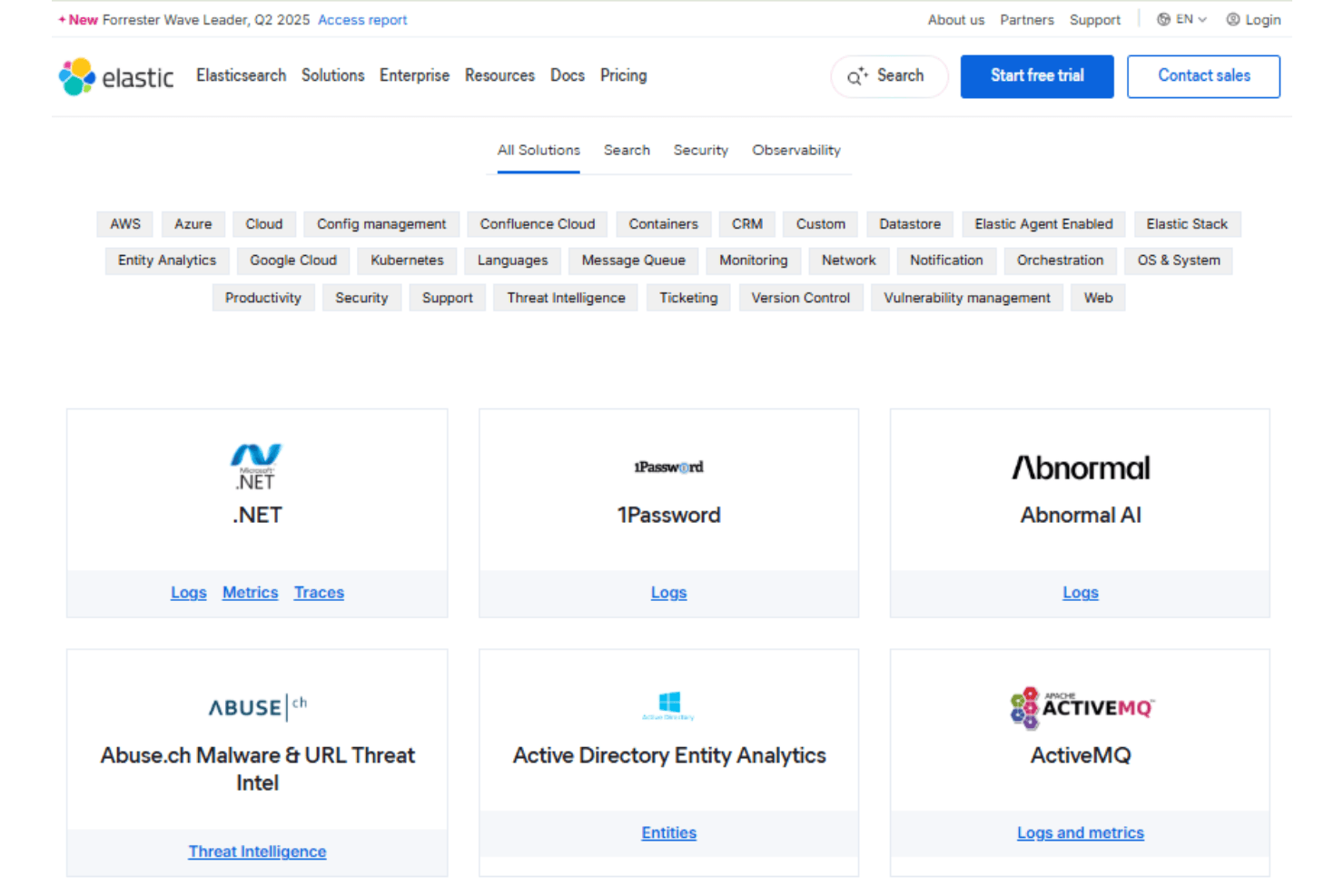
Elastic APM integrates with .NET, Go, Java, Node.js, PHP, Python, Ruby, iOS SDK, RUM (Real User Monitoring) for JavaScript, Microsoft Azure, Amazon Web Services (AWS), Kubernetes, Docker, Elastic Cloud, and more.
Elastic APM also offers an API and supports connections with third-party integration tools.
Elastic APM Specs
- AI Integration: Yes
- API: Yes
- Automated Testing: Yes
- Browser Compatibility Testing: Yes
- Bug Tracking: Yes
- Code Review: Yes
- Custom Reports: Yes
- Data Export: Yes
- Data Import: Yes
- Developer Tools: Yes
- External Integrations: Yes
- Malware Protection: Yes
- Multi-User: Yes
- Notifications: Yes
- Performance Testing: Yes
- Process Reporting: Yes
- Static Analysis: Yes
- Status Notifications: Yes
- Workflow Management: Yes


