
Aisera-Bewertung 2026: Funktionen, Vorteile, Nachteile und Preise
I’ve dug into Aisera AI’s service management tools—here’s what actually sets it apart and where it falls short, so you know if it’s the smart move for transforming support in 2026.

Wir bewerten Tools unabhängig; Provisionen helfen, unsere Tests zu finanzieren. Siehe unsere Transparenzrichtlinie und unsere Methodik.
Aisera is a service management software built for IT and tech teams that need to automate, scale, and personalize support operations without drowning in tickets or manual processes. For IT leaders who face mounting pressure to reduce downtime, drive self-service adoption, and quickly resolve issues across increasingly complex environments, Aisera brings AI-driven automation and conversational support to the table.
In this review, I’ll break down Aisera’s core features, best and worst use cases, pricing, and the real pros and cons you can expect if you’re considering it for your own tech stack.
Aisera Evaluation Summary
4.5/5
- Pricing upon request
- Free demo available
Warum Sie unseren Software-Empfehlungen vertrauen können
6,700+
Reviews
20
Industry experts
16+
Evaluation factors
14
Years
Unser Team testet und bewertet Software seit 2012. Als Tech-Führungskräfte wissen wir selbst, wie schwierig – und wichtig – es ist, die richtige Software auszuwählen.
Für diesen Leitfaden haben wir Tools mithilfe von praktischen Tests und unabhängiger Recherche bewertet und dabei unsere Bewertungskriterien angewendet.
Unsere Bewertungen spiegeln unser menschliches redaktionelles Urteilsvermögen wider, keine Verkaufsstrategie.
Expertenprüfer:
- Paulo Gardini MiguelTech-Direktor
 Tim FisherVP für KI
 Gabriel RosasTech Lead & Software-Architekt
 Christhian GruhnTech Lead & Plattform-Architekt

Aisera Overview
From my perspective, Aisera stands out for its strong AI automation, intuitive interface, and deep integration options, which makes selecting it appealing if reducing manual workloads is a top priority. While its pricing is on the higher side and onboarding may need some dedicated time, I think it outperforms much of the market for enterprise IT teams seeking customizable, scalable workflows.
Its real strength shows up in environments where fast ticket resolution and proactive self-service matter most, but those juggling tight budgets or looking for simple out-of-the-box setups might judge other options more favorably.
Pros
- AI-driven ticket routing reduces manual triage for IT teams
- Conversational AI chatbot supports advanced self-service workflows
- Strong automation for repetitive support and incident tasks
Cons
- Setup and implementation can require significant upfront effort
- Limited real-time analytics compared to some competitors
- Pricing can be high for smaller IT organizations
Is Aisera Right For Your Needs?
Who Would be a Good Fit for Aisera?
Aisera is well suited for organizations with high ticket volumes, diverse data sources, and strong automation needs. Enterprise IT, managed services, and regulated industries gain the most value from its AI-driven workflows, broad integrations, and advanced ticket resolution capabilities. Fast-growing SaaS providers and hybrid workforce support teams also benefit from automation, while departments with distributed support get rapid, consistent responses.
- Enterprise IT DepartmentsYou get scalable automation for complex internal service requests and system integrations.
- Financial Services FirmsAisera helps manage high compliance demands and strict documentation requirements with robust recordkeeping.
- Healthcare OrganizationsThe platform’s secure, AI-powered responses and audit trails support sensitive patient and operational inquiries.
- Global Customer SupportYou handle high volumes and varied languages, taking advantage of Aisera’s multi-channel and multilingual support.
- SaaS Growth TeamsAisera helps support teams maintain speed and quality as user bases expand rapidly.
- Hybrid or Remote WorkforcesAI-driven self-service is ideal for distributed teams dealing with mixed technical and business needs.
Who Would be a Bad Fit for Aisera?
Aisera isn’t built for everyone. Small startups, hands-on boutique agencies, and businesses with very low ticket volume may find its cost hard to justify. Teams needing basic email support, limited automation, or heavy customization that falls outside AI-driven models might struggle with its approach. Niche industries with highly specialized workflows or organizations with strict on-premises requirements also face challenges.
- Small StartupsThe entry price and advanced features typically exceed what a small team really needs.
- Boutique Consulting FirmsHands-on, relationship-driven support models won’t benefit from Aisera’s heavy automation focus.
- Nonprofit OrganizationsBudget-sensitive teams with fewer IT complexities may not see enough value for the investment.
- Minimalist IT OperationsIf your support needs are basic and ticket volume is consistently low, Aisera’s AI features add unnecessary cost and complexity.
- On-Premises-Only EnvironmentsAisera’s cloud-first architecture can’t always accommodate strict on-premises data or security requirements.
- Highly Specialized IndustriesWorkflows requiring extremely unique or nonstandard support processes may not map well to Aisera’s automation models.
Unsere Bewertungsmethodik
Wie wir Werkzeuge testen & bewerten
Wir haben Jahre damit verbracht, unser System zur Softwareprüfung und -bewertung aufzubauen, zu verfeinern und zu verbessern. Das Bewertungsraster ist darauf ausgelegt, die Feinheiten der Softwareauswahl und Effektivität eines Tools einzufangen, wobei wir uns auf kritische Aspekte des Entscheidungsprozesses konzentrieren.
Nachfolgend sehen Sie genau, wie unser Test- und Bewertungssystem anhand von sieben Kriterien funktioniert. Es ermöglicht uns eine unparteiische Bewertung der Software basierend auf Grundfunktionalität, besonderen Funktionen, Benutzerfreundlichkeit, Onboarding, Kundensupport, Integrationen, Kundenbewertungen und Preis-Leistungs-Verhältnis.
Grundfunktionalität (25 % der Endbewertung)
Der Ausgangspunkt unserer Bewertung ist immer die Grundfunktionalität des Werkzeugs. Verfügt es über die grundlegenden Funktionen und Merkmale, die ein Benutzer erwarten würde? Sind grundlegende Funktionen auf höherpreisige Tarife beschränkt? Im Kern erwarten wir, dass ein Tool den Basisfähigkeiten seiner Konkurrenten standhält.
Besondere Features (25 % der Endbewertung)
Anschließend bewerten wir ungewöhnliche, herausragende Funktionen, die über die typische Grundfunktionalität von Tools dieser Art hinausgehen. Eine hohe Bewertung zeigt spezialisierte oder einzigartige Eigenschaften, die das Produkt schneller, effizienter oder für den Nutzer wertvoller machen.
Wir bewerten außerdem, wie einfach sich das Tool mit anderen üblichen Werkzeugen im Technologie-Stack integrieren lässt, um die Funktionalität und den Nutzen der Software zu erweitern. Tools mit vielen nativen Integrationen, Drittanbieter-Anbindungen und API-Zugang zur Erstellung kundenspezifischer Integrationen erhalten die besten Bewertungen.
Benutzerfreundlichkeit (10 % der Endbewertung)
Wir betrachten, wie schnell und einfach Aufgaben aus dem Bereich der Grundfunktionalität mit dem Tool erledigt werden können. Gut bewertete Software ist durchdacht gestaltet, intuitiv bedienbar, bietet mobile Apps, Vorlagen und lässt relativ komplexe Aufgaben einfach erscheinen.
Onboarding (10 % der Endbewertung)
Wir wissen, wie wichtig die schnelle Einführung eines neuen Tools für das Team ist, daher bewerten wir, wie leicht sich ein Werkzeug mit minimalem Training erlernen und nutzen lässt. Wir bewerten, wie schnell ein Teammitglied ohne Vorerfahrung anfangen kann. Hoch bewertete Lösungen benötigen wenig bis gar keine Unterstützung.
Kundensupport (10 % der Endbewertung)
Wir prüfen, wie schnell und einfach man bei Problemen Hilfe per Telefon, Live-Chat oder Wissensdatenbank erhält. Tools und Anbieter mit Echtzeit-Support werden besser bewertet, während Chatbots schlechter abschneiden.
Kundenbewertungen (10 % der Endbewertung)
Neben unserer eigenen Prüfung beziehen wir den Net Promoter Score aktueller und ehemaliger Kunden mit ein. Wir bewerten, wie wahrscheinlich es ist, dass sie sich erneut für das Werkzeug entscheiden würden. Hoch bewertete Software weist einen hohen Net Promoter Score auf.
Preis-Leistungs-Verhältnis (10 % der Endbewertung)
Abschließend vergleichen wir unter Berücksichtigung aller Kriterien den durchschnittlichen Preis der Einstiegspakete mit den Grundfunktionen und bewerten den Mehrwert aus den anderen Bewertungsbereichen. Software, die mehr fürs gleiche Geld bietet, schneidet besser ab.
Core Features
AI-Powered Ticket Routing
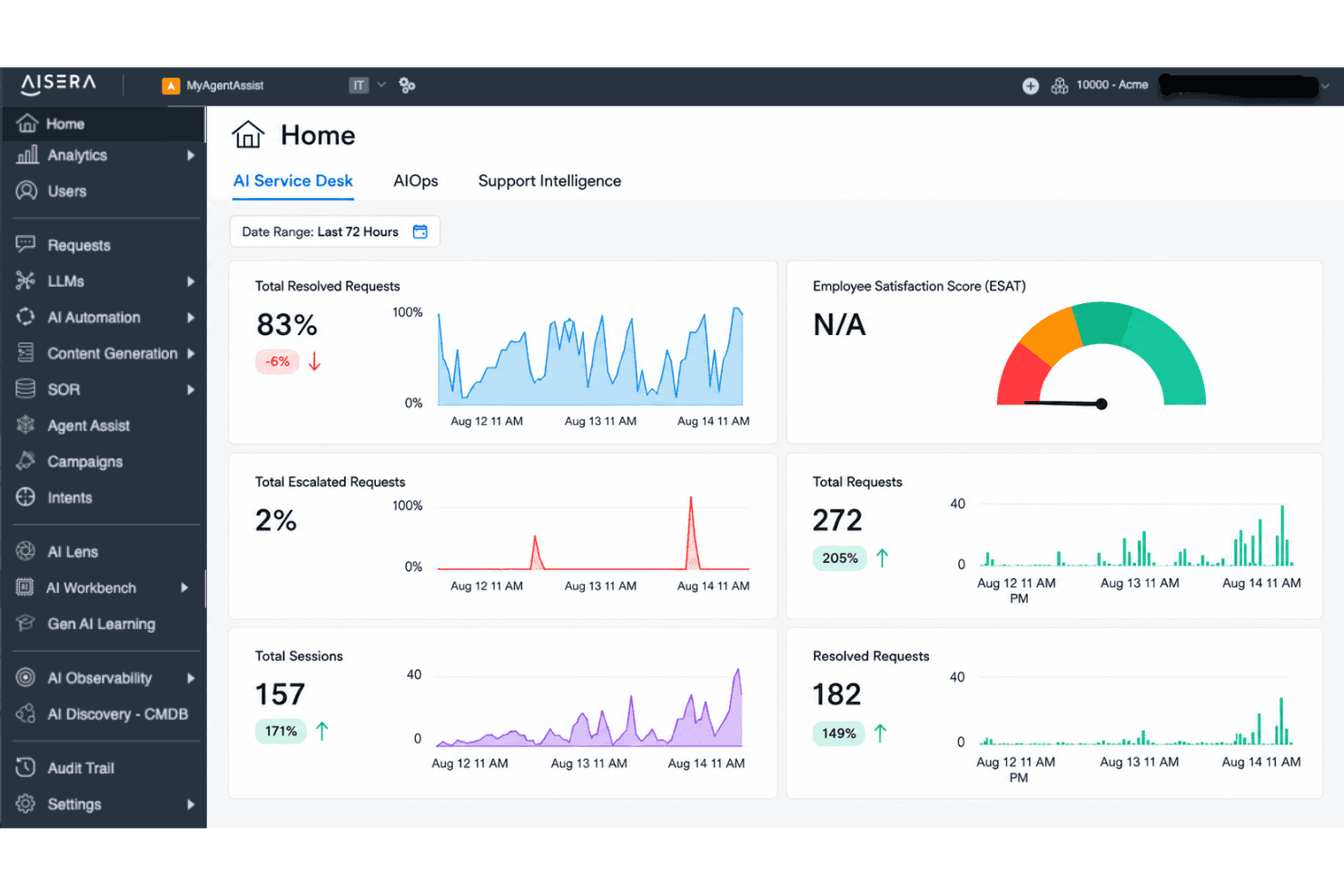
Automatically assigns tickets to the right support team or agent using AI models. This helps IT teams cut down on misrouted or delayed tickets.
Conversational AI Chatbot
Handles user queries and requests through natural conversations on chat platforms and portals. The chatbot resolves common issues instantly and escalates complex problems as needed.
Workflow Automation
Automates multi-step support processes like approvals, escalations, and status notifications. You can build custom workflows to fit your organization’s unique needs.
Knowledge Management
Surfaces relevant articles and answers for users and agents within the support interface. This reduces repeat questions and improves self-service adoption.
Incident Management
Tracks, categorizes, and resolves IT incidents with clear timelines and ownership. Real-time updates keep your team aligned and enable fast resolution.
Service Catalog
Presents end users with an AI-powered catalog for submitting service requests. Employees can browse, request, and track services with self-service at the front end.
Ease of Use
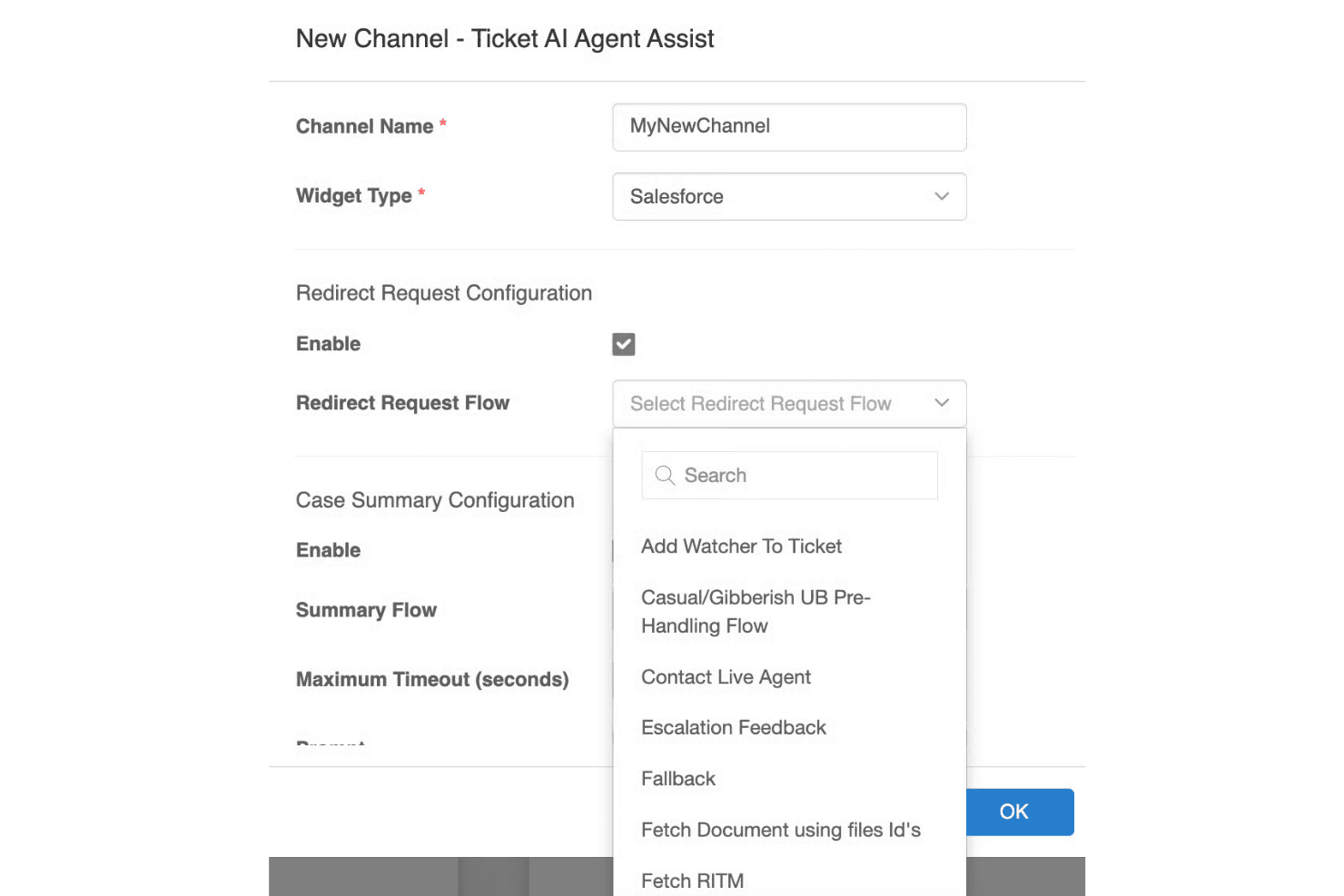
Aisera makes complex service workflows feel much simpler thanks to its conversational UI, smart ticket handling, and clear dashboards. I find the AI-driven interface intuitive for both end users and IT staff, especially when automating repetitive requests or surfacing knowledge articles. Some reviewers note initial setup can be dense, but daily interactions and ongoing management feel approachable and streamlined compared to more manual tools.
Integrations
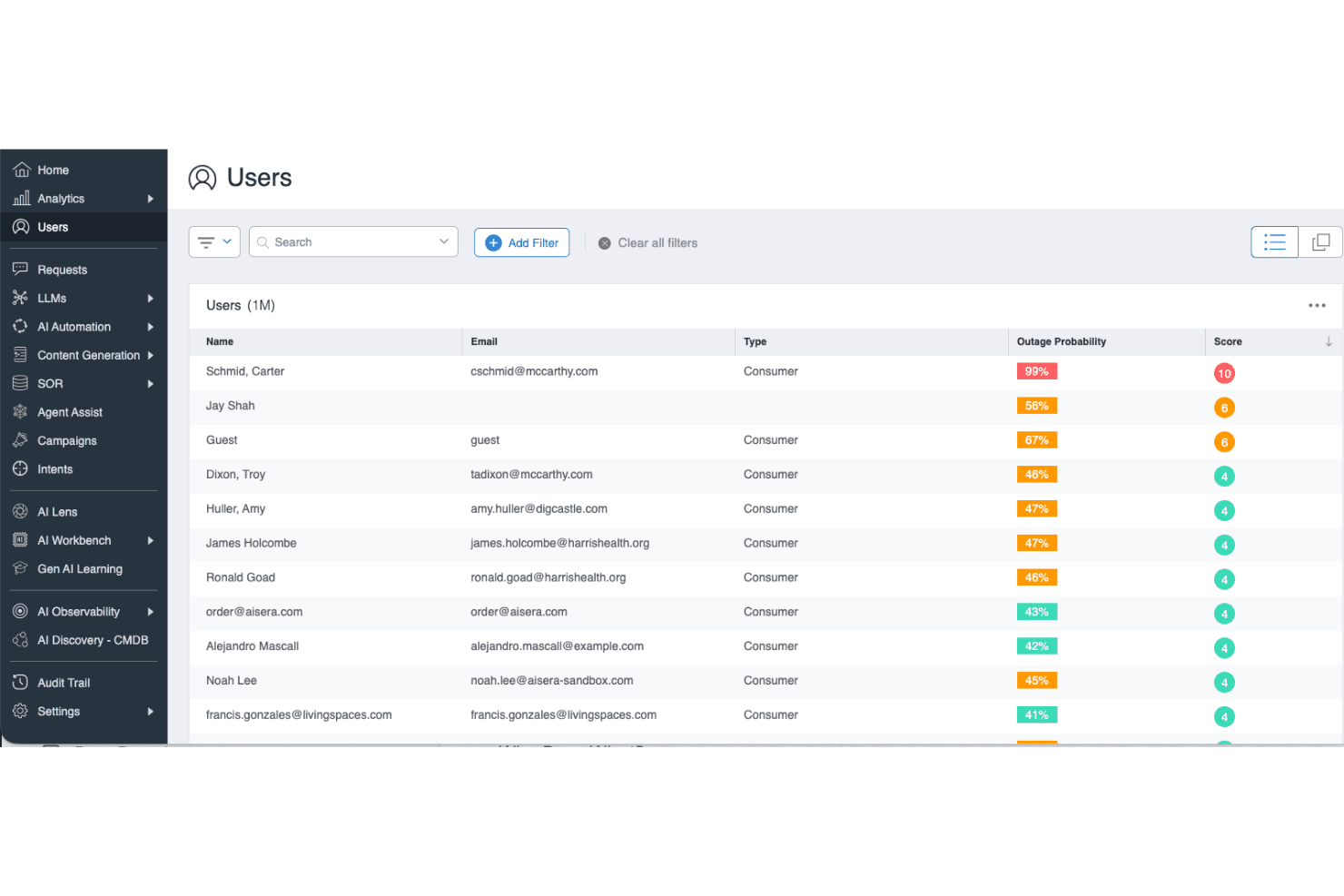
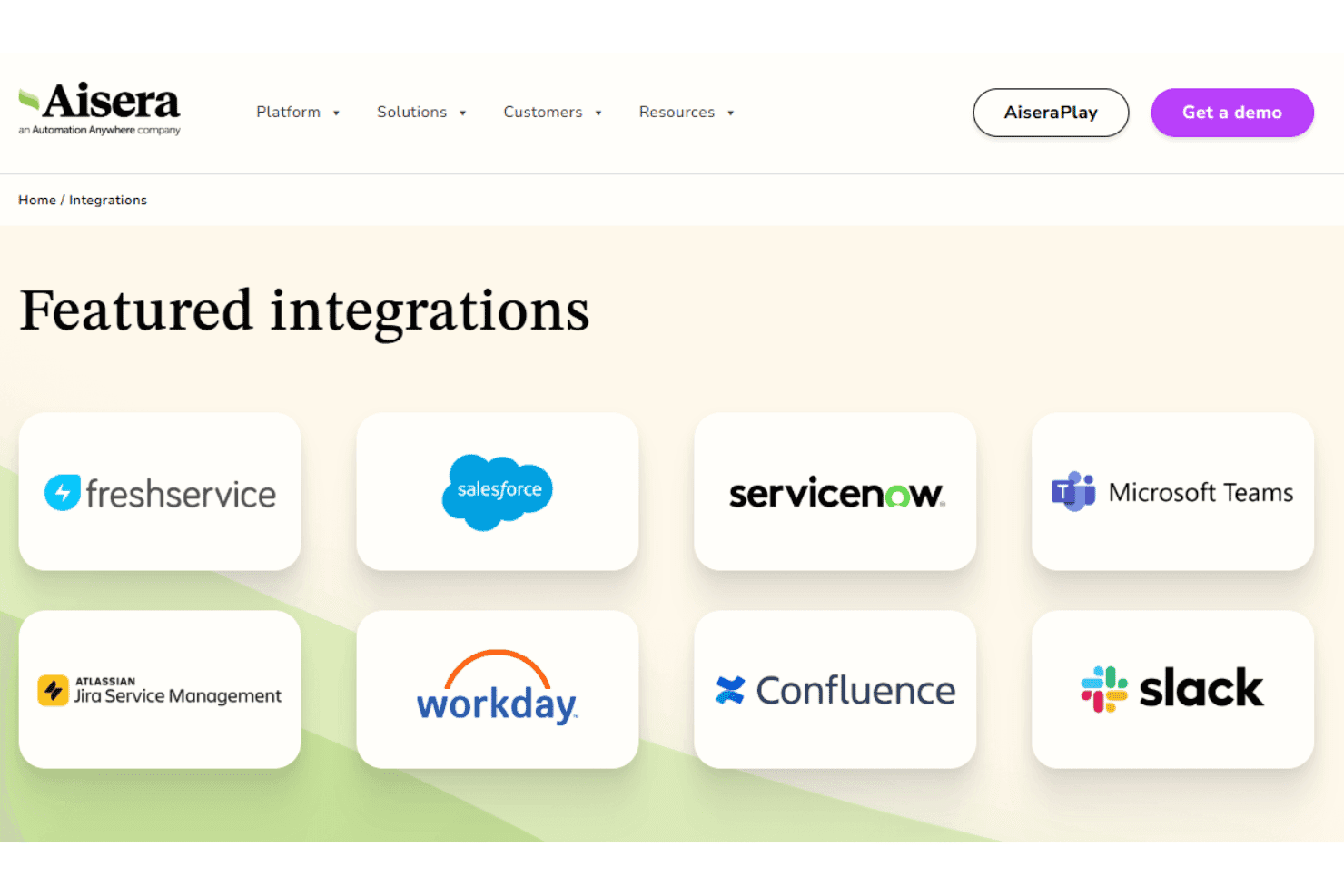
Aisera integrates with ServiceNow, Salesforce, Microsoft Teams, Slack, Zendesk, Jira, Okta, Zoom, Freshdesk, and Google Workspace, among others.
You can also connect Aisera to other systems using its open API architecture, and it supports third-party integration tools like Workato for broader connectivity.
Aisera Specs
- Analytics: Yes
- API: Yes
- Batch Permissions & Access: No
- Call Integration: Yes
- Chat: Yes
- Contact Management: No
- Contact Sharing: No
- CRM Integration: Yes
- Customer Management: No
- Customer Service: Yes
- Dashboard: Yes
- Data Export: Yes
- Data Import: Yes
- Data Visualization: Yes
- Email Integration: Yes
- Escalation Management: Yes
- External Integrations: Yes
- Instant Chat Integration: Yes
- Knowledge Base: Yes
- Lead Management: Yes
- Lead Scoring: Yes
- Multi-User: Yes
- Notifications: Yes
- Real-time Alerts: Yes
- Scheduling: Yes
- Self-service Portal: Yes
- Social Media Integration: No
- Support Forum: No
- Third-Party Plugins/Add-Ons: No
- Ticket Management: Yes
- Workflow Management: Yes


