

Databricks vs. Cloudera: Sammenligning og anmeldelser for 2026
Valget mellem Databricks og Cloudera afhænger af, hvordan dit team håndterer data på tværs af cloud- og hybridmiljøer. Jeg sammenligner deres styrker, kompromiser og bedst egnede anvendelsesområder.

We review tools independently, and commissions help fund our testing. See our transparency policy, our methodology, or suggest a tool.
As data environments spread across cloud, on-premises systems, and multiple pipelines, keeping ingestion and transformation workflows consistent gets harder. The right DataOps tool should help teams manage that complexity without creating more operational overhead.
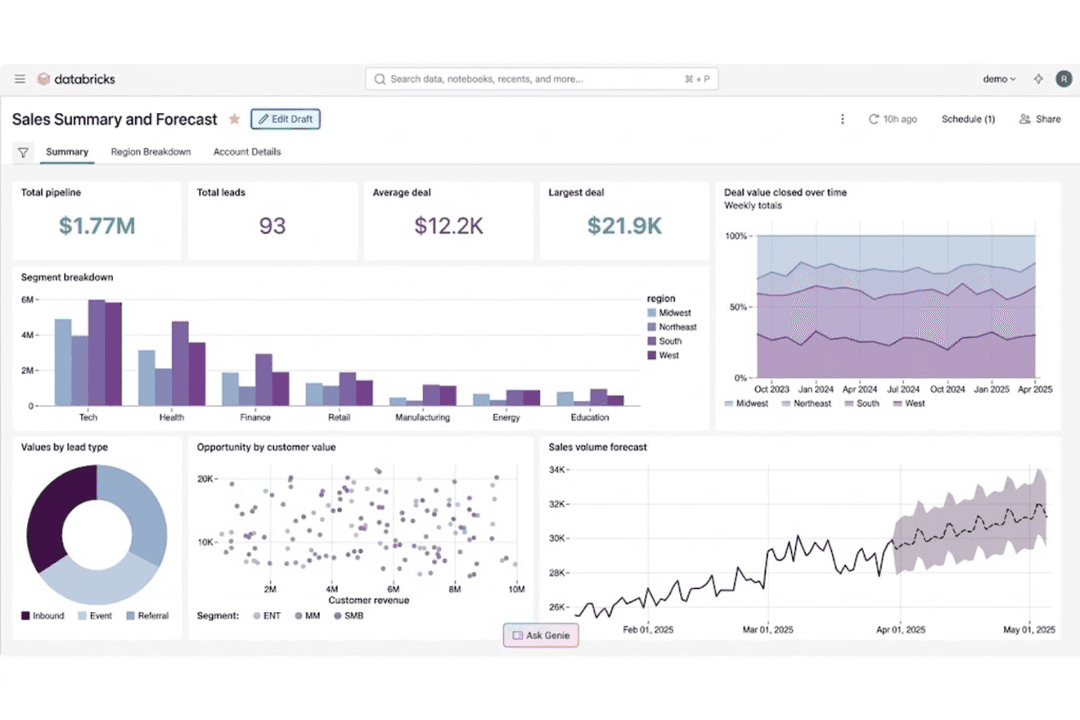
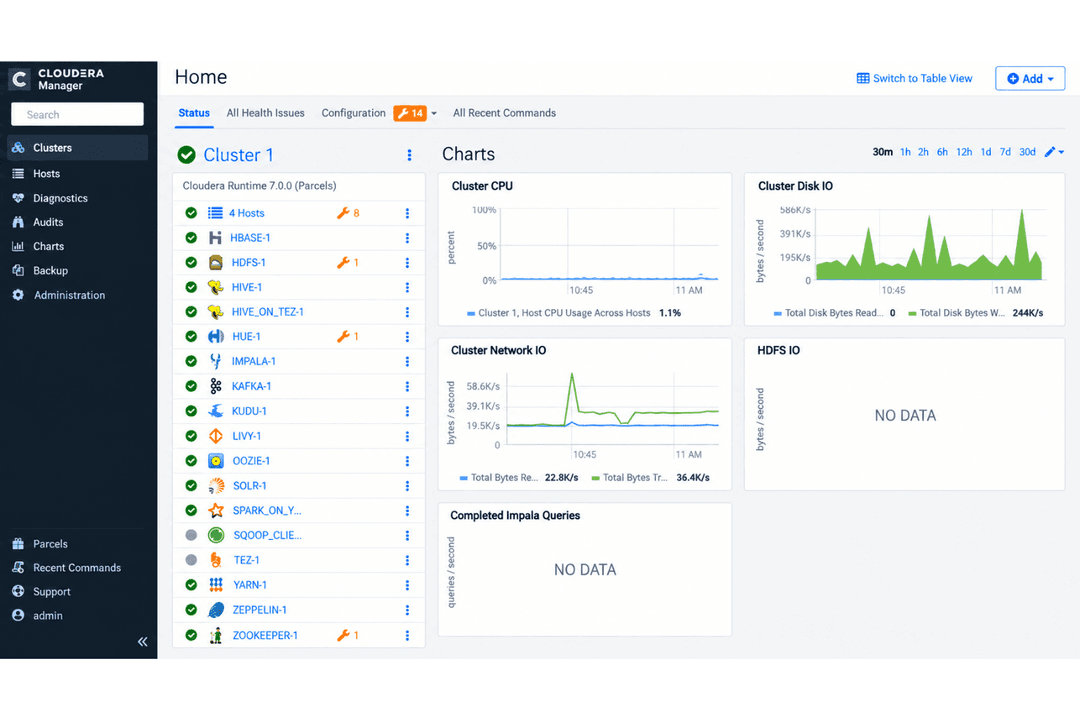
Databricks and Cloudera both support large-scale data engineering and analytics, but they solve the problem from different starting points. Databricks centers on a lakehouse model with managed pipelines, streaming, governance, and AI, while Cloudera emphasizes hybrid data operations across cloud, data center, and edge environments.
In this article, I compare Databricks and Cloudera across features, pricing, security, ease of use, and best-fit scenarios to help you decide which platform suits your data strategy and infrastructure.
Databricks
4.5/5
- Free edition available + 14-day free trial
- From $0.15/DBU
Cloudera
4.1/5
- 60-day free trial
- From $0.04/CCU/hour
Why Trust Our Software Recommendations
6,700+
Reviews
20
Industry experts
16+
Evaluation factors
14
Years
Our team has been testing and reviewing software since 2012. As tech leaders ourselves, we know how difficult—and important—it is to choose the right software.
For this guide, we evaluated tools using hands-on testing and independent research, scoring tools using our selection criteria.
Our reviews reflect our human editorial judgment, not a sales pitch.
Expert reviewers:
- Paulo Gardini MiguelTech Director
 Tim FisherVP of AI
 Gabriel RosasTech Lead & Software Architect
 Christhian GruhnTech Lead & Platform Architect

| Databricks | Cloudera | |
|---|---|---|
| Free Trial | Free edition available + 14-day free trial | 60-day free trial |
| Pricing | From $0.15/DBU | From $0.04/CCU/hour |
Priser og skjulte omkostninger for Databricks vs. Cloudera
Databricks bruger forbrugsbaseret prissætning på tværs af datateknik, datalager, AI og andre arbejdsbelastninger, hvor omkostningerne bestemmes af computerforbrug samt cloudinfrastruktur, lagring, netværk og support. Cloudera anvender en hybrid tilgang: Cloudtjenester faktureres efter forbrug gennem Cloudera Compute Units (CCU'er), mens lokale implementeringer bruger årsabonnementer. I begge tilfælde kan infrastruktur og netværk øge de samlede omkostninger ud over de grundlæggende platformgebyrer.
Når du sammenligner de to løsninger, er det en god idé at se længere end den overordnede prissætning og kortlægge, hvor dine arbejdsbelastninger skal køre, og hvor ofte pipelines, streamingjobs og transformationer udføres. Med Databricks kan ineffektiv eller langvarig beregning samt dataoverførsel øge forbruget. Cloudera kan derimod medføre ekstra omkostninger gennem infrastruktur, netværk, Private Link, observerbarhed og tjenester som Data Flow eller Lakehouse Optimizer. Hvis du tager højde for implementeringsmodel, arbejdsbelastningens omfang, support og skaleringsbehov, får du et mere realistisk billede af de langsigtede omkostninger.
| Databricks | Cloudera | |
|---|---|---|
| A/B Testing | No | No |
| Analytics | Yes | Yes |
| API | Yes | Yes |
| Conversion Tracking | No | No |
| Custom Reports | Yes | Yes |
| Dashboards | Yes | Yes |
| Data Export | Yes | Yes |
| Data Import | Yes | Yes |
| Data Mining | Yes | Yes |
| Data Visualization | Yes | Yes |
| External Integrations | Yes | Yes |
| Forecasting | Yes | Yes |
| Keyword Tracking | No | No |
| Link Tracking | No | No |
| Multi-User | Yes | Yes |
| Notifications | Yes | Yes |
| Reports | Yes | Yes |
| Scenario Planning | No | No |
| SEO | No | No |
| Visualization | Yes | Yes |
| Integration | Databricks | Cloudera |
|---|---|---|
| IntegrationMicrosoft Azure | Databricks✅ | Cloudera✅ |
| IntegrationAmazon Web Services | Databricks✅ | Cloudera✅ |
| IntegrationGoogle Cloud Platform | Databricks✅ | Cloudera✅ |
| IntegrationTableau | Databricks✅ | Cloudera✅ |
| IntegrationInformatica | Databricks✅ | Cloudera✅ |
| IntegrationSalesforce | Databricks✅ | Cloudera✅ |
| IntegrationQlik | Databricks✅ | Cloudera✅ |
| IntegrationOracle Database | Databricks✅ | Cloudera✅ |
| IntegrationMongoDB | Databricks✅ | Cloudera✅ |
| IntegrationAPI | Databricks✅ | Cloudera✅ |
| IntegrationZapier | Databricks✅ | Cloudera❌ |
Både Databricks og Cloudera understøtter brede økosystemer på tværs af cloudplatforme, databaser, BI-værktøjer, API'er og datatjenester. Databricks integrerer disse forbindelser i Lakeflow, Partner Connect og sine administrerede arbejdsgange til datateknik, mens Cloudera lægger vægt på forbindelse på tværs af cloud-, lokale og hybride miljøer.
| Faktor | Databricks | Cloudera |
|---|---|---|
| FaktorKryptering | DatabricksKrypterer data i hvile og under overførsel med understøttelse af kundeadministrerede nøgler, cloudbaseret nøglehåndtering og detaljeret beskyttelse på tværs af styrede data- og AI-aktiver. | ClouderaUnderstøtter kryptering af data i hvile og under overførsel, nøglehåndtering og sikkerhedskontroller på tværs af cloud- og lokale miljøer. |
| FaktorAdgangskontroller | DatabricksUnity Catalog centraliserer detaljerede adgangspolitikker på tværs af data, modeller, applikationer og AI-aktiver med SSO, identitetsintegrationer, række- og kolonnebaserede kontroller samt arbejdsområdeforbindelser. | ClouderaAnvender Apache Ranger, Knox og identitetsintegrationer til at håndtere godkendelse, autorisation, SSO og detaljeret adgang på tværs af hybride miljøer. |
| FaktorOverholdelse af lovkrav | DatabricksHar certificeringerne SOC 1 Type II, SOC 2 Type II, ISO 27001, ISO 27017 og ISO 27018 samt understøttelse af HIPAA, PCI DSS, HITRUST og FedRAMP Moderate og High afhængigt af cloud, region og konfiguration. | ClouderaOpretholder certificeringer og programmer, herunder SOC 2 Type II, ISO 27001, PCI DSS og FedRAMP Moderate for kvalificerede Cloudera-miljøer. |
| FaktorPålidelighed | DatabricksUnderstøtter autoskalering, serverløs og styret databehandling, arbejdsbelastningsisolering og cloudbaseret tilgængelighed på tværs af AWS, Azure og Google Cloud med gendannelsesstrategier konfigureret efter arbejdsbelastningernes krav. | ClouderaUnderstøtter installationer på tværs af flere zoner, redundant infrastruktur, automatisk overtagelse og katastrofegendannelse på tværs af cloud- og hybride installationer. |
| FaktorDatastyring | DatabricksUnity Catalog giver centraliseret revision, søgning, klassificering og automatiseret dataafstamning fra kildedata gennem notesbøger, jobs, modeller, tjenester og dashboards. | ClouderaSDX kombinerer Apache Ranger og Atlas for at anvende politikker, revision, metadatastyring, klassificering og dataafstamning på tværs af cloud- og lokale data. |
Begge platforme leverer sikkerhed og styring på virksomhedsniveau, men vægtningen er forskellig. Databricks samler adgangskontrol, revision, klassificering og dataafstamning gennem Unity Catalog på tværs af data- og AI-arbejdsbelastninger, mens Cloudera udvider centraliseret styring på tværs af hybride og lokale miljøer gennem SDX, Ranger og Atlas.
| Faktor | Databricks | Cloudera |
|---|---|---|
| FaktorBrugergrænseflade | DatabricksKombinerer samarbejdsbaserede notesbøger, SQL-værktøjer, dashboards og visuelle arbejdsgange i ét arbejdsområde for teknik-, analyse- og AI-teams. | ClouderaAnvender administrationskonsoller og servicespecifikke grænseflader til administration af data og hybrid infrastruktur. |
| FaktorOpsætningsproces | DatabricksCloudarbejdsområder kan klargøres hurtigt, mens serverløs og styret databehandling reducerer infrastrukturkonfigurationen for almindelige arbejdsbelastninger. | ClouderaOpsætningen afhænger af installationsmodellen, med yderligere konfiguration for hybride og lokale miljøer. |
| FaktorIntroduktion | DatabricksTilbyder guidet opsætning, eksempelnotesbøger, oplæring og styrede tjenester, der hjælper teams med at gå fra indledende eksperimenter til styrede produktionsarbejdsgange. | ClouderaKræver kendskab til det bredere økosystem, især når teams arbejder på tværs af teknologier som NiFi, Spark, Ranger og hybrid infrastruktur. |
| FaktorDokumentation | DatabricksTilbyder omfattende dokumentation, vejledninger, implementeringsråd og oplæring inden for data engineering, styring, analyse og AI. | ClouderaTilbyder teknisk dokumentation på tværs af cloud, lokale miljøer, sikkerhed og platformsadministration. |
| FaktorAdgang til support | DatabricksTilbyder offentlige ressourcer og trindelt betalt support med tekniske kontaktpersoner, eskaleringsveje og dækning af kritiske problemer for virksomhedsimplementeringer. | ClouderaOmfatter virksomhedssupport og tekniske ressourcer på tværs af cloud- og lokale tilbud. |
Set fra et brugervenlighedsperspektiv kombinerer Databricks et teknisk udviklingsmiljø med styrede tjenester, der reducerer infrastrukturarbejdet på tværs af pipelines, analyse og AI. Cloudera understøtter cloud-, lokale og hybride miljøer, hvilket medfører yderligere overvejelser om installationen. For cloudfokuserede datateams tilbyder Databricks en sammenhængende arbejdsgang fra udvikling til produktion, mens Cloudera egner sig til organisationer, der har behov for at arbejde på tværs af blandet infrastruktur.
Databricks
- Unifies data engineering, analytics, governance, and AI workloads, reducing the need to maintain separate platforms and duplicate data
- Built on open technologies like Delta Lake and Apache Spark, giving teams more flexibility and portability than proprietary data formats
- Unity Catalog applies governance and access policies consistently across data and workloads, which is useful for complex or multi-cloud environments
- Usage-based pricing can become difficult to predict as workloads grow, especially without careful compute and query optimization
- Requires strong technical expertise in areas like SQL, Python, Spark, and data engineering to get full value from the platform
- Can be excessive for teams with simple reporting or low-volume analytics needs, where the platform’s complexity may outweigh the benefits
Cloudera
- Handles petabyte-scale datasets with strong data governance tools
- Flexible deployment across on-premises, private, and public clouds
- Open-source architecture with full control over data location
- Interface is complex for smaller or less technical teams
- Initial setup and onboarding can be time-consuming
- Performance tuning requires deep technical expertise
Databricks
- Large EnterprisesOrganizations with multiple data teams and high-volume workloads can use Databricks to centralize data engineering, analytics, governance, and AI while reducing duplicated data and tooling.
- Financial ServicesBanks, insurers, and other financial organizations can use Databricks for governed analytics, fraud detection, risk modeling, and machine learning across sensitive datasets.
- Healthcare and Life SciencesHealthcare and life sciences teams can manage large, sensitive datasets while applying centralized governance to analytics, research, and AI workloads.
- Retail and Consumer GoodsRetailers can combine customer, transaction, inventory, and operational data for forecasting, personalization, supply chain analytics, and machine learning.
- ManufacturingManufacturers can bring together operational, IoT, and enterprise data for predictive maintenance, production analytics, forecasting, and AI-driven optimization.
- Technology and SoftwareTechnology companies with data-intensive products or services can use Databricks for large-scale pipelines, real-time analytics, ML development, and AI applications.
Cloudera
- Financial ServicesCloudera’s advanced governance, lineage, and security features make it a reliable fit for meeting banking and financial regulatory demands.
- Healthcare & Life SciencesStrict data governance, in-depth audit trails, and hybrid cloud options match healthcare’s compliance and privacy requirements.
- TelecommunicationsManaging massive data pipelines is easier with Cloudera’s Apache Spark, Kafka, and NiFi integrations.
- Large EnterprisesCloudera’s hybrid deployment support and control over complex infrastructures suit organizations with diverse, global operations.
- Data Engineering TeamsNative integration with tools like Apache Airflow, Impala, and Hive gives data engineers extensive workflow and processing flexibility.
- Government AgenciesFull data residency control, advanced security controls, and detailed auditing cater to public sector compliance standards.
Hvem bør bruge Databricks, og hvem bør bruge Cloudera?
Hvis du leder efter en DataOps-platform, der samler data engineering, analyse, styring og AI i det samme cloudfokuserede miljø, er Databricks sandsynligvis det bedste valg. Den er især nyttig for teams, der ønsker styrede pipelines, samarbejdsbaserede notesbøger, understøttelse af streaming og centraliseret styring uden selv at skulle håndtere lige så meget infrastruktur.
Hvis du i stedet har brug for at køre dataarbejdsgange på tværs af skybaserede, lokale og hybride miljøer, kan Cloudera passe bedre til din infrastruktur. Det er et stærkt valg for virksomheder med strenge krav til overholdelse af regler eller datalokalitet, veletablerede økosystemer baseret på åben kildekode samt teams, der administrerer distribuerede dataplatforme på tværs af flere miljøer.
| Databricks | Cloudera | |
|---|---|---|
| Compute & Development | Databricks Workload-aware compute, autoscaling, and collaborative notebooks support engineering, SQL, and AI workloads without provisioning everything for peak demand. | Cloudera Provides configurable compute and data services designed to operate across cloud and on-premises infrastructure. |
| Data Intelligence | Databricks Its Data Intelligence Engine uses organizational metadata and context to improve discovery, governance, optimization, analytics, and AI workflows. | Cloudera Uses metadata, cataloging, and platform services to manage data and analytics across distributed environments. |
| Deployment Model | Databricks Runs as a cloud-native platform across AWS, Azure, and Google Cloud, with managed and serverless compute reducing infrastructure work across data and AI workloads. | Cloudera Extends across public cloud, private cloud, on-premises data centers, and edge environments. |
| Governance Model | Databricks Unity Catalog centralizes access policies, auditing, discovery, and lineage across data, models, applications, and AI assets. | Cloudera SDX combines technologies such as Apache Ranger and Atlas for policy enforcement, auditing, metadata, and lineage. |
| Lakehouse Foundation | Databricks Combines warehousing, engineering, BI, ML, and AI on a lakehouse built around open technologies such as Delta Lake and Apache Spark. | Cloudera Uses an open lakehouse approach based on technologies such as Apache Iceberg, HDFS, and the broader Apache ecosystem. |
| Analytics & Machine Learning | Both support SQL analytics, data science, machine learning, and AI workloads within their broader data platforms. |
|---|---|
| Apache Spark Support | Both use Apache Spark for distributed data processing and large-scale engineering workloads. |
| Batch & Streaming | Both process batch and real-time data for analytics, operational workflows, and downstream applications. |
| Data Integration & ETL | Both support ingestion, transformation, orchestration, and monitoring for large-scale data pipelines. |
| Integrations & APIs | Both connect with major cloud platforms, databases, BI tools, and enterprise systems and provide APIs for extending workflows. |