

Kaspersky Review: Pros, Cons, Features, and Pricing
Kaspersky offers a clean user interface and powerful capabilities, making it a top choice for those seeking reliable internet security and antivirus protection.

We review tools independently, and commissions help fund our testing. See our transparency policy, our methodology, or suggest a tool.
Kaspersky is an internet security software for individuals and organizations that need multi-layered device protection—covering malware detection, web filtering, VPN, and password management from a single platform. I'd consider it a strong pick if you want more granular threat detection controls than Norton delivers, without paying for enterprise-grade features your setup doesn't actually need.
Kaspersky Evaluation Summary
4.4/5
- From £14.99/year
- Free demo available
Why Trust Our Software Recommendations
6,700+
Reviews
20
Industry experts
16+
Evaluation factors
14
Years
Our team has been testing and reviewing software since 2012. As tech leaders ourselves, we know how difficult—and important—it is to choose the right software.
For this guide, we evaluated tools using hands-on testing and independent research, scoring tools using our selection criteria.
Our reviews reflect our human editorial judgment, not a sales pitch.
Expert reviewers:
- Paulo Gardini MiguelTech Director
 Tim FisherVP of AI
 Gabriel RosasTech Lead & Software Architect
 Christhian GruhnTech Lead & Platform Architect

Kaspersky Overview
In my opinion, Kaspersky offers reliable security with a user-friendly interface, making it a solid choice for IT teams needing powerful antivirus protection. It excels in independent testing by labs such as AV-TEST and AV-Comparatives, earning strong detection rate scores, though onboarding could be smoother. Compared to competitors like Bitdefender, McAfee, Avast, Avira, and ESET, Kaspersky stands out for its straightforward pricing, excellent functionality, and effective threat protection. It's suitable for industries like finance and healthcare, where data security is critical. If you're evaluating the best antivirus software, Kaspersky's strong performance in essential areas makes it worth considering.
Pros
- It offers strong protection against various cyber threats.
- The interface is user-friendly and easy to navigate, with clear notifications.
- You get reliable customer support when needed.
Cons
- Onboarding can be a bit challenging for new users.
- It may slow down system performance during a full scan.
- Some advanced features require a learning curve.
Is Kaspersky Right For Your Needs?
Who Would be a Good Fit for Kaspersky?
Kaspersky is ideal for businesses in finance and healthcare where data security is crucial. It offers strong web protection, malware scanning, and an intuitive interface, which makes it suitable for IT departments needing reliable defense against cyber threats. If your team values dependable customer support and easy navigation, Kaspersky's antivirus products align well with your security needs.
- Finance IndustryKaspersky provides excellent protection for sensitive financial data and online transactions with its advanced capabilities, such as Safe Money.
- Healthcare SectorIt's a good fit for healthcare organizations due to its ability to secure patient information and prevent data leaks.
- Small to Medium EnterprisesKaspersky's straightforward interface offers built-in optimization tools that help small to medium businesses manage security without a dedicated IT staff.
- IT DepartmentsIt offers robust tools for IT teams to handle cyber threats efficiently, including quick scan options for minimal disruption.
- Data Protection OfficersKaspersky aids in maintaining data integrity with its comprehensive security options and data collection controls.
- Educational InstitutionsKaspersky secures networks and protects student data, making it suitable for schools and universities.
Who Would be a Bad Fit for Kaspersky?
The Kaspersky antivirus software may not be ideal for startups or small businesses with limited IT resources due to its onboarding complexity. Businesses that require high-speed operations may find Kaspersky's system performance during full scans a hindrance. If your team needs advanced features without a learning curve, Kaspersky's complexity could pose a challenge.
- StartupsKaspersky's onboarding might be too complex for startups lacking a dedicated IT team.
- Graphic Design FirmsThe potential slowdown during scans could disrupt high-speed graphic rendering processes.
- FreelancersFreelancers might find Kaspersky's advanced functionality unnecessary compared to simpler free versions, such as Windows Defender.
- Retail BusinessesRetail operations needing fast transactions may be affected by Kaspersky's system performance impact.
- Tech-Savvy TeamsTeams seeking cutting-edge options may find Kaspersky's offerings too basic or limiting.
- NonprofitsOrganizations with tight budgets might struggle with the resources needed for effective Kaspersky implementation.
Our Review Methodology
How We Test & Score Tools
We’ve spent years building, refining, and improving our software testing and scoring system. The rubric is designed to capture the nuances of software selection and what makes a tool effective, focusing on critical aspects of the decision-making process.
Below, you can see exactly how our testing and scoring works across seven criteria. It allows us to provide an unbiased evaluation of the software based on core functionality, standout features, ease of use, onboarding, customer support, integrations, customer reviews, and value for money.
Core Functionality (25% of final scoring)
The starting point of our evaluation is always the core functionality of the tool. Does it have the basic features and functions that a user would expect to see? Are any of those core features locked to higher-tiered pricing plans? At its core, we expect a tool to stand up against the baseline capabilities of its competitors.
Standout Features (25% of final scoring)
Next, we evaluate uncommon standout features that go above and beyond the core functionality typically found in tools of its kind. A high score reflects specialized or unique features that make the product faster, more efficient, or offer additional value to the user.
We also evaluate how easy it is to integrate with other tools typically found in the tech stack to expand the functionality and utility of the software. Tools offering plentiful native integrations, 3rd party connections, and API access to build custom integrations score best.
Ease of Use (10% of final scoring)
We consider how quick and easy it is to execute the tasks defined in the core functionality using the tool. High scoring software is well designed, intuitive to use, offers mobile apps, provides templates, and makes relatively complex tasks seem simple.
Onboarding (10% of final scoring)
We know how important rapid team adoption is for a new platform, so we evaluate how easy it is to learn and use a tool with minimal training. We evaluate how quickly a team member can get set up and start using the tool with no experience. High scoring solutions indicate little or no support is required.
Customer Support (10% of final scoring)
We review how quick and easy it is to get unstuck and find help by phone, live chat, or knowledge base. Tools and companies that provide real-time support score best, while chatbots score worst.
Customer Reviews (10% of final scoring)
Beyond our own testing and evaluation, we consider the net promoter score from current and past customers. We review their likelihood, given the option, to choose the tool again for the core functionality. A high scoring software reflects a high net promoter score from current or past customers.
Value for Money (10% of final scoring)
Lastly, in consideration of all the other criteria, we review the average price of entry level plans against the core features and consider the value of the other evaluation criteria. Software that delivers more, for less, will score higher.
Core Features
Real-Time Protection: Kaspersky continuously monitors your system to detect and block malware, ransomware, keyloggers, and spyware.
Firewall Protection: It acts as a barrier between your network and potential cyber threats, blocking unauthorized access and protecting connected webcam devices.
Anti-Phishing: Kaspersky identifies and blocks phishing attempts to protect your sensitive information.
Web Control: This restricts access to harmful sites and manages internet usage. Kaspersky includes an optional ad blocker and browser extension to ensure that your team stays productive and secure online.
Automatic Updates: Kaspersky keeps your software updated with the latest security patches, ensuring that your protection is always current and effective.
Parental Controls: It lets you manage and monitor internet use for children using Kaspersky Safe Kids.

Ease of Use
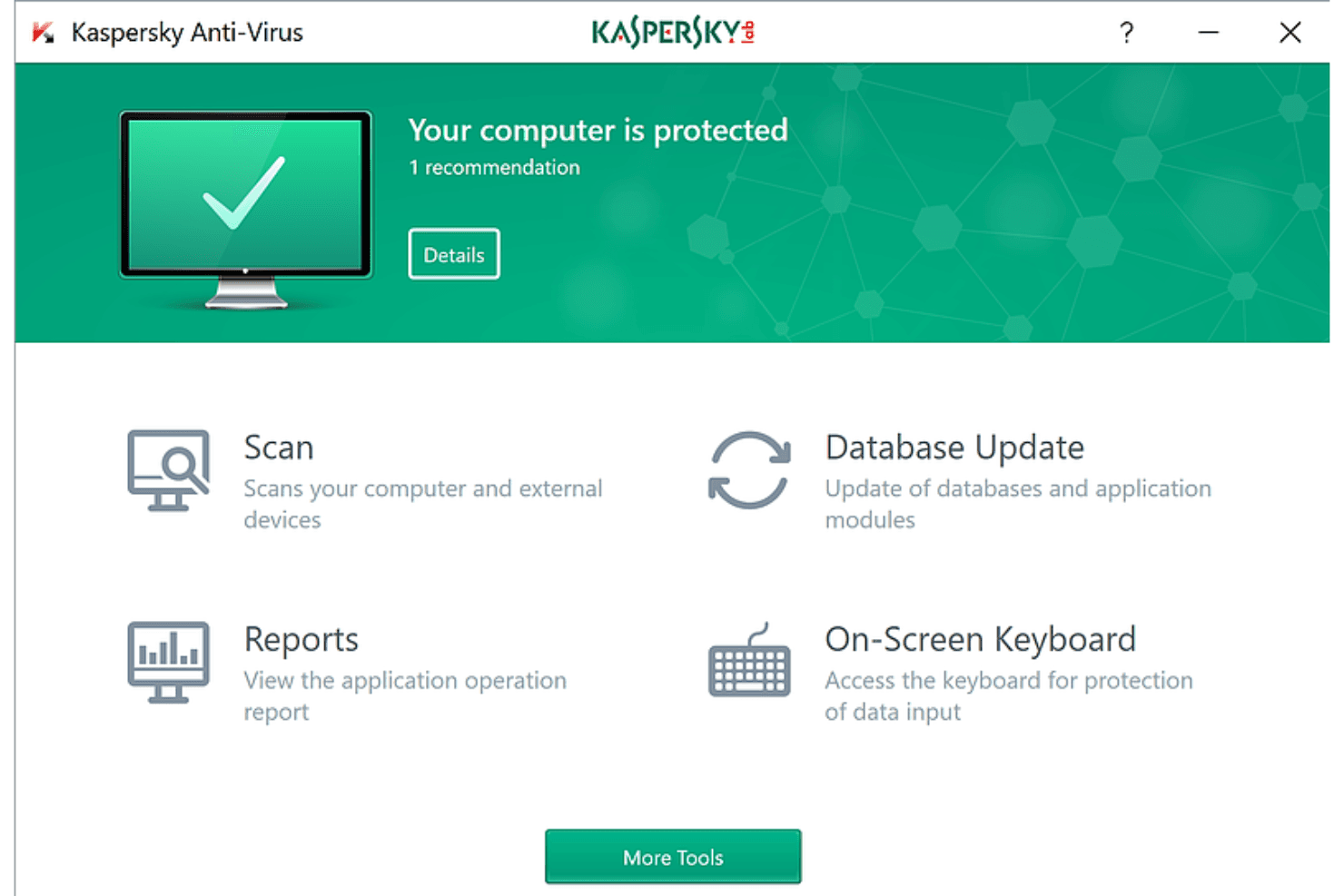
The Kaspersky security software is generally user-friendly, with an interface that's easy to navigate across Windows, macOS, Android, and iOS devices. You can quickly access its core features, like real-time protection and firewall settings, without getting lost in complex menus. However, some users mention that onboarding initially feels challenging, especially for those new to security software. Once you're familiar with its layout, managing your internet security becomes straightforward and efficient, allowing your team to focus on their work without constant interruptions.

Integrations
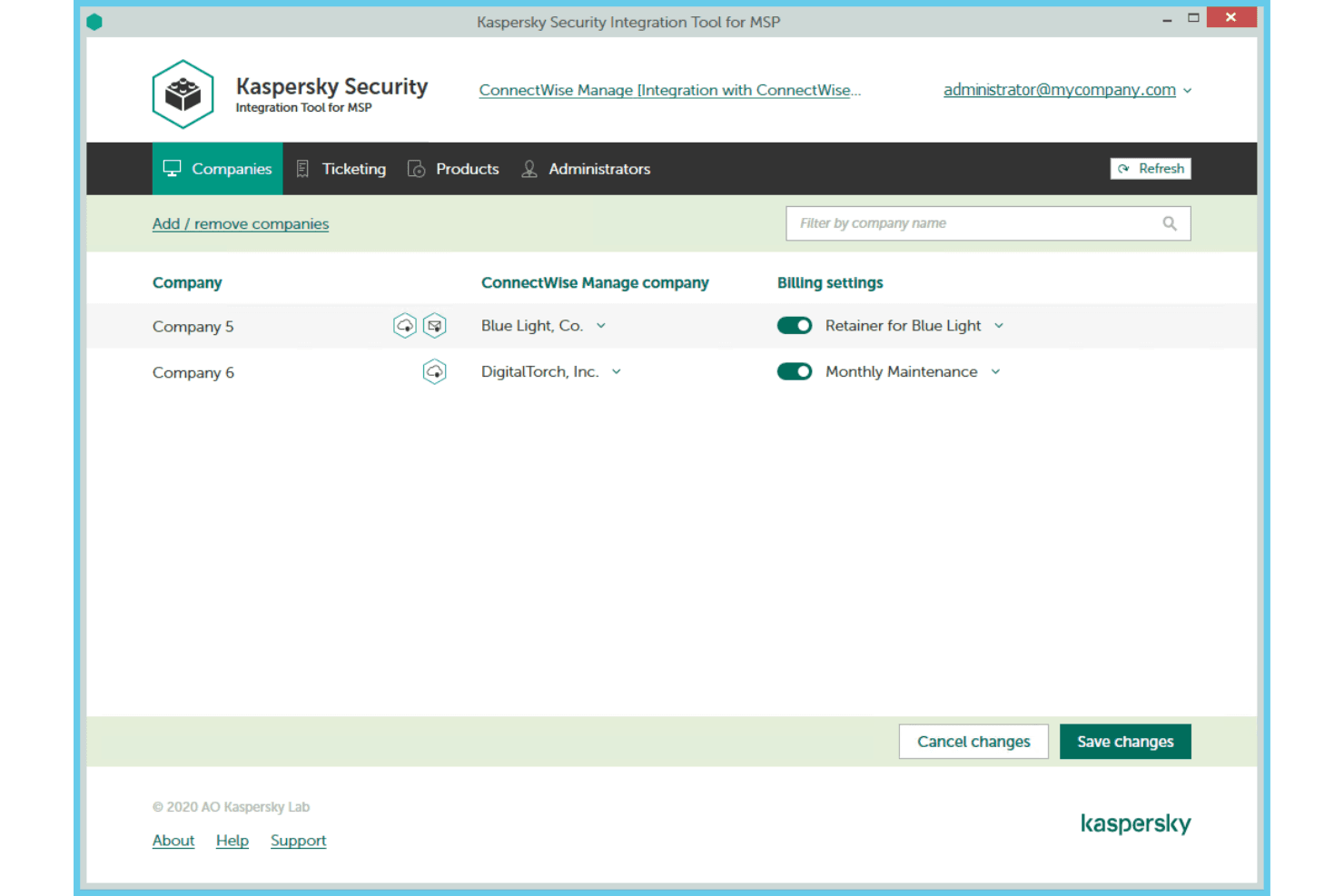
Kaspersky integrates with SolarWinds, SIEM, ThreatConnect, N-able, ConnectWise Manage, Autotask, Cortex XSOAR, and other Kaspersky products, such as its Automated Security Awareness Platform.
It also offers an API for custom integrations and connects with third-party integration tools.
Kaspersky Specs
- 2-Factor Authentication: Yes
- Access Management: Yes
- Anti-Virus: Yes
- API: Yes
- Audit Management: Yes
- Audit Trail: Yes
- Batch Permissions & Access: Yes
- Compliance Tracking: Yes
- Dashboard: Yes
- Data Export: Yes
- Data Import: Yes
- DDoS Protection: Yes
- External Integrations: Yes
- File Sharing: Yes
- File Transfer: Yes
- Firewall: Yes
- Incident Management: Yes
- Malware Protection: Yes
- Multi-User: Yes
- Notifications: Yes
- Password & Access Management: Yes
- Policy Management: Yes
- Real-time Alerts: Yes
- Report & Compliance: Yes
- Risk Assessment: Yes
- Security Migration: Yes
- Threat Detection: Yes
- Workflow Management: Yes
Alternatives to Kaspersky


Kaspersky FAQs
What's Next?