

Recensione di Zoho Sprints: Pro, Contro, Caratteristiche e Prezzi Spiegati
Ho messo Zoho Sprints alla prova—se cerchi strumenti agili che si adattino davvero al tuo flusso di lavoro (e non il contrario), scopri cosa lo distingue nel 2026.

Recensiamo gli strumenti in modo indipendente e le commissioni ci aiutano a finanziare i nostri test. Consulta la nostra politica sulla trasparenza, la nostra metodologia, oppure suggerisci uno strumento.
Zoho Sprints is an agile software development tool built around scrum—giving development teams a dedicated space for sprint planning, backlog management, and velocity tracking. It's worth a close look if your team wants to move away from Jira but doesn't want to deal with its configuration overhead and licensing costs. Zoho Sprints keeps things lean without stripping out the features that matter for sprint-based delivery.
Zoho Sprints Evaluation Summary
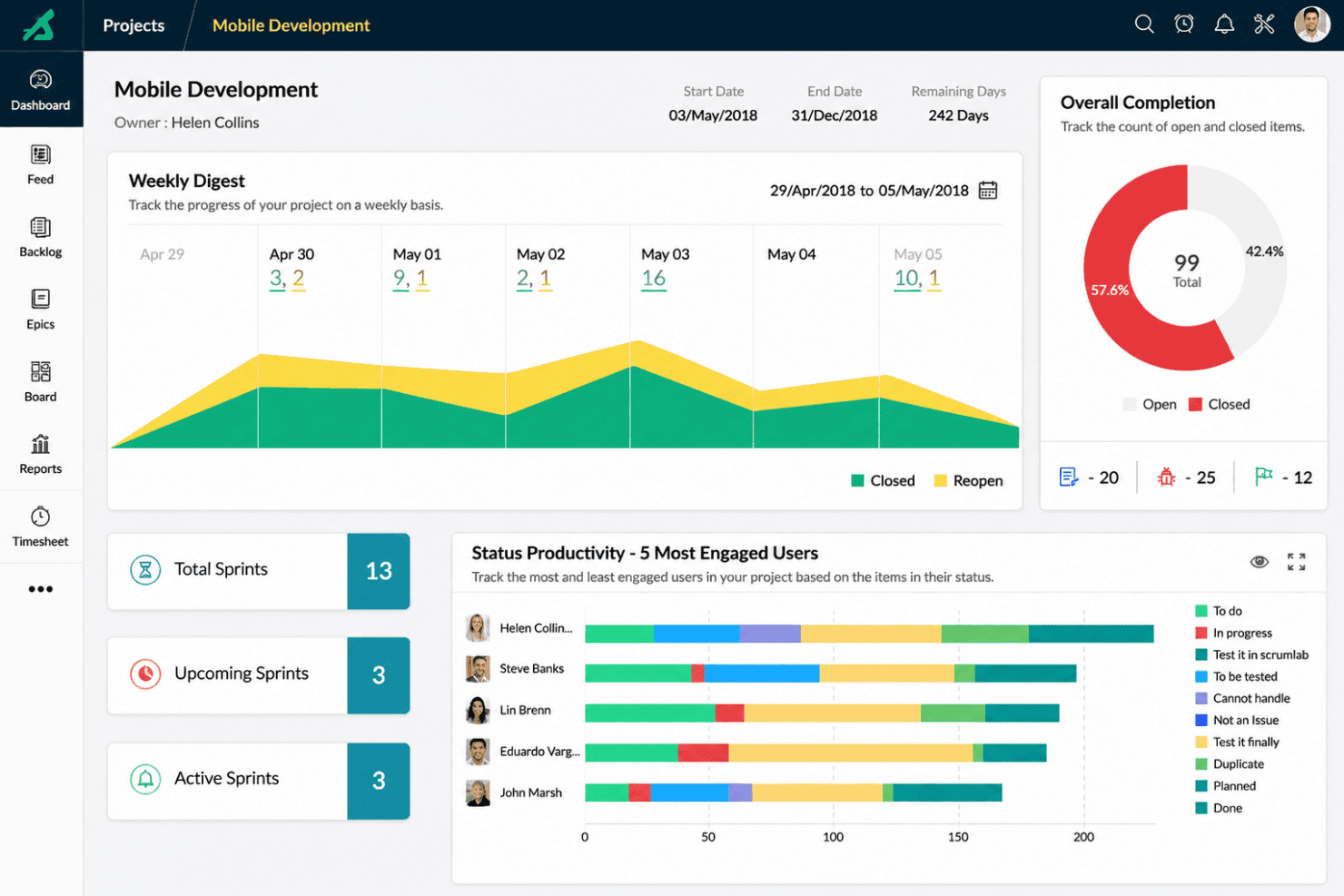
4.2/5
- From $1/user/month (12 user minimum)
- 15-day free trial
Perché fidarsi dei nostri consigli sui software
6,700+
Reviews
20
Industry experts
16+
Evaluation factors
14
Years
Il nostro team testa e recensisce software dal 2012. In quanto leader tecnologici noi stessi, sappiamo quanto sia difficile — e importante — scegliere il software giusto.
Per questa guida, abbiamo valutato gli strumenti attraverso test praticie ricerche indipendenti, assegnando un punteggio agli strumenti in base ai nostri criteri di selezione.
Le nostre recensioni riflettono il nostro giudizio editoriale umano, non un discorso di vendita.
Revisori esperti:
- Paulo Gardini MiguelDirettore tecnico
 Tim FisherVP dell'IA
 Gabriel RosasTech Lead e architetto software
 Christhian GruhnTech Lead e architetto della piattaforma

Zoho Sprints Overview
When judging Zoho Sprints, I think its clean user interface, simple onboarding, and flexible boards make it easy to choose for agile teams new to agile project management. The pricing is fair for the features you get, and the integrations cover most needs, though deeper dev tool integrations would help. Compared to options like Trello or Asana, I find Zoho Sprints outperforms in usability and core functionality but can underperform on advanced customization. I’d recommend selecting it for small to mid-sized teams or organizations adopting agile methodologies, prioritizing clarity and fast adoption over niche configuration.
Pros
- Sprint planning and backlog management are straightforward for teams.
- Customizable scrum boards support unique team workflows well.
- Built-in reports and notifications help track progress and flag bottlenecks in real-time.
Cons
- Mobile app features are limited compared to desktop.
- Notifications lack granular controls, making it hard to tune alerts without noise.
- Advanced permissions are less flexible for large agile organizations.
Is Zoho Sprints Right For Your Needs?
Who Would be a Good Fit for Zoho Sprints?
Zoho Sprints is a great choice for startups, agile software teams, and digital agencies that want an easy-to-learn, affordable agile platform. Its simple backlogs and sprint planning make it ideal for fast-moving product teams. Smaller IT departments, SaaS companies, and consulting firms looking for quick onboarding and high flexibility will find features like Kanban views, timesheets, and customization options especially appealing.
- Agile Product TeamsSprint planning, backlog management, and progress tracking for iterative product development are well supported.
- Small Tech StartupsLow entry cost and intuitive onboarding make Zoho Sprints ideal for small businesses building products without complex tool configuration.
- Digital AgenciesClient management, permissions, and time tracking fit fee-for-service and project-based work.
- IT DepartmentsSimple ticketing, workflow customization, and reporting help track internal projects efficiently.
- SaaS ProvidersSmooth integrations and DevOps tooling connect code, releases, and support easily.
- Consulting FirmsFlexible project templates and user roles enable tailored agile processes for different clients.
Who Would be a Bad Fit for Zoho Sprints?
Larger enterprises, manufacturing, or non-technical teams that need deep portfolio management or process mapping beyond standard agile methodologies will miss enterprise-level features. Regulated industries, construction, and organizations stuck in traditional project management may find it lacking audit trails, resource forecasting, or waterfall-style planning. Zoho Sprints also isn’t built for cross-departmental programs—teams often compare it against platforms like Asana for broader enterprise needs.
- Large EnterprisesMissing advanced portfolio management, roadmap planning, and resource management for high-scale projects.
- Manufacturing CompaniesDoesn’t offer built-in Gantt charts, critical path analysis, or physical asset tracking needed for factory project planning.
- Finance DepartmentsLacks robust compliance tracking, advanced approval workflows, and regulatory audit features.
- Construction TeamsNo native support for field reporting, site management, or complex scheduling and dependency mapping.
- Waterfall-Only TeamsAgile-focused design and terminology make traditional, linear project management cumbersome.
- Non-Technical StaffKanban, sprint, and backlog concepts can feel overly complex for business teams outside IT or software.
La Nostra Metodologia di Recensione
Come Testiamo e Valutiamo gli Strumenti
Abbiamo trascorso anni a costruire, perfezionare e migliorare il nostro sistema di testing e valutazione del software. Il nostro schema è progettato per cogliere le sfumature della selezione software e cosa rende efficace uno strumento, focalizzandosi sugli aspetti critici del processo decisionale.
Di seguito, puoi vedere esattamente come funziona il nostro testing e punteggio su sette criteri. Ci permette di offrire una valutazione imparziale del software basata su funzionalità principali, caratteristiche distintive, facilità d’uso, onboarding, assistenza clienti, integrazioni, recensioni dei clienti e rapporto qualità-prezzo.
Funzionalità Principali (25% del punteggio finale)
Il punto di partenza della nostra valutazione è sempre la funzionalità principale dello strumento. Ha le funzioni e caratteristiche base che ci si aspetta? Alcune di queste caratteristiche sono limitate ai piani tariffari superiori? Fondamentalmente, ci aspettiamo che uno strumento regga il confronto rispetto alle capacità di base dei concorrenti.
Caratteristiche Distintive (25% del punteggio finale)
Successivamente, valutiamo le caratteristiche distintive e non comuni che vanno oltre la funzionalità base tipicamente trovata negli strumenti di questa categoria. Un punteggio alto riflette funzionalità specializzate o uniche che rendono il prodotto più veloce, efficiente o offrono ulteriore valore all’utente.
Valutiamo inoltre quanto sia semplice integrare altri strumenti tipicamente utilizzati nell’infrastruttura tecnologica per espandere la funzionalità e l’utilità del software. Gli strumenti che offrono numerose integrazioni native, connessioni di terze parti e accesso API per creare integrazioni personalizzate ottengono i punteggi migliori.
Facilità d’Uso (10% del punteggio finale)
Consideriamo quanto sia rapido e semplice svolgere i compiti definiti nella funzionalità principale utilizzando lo strumento. Il software con punteggio alto è ben progettato, intuitivo da usare, offre app mobili, fornisce modelli e rende semplici attività relativamente complesse.
Onboarding (10% del punteggio finale)
Sappiamo quanto sia importante l’adozione rapida da parte del team per una nuova piattaforma, quindi valutiamo quanto sia facile imparare e utilizzare uno strumento con formazione minima. Valutiamo quanto velocemente un membro del team possa iniziare a usare lo strumento anche senza esperienza. Soluzioni con punteggio alto indicano che sono richiesti pochi o nessun supporto.
Assistenza Clienti (10% del punteggio finale)
Esaminiamo quanto sia veloce e facile ricevere assistenza e risolvere problemi tramite telefono, live chat o knowledge base. Gli strumenti e le aziende che garantiscono supporto in tempo reale ottengono il miglior punteggio, mentre i chatbot ottengono il peggiore.
Recensioni dei Clienti (10% del punteggio finale)
Oltre ai nostri test e valutazioni, prendiamo in considerazione il net promoter score dei clienti attuali e passati. Valutiamo la probabilità che, data la scelta, selezionerebbero nuovamente lo strumento per la funzionalità principale. Un software con punteggio alto riflette un alto net promoter score da parte dei clienti attuali o passati.
Rapporto Qualità-Prezzo (10% del punteggio finale)
Infine, considerando tutti gli altri criteri, analizziamo il prezzo medio dei piani base rispetto alle funzionalità principali e consideriamo il valore degli altri criteri di valutazione. Il software che offre di più a meno otterrà un punteggio più alto.
Core Features
Scrum Boards
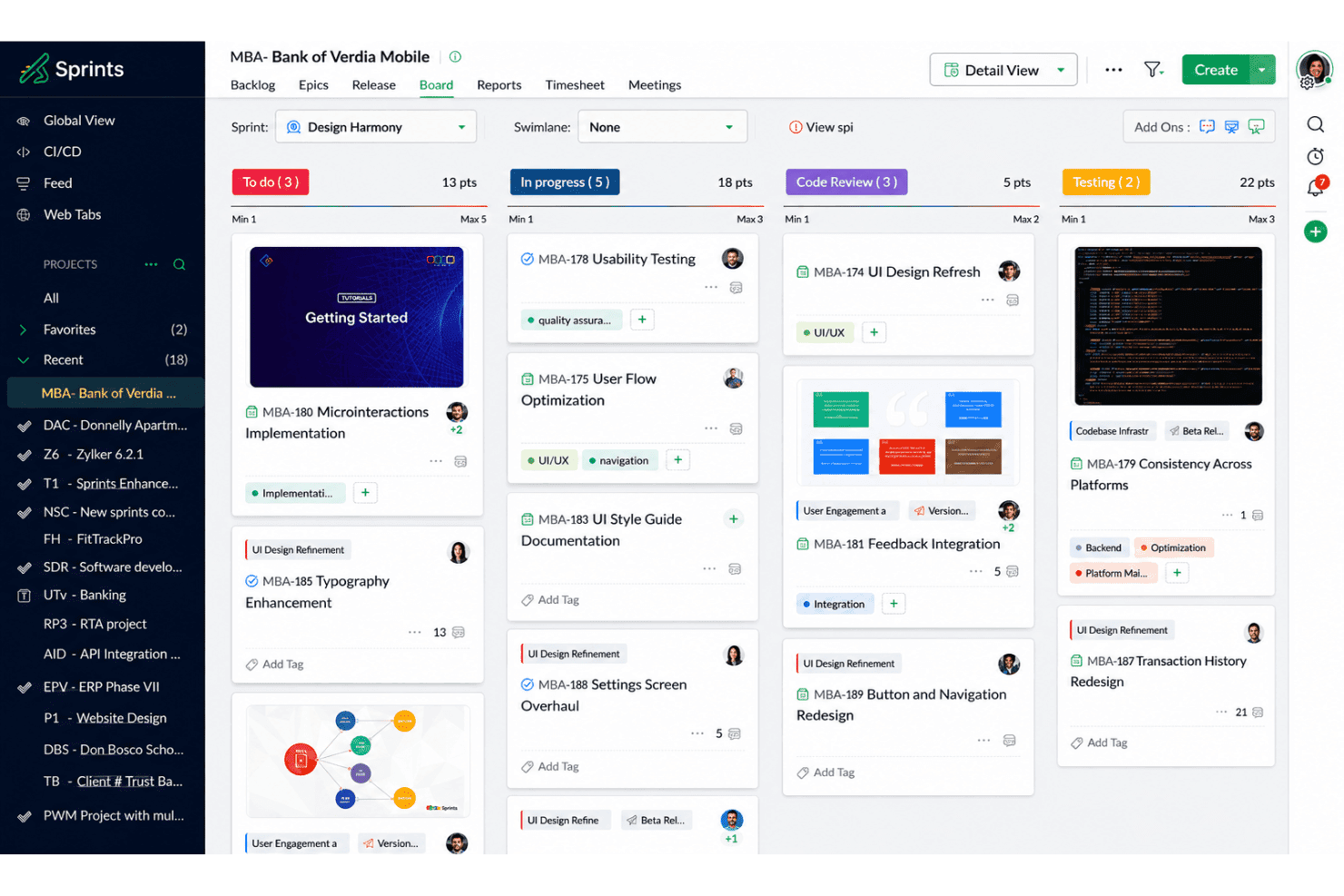
Task management is visual—arrange cards across custom columns to track all in-progress work. Teams get real-time visibility into work in progress and catch bottlenecks at a glance.
Backlog Management
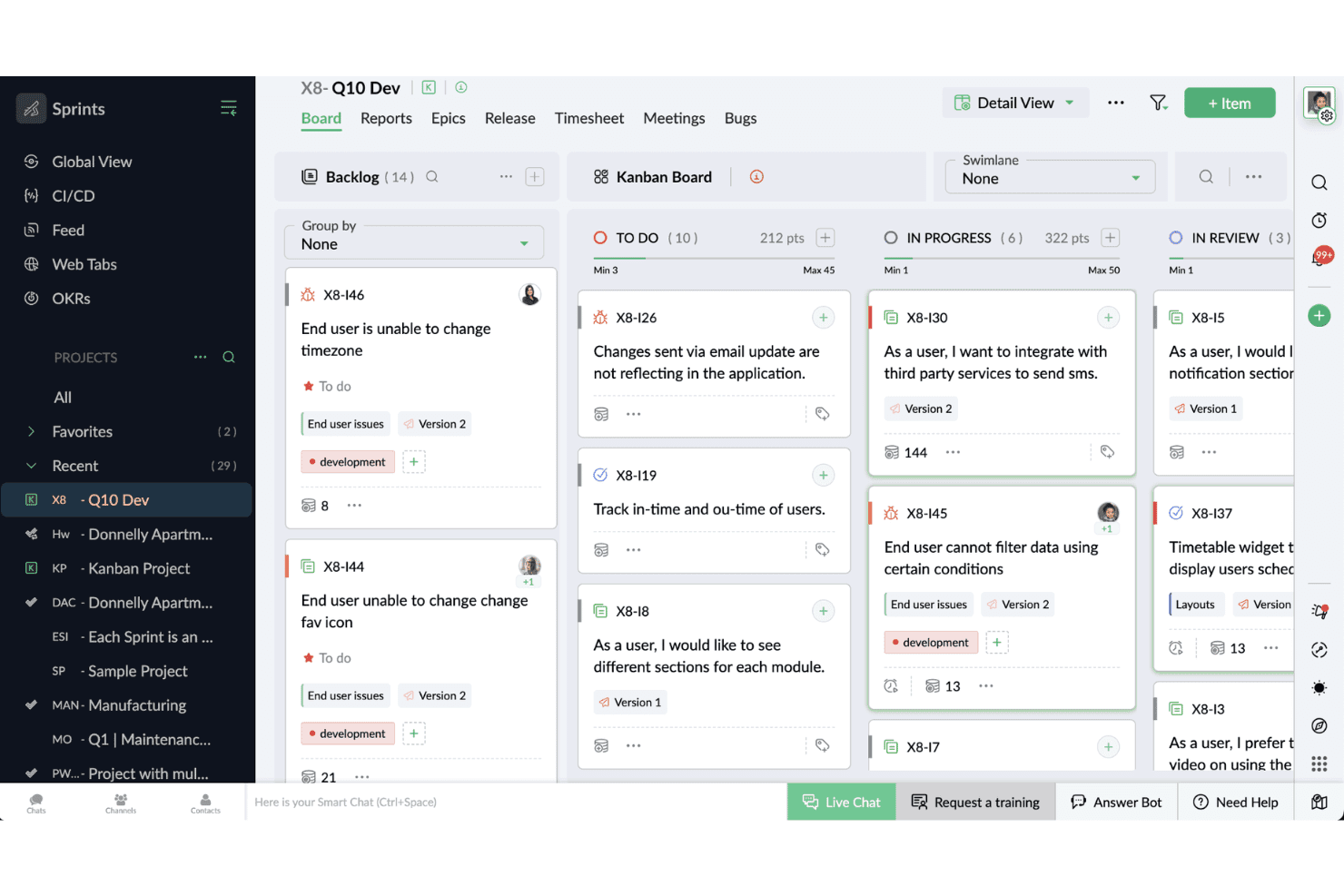
Prioritize, sort, and refine user stories in a drag-and-drop list. This keeps planned work organized for agile development and ready for sprints.
Sprint Planning
Set sprint goals, enable automation for recurring tasks, and assign work in one place. Sprints can be adjusted mid-cycle—enabling prioritization of urgent work as needs evolve.
Timesheet Tracking
Log effort and time for each task with built-in timesheets. Managers review progress and spot under- or over-utilization easily.
Velocity Charts
Track team speed with automatic velocity and burndown charts. Teams compare past sprints using burnup alongside burndown data to better estimate future workload.
Custom Workflows
Tailor fields, statuses, and board layouts to suit product management or development team needs.Scrum teams control how their process flows from start to finish.
Ease of Use
Zoho Sprints stands out for its user-friendly navigation and drag-and-drop boards, which let teams adapt quickly without lengthy onboarding. I’ve noticed that even new users can easily manage backlogs, sprints, and reports thanks to its clean, logical layout. The mobile app is less robust, but for web use, the simplicity wins out for busy tech teams looking to avoid unnecessary complexity.
Integrations
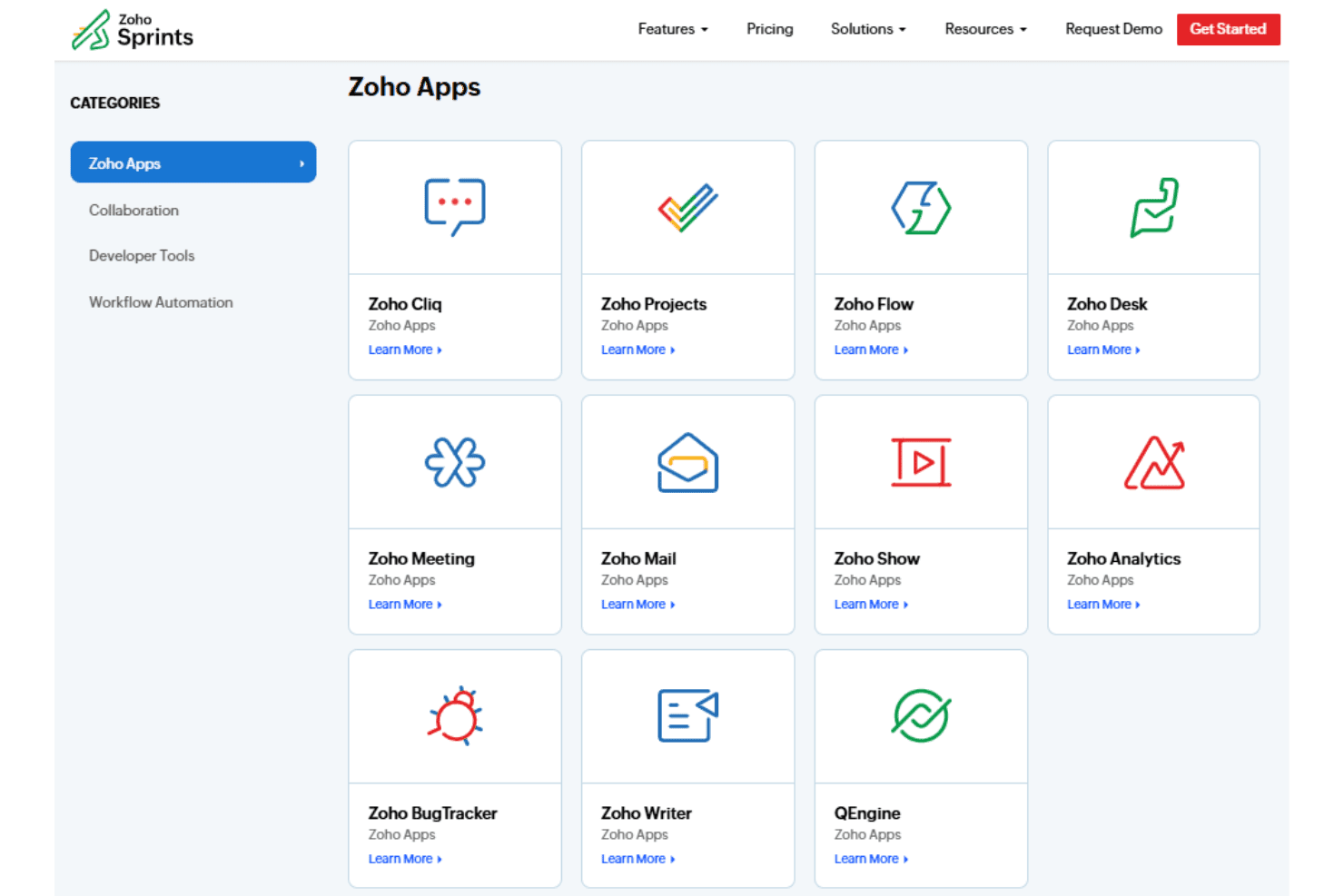
Zoho Sprints integrates with Zoho Cliq, Zoho Projects, Zoho Flow, Zoho Desk, Zoho Analytics, Microsoft Teams, Google Workspace, Jira, GitHub, and GitLab, among others.
Zoho Sprints also provides a REST API and supports third-party integration tools such as Zapier.
Zoho Sprints Specs
- API: Yes
- Approval Workflows: Yes
- Batch Permissions & Access: Yes
- Budgeting: Yes
- Calendar Management: Yes
- Contact Management: Yes
- Contact Sharing: Yes
- Custom Reports: Yes
- Customer Management: Yes
- Dashboard: Yes
- Dashboards: Yes
- Data Export: Yes
- Data Import: Yes
- Data Visualization: Yes
- Document Management: Yes
- Expense Tracking: Yes
- External Integrations: Yes
- Gantt Charts: Yes
- Multi-User: Yes
- Notifications: Yes
- Process Modeling: Yes
- Project Management: Yes
- Resource Management: Yes
- Risk Assessment: Yes
- Roadmapping: Yes
- Scheduling: Yes
- Task Scheduling/Tracking: Yes
- Third-Party Plugins/Add-Ons: Yes
- Travel Management: Yes
- Workflow Management: Yes