
Recensione ER/Studio: Pro, Contro, Caratteristiche e Guida ai Prezzi



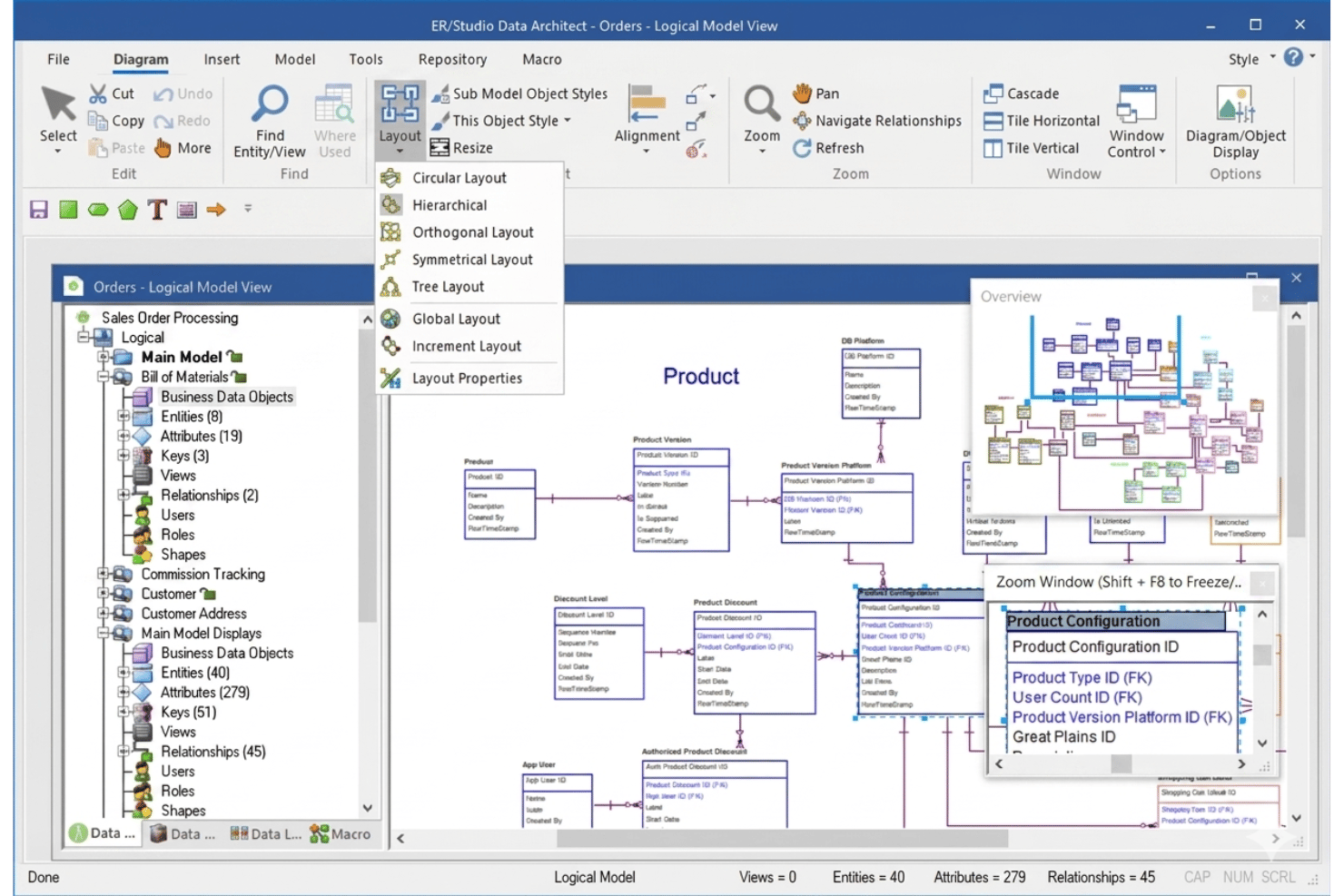
ER/Studio is an enterprise data modeling and data architecture platform built for teams managing complex, multi-system environments. It goes beyond basic database design tools, helping you define, standardize, and govern how data is structured and understood across your organization.
If you’re dealing with multiple databases, cloud platforms, or distributed data systems, ER/Studio gives you a single, consistent way to model data, align business definitions with technical structures, and maintain control as your architecture evolves. It’s designed for data architects, engineers, and governance teams who need more than diagrams—they need a reliable foundation for how data is defined, connected, and managed at scale.
In this review, I’ll walk you through ER/Studio’s features, use cases, pros and cons, and pricing to help you decide whether it’s the right fit for your data stack.
ER/Studio Evaluation Summary
- From $2,687/user (billed annually)
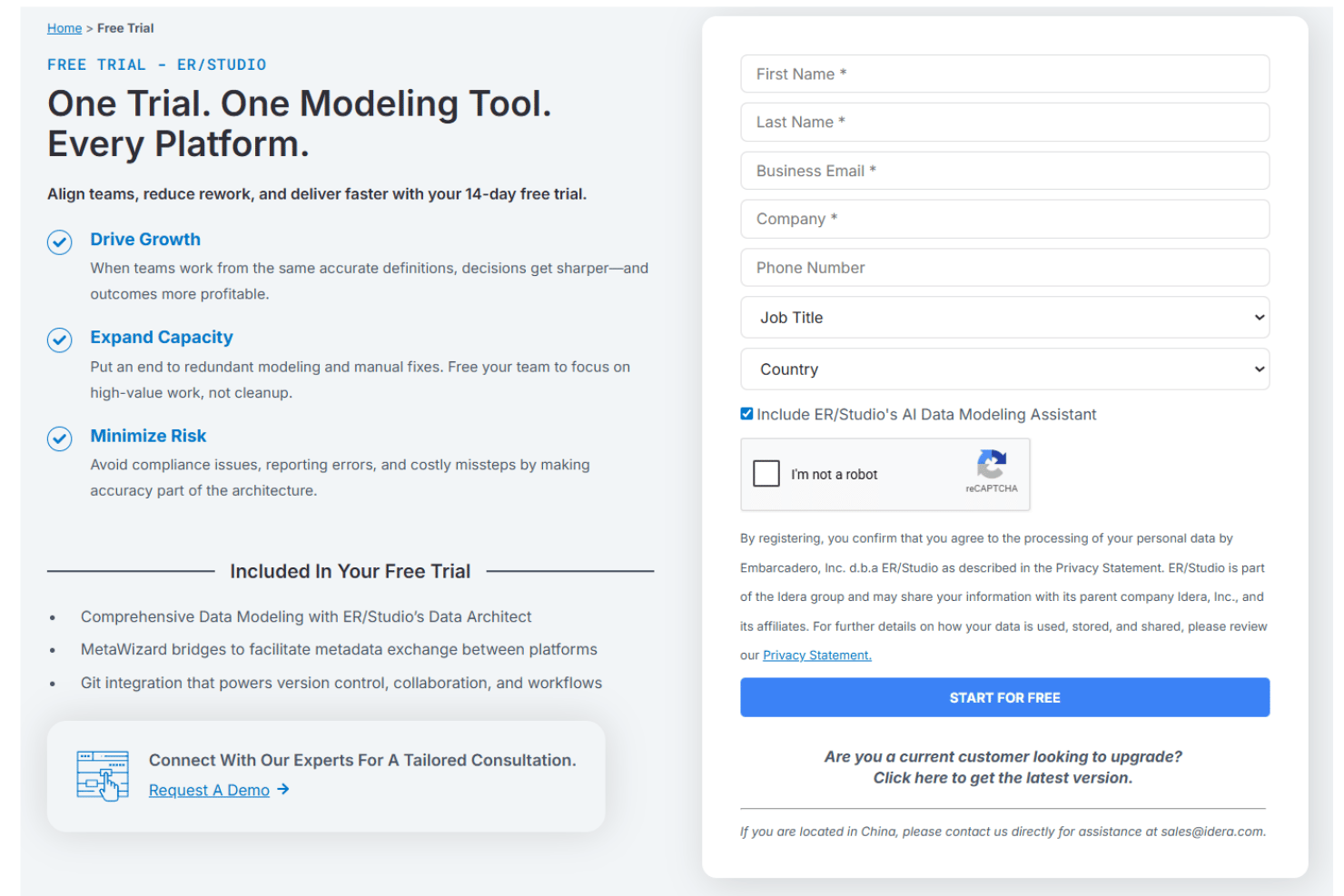
- Free trial + free demo available
Perché fidarsi dei nostri consigli sui software
Il nostro team testa e recensisce software dal 2012. In quanto leader tecnologici noi stessi, sappiamo quanto sia difficile — e importante — scegliere il software giusto.
Per questa guida, abbiamo valutato gli strumenti attraverso test praticie ricerche indipendenti, assegnando un punteggio agli strumenti in base ai nostri criteri di selezione.
Le nostre recensioni riflettono il nostro giudizio editoriale umano, non un discorso di vendita.
Revisori esperti:
ER/Studio Overview
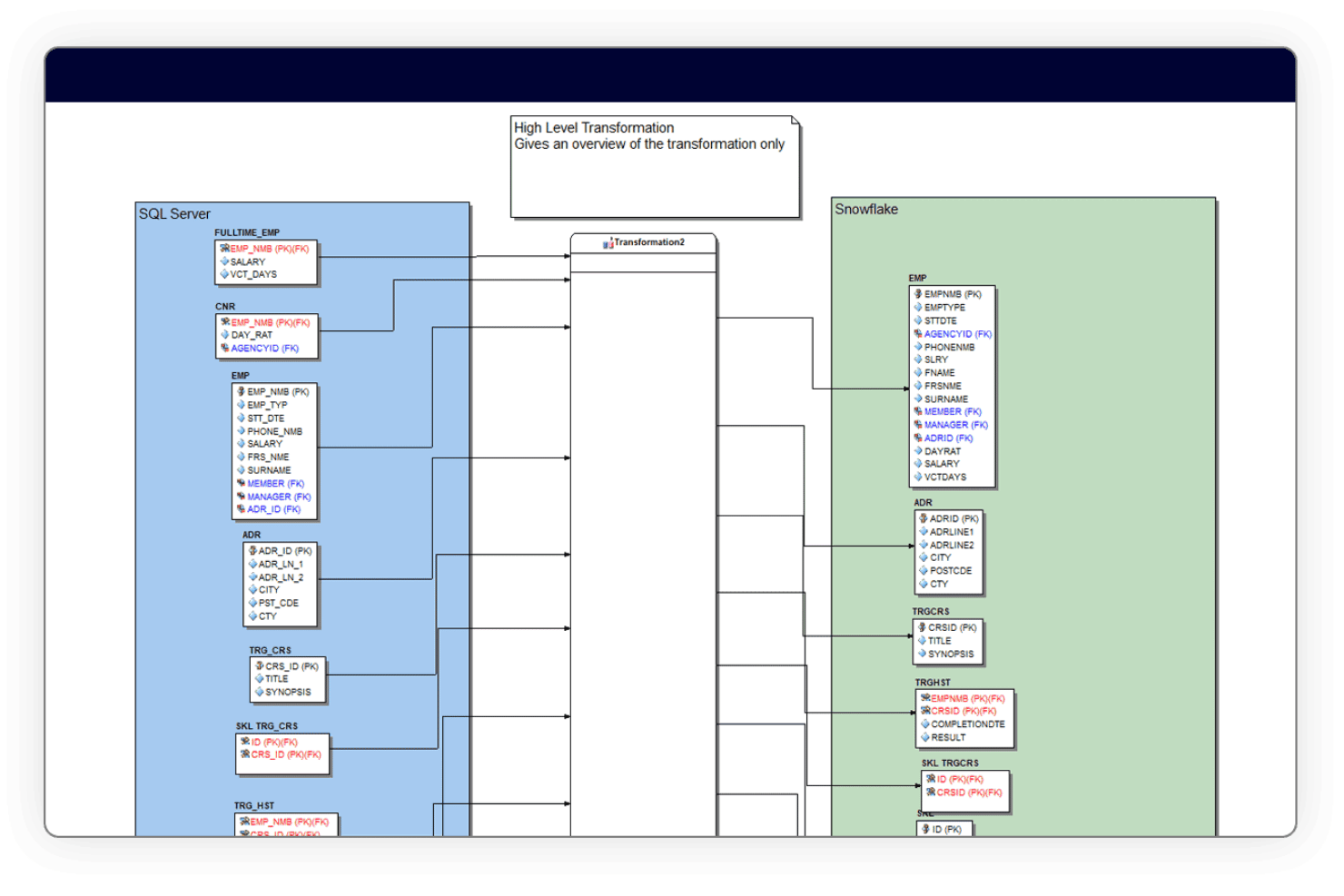
What stands out to me about ER/Studio is how it handles complexity across modern data environments. It’s not limited to a single database or platform—you can model across cloud, relational, and semi-structured systems while keeping everything aligned in one place. That becomes especially valuable when you’re managing change, because features like compare and merge, reverse and forward engineering, and lineage tracking give you real control over how your data evolves.
I also see ER/Studio as a strong foundation for governance and consistency. It connects business definitions to technical models, enforces standards, and fits into development workflows through integrations and version control. It’s not designed for lightweight use, but if your goal is to bring structure and clarity to complex data systems, it delivers where simpler tools fall short.
pros
-
Models and standardizes data across complex, multi-platform environments.
-
Connects business definitions, metadata, and models for full alignment.
-
Advanced change management with compare, merge, and lineage visibility.
cons
-
Steeper learning curve for teams new to data modeling.
-
Requires workflow integration to realize full platform value.
-
Not a standalone data catalog or governance solution.
Is ER/Studio Right For Your Needs?
Who Would be a Good Fit for ER/Studio?
ER/Studio fits best for mid-sized to large organizations with complex, multi-system data environments, offering significant value where structured modeling, data governance, and cross-platform consistency are priorities.
-
Enterprise Data Architecture Teams
Teams managing multiple databases, platforms, and systems benefit from unified modeling, version control, and cross-environment consistency.
-
Data Governance and Stewardship Initiatives
Organizations standardizing definitions, enforcing naming conventions, and aligning business and technical metadata gain strong value from ER/Studio.
-
Regulated and Compliance-Driven Environments
Industries like finance, healthcare, and government benefit from lineage visibility, auditability, and consistent data definitions.
-
Multi-Platform and Hybrid Cloud Environments
Teams working across cloud, on-prem, and mixed data systems can model and manage everything in one consistent framework.
-
Data Engineering and Database Development Teams
Teams responsible for schema design, change management, and database evolution benefit from compare/merge, reverse engineering, and lifecycle control.
-
Organizations Building AI-Ready or Analytics-Ready Data Foundations
Teams that need consistent, well-defined data structures to support analytics and AI benefit from ER/Studio’s semantic and metadata alignment.
Who Would be a Bad Fit for ER/Studio?
ER/Studio is a poor fit for teams with low data complexity, lacking governance needs, short-lived projects, or those wanting only lightweight diagramming or analytics tools.
-
Small Organizations with Minimal Data Complexity
Organizations with a single database or minimal data integration needs won’t benefit from its full capabilities and advanced feature set.
-
Teams Without Data Modeling or Governance Practices
Without dedicated roles or defined processes, ER/Studio’s structure, standards, and governance features are often underutilized.
-
Pipeline- or Analytics-Only Teams
Teams focused only on data transformations or dashboards may not need full data architecture and modeling tooling.
-
Short-Term or One-Off Projects
Temporary or short-lived initiatives don’t justify the investment in modeling, standards, and governance setup.
-
Highly Unstructured or Schemaless Data Environments
Use cases without defined schemas or structured data won’t fully benefit from ER/Studio’s core strengths.
-
Teams Seeking Lightweight Diagramming Tools
Simple ERD or visualization-only needs are better served by less complex, lower-cost, and easier-to-use tools.
La Nostra Metodologia di Recensione
Come Testiamo e Valutiamo gli Strumenti
Abbiamo trascorso anni a costruire, perfezionare e migliorare il nostro sistema di testing e valutazione del software. Il nostro schema è progettato per cogliere le sfumature della selezione software e cosa rende efficace uno strumento, focalizzandosi sugli aspetti critici del processo decisionale.
Di seguito, puoi vedere esattamente come funziona il nostro testing e punteggio su sette criteri. Ci permette di offrire una valutazione imparziale del software basata su funzionalità principali, caratteristiche distintive, facilità d’uso, onboarding, assistenza clienti, integrazioni, recensioni dei clienti e rapporto qualità-prezzo.
Funzionalità Principali (25% del punteggio finale)
Il punto di partenza della nostra valutazione è sempre la funzionalità principale dello strumento. Ha le funzioni e caratteristiche base che ci si aspetta? Alcune di queste caratteristiche sono limitate ai piani tariffari superiori? Fondamentalmente, ci aspettiamo che uno strumento regga il confronto rispetto alle capacità di base dei concorrenti.
Caratteristiche Distintive (25% del punteggio finale)
Successivamente, valutiamo le caratteristiche distintive e non comuni che vanno oltre la funzionalità base tipicamente trovata negli strumenti di questa categoria. Un punteggio alto riflette funzionalità specializzate o uniche che rendono il prodotto più veloce, efficiente o offrono ulteriore valore all’utente.
Valutiamo inoltre quanto sia semplice integrare altri strumenti tipicamente utilizzati nell’infrastruttura tecnologica per espandere la funzionalità e l’utilità del software. Gli strumenti che offrono numerose integrazioni native, connessioni di terze parti e accesso API per creare integrazioni personalizzate ottengono i punteggi migliori.
Facilità d’Uso (10% del punteggio finale)
Consideriamo quanto sia rapido e semplice svolgere i compiti definiti nella funzionalità principale utilizzando lo strumento. Il software con punteggio alto è ben progettato, intuitivo da usare, offre app mobili, fornisce modelli e rende semplici attività relativamente complesse.
Onboarding (10% del punteggio finale)
Sappiamo quanto sia importante l’adozione rapida da parte del team per una nuova piattaforma, quindi valutiamo quanto sia facile imparare e utilizzare uno strumento con formazione minima. Valutiamo quanto velocemente un membro del team possa iniziare a usare lo strumento anche senza esperienza. Soluzioni con punteggio alto indicano che sono richiesti pochi o nessun supporto.
Assistenza Clienti (10% del punteggio finale)
Esaminiamo quanto sia veloce e facile ricevere assistenza e risolvere problemi tramite telefono, live chat o knowledge base. Gli strumenti e le aziende che garantiscono supporto in tempo reale ottengono il miglior punteggio, mentre i chatbot ottengono il peggiore.
Recensioni dei Clienti (10% del punteggio finale)
Oltre ai nostri test e valutazioni, prendiamo in considerazione il net promoter score dei clienti attuali e passati. Valutiamo la probabilità che, data la scelta, selezionerebbero nuovamente lo strumento per la funzionalità principale. Un software con punteggio alto riflette un alto net promoter score da parte dei clienti attuali o passati.
Rapporto Qualità-Prezzo (10% del punteggio finale)
Infine, considerando tutti gli altri criteri, analizziamo il prezzo medio dei piani base rispetto alle funzionalità principali e consideriamo il valore degli altri criteri di valutazione. Il software che offre di più a meno otterrà un punteggio più alto.
Core Features
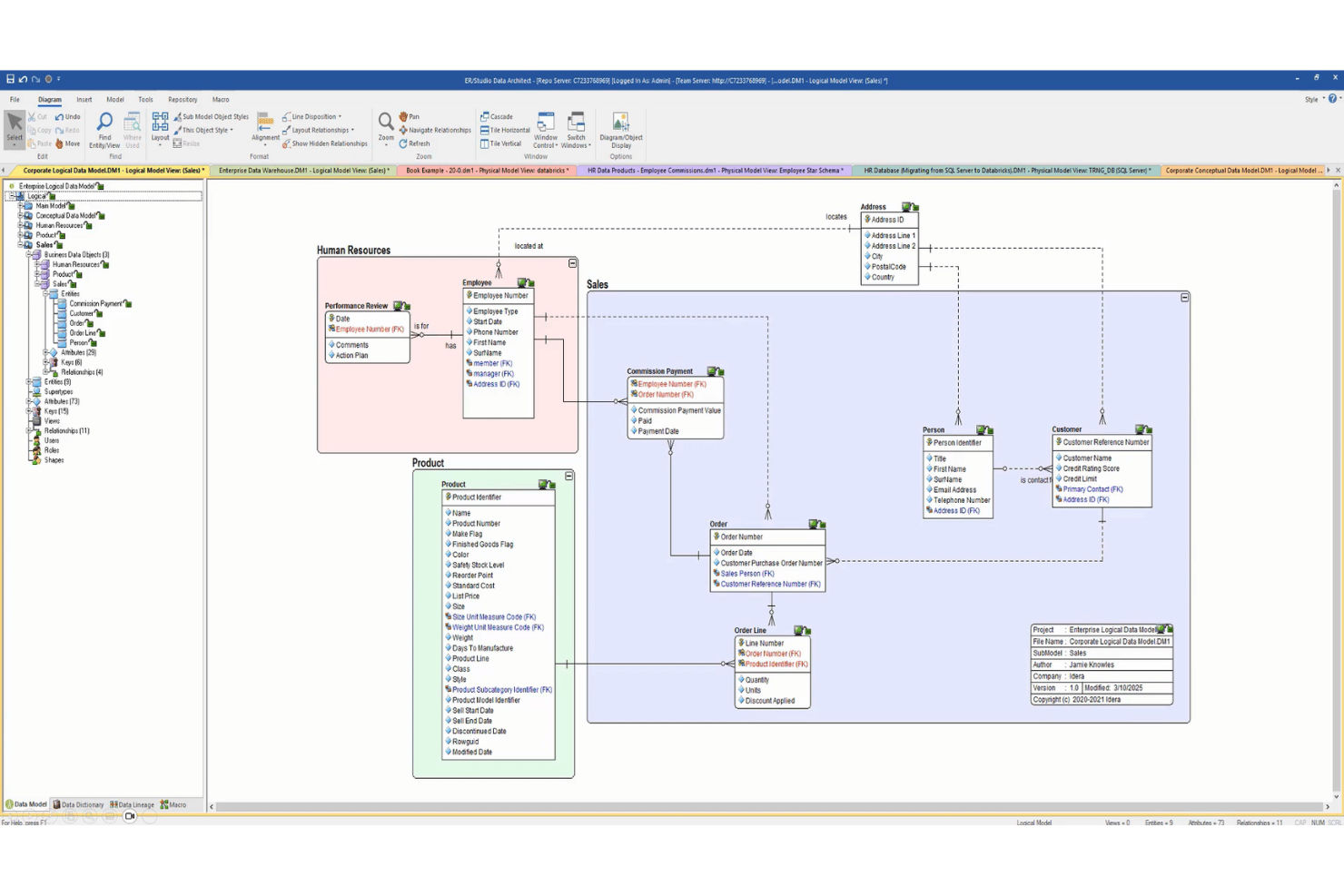
Conceptual, Logical, and Physical Data Modeling
Define and manage data at every layer, from business concepts to implementation. ER/Studio connects conceptual, logical, and physical models so business meaning stays aligned with technical execution.
Reverse and Forward Engineering
Generate models from existing databases or create databases directly from models. This keeps your documentation and live systems continuously aligned as changes occur.
Compare and Merge
Identify differences between models or databases and merge changes with control. This is critical for managing schema drift across development, test, and production environments.
Data Lineage and Impact Analysis
Visualize how data flows across systems and understand dependencies before making changes. This reduces risk and supports compliance, auditing, and change management.
Naming Standards and Reusable Metadata
Enforce consistency with standardized naming conventions, domains, and reusable templates. This ensures data models remain clean, consistent, and scalable across teams.
Multi-User Collaboration and Version Control
Work in a centralized repository with version history, check-in/check-out, and role-based access. Teams can collaborate in parallel while maintaining full control over changes.
Standout Features
Unified Multi-Platform Data Modeling
Model across relational, cloud, and semi-structured systems—like SQL Server, Snowflake, MongoDB, and Databricks—in a single environment. This eliminates fragmented tooling and gives you a consistent architectural view across your entire data ecosystem.
Business and Technical Alignment Through Metadata
ER/Studio connects business definitions, glossaries, and technical models into a single system of record. This creates a shared understanding of data across teams and ensures consistency in analytics, governance, and reporting.
End-to-End Data Lifecycle Control
From reverse engineering to deployment and ongoing updates, ER/Studio supports the full data lifecycle. With built-in lineage, impact analysis, and schema synchronization, you can manage change with confidence across complex environments.
Ease of Use
ER/Studio is built for depth rather than simplicity, so how easy it feels depends on your experience. If you’re familiar with data modeling, the interface is structured and logical, with powerful tools for modeling, lineage, and standards enforcement. But there is a learning curve—especially around metadata, governance, and impact analysis—and you’ll get the most value once it’s integrated into your team’s workflow rather than used occasionally.
Onboarding
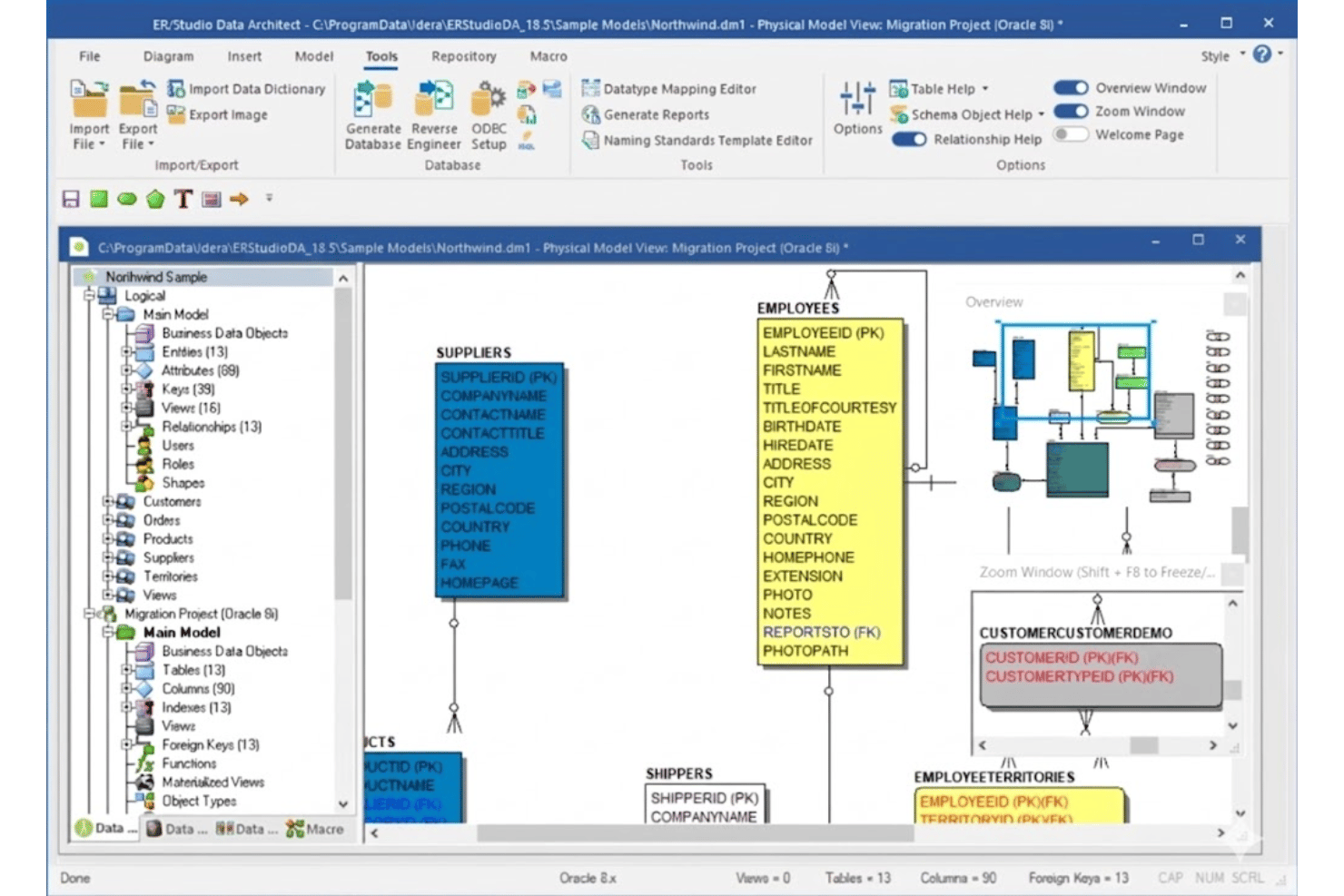
Onboarding with ER/Studio is typically a mix of guided support and self-serve, depending on your team’s size and experience. Most mid-sized and enterprise teams work with solution engineers or customer success to set up their environment, define modeling standards, and integrate ER/Studio into existing workflows. You’ll usually start by reverse-engineering existing databases to create baseline models, then build out structure and governance from there. While smaller teams can get up and running quickly, full adoption takes longer and is moderately to highly technical—especially if you’re implementing collaboration, governance, or integrations.
Customer Support
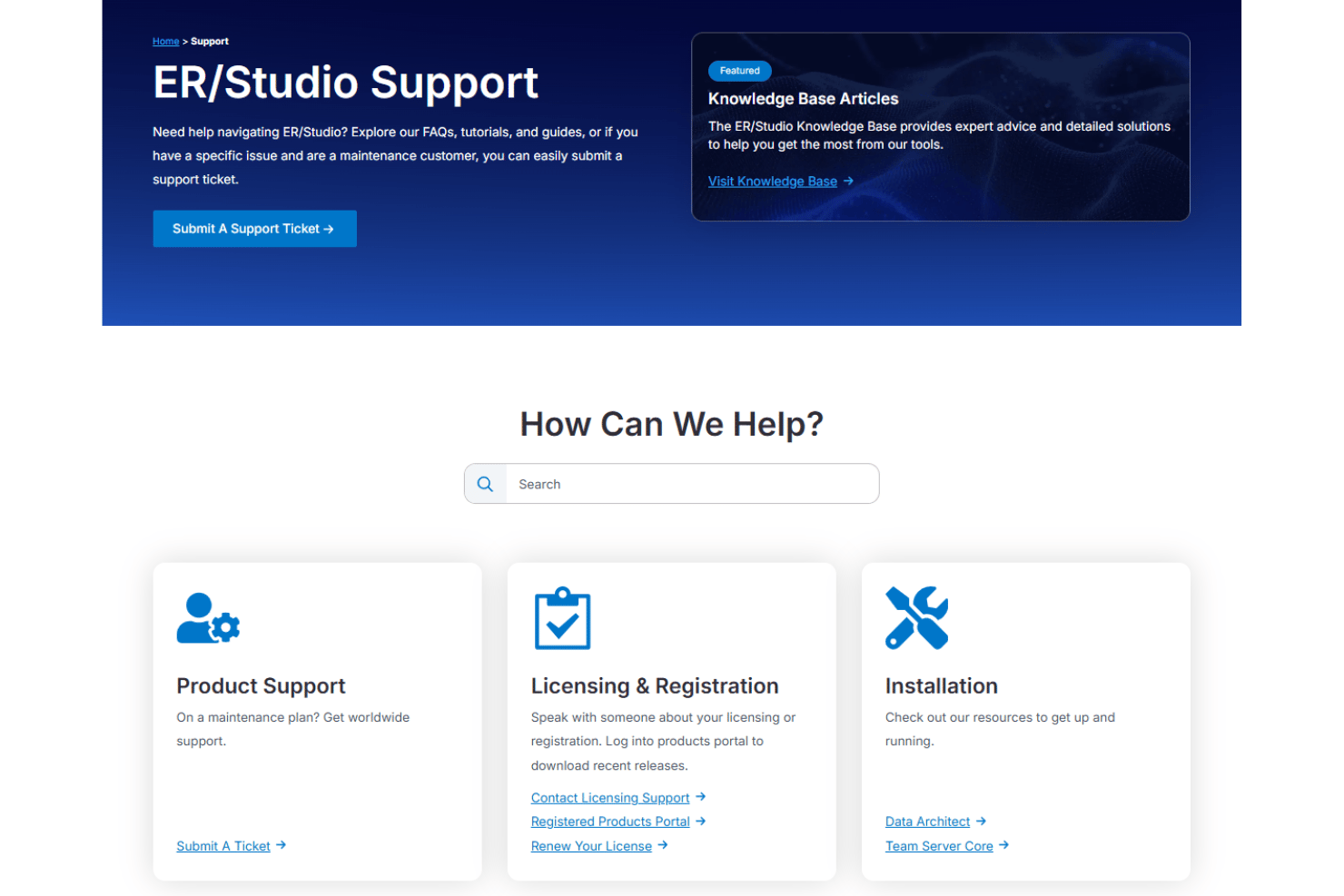
ER/Studio offers tiered support that scales based on your plan, with access to documentation, tutorials, and a knowledge base available to all users. For hands-on help, support tickets and technical assistance are tied to active maintenance, which is important to factor into long-term use.
If you opt for premium support, the experience becomes much more proactive. You get priority email and phone access, escalation to senior engineers, and options like live remote sessions, onboarding assistance, and training programs.
Integrations
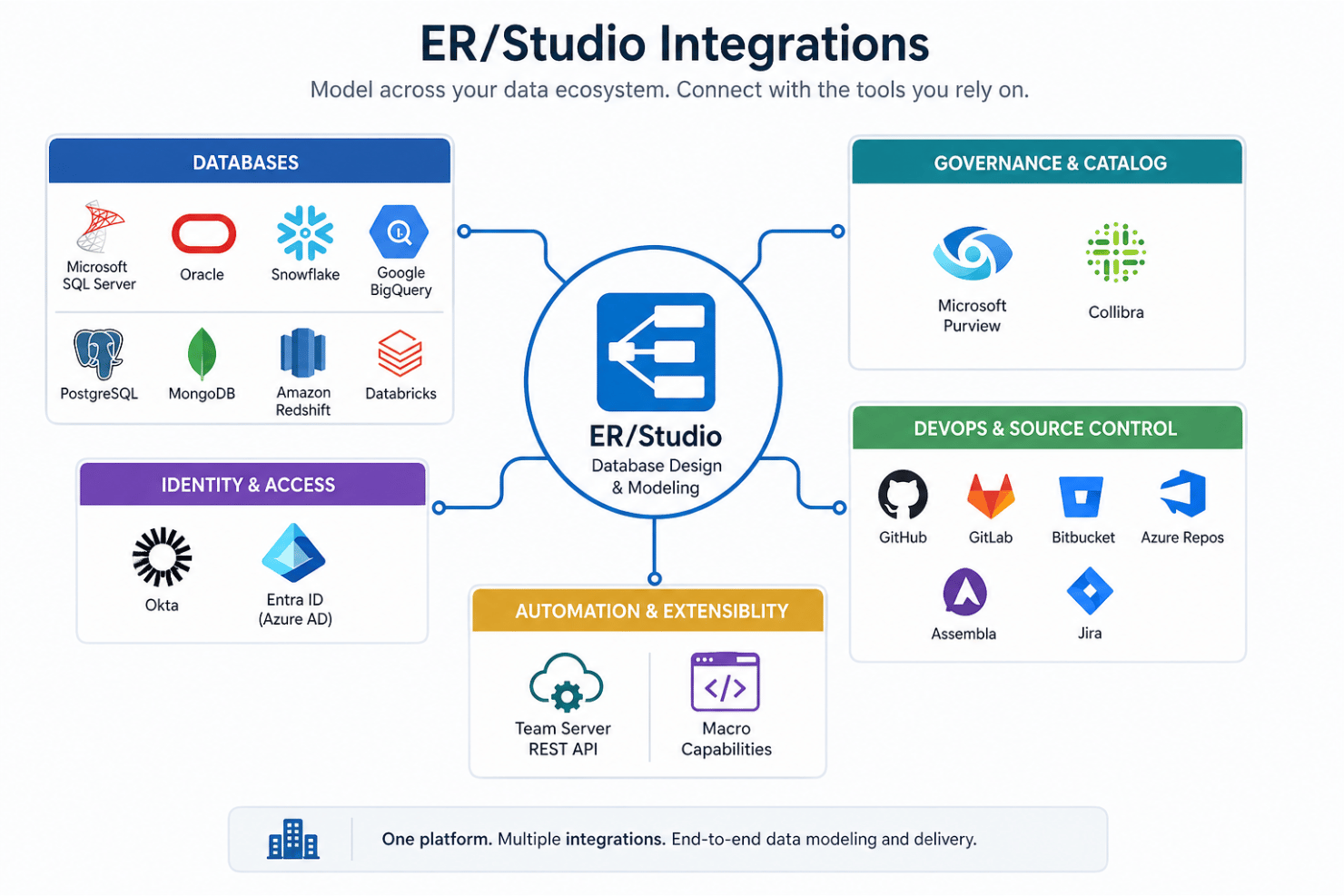
ER/Studio integrates with a wide range of databases, making it well-suited for complex, multi-platform environments. It supports major relational, cloud, and NoSQL systems like SQL Server, Oracle, Snowflake, BigQuery, PostgreSQL, MongoDB, Redshift, and Databricks, allowing you to model across your entire data ecosystem from one place.
It also connects with governance and DevOps tools like Microsoft Purview, Collibra, GitHub, GitLab, Bitbucket, Azure Repos, Assembla, and Jira, along with identity providers like Okta and Entra ID. For automation, ER/Studio offers a Team Server REST API and macro capabilities, so you can extend workflows and integrate them into broader enterprise processes.
Value for Money
ER/Studio is positioned as an enterprise-grade investment, and its pricing reflects that. Beyond data modeling, you’re investing in a platform that supports data architecture, governance, and lifecycle management across complex environments. For organizations dealing with multiple systems, compliance requirements, or large-scale data operations, the value is clear. But if your needs are simpler or more ad hoc, it can be harder to justify the cost.
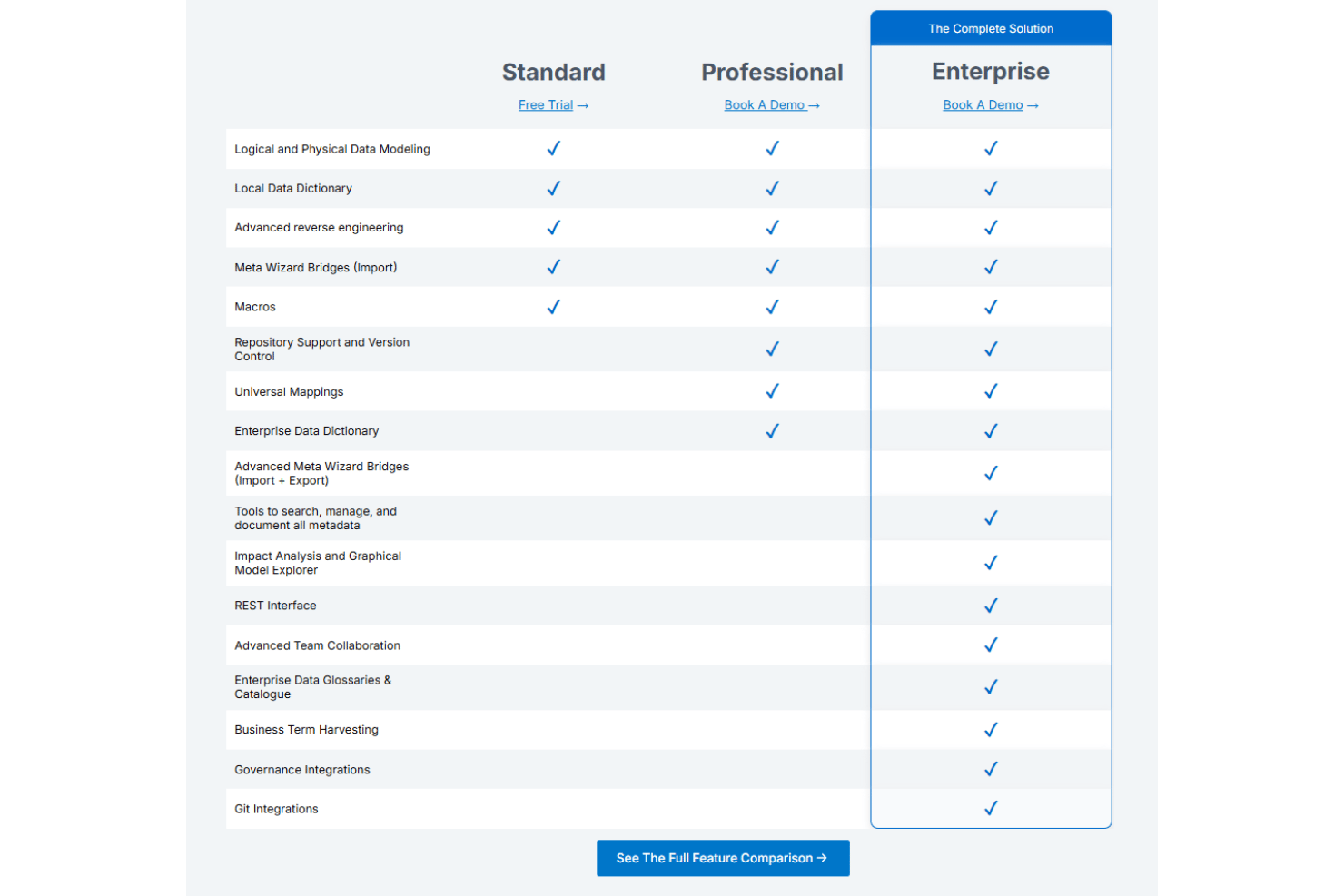
At its core is ER/Studio Data Architect, the desktop application used for modeling, design, and schema management across all tiers. As you move up editions, additional capabilities are layered on:
- Standard: Core data modeling for individuals and small teams.
- Professional: Adds collaboration, shared repository, and version control.
- Enterprise: Includes governance features, Team Server portal, and integrations.
Pricing for Standard and Professional is publicly listed, while Enterprise is quote-based, with additional costs depending on deployment, support, and advanced capabilities.
ER/Studio Specs
- 2-Factor Authentication
- A/B Testing
- Analytics
- API
- Calendar Management
- Contact Management
- Dashboard
- Data Export
- Data Import
- Data Mining
- Data Visualization
- External Integrations
- Forecasting
- Keyword Tracking
- Multi-User
- Notifications
- Scheduling
- SEO
ER/Studio Customers


ER/Studio FAQs
How does ER/Studio handle version control for data models?
Can ER/Studio support modeling across different database platforms simultaneously?
What data security and compliance features are available in ER/Studio?
How does ER/Studio integrate with data governance solutions?
Is ER/Studio available as a cloud or SaaS platform?
What reporting and documentation capabilities does ER/Studio provide?
Does ER/Studio support collaboration between distributed teams?
What kind of training and user support is available for ER/Studio?
ER/Studio Company Overview & History
ER/Studio is developed by IDERA, Inc., a company specializing in data management and modeling tools. Headquartered in Houston, Texas, IDERA serves thousands of organizations worldwide, including many Fortune 500 companies, across industries such as banking, healthcare, and government. The company manages a broad portfolio of software solutions for data architecture, monitoring, and security. Notable for its technical focus, IDERA operates a number of product brands beyond ER/Studio, including AquaFold and Precise.
ER/Studio Major Milestones
- 2000: Initial release of ER/Studio as a data modeling tool.
- 2015: IDERA acquires Embarcadero Technologies, expanding ER/Studio's functionality and reach.
- 2021: Rollout of major user experience improvements and metadata management enhancements for ER/Studio.
- 2023: Launch of deeper cloud and hybrid data platform integrations.