

Recensione Devs.ai: Pro, Contro, Caratteristiche e Prezzi Spiegati
Sei curioso di sapere se Devs.ai può davvero garantire una creazione rapida di app tramite IA? Analizzo dove eccelle, dove inciampa e perché non è la classica piattaforma adatta a tutti.

Recensiamo gli strumenti in modo indipendente e le commissioni ci aiutano a finanziare i nostri test. Consulta la nostra politica sulla trasparenza, la nostra metodologia, oppure suggerisci uno strumento.
Ever feel like your dev team is stuck building the same internal tools over and over, except each one takes three sprints longer than it should? Enter Devs.ai, the app builder promising to swap your ticket queue for a launchpad, so let's see if it actually delivers or just adds another tab to your browser.
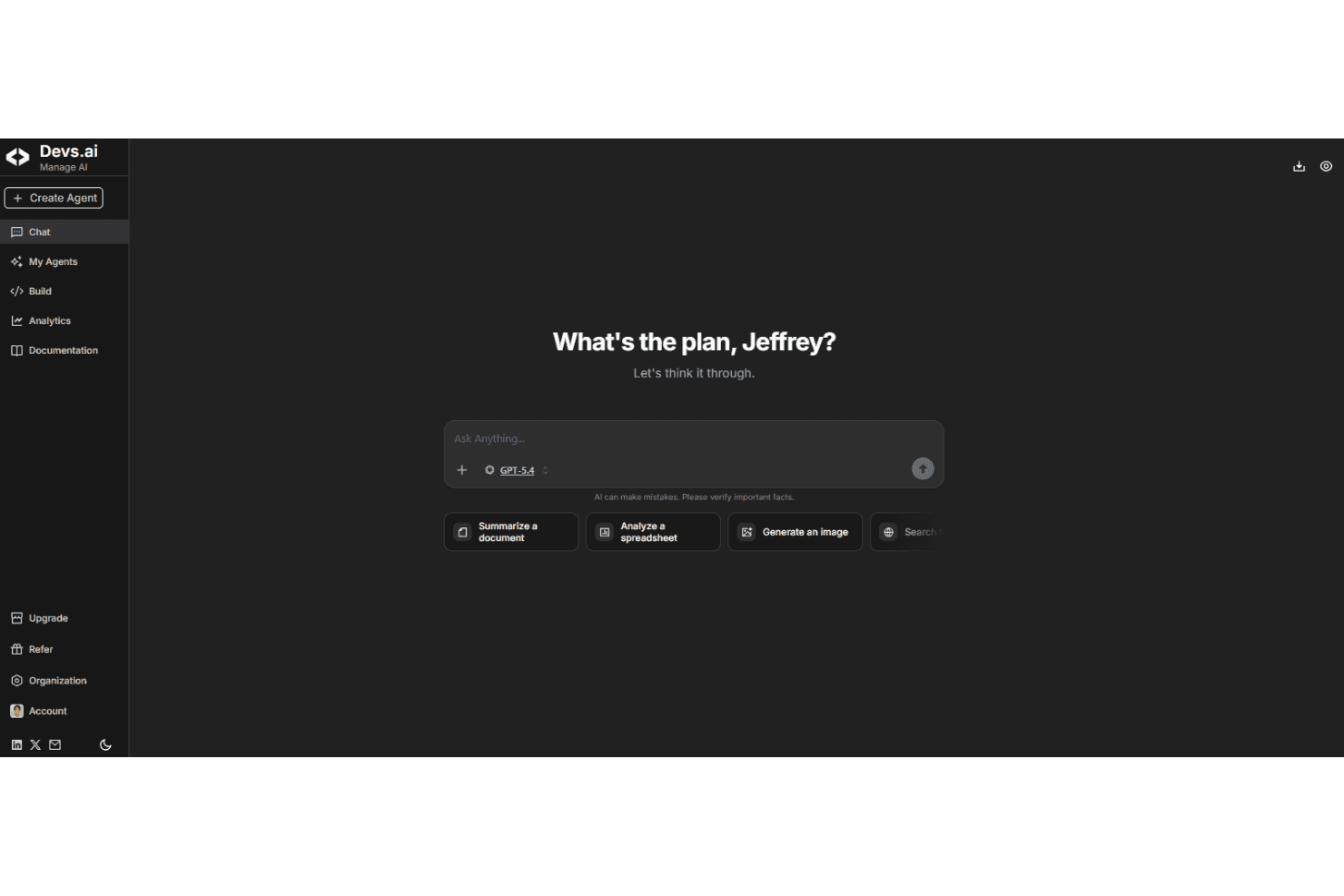
Devs.ai is a full platform for building AI-powered business applications and agents — not a chatbot, and not “a better ChatGPT.” It covers the whole enterprise AI lifecycle in one governed environment: build with App Builder and Agent Builder, distribute internally via the Private AI Store, search every connected system with Enterprise Search, and control spend with the AI Cost Center. If you’re under pressure to move fast without giving your CISO a heart attack, this is the launchpad IT can actually approve.
Devs.ai Evaluation Summary
5/5
- Starting from $15/month/seat
- Free plan available
Perché fidarsi dei nostri consigli sui software
6,700+
Reviews
20
Industry experts
16+
Evaluation factors
14
Years
Il nostro team testa e recensisce software dal 2012. In quanto leader tecnologici noi stessi, sappiamo quanto sia difficile — e importante — scegliere il software giusto.
Per questa guida, abbiamo valutato gli strumenti attraverso test praticie ricerche indipendenti, assegnando un punteggio agli strumenti in base ai nostri criteri di selezione.
Le nostre recensioni riflettono il nostro giudizio editoriale umano, non un discorso di vendita.
Revisori esperti:
- Paulo Gardini MiguelDirettore tecnico
 Tim FisherVP dell'IA
 Gabriel RosasTech Lead e architetto software
 Christhian GruhnTech Lead e architetto della piattaforma

Devs.ai Overview
When judging Devs.ai against other AI coding tools, I think its simple interface and quick onboarding make it easy to adopt, especially for teams new to AI app building. Pricing feels transparent and accessible for mid-sized businesses. While it doesn't have the deepest integration catalog or advanced customization power, those looking to choose a straightforward, guided platform for launching basic AI-driven solutions will find it a strong fit. I’d suggest Devs.ai if you want clear pricing, responsive support, and don’t have niche integration needs.
Pros
- Complete platform covering the full enterprise AI lifecycle in one governed environment
- Model-agnostic access to 50+ LLMs with auto model selection — no vendor lock-in
- Enterprise governance built in from day one, not a premium add-on
Cons
- Platform breadth requires deliberate onboarding — not plug-and-play at enterprise scale
- Advanced Enterprise Customization require support
- Value is proportional to data connectivity, so fragmented data estates limit early performance
Is Devs.ai Right For Your Needs?
Who Would be a Good Fit for Devs.ai?
Devs.ai is suitable for organizations of all sizes that require rapid AI adoption with strong governance, including IT-approved workflows and unified cost control. It is especially valuable for those who cannot compromise on governance and wish to avoid shadow AI or lengthy build cycles.
- ISVs & SaaS CompaniesSoftware teams can use Devs.ai to rapidly build and ship AI applications and agents while maintaining necessary enterprise controls.
- VARs, MSPs & Systems IntegratorsPartners can deliver enterprise-grade AI services as a new revenue line — without building or maintaining the underlying platform.
- Regulated IndustriesOrganizations in financial services, healthcare, and legal sectors with compliance needs benefit from out-of-the-box SOC 2, audit trails, and model governance.
- Enterprise IT & CISOsIT departments acquire a sanctioned AI workspace that reduces use of unsanctioned shadow AI tools by providing a superior solution.
- Startup Founders & Small TeamsSmall teams and founders can quickly prototype using the free tier and only pay as their usage increases.
- Telecom, Retail & Non-ProfitsSector-specific teams can automate workflows and integrate with existing systems without heavy IT investment or data migration.
Who Would be a Bad Fit for Devs.ai?
Devs.ai is less suitable for individuals or organizations without governance needs, as its primary value comes from enterprise-grade oversight. It is optimized for internal enterprise use rather than pure consumer applications, and its effectiveness depends on the quality and connectivity of your existing data systems.
- Hobbyists & Personal ProjectsIndividuals seeking tools for personal coding or creative projects will find more suitable options in consumer-focused platforms like Replit or Bolt.new.
- Ungoverned OrganizationsTeams that lack compliance, governance, or IT oversight do not benefit from Devs.ai’s core strengths.
- Consumer-Facing ProductsConsumer solutions with no requirement for enterprise data governance are outside the platform’s optimal use.
- Fragmented Data EstatesOrganizations with poor data quality, silos, or heavy technical debt will need to address these issues to gain full benefit from the platform.
- Large-Scale White-Label SellersCompanies intending very large-scale white-label deployments should verify multi-tenancy support and relevant roadmap features before committing.
- Zero-Onboarding BuyersEnterprises seeking zero-configuration, instant-at-scale deployment without onboarding effort should adjust their expectations.
La Nostra Metodologia di Recensione
Come Testiamo e Valutiamo gli Strumenti
Abbiamo trascorso anni a costruire, perfezionare e migliorare il nostro sistema di testing e valutazione del software. Il nostro schema è progettato per cogliere le sfumature della selezione software e cosa rende efficace uno strumento, focalizzandosi sugli aspetti critici del processo decisionale.
Di seguito, puoi vedere esattamente come funziona il nostro testing e punteggio su sette criteri. Ci permette di offrire una valutazione imparziale del software basata su funzionalità principali, caratteristiche distintive, facilità d’uso, onboarding, assistenza clienti, integrazioni, recensioni dei clienti e rapporto qualità-prezzo.
Funzionalità Principali (25% del punteggio finale)
Il punto di partenza della nostra valutazione è sempre la funzionalità principale dello strumento. Ha le funzioni e caratteristiche base che ci si aspetta? Alcune di queste caratteristiche sono limitate ai piani tariffari superiori? Fondamentalmente, ci aspettiamo che uno strumento regga il confronto rispetto alle capacità di base dei concorrenti.
Caratteristiche Distintive (25% del punteggio finale)
Successivamente, valutiamo le caratteristiche distintive e non comuni che vanno oltre la funzionalità base tipicamente trovata negli strumenti di questa categoria. Un punteggio alto riflette funzionalità specializzate o uniche che rendono il prodotto più veloce, efficiente o offrono ulteriore valore all’utente.
Valutiamo inoltre quanto sia semplice integrare altri strumenti tipicamente utilizzati nell’infrastruttura tecnologica per espandere la funzionalità e l’utilità del software. Gli strumenti che offrono numerose integrazioni native, connessioni di terze parti e accesso API per creare integrazioni personalizzate ottengono i punteggi migliori.
Facilità d’Uso (10% del punteggio finale)
Consideriamo quanto sia rapido e semplice svolgere i compiti definiti nella funzionalità principale utilizzando lo strumento. Il software con punteggio alto è ben progettato, intuitivo da usare, offre app mobili, fornisce modelli e rende semplici attività relativamente complesse.
Onboarding (10% del punteggio finale)
Sappiamo quanto sia importante l’adozione rapida da parte del team per una nuova piattaforma, quindi valutiamo quanto sia facile imparare e utilizzare uno strumento con formazione minima. Valutiamo quanto velocemente un membro del team possa iniziare a usare lo strumento anche senza esperienza. Soluzioni con punteggio alto indicano che sono richiesti pochi o nessun supporto.
Assistenza Clienti (10% del punteggio finale)
Esaminiamo quanto sia veloce e facile ricevere assistenza e risolvere problemi tramite telefono, live chat o knowledge base. Gli strumenti e le aziende che garantiscono supporto in tempo reale ottengono il miglior punteggio, mentre i chatbot ottengono il peggiore.
Recensioni dei Clienti (10% del punteggio finale)
Oltre ai nostri test e valutazioni, prendiamo in considerazione il net promoter score dei clienti attuali e passati. Valutiamo la probabilità che, data la scelta, selezionerebbero nuovamente lo strumento per la funzionalità principale. Un software con punteggio alto riflette un alto net promoter score da parte dei clienti attuali o passati.
Rapporto Qualità-Prezzo (10% del punteggio finale)
Infine, considerando tutti gli altri criteri, analizziamo il prezzo medio dei piani base rispetto alle funzionalità principali e consideriamo il valore degli altri criteri di valutazione. Il software che offre di più a meno otterrà un punteggio più alto.
Core Features
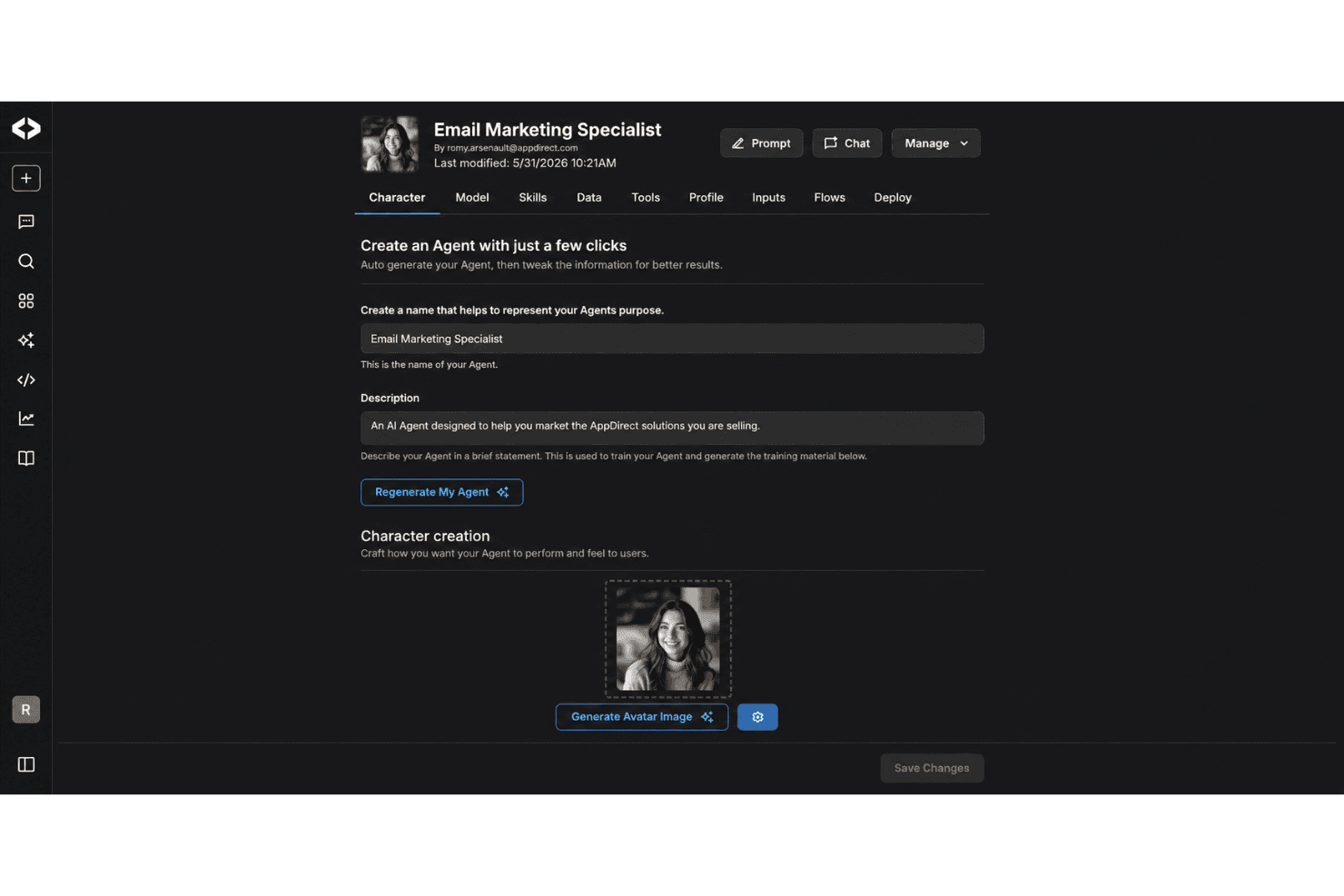
App Builder & Agent Builder
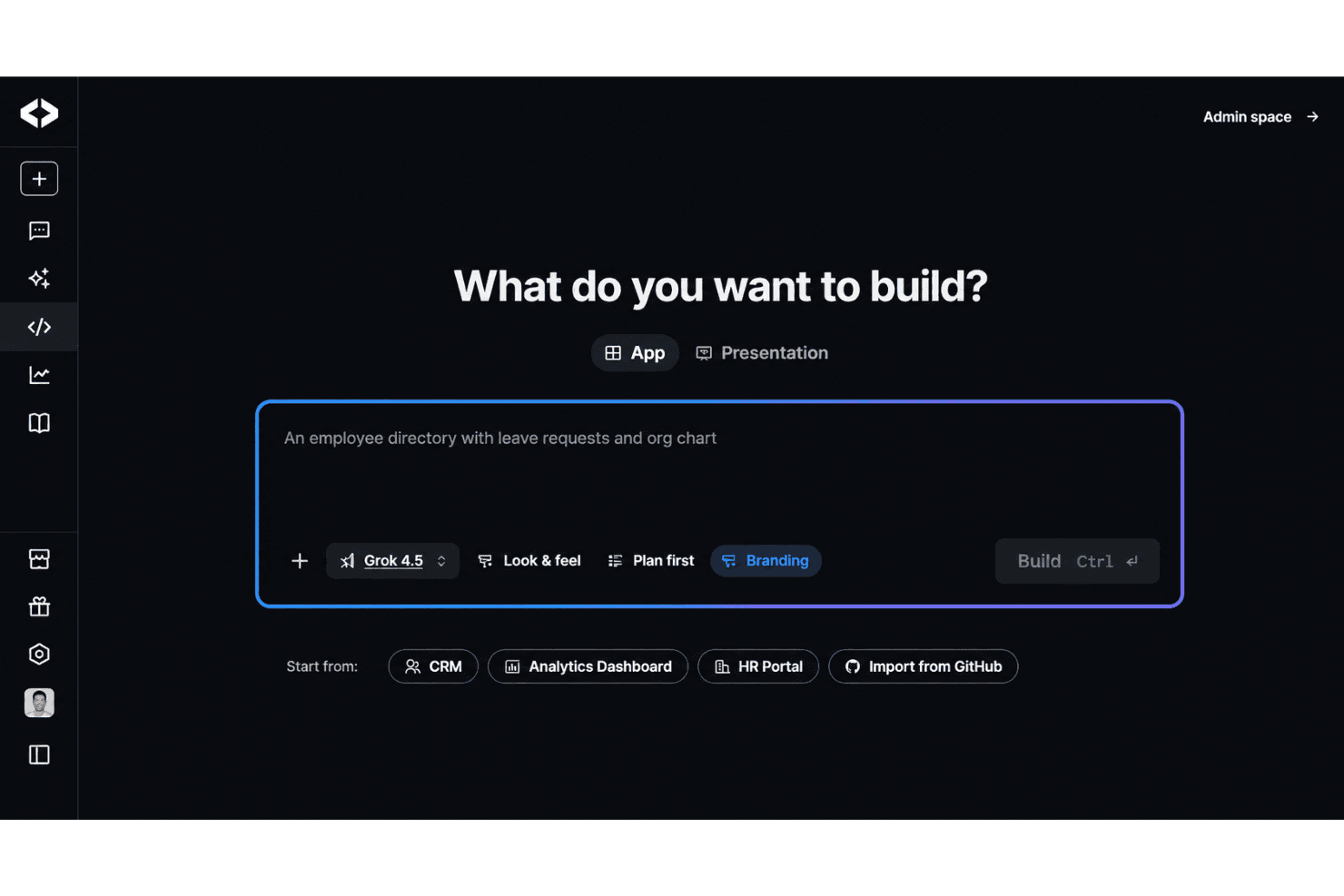
Build AI-powered apps and agents in plain language, without writing code. Teams go from idea to working tool fast enough to replace redundant SaaS subscriptions.
Private AI Store
Distribute approved apps and agents internally through a governed publish workflow. Every app requires IT approval before reaching the workforce.
Enterprise Search
Search across all your connected systems from one workspace. Permission-aware retrieval means users only ever see what their role allows.
AI Cost Center
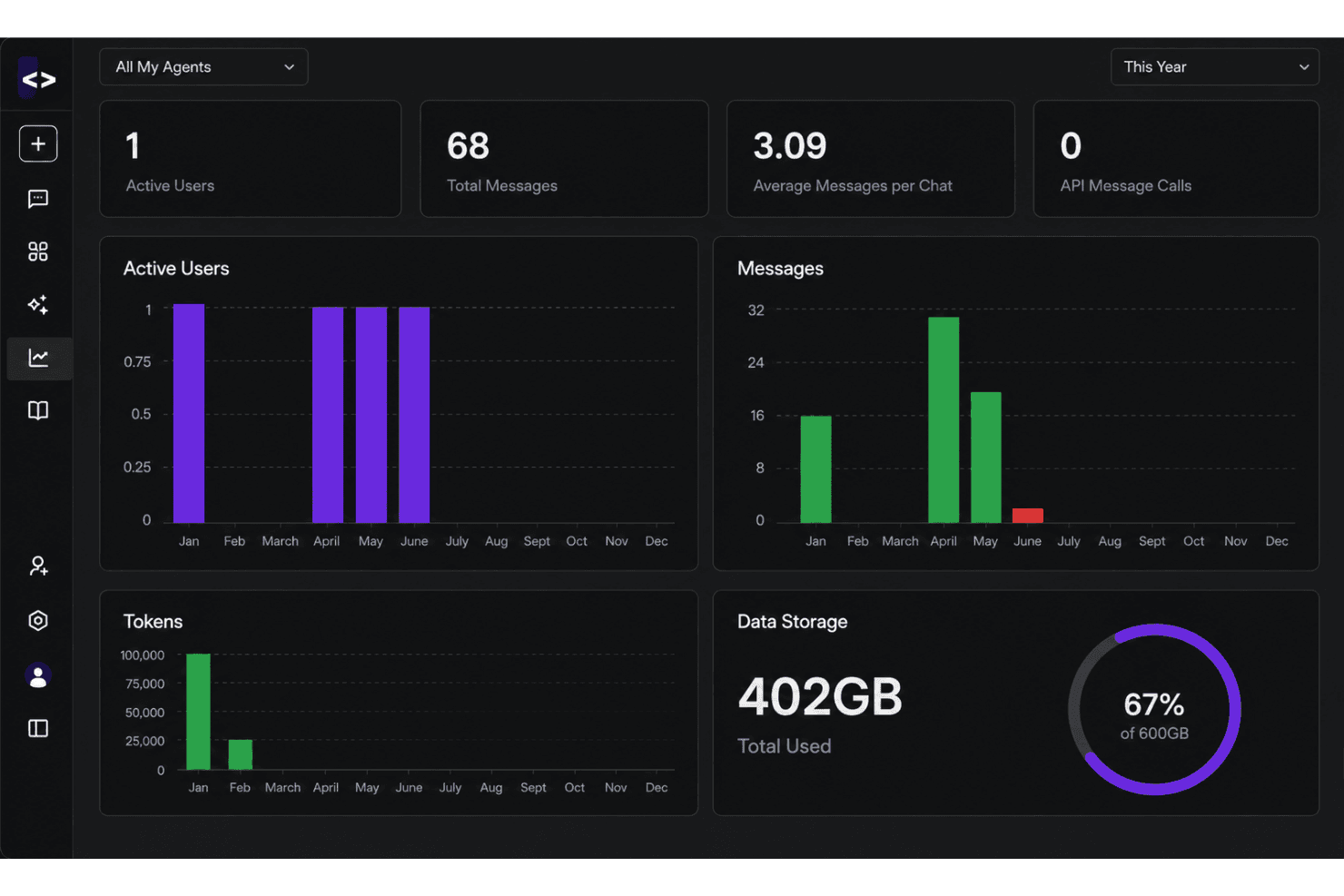
Get real-time spend visibility across all 50+ LLMs, broken down by team, model, and use case, with hard caps enforced. The board ROI conversation moves from estimates to a dashboard.
Model-Agnostic Access to 50+ LLMs
Use OpenAI, Anthropic, Google Gemini, Grok, Perplexity, and more in one workspace. Auto model selection routes each task to the best model.
Built-In Enterprise Governance
RBAC, audit trails, SSO with SCIM sync, model governance, and cost controls are foundational, with every AI interaction logged and role-controlled.
Standout Features
White-Label Deployment Options
Deliver AI apps under your own brand identity. Offer clients a custom-branded experience without revealing Devs.ai as the underlying platform.
Ease of Use
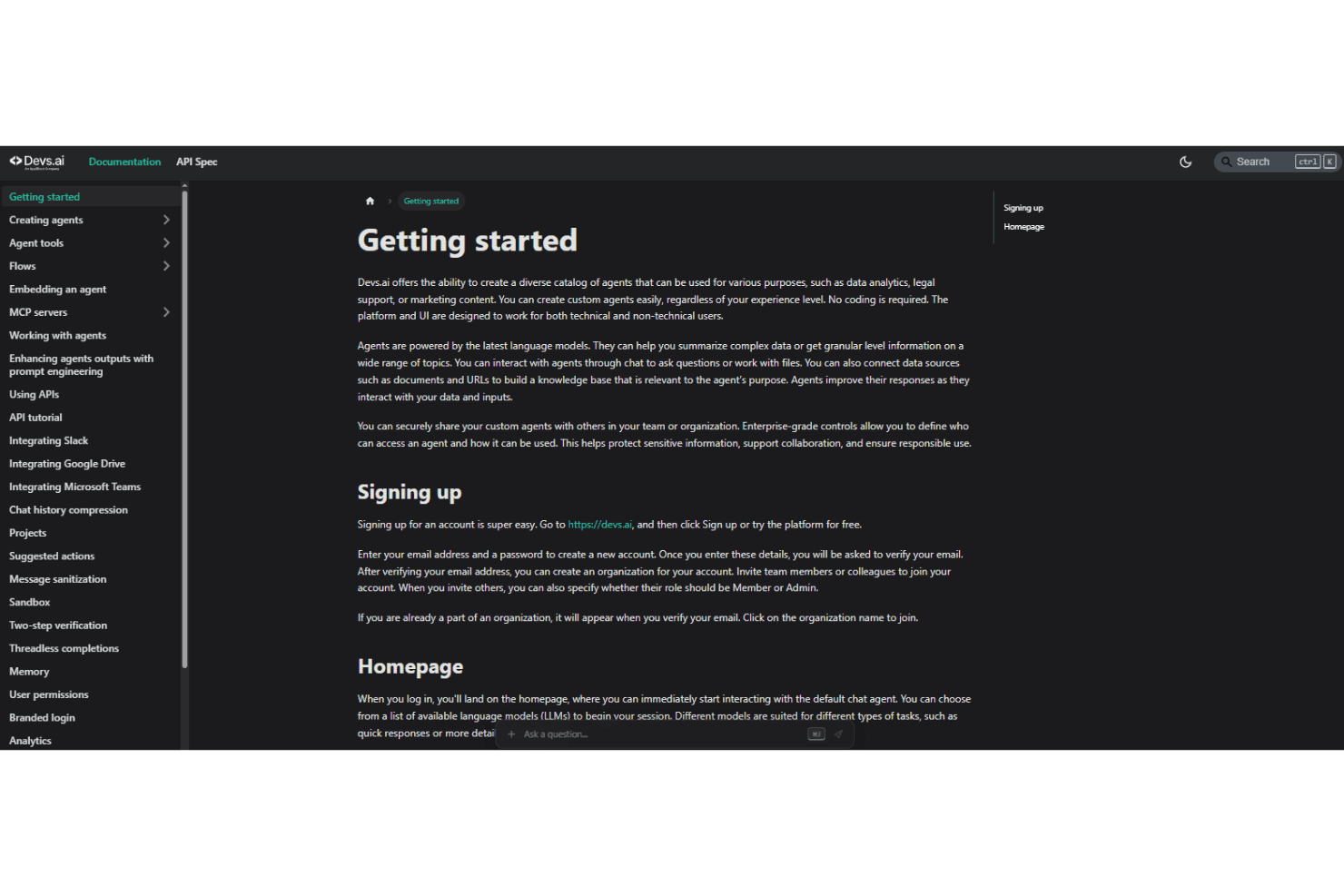
Devs.ai keeps technical complexity low: apps and agents are built in plain language via App Builder and Agent Studio, and the free tier is frictionless by design — the goal is a first experience that beats any public AI tool. That said, the platform spans five major modules plus MCP connectors, so deploying that breadth at enterprise scale takes deliberate setup rather than a single afternoon.
Onboarding
For individuals and SMBs, onboarding is self-serve: the free tier requires no credit card, and users connect a data source and build their first app or agent within minutes. Enterprise onboarding is typically partner-led and phased, starting with an AI readiness assessment, then a data and security foundation (SSO/SCIM, RBAC, data residency, validated with the CISO), then governed deployment of the first agents to the Private AI Store, and finally scaling across business units with AI cost reporting for board-level ROI. Enterprise POCs typically run 4–8 weeks; full transformation engagements run 3–12 months depending on estate complexity.
Customer Support
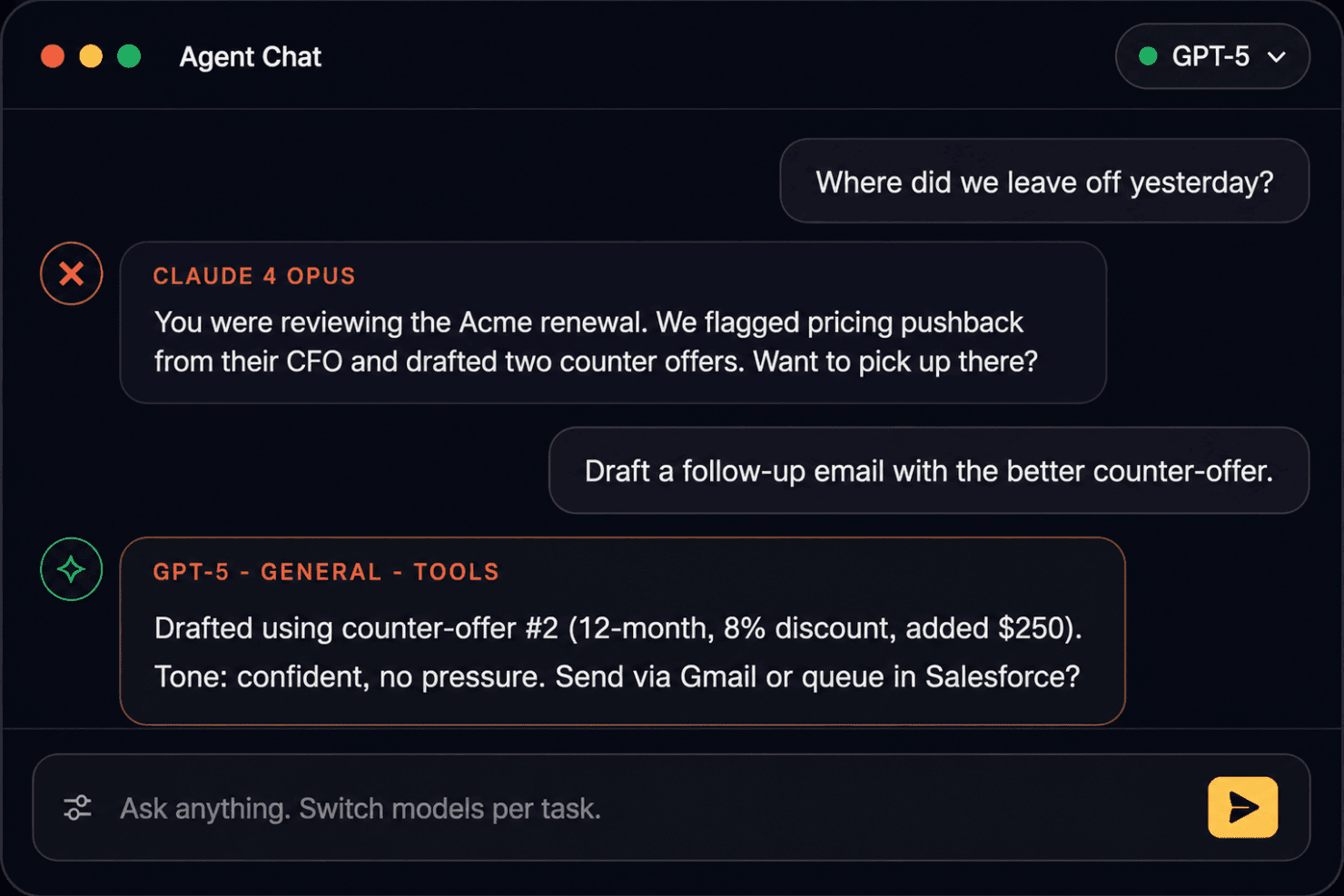
Devs.ai impresses with live chat staffed by AI-savvy humans who respond quickly and provide actionable advice. Users highlight supportive staff who follow up on issues, detailed documentation, and proactive outreach during onboarding. I think this responsive support and clear help content help teams resolve blockers much faster than is typical.
Integrations
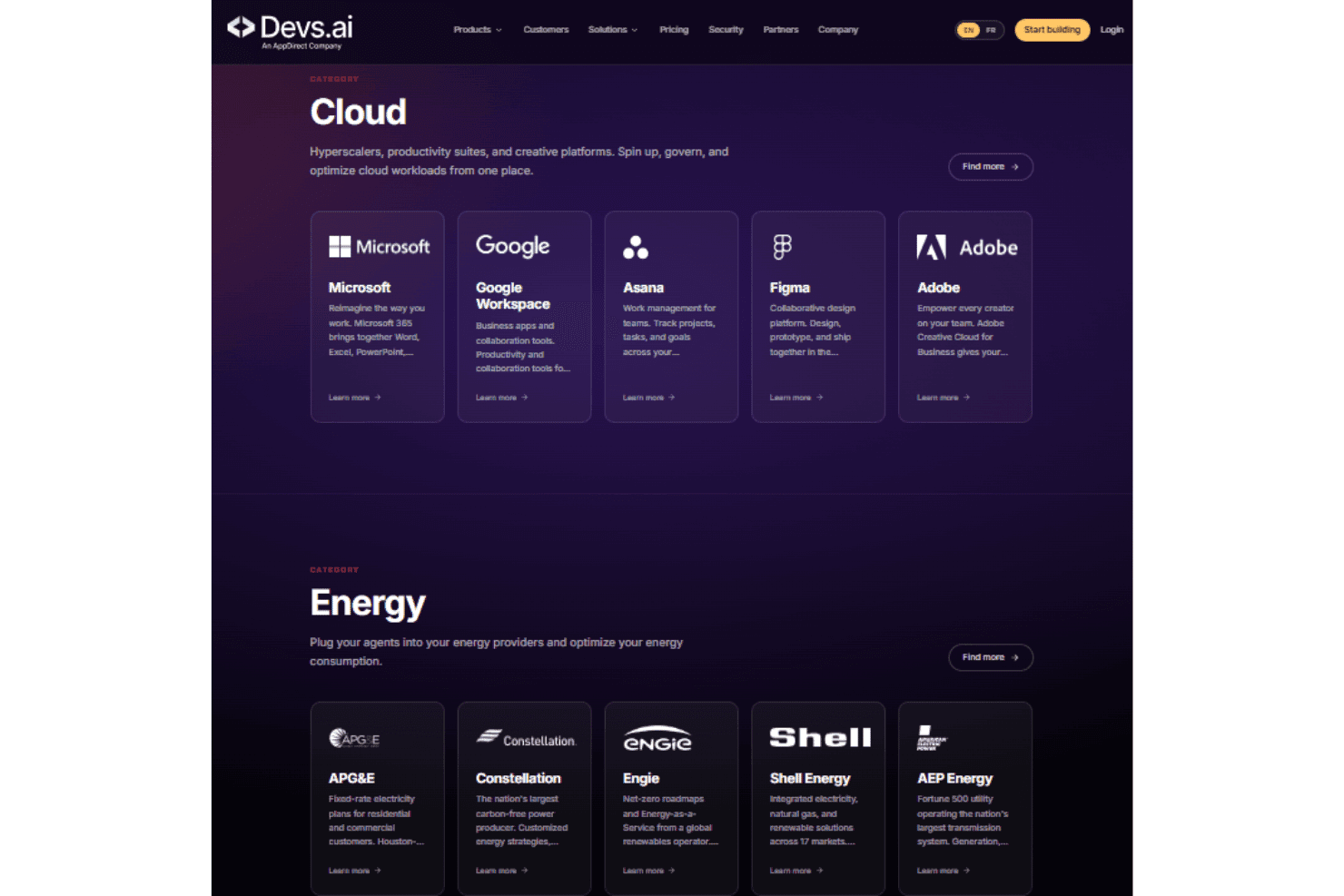
Devs.ai integrates with Google Workspace, Microsoft 365, Asana, Figma, Adobe Creative Cloud, Okta, and CrowdStrike, among others.
Devs.ai also provides an API for custom integrations and may connect through third-party integration platforms.
Value for Money
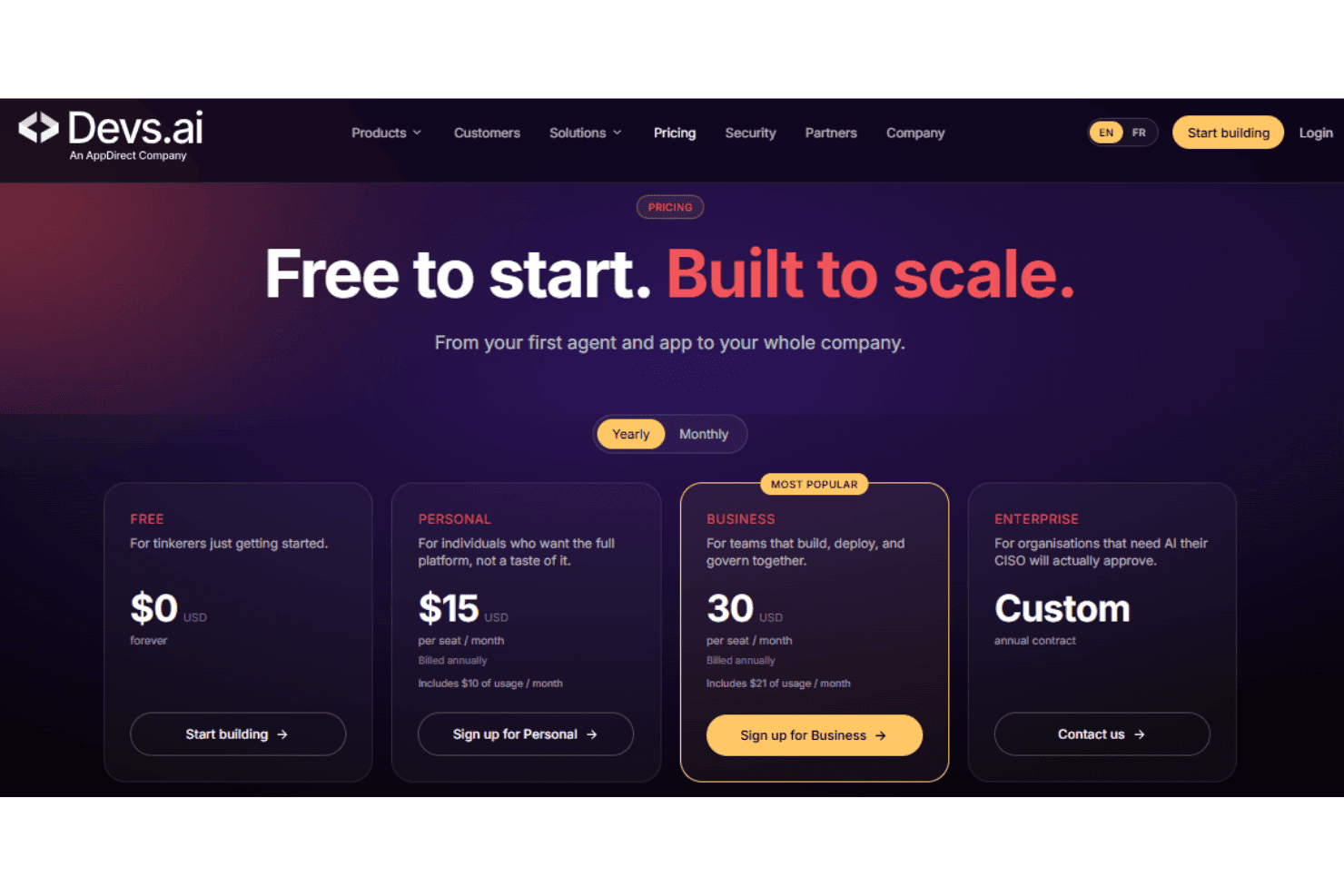
Devs.ai’s clear seat-based and usage-based pricing gives teams predictable monthly costs while still letting them scale with demand. Users value the included support and rapid onboarding, saying the plans fit both startups and scaling teams. You can start small and expand only when your team size or workflow grows.
- Free: Includes core agent builder and app builder capabilities, GitHub imports, chat logs, and role-based permissions.
- Personal: Adds API access, integrations, and 10GB of data upload.
- Business: Offers team governance and collaboration, full agent & app builder capabilities, and 20GB of data upload.
- Enterprise: Provides SSO, ACLs, custom connectors, and white-labeling.
Devs.ai Specs
- A/B Testing: Yes
- API: Yes
- External Integrations: Yes
- Multi-User: Yes
- Third-Party Plugins/Add-Ons: Yes
Devs.ai FAQs
Devs.ai Company Overview & History
Devs.ai is an AI app builder platform focused on simplifying the workflow automation and no-code AI solution space. The company’s website does not publicly share details about its headquarters, workforce size, company ownership, or client base. There is also no published information regarding its financials, stock, or affiliations with other products or companies. Devs.ai’s history, product lineage, and leadership background remain undisclosed on their primary channels.
Devs.ai Major Milestones
- 2023: Public launch of the Devs.ai platform for AI-powered workflow automation
- 2024: Platform noted on major technology news forums for its growth in the no-code AI segment