

Recensione AWS CloudFormation 2026: Pro, Contro, Caratteristiche e Prezzi
Se desideri un'integrazione e un'automazione profonda con AWS, CloudFormation è all'altezza—ma preparati ad affrontare una curva di apprendimento e un certo vincolo verso AWS. Ecco la mia opinione su dove eccelle e dove invece fatica.

Recensiamo gli strumenti in modo indipendente e le commissioni ci aiutano a finanziare i nostri test. Consulta la nostra politica sulla trasparenza, la nostra metodologia, oppure suggerisci uno strumento.
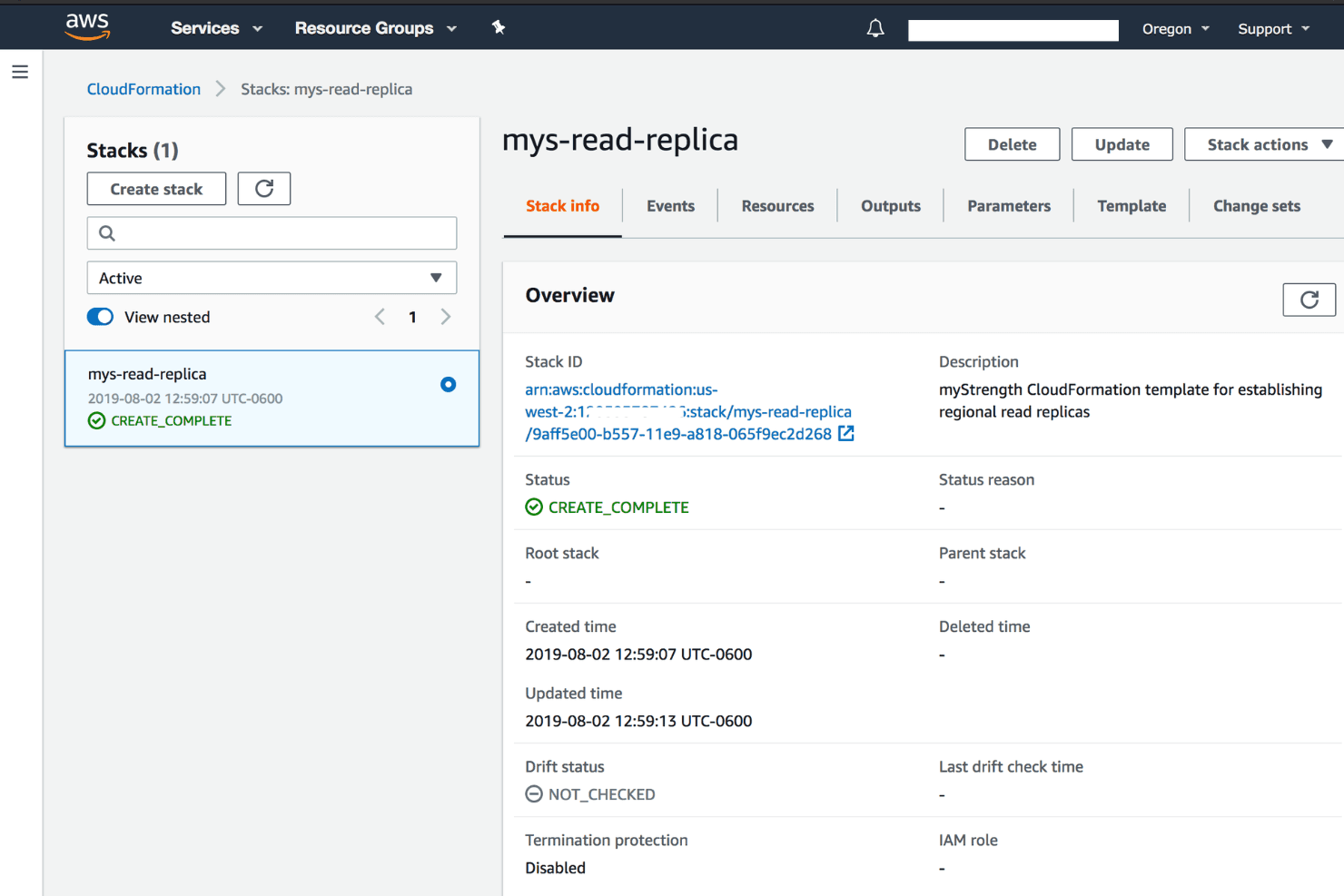
AWS CloudFormation is an IaC tool for provisioning and managing AWS infrastructure through declarative JSON or YAML templates. I'd consider it if your team runs entirely within AWS and needs native coverage across every AWS service without managing external state files. That's where it has a clear edge over Terraform—you get first-party AWS integration and no separate toolchain to maintain, which matters when your infrastructure and your cloud provider are one and the same.
AWS CloudFormation Evaluation Summary
4.4/5
- Pricing upon request
- Up to 6-month free trial
Perché fidarsi dei nostri consigli sui software
6,700+
Reviews
20
Industry experts
16+
Evaluation factors
14
Years
Il nostro team testa e recensisce software dal 2012. In quanto leader tecnologici noi stessi, sappiamo quanto sia difficile — e importante — scegliere il software giusto.
Per questa guida, abbiamo valutato gli strumenti attraverso test praticie ricerche indipendenti, assegnando un punteggio agli strumenti in base ai nostri criteri di selezione.
Le nostre recensioni riflettono il nostro giudizio editoriale umano, non un discorso di vendita.
Revisori esperti:
- Paulo Gardini MiguelDirettore tecnico
 Tim FisherVP dell'IA
 Gabriel RosasTech Lead e architetto software
 Christhian GruhnTech Lead e architetto della piattaforma

AWS CloudFormation Overview
When you’re judging AWS CloudFormation, its deep AWS integration and automation stand out, especially for teams already committed to AWS. I think its pricing model—paying only for underlying AWS resources—makes it appealing for cost-conscious environments. The interface and YAML/JSON templates can be tough for newcomers, but the documentation and support are solid.
Compared to other options, CloudFormation underperforms if you want multi-cloud flexibility or a gentler onboarding. I’d suggest it’s best for teams managing complex AWS environments who value automation, consistency, and direct access to AWS-native features.
Pros
- You can automate AWS resource management to save time.
- It integrates deeply with AWS services, boosting efficiency.
- Your team can use templates to ensure consistent setups.
Cons
- You might find the learning curve steep if you're new to AWS.
- It lacks flexibility when compared to some other IaC tools.
- Your team may encounter limitations in cross-cloud deployments.
Is AWS CloudFormation Right For Your Needs?
Who Would be a Good Fit for AWS CloudFormation?
If your team is already using AWS services, AWS CloudFormation is a great fit for you. It’s ideal for tech-savvy startups, large enterprises in finance, and healthcare sectors that need reliable and consistent AWS infrastructure management. With its deep integration with AWS, you can automate resource configuration and management, which is perfect for teams focusing on optimizing AWS environments.
- Tech StartupsYour startup can quickly deploy and manage AWS resources without a large infrastructure team.
- Large EnterprisesYou can maintain consistent and secure AWS setups across global teams.
- Finance SectorYour finance company can ensure compliance with strict security standards using AWS templates.
- Healthcare OrganizationsYou can benefit from automated AWS resource management, reducing manual errors.
- DevOps TeamsYour team can streamline AWS workflows, allowing more focus on development and innovation.
- Education InstitutionsYou can easily manage and scale AWS resources to meet varying demands.
Who Would be a Bad Fit for AWS CloudFormation?
If your team isn’t deeply invested in AWS or needs to manage multi-cloud environments, AWS CloudFormation might not suit you. It’s not ideal for companies relying heavily on non-AWS services, as CloudFormation is specifically designed for AWS and lacks flexibility in cross-cloud setups. Teams without AWS expertise may struggle with its learning curve and complex configurations.
- Multi-cloud CompaniesYour team won’t benefit if you need seamless integration across non-AWS platforms.
- Small BusinessesYou might find it too complex if you’re not primarily using AWS services.
- IT Departments Without AWS ExpertiseYour team could face challenges with the steep learning curve.
- Creative AgenciesYou likely won’t need AWS-specific automation if you work mostly with non-AWS tools.
- Retail BusinessesYou may struggle if your e-commerce platform isn’t on AWS.
- Manufacturing FirmsYou might not find value if your operations don’t primarily run on AWS.
La Nostra Metodologia di Recensione
Come Testiamo e Valutiamo gli Strumenti
Abbiamo trascorso anni a costruire, perfezionare e migliorare il nostro sistema di testing e valutazione del software. Il nostro schema è progettato per cogliere le sfumature della selezione software e cosa rende efficace uno strumento, focalizzandosi sugli aspetti critici del processo decisionale.
Di seguito, puoi vedere esattamente come funziona il nostro testing e punteggio su sette criteri. Ci permette di offrire una valutazione imparziale del software basata su funzionalità principali, caratteristiche distintive, facilità d’uso, onboarding, assistenza clienti, integrazioni, recensioni dei clienti e rapporto qualità-prezzo.
Funzionalità Principali (25% del punteggio finale)
Il punto di partenza della nostra valutazione è sempre la funzionalità principale dello strumento. Ha le funzioni e caratteristiche base che ci si aspetta? Alcune di queste caratteristiche sono limitate ai piani tariffari superiori? Fondamentalmente, ci aspettiamo che uno strumento regga il confronto rispetto alle capacità di base dei concorrenti.
Caratteristiche Distintive (25% del punteggio finale)
Successivamente, valutiamo le caratteristiche distintive e non comuni che vanno oltre la funzionalità base tipicamente trovata negli strumenti di questa categoria. Un punteggio alto riflette funzionalità specializzate o uniche che rendono il prodotto più veloce, efficiente o offrono ulteriore valore all’utente.
Valutiamo inoltre quanto sia semplice integrare altri strumenti tipicamente utilizzati nell’infrastruttura tecnologica per espandere la funzionalità e l’utilità del software. Gli strumenti che offrono numerose integrazioni native, connessioni di terze parti e accesso API per creare integrazioni personalizzate ottengono i punteggi migliori.
Facilità d’Uso (10% del punteggio finale)
Consideriamo quanto sia rapido e semplice svolgere i compiti definiti nella funzionalità principale utilizzando lo strumento. Il software con punteggio alto è ben progettato, intuitivo da usare, offre app mobili, fornisce modelli e rende semplici attività relativamente complesse.
Onboarding (10% del punteggio finale)
Sappiamo quanto sia importante l’adozione rapida da parte del team per una nuova piattaforma, quindi valutiamo quanto sia facile imparare e utilizzare uno strumento con formazione minima. Valutiamo quanto velocemente un membro del team possa iniziare a usare lo strumento anche senza esperienza. Soluzioni con punteggio alto indicano che sono richiesti pochi o nessun supporto.
Assistenza Clienti (10% del punteggio finale)
Esaminiamo quanto sia veloce e facile ricevere assistenza e risolvere problemi tramite telefono, live chat o knowledge base. Gli strumenti e le aziende che garantiscono supporto in tempo reale ottengono il miglior punteggio, mentre i chatbot ottengono il peggiore.
Recensioni dei Clienti (10% del punteggio finale)
Oltre ai nostri test e valutazioni, prendiamo in considerazione il net promoter score dei clienti attuali e passati. Valutiamo la probabilità che, data la scelta, selezionerebbero nuovamente lo strumento per la funzionalità principale. Un software con punteggio alto riflette un alto net promoter score da parte dei clienti attuali o passati.
Rapporto Qualità-Prezzo (10% del punteggio finale)
Infine, considerando tutti gli altri criteri, analizziamo il prezzo medio dei piani base rispetto alle funzionalità principali e consideriamo il valore degli altri criteri di valutazione. Il software che offre di più a meno otterrà un punteggio più alto.
Core Features
Template-Driven Provisioning
Define infrastructure using YAML or JSON templates for repeatable, version-controlled deployments. Templates let you manage everything from EC2 instances to IAM roles in code.
Stack Management
Group related resources into stacks for easy creation, update, and deletion. Rollback and drift detection help maintain stack integrity.
Change Sets
Preview proposed changes before applying them to your environment. This reduces risk by showing exactly what will be modified or replaced.
Resource Dependency Handling
CloudFormation automatically manages resource dependencies during stack operations. You don’t need to manually order resource creation or deletion.
Parameterization
Use parameters to customize templates for different environments or projects. This makes it easy to reuse templates across teams or accounts.
Drift Detection
Detect when resources have been changed outside of CloudFormation. This helps you keep your infrastructure consistent and compliant.
Ease of Use
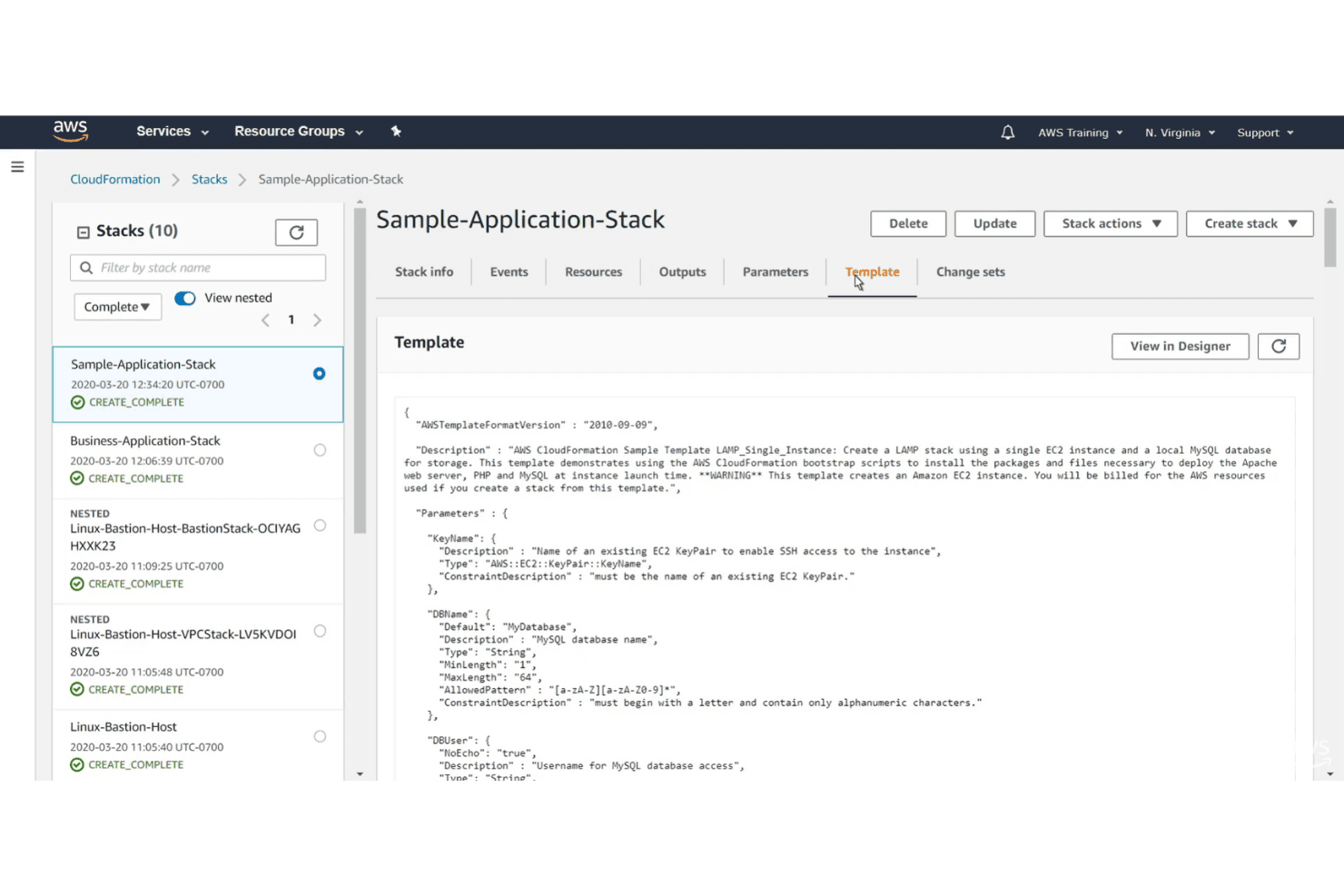
AWS CloudFormation isn’t the most user-friendly IaC tool, especially for newcomers. Writing and managing YAML or JSON templates can feel tedious, and troubleshooting failed deployments often requires digging through detailed logs. However, once you’re familiar with AWS concepts, the documentation and built-in automation features help offset the initial complexity.
Experienced AWS users will appreciate the control and precision, but teams looking for a quick start may find the onboarding process slow.
Integrations
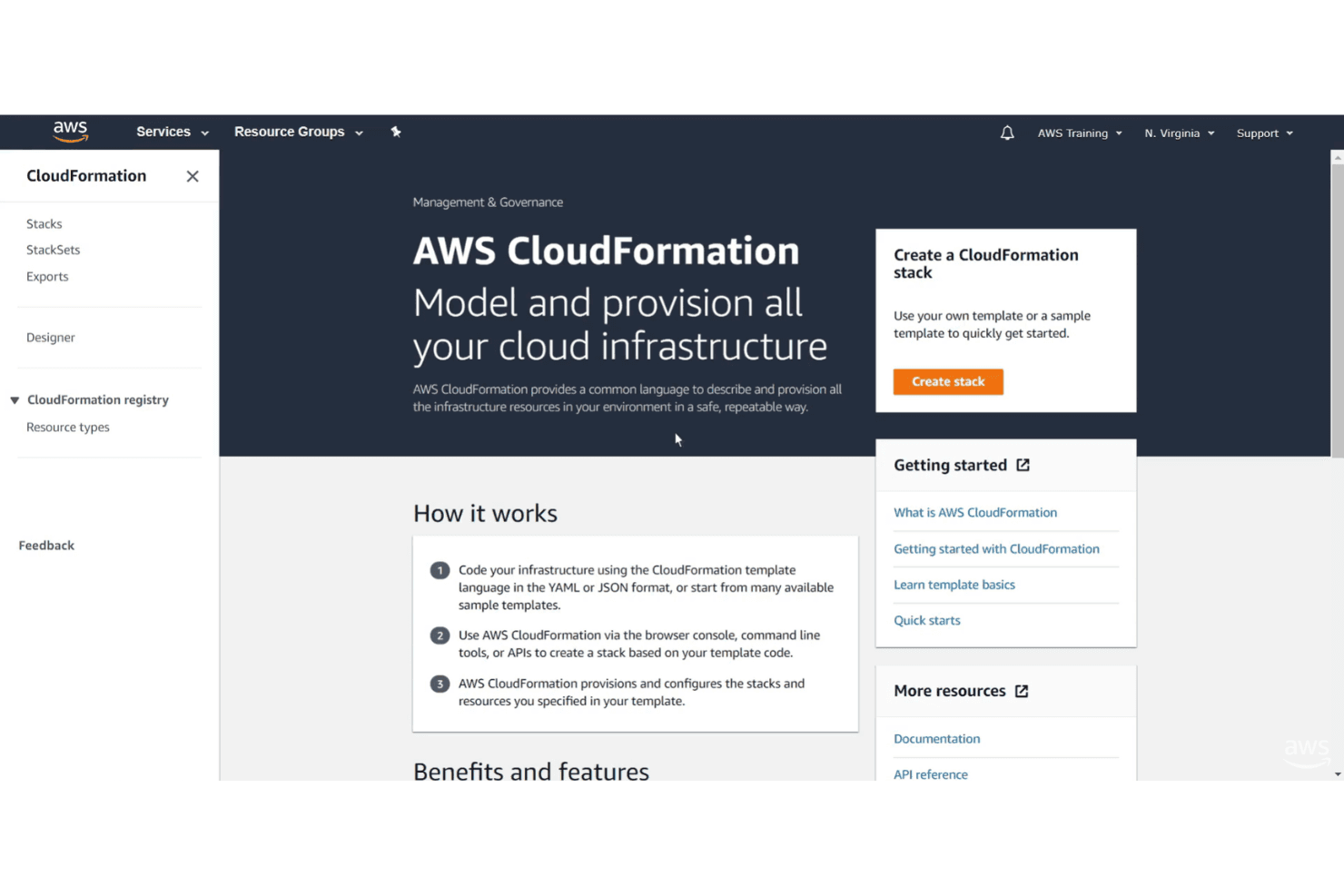
AWS CloudFormation integrates with AWS Lambda, Amazon EC2, Amazon S3, AWS IAM, Amazon RDS, Amazon VPC, AWS CloudWatch, AWS CodePipeline, AWS Service Catalog, and AWS Systems Manager, among others.
AWS CloudFormation also offers a comprehensive API and supports custom resource providers, allowing connections with third-party integration tools.
AWS CloudFormation Specs
- A/B Testing: No
- API: Yes
- Automated Testing: No
- Browser Compatibility Testing: No
- Bug Tracking: No
- Calendar Management: No
- CI/CD Integration: Yes
- Dashboard: Yes
- Data Export: No
- Data Import: No
- Data Visualization: Yes
- Developer Tools: Yes
- External Integrations: Yes
- History/Version Control: Yes
- Manual Testing: No
- Multi-User: Yes
- Notifications: Yes
- Performance Testing: No
- Regression Testing: No
- Scheduling: No
- Status Notifications: Yes
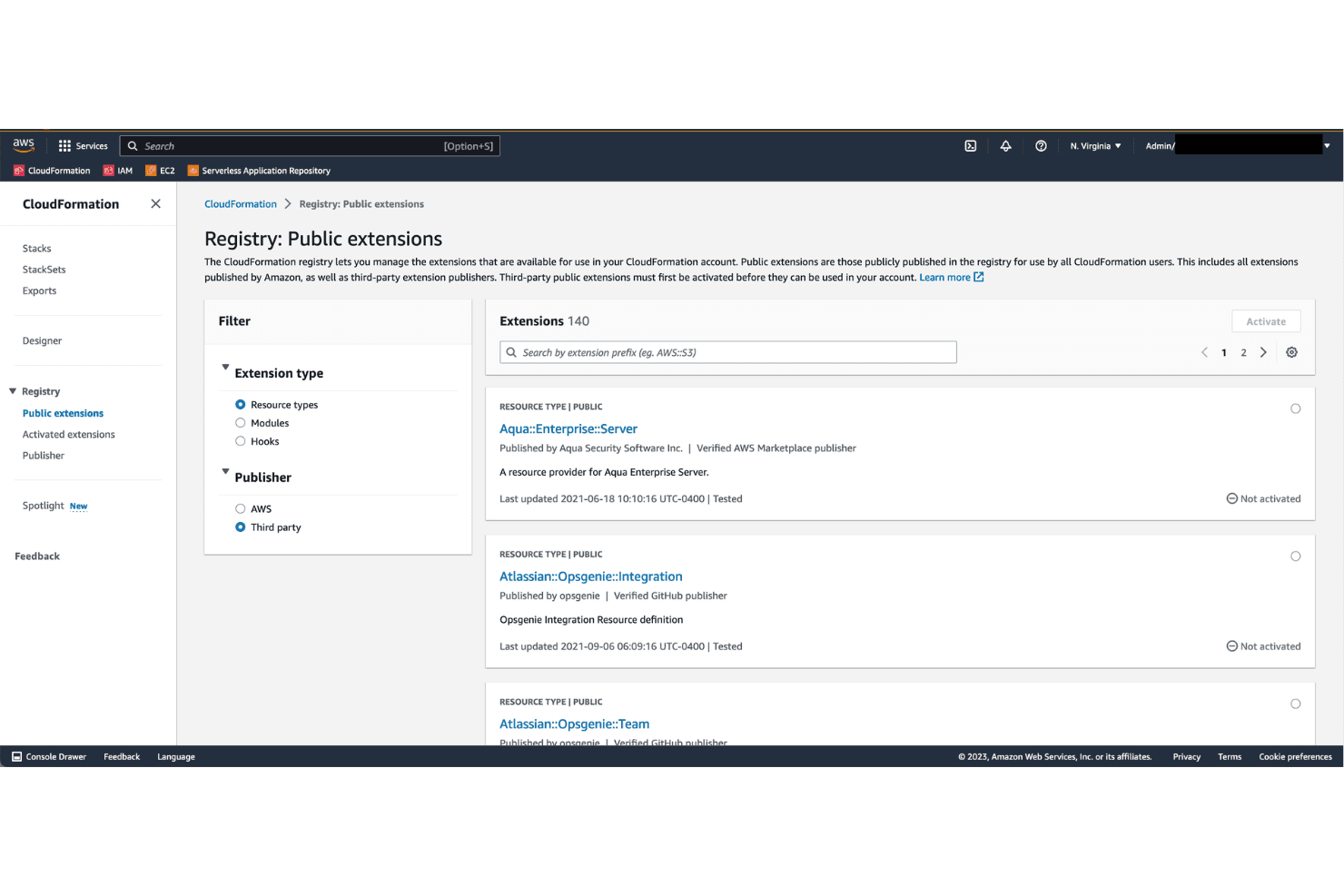
- Third-Party Plugins/Add-Ons: Yes


