
Recensione Red Hat Ansible Automation Platform 2026: Caratteristiche Principali, Pro e Contro, Prezzi
Red Hat Ansible Automation Platform si distingue come strumento di automazione per la gestione di deployment, configurazioni e workflow su larga scala. Scopri come aiuta i team a semplificare operazioni IT complesse.

Recensiamo gli strumenti in modo indipendente e le commissioni ci aiutano a finanziare i nostri test. Consulta la nostra politica sulla trasparenza, la nostra metodologia, oppure suggerisci uno strumento.
Red Hat Ansible Automation Platform is a DevOps automation tool built for IT teams managing infrastructure configuration, application deployment, and orchestration at scale. It's a strong fit when your environment spans on-premises systems, cloud infrastructure, and network devices. I'd reach for it over Puppet when your team wants an agentless architecture and human-readable YAML playbooks—without the overhead of managing agents or learning a proprietary domain-specific language.
Red Hat Ansible Automation Platform Evaluation Summary
4.6/5
- Pricing upon request
- Free trial available
Perché fidarsi dei nostri consigli sui software
6,700+
Reviews
20
Industry experts
16+
Evaluation factors
14
Years
Il nostro team testa e recensisce software dal 2012. In quanto leader tecnologici noi stessi, sappiamo quanto sia difficile — e importante — scegliere il software giusto.
Per questa guida, abbiamo valutato gli strumenti attraverso test praticie ricerche indipendenti, assegnando un punteggio agli strumenti in base ai nostri criteri di selezione.
Le nostre recensioni riflettono il nostro giudizio editoriale umano, non un discorso di vendita.
Revisori esperti:
- Paulo Gardini MiguelDirettore tecnico
 Tim FisherVP dell'IA
 Gabriel RosasTech Lead e architetto software
 Christhian GruhnTech Lead e architetto della piattaforma

Red Hat Ansible Automation Platform Overview
When judging Ansible Automation Platform against similar tools, I find its agentless design, scalability, and rich integration ecosystem make it a strong pick for enterprises managing hybrid or multi-cloud at scale. The interface is straightforward, docs and support are reliable, and onboarding is easier than most.
I’d select Ansible for teams who want flexible, standardized automation across diverse environments, especially when repeatable infrastructure-as-code is a must.
Pros
- Agentless architecture simplifies infrastructure automation deployment.
- Mature role-based access control helps with enterprise governance.
- Dynamic inventory management supports large-scale hybrid environments.
Cons
- Playbook debugging can be time-consuming and tricky.
- Pricing is higher than many open-source alternatives.
- Initial setup for advanced workflows is complex.
Is Red Hat Ansible Automation Platform Right For Your Needs?
Who Would be a Good Fit for Red Hat Ansible Automation Platform?
Ansible fits teams managing complex, multi-cloud infrastructure, especially in regulated or large-scale environments. Enterprises with strict compliance rules, hybrid cloud usage, and distributed operations will see value in its policy-driven controls, automation mesh, and advanced analytics. Central IT, network, and security teams that need granular permissioning and high availability are going to appreciate its mature role-based access and broad ecosystem.
- Global EnterprisesManages complex, distributed operations globally with features like automation mesh and centralized governance.
- Regulated IndustriesSupports strict compliance and audit needs with robust RBAC and detailed automation activity tracking.
- Hybrid Cloud OperationsOrchestrates automation across on-premises, private, and public clouds from a single interface.
- Network Engineering TeamsAutomates network device configuration and maintenance with dedicated collections for major networking vendors.
- Security OperationsEnables automated threat response workflows and patch management using event-driven automation.
- Large IT DepartmentsProvides scalable, multi-team collaboration with granular project and inventory management.
Who Would be a Bad Fit for Red Hat Ansible Automation Platform?
Smaller companies, budget-conscious startups, and teams running straightforward infrastructure won’t get the most value from Ansible’s enterprise feature set or cost. When automation needs are limited to a few servers, or when teams lack the resources to manage advanced playbooks and governance structures, the platform’s complexity and price are tough to justify. Scripting-heavy shops or small departments with basic needs are better off with simpler or free solutions.
- Small StartupsOverkill for basic automation needs due to cost and advanced feature complexity.
- Single-Cloud EnvironmentsUnnecessary for teams entirely based in one cloud provider without hybrid or multi-cloud operations.
- Basic IT SupportToo complex for IT helpdesks or shops that only automate password resets and user onboarding.
- Non-Technical TeamsDemands a level of automation and IT skill that doesn’t fit business users or departments outside IT.
- Cost-Sensitive SMBsHigh licensing fees aren’t justifiable without enterprise-level requirements or scale.
- Minimal Compliance NeedsLacks clear benefits for teams not needing detailed audit trails, RBAC, or enterprise policy enforcement.
La Nostra Metodologia di Recensione
Come Testiamo e Valutiamo gli Strumenti
Abbiamo trascorso anni a costruire, perfezionare e migliorare il nostro sistema di testing e valutazione del software. Il nostro schema è progettato per cogliere le sfumature della selezione software e cosa rende efficace uno strumento, focalizzandosi sugli aspetti critici del processo decisionale.
Di seguito, puoi vedere esattamente come funziona il nostro testing e punteggio su sette criteri. Ci permette di offrire una valutazione imparziale del software basata su funzionalità principali, caratteristiche distintive, facilità d’uso, onboarding, assistenza clienti, integrazioni, recensioni dei clienti e rapporto qualità-prezzo.
Funzionalità Principali (25% del punteggio finale)
Il punto di partenza della nostra valutazione è sempre la funzionalità principale dello strumento. Ha le funzioni e caratteristiche base che ci si aspetta? Alcune di queste caratteristiche sono limitate ai piani tariffari superiori? Fondamentalmente, ci aspettiamo che uno strumento regga il confronto rispetto alle capacità di base dei concorrenti.
Caratteristiche Distintive (25% del punteggio finale)
Successivamente, valutiamo le caratteristiche distintive e non comuni che vanno oltre la funzionalità base tipicamente trovata negli strumenti di questa categoria. Un punteggio alto riflette funzionalità specializzate o uniche che rendono il prodotto più veloce, efficiente o offrono ulteriore valore all’utente.
Valutiamo inoltre quanto sia semplice integrare altri strumenti tipicamente utilizzati nell’infrastruttura tecnologica per espandere la funzionalità e l’utilità del software. Gli strumenti che offrono numerose integrazioni native, connessioni di terze parti e accesso API per creare integrazioni personalizzate ottengono i punteggi migliori.
Facilità d’Uso (10% del punteggio finale)
Consideriamo quanto sia rapido e semplice svolgere i compiti definiti nella funzionalità principale utilizzando lo strumento. Il software con punteggio alto è ben progettato, intuitivo da usare, offre app mobili, fornisce modelli e rende semplici attività relativamente complesse.
Onboarding (10% del punteggio finale)
Sappiamo quanto sia importante l’adozione rapida da parte del team per una nuova piattaforma, quindi valutiamo quanto sia facile imparare e utilizzare uno strumento con formazione minima. Valutiamo quanto velocemente un membro del team possa iniziare a usare lo strumento anche senza esperienza. Soluzioni con punteggio alto indicano che sono richiesti pochi o nessun supporto.
Assistenza Clienti (10% del punteggio finale)
Esaminiamo quanto sia veloce e facile ricevere assistenza e risolvere problemi tramite telefono, live chat o knowledge base. Gli strumenti e le aziende che garantiscono supporto in tempo reale ottengono il miglior punteggio, mentre i chatbot ottengono il peggiore.
Recensioni dei Clienti (10% del punteggio finale)
Oltre ai nostri test e valutazioni, prendiamo in considerazione il net promoter score dei clienti attuali e passati. Valutiamo la probabilità che, data la scelta, selezionerebbero nuovamente lo strumento per la funzionalità principale. Un software con punteggio alto riflette un alto net promoter score da parte dei clienti attuali o passati.
Rapporto Qualità-Prezzo (10% del punteggio finale)
Infine, considerando tutti gli altri criteri, analizziamo il prezzo medio dei piani base rispetto alle funzionalità principali e consideriamo il valore degli altri criteri di valutazione. Il software che offre di più a meno otterrà un punteggio più alto.
Core Features
Automation Execution Environments
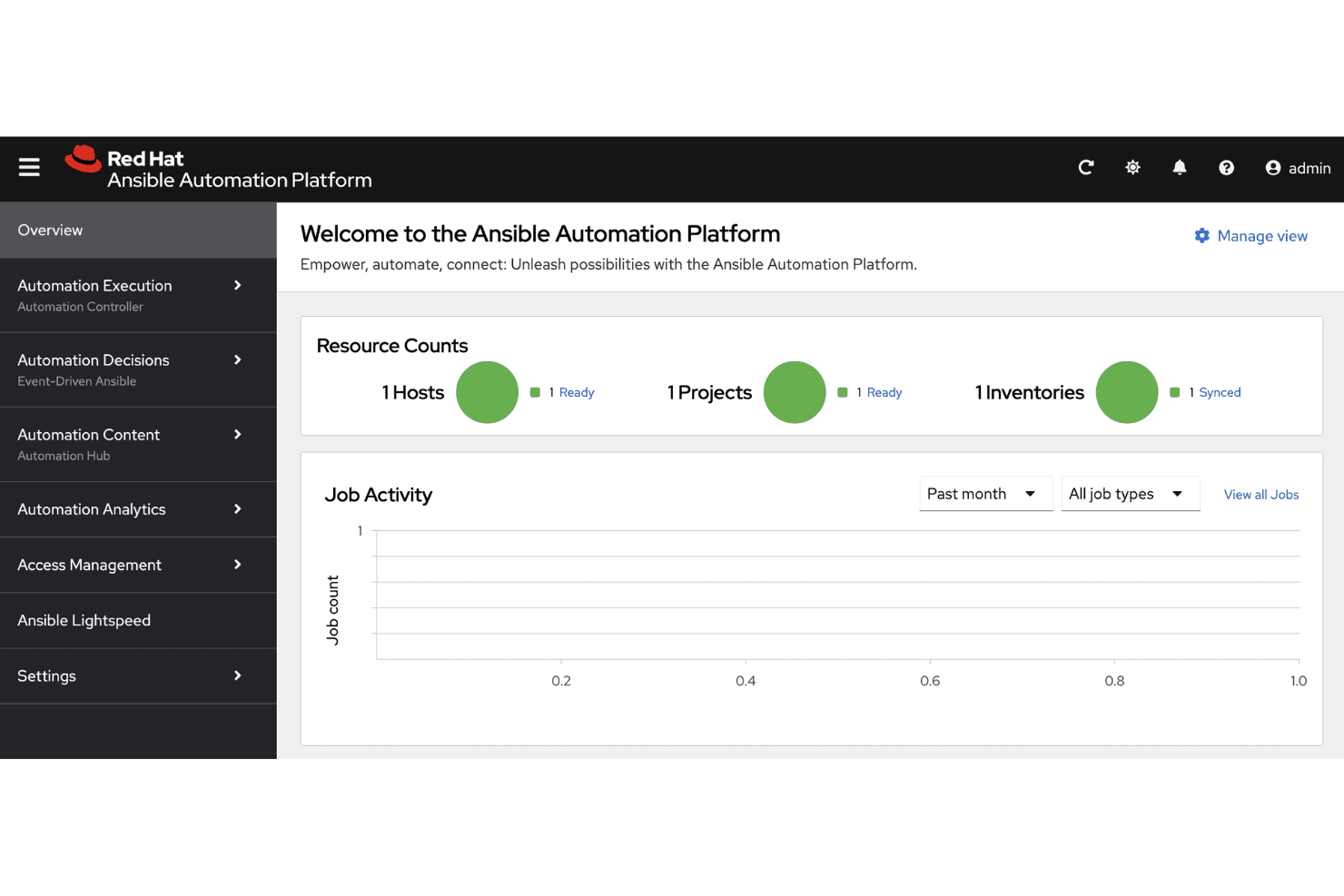
Run automation workflows in consistent, containerized environments across any infrastructure. This reduces conflicts and ensures predictable results for every deployment.
Visual Job Workflow Designer
Design and manage automation workflows through a drag-and-drop interface. Teams can build complex automations without needing to code every step.
Role-Based Access Control
Assign and manage user permissions granularly for projects and inventories. This keeps automation secure and aligns with enterprise compliance needs.
Automation Analytics
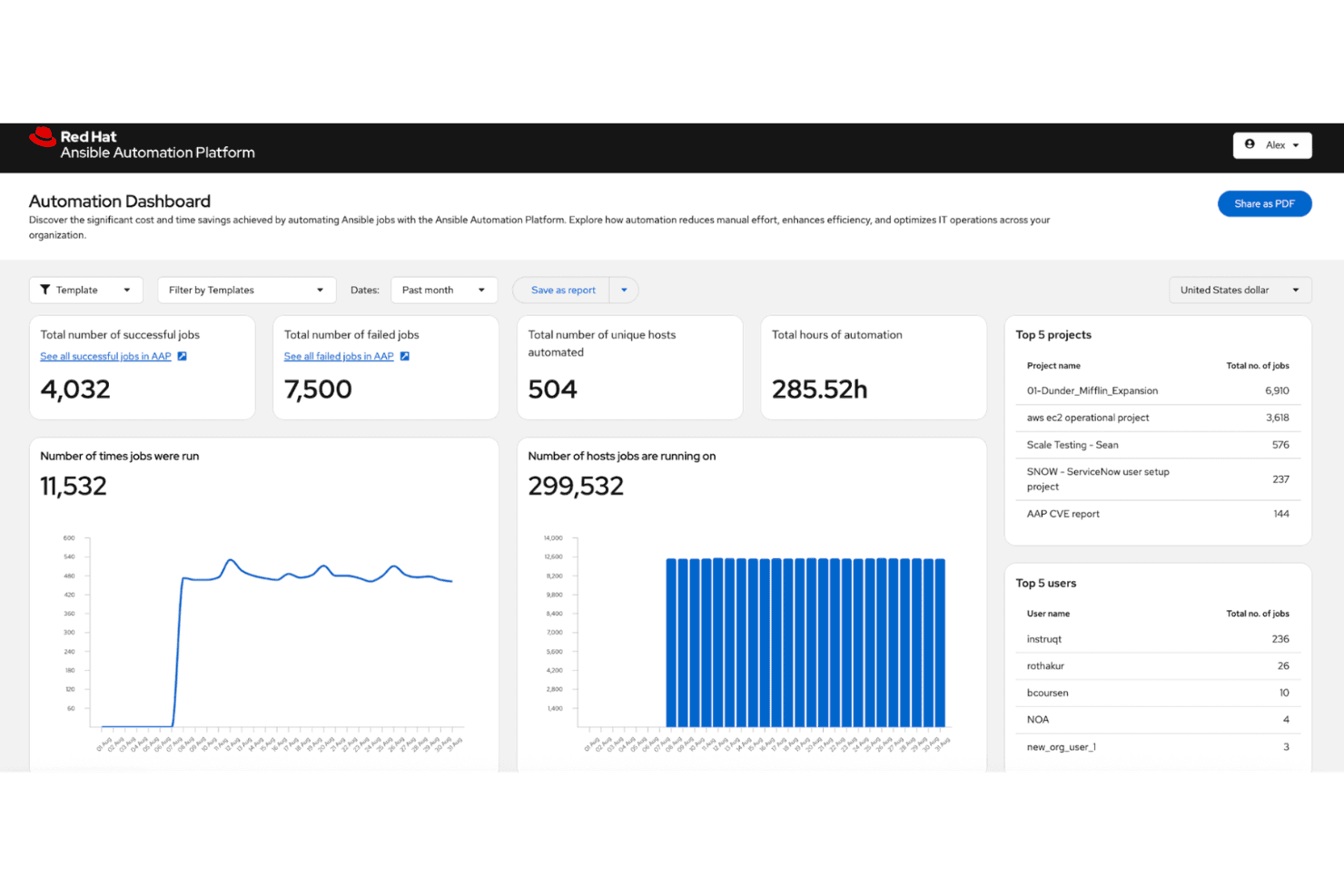
Track, analyze, and troubleshoot automation runs with built-in reporting tools. You can spot bottlenecks and measure success across teams and projects.
Event-Driven Automation
Trigger automation tasks automatically from IT events and incidents. This lets your team respond to issues and changes in real time.
Content Collections
Access and curate pre-built automation modules and roles from Red Hat and its partners. This accelerates your playbook creation and keeps automations current.
Ease of Use
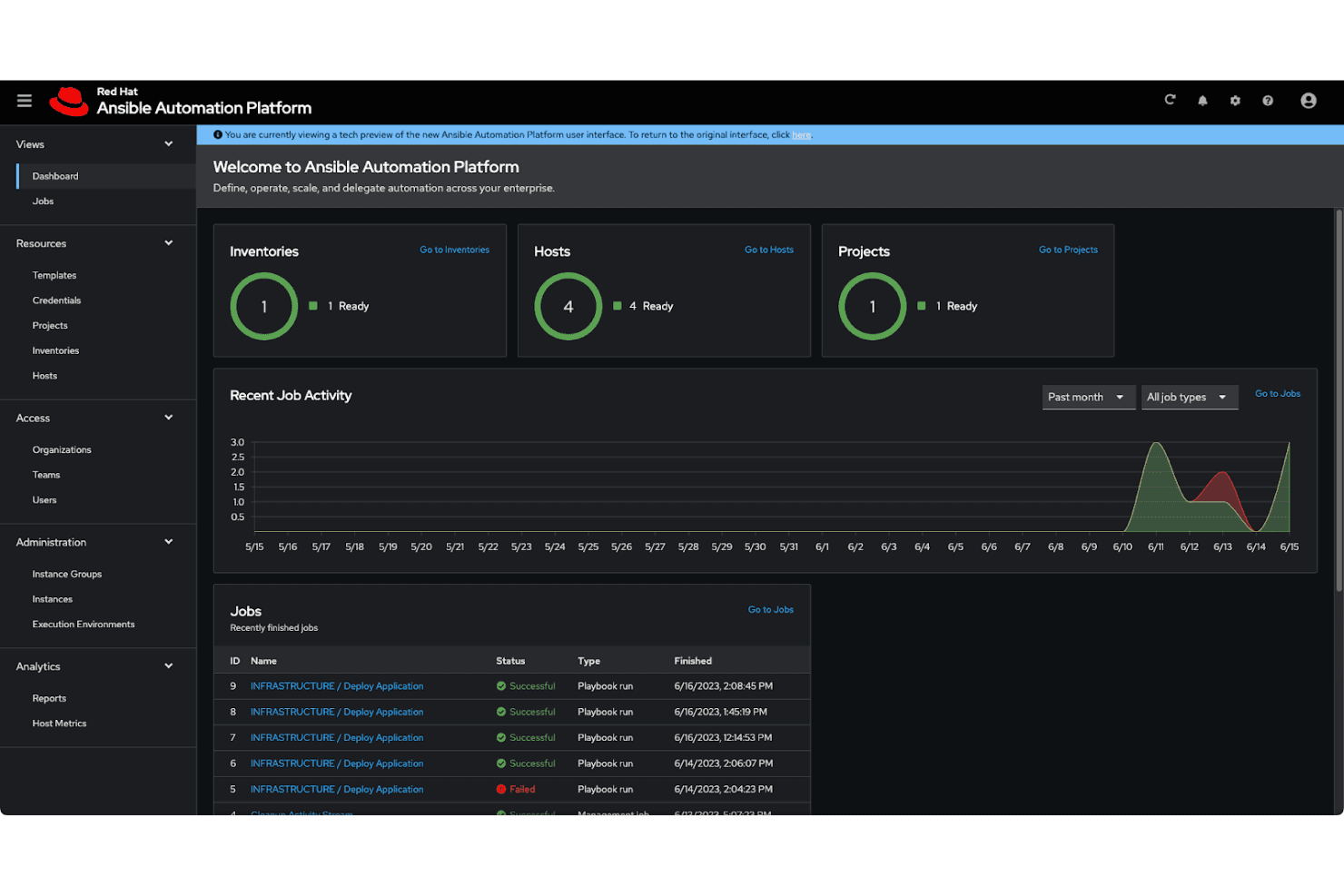
Ansible Automation Platform stands out for its straightforward web UI, clear job management, and structured workflow designer, making routine automation accessible even for less experienced users. While advanced playbook design can be technical, most tasks feel intuitive, and extensive documentation supports quick onboarding.
Integrations
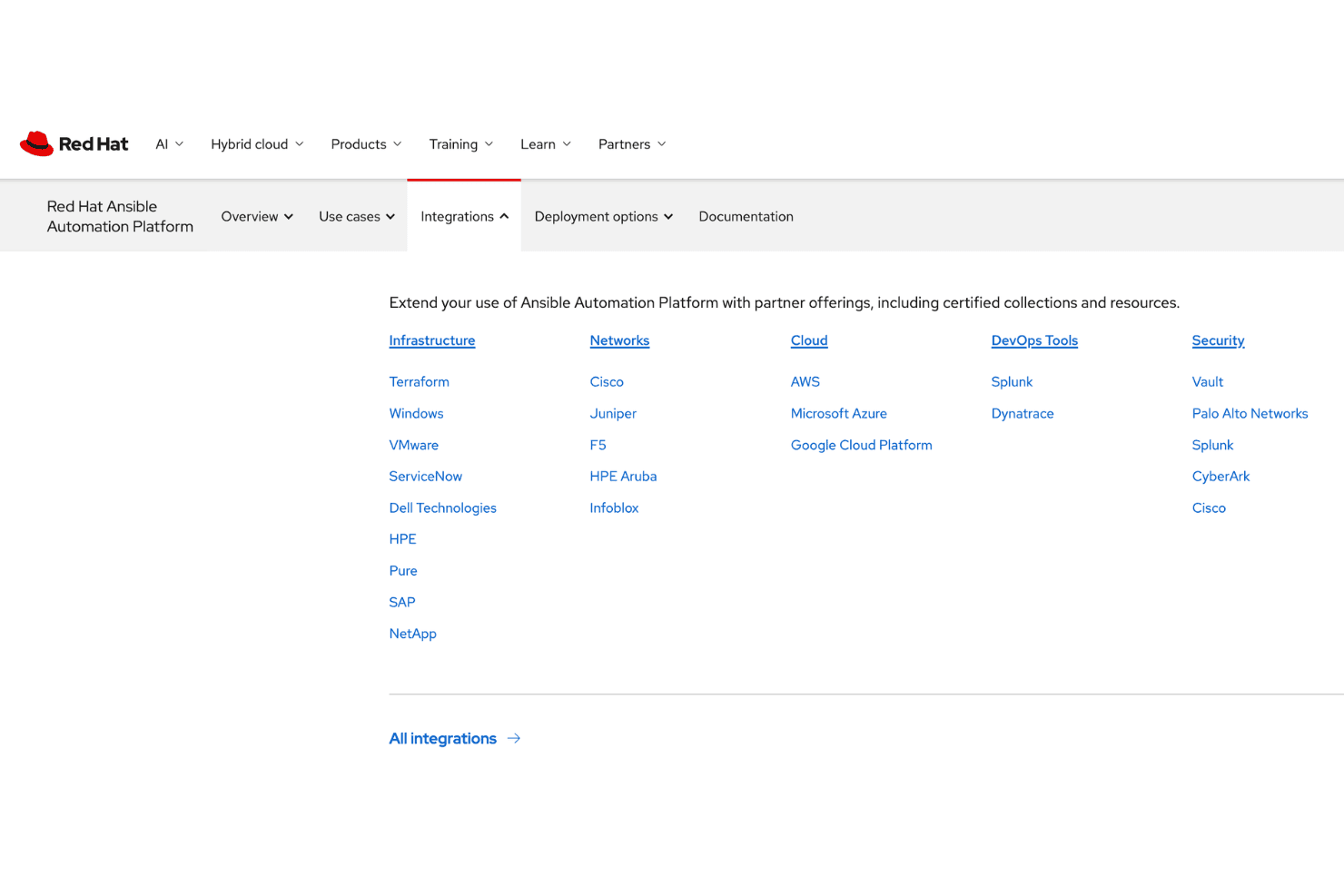
Ansible Automation Platform integrates with AWS, Microsoft Azure, Google Cloud Platform, VMware vSphere, ServiceNow, Cisco ACI, GitHub, GitLab, F5, and Splunk, among others.
Ansible also offers a robust API and supports connections with third-party integration tools.
Red Hat Ansible Automation Platform Specs
- API: Yes
- Bug Tracking: No
- CI/CD Integration: No
- Cloud Deployment: Yes
- Code Review: No
- Code Transformation: No
- Collaboration Support: Yes
- Data Export: No
- Data Import: No
- Developer Tools: No
- External Integrations: No
- Git Integration: No
- History/Version Control: No
- IDE Plugins: No
- Local Deployment: No
- Multi-User: Yes
- Notifications: Yes
- Project Management: Yes
- Release Management: No
- Static Analysis: No
- Task Scheduling/Tracking: Yes
- Testing: No


