

HaloITSM-arvostelu: hyvät ja huonot puolet, ominaisuudet ja hinnoittelukatsaus
Näin HaloITSM erottuu joukosta (ja missä se kompastelee) tehdessään IT-palvelunhallinnasta selkeämpää, nopeampaa ja älykkäämpää organisaatiollesi.

We review tools independently, and commissions help fund our testing. See our transparency policy, our methodology, or suggest a tool.
HaloITSM is a service management software built for IT teams managing incidents, changes, assets, and service requests within a single ITIL-aligned platform. It's worth a close look if you need more configurability than Freshservice gives you, but don't want the implementation complexity and cost that come with enterprise platforms like ServiceNow.
Halo Evaluation Summary
4.7/5
- From $99/agent/month (billed annually)
- Free demo + 30-day free trial available
Why Trust Our Software Recommendations
6,700+
Reviews
20
Industry experts
16+
Evaluation factors
14
Years
Our team has been testing and reviewing software since 2012. As tech leaders ourselves, we know how difficult—and important—it is to choose the right software.
For this guide, we evaluated tools using hands-on testing and independent research, scoring tools using our selection criteria.
Our reviews reflect our human editorial judgment, not a sales pitch.
Expert reviewers:
- Paulo Gardini MiguelTech Director
 Tim FisherVP of AI
 Gabriel RosasTech Lead & Software Architect
 Christhian GruhnTech Lead & Platform Architect

Halo Overview
HaloITSM offers a clean interface, flexible automation, and broad integration options that outperform many competitors on usability and configuration. Pricing is transparent, and onboarding is straightforward, especially for mid-sized IT teams modernizing legacy processes. Support response is reliable, though advanced reporting and deep customization lag compared to pricier options. If you’re choosing an IT service management solution for a growing in-house IT team or managed service provider with varied client needs, I think HaloITSM should be on your shortlist.
Pros
- All modules included with no feature-gating or bolt-ons.
- ITIL-aligned workflows available out of the box.
- Over 200 native integrations included at no extra cost.
Cons
- Advanced customization increases administrative complexity over time.
- Smaller teams may find implementation heavier than needed.
- Documentation lacks depth on advanced configurations.
Is Halo Right For Your Needs?
Who Would be a Good Fit for Halo?
HaloITSM works best for organizations that want a powerful, customizable ITSM platform with strong automation and asset management. IT and service desk teams needing multi-brand support, clear workflow design, or quick implementation see value in its unified approach. Industries with strict compliance and service delivery requirements, plus mid-sized and large teams that need role-based ticketing, tend to benefit the most.
- Mid-Sized EnterprisesHaloITSM scales well without the complexity of legacy suites, with easy configuration for internal and external support desks.
- Education SectorSchools and universities manage student and staff tickets, assets, and contracts in one place, using the self-service portal and knowledge base.
- Public Sector OrganizationsGovernment agencies and public-sector teams can centralize service requests, automate workflows, and improve transparency while reducing administrative overhead.
- Healthcare OrganizationsBuilt-in compliance controls, asset lifecycle management, and contract tracking meet strict regulatory and operational needs.
- IT DepartmentsInternal IT teams benefit from rapid ticket routing, asset visibility, and change management automation within a unified dashboard.
- Facilities ManagementFacilities or non-IT teams can use HaloITSM’s configurable workflows to track and route non-IT requests, leveraging the flexible service catalog.
Who Would be a Bad Fit for Halo?
HaloITSM may be too feature-rich or process-centric for small businesses, teams needing only simple ticket tracking, or organizations exclusively outside of IT. Those with minimal ITSM needs, limited budgets, or rigid requirements for on-premise deployment may find its model excessive or restrictive. Companies needing only lightweight help desk software or one-off issue management should look elsewhere.
- Small StartupsThe platform’s range of features and admin options can overwhelm teams seeking basic ticket logging without complex configuration.
- Retail ChainsOrganizations mainly needing point-of-sale or frontline support often find HaloITSM’s ITSM focus too broad for their daily requirements.
- Solo IT OperatorsSingle-person IT teams may not get value from features designed for workflow automation, asset tracking, and approvals.
- Pure HR DepartmentsHR teams needing only personnel request tracking may find the IT-centered modules and terminology don’t fit their needs closely.
- Companies With Static ITOrganizations with little change or incident volume don’t benefit from workflow-rich modules built for dynamic, process-heavy environments.
- On-Premise-Only BuyersHaloITSM’s cloud-first deployment model can be limiting for organizations with strict policies requiring on-premise-only solutions.
Our Review Methodology
How We Test & Score Tools
We’ve spent years building, refining, and improving our software testing and scoring system. The rubric is designed to capture the nuances of software selection and what makes a tool effective, focusing on critical aspects of the decision-making process.
Below, you can see exactly how our testing and scoring works across seven criteria. It allows us to provide an unbiased evaluation of the software based on core functionality, standout features, ease of use, onboarding, customer support, integrations, customer reviews, and value for money.
Core Functionality (25% of final scoring)
The starting point of our evaluation is always the core functionality of the tool. Does it have the basic features and functions that a user would expect to see? Are any of those core features locked to higher-tiered pricing plans? At its core, we expect a tool to stand up against the baseline capabilities of its competitors.
Standout Features (25% of final scoring)
Next, we evaluate uncommon standout features that go above and beyond the core functionality typically found in tools of its kind. A high score reflects specialized or unique features that make the product faster, more efficient, or offer additional value to the user.
We also evaluate how easy it is to integrate with other tools typically found in the tech stack to expand the functionality and utility of the software. Tools offering plentiful native integrations, 3rd party connections, and API access to build custom integrations score best.
Ease of Use (10% of final scoring)
We consider how quick and easy it is to execute the tasks defined in the core functionality using the tool. High scoring software is well designed, intuitive to use, offers mobile apps, provides templates, and makes relatively complex tasks seem simple.
Onboarding (10% of final scoring)
We know how important rapid team adoption is for a new platform, so we evaluate how easy it is to learn and use a tool with minimal training. We evaluate how quickly a team member can get set up and start using the tool with no experience. High scoring solutions indicate little or no support is required.
Customer Support (10% of final scoring)
We review how quick and easy it is to get unstuck and find help by phone, live chat, or knowledge base. Tools and companies that provide real-time support score best, while chatbots score worst.
Customer Reviews (10% of final scoring)
Beyond our own testing and evaluation, we consider the net promoter score from current and past customers. We review their likelihood, given the option, to choose the tool again for the core functionality. A high scoring software reflects a high net promoter score from current or past customers.
Value for Money (10% of final scoring)
Lastly, in consideration of all the other criteria, we review the average price of entry level plans against the core features and consider the value of the other evaluation criteria. Software that delivers more, for less, will score higher.
Core Features
Incident Management
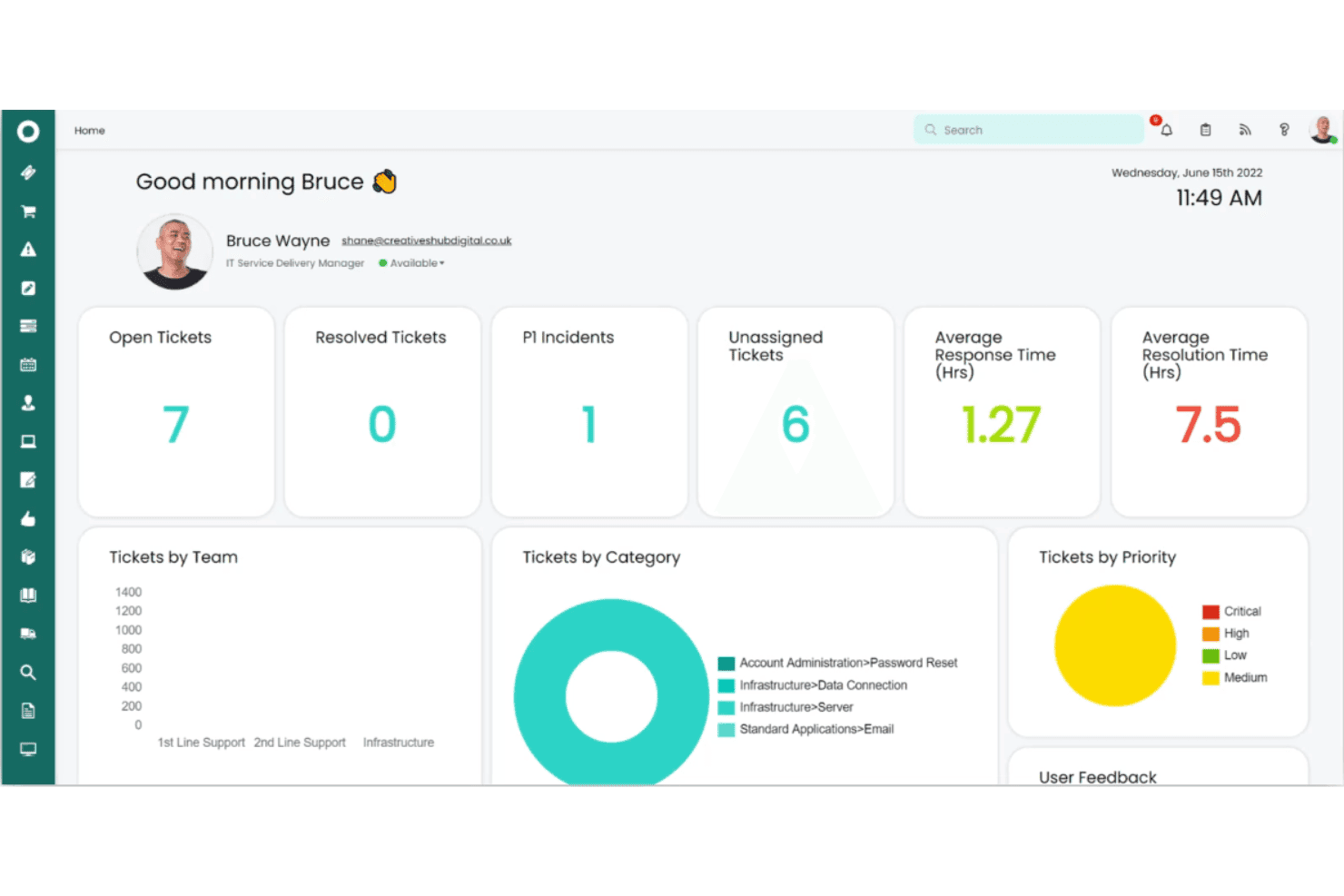
Log, prioritize, and resolve IT incidents from a unified dashboard. Automations route tickets based on urgency, keeping resolution fast.
Change Management
Handle IT changes with customizable approval workflows and risk assessment. Built-in auditing tracks every change for compliance.
Asset Management
Track hardware, software, and configuration items along the full lifecycle. Users see warranty status and assign assets directly from the system.
Service Catalog
Offer a centralized portal for users to request IT and business services. Custom forms standardize intake and drive consistent fulfillment.
Self-Service Portal
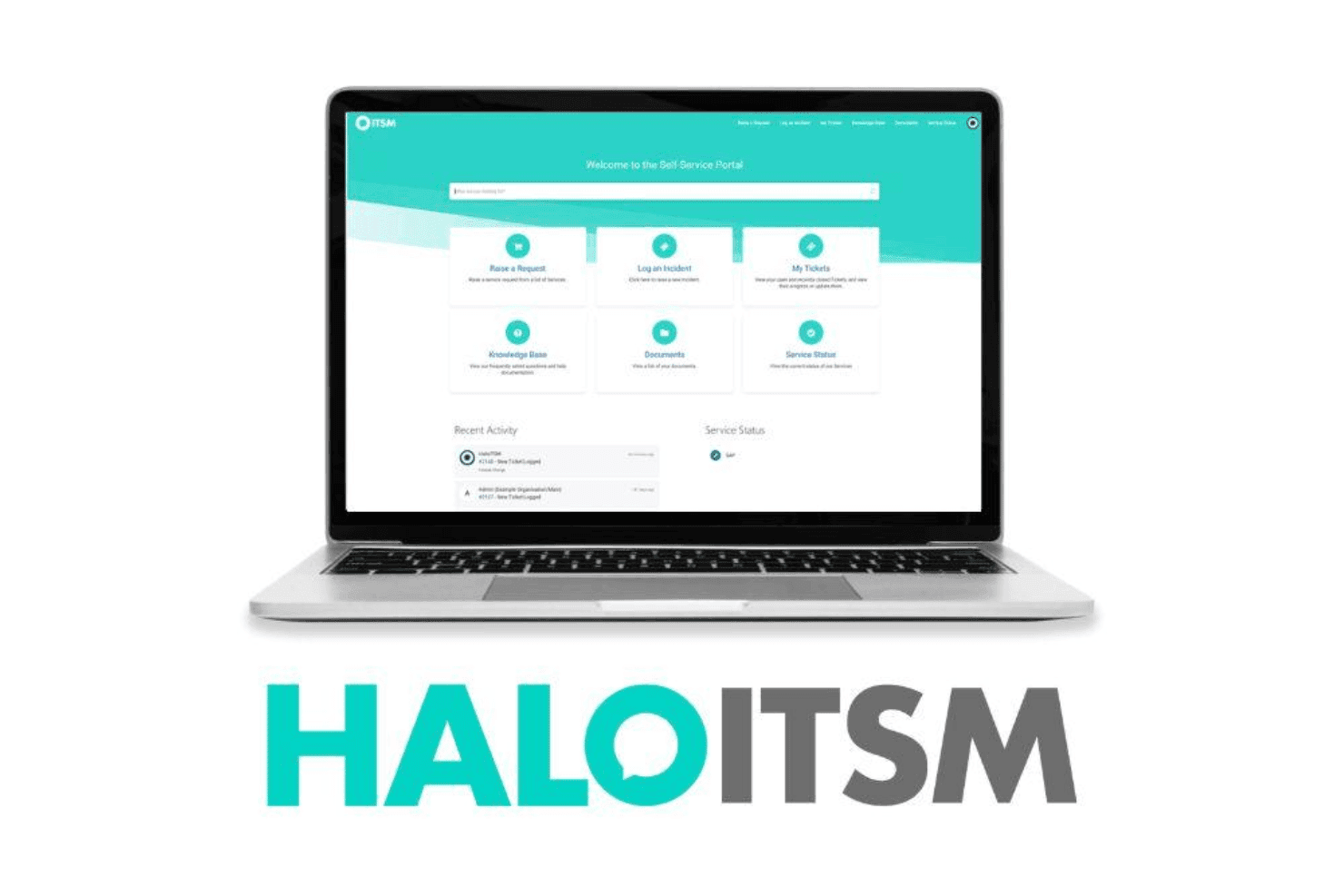
End users submit tickets and find solutions using a branded, knowledge-backed portal. Real-time ticket updates and FAQs reduce support workload.
Knowledge Base
Document solutions and procedures with built-in knowledge management tools. Staff can share articles during ticket resolution or surface them in search.
Ease of Use
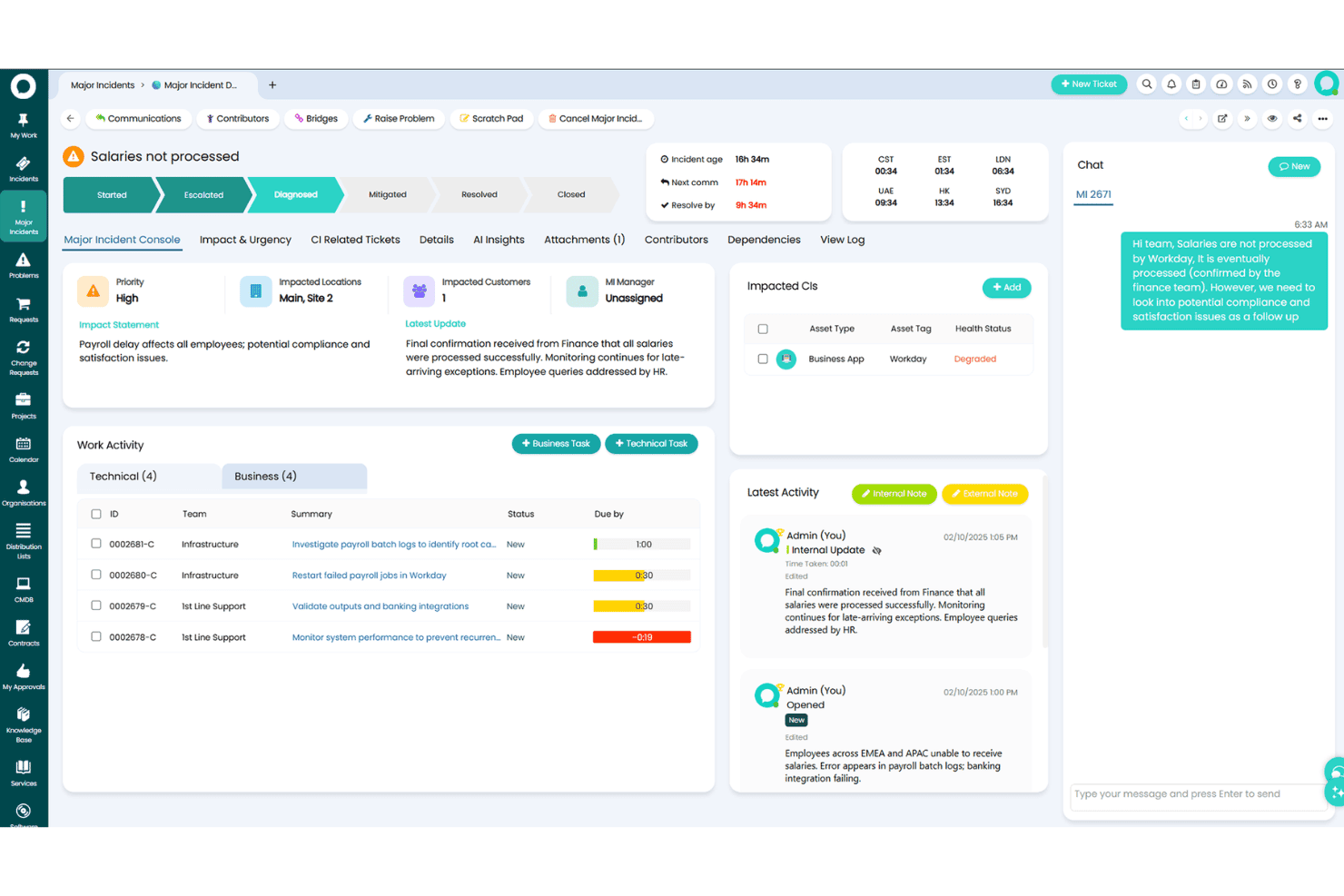
HaloITSM strikes a strong balance between depth and usability, with a clean interface and intuitive workflows. Users praise its drag-and-drop automations and simple form designers, making it quick to customize ticket flows and service catalogs. I find navigation is straightforward, and admins appreciate the contextual help, though a few advanced settings menus are less obvious for first-timers.
Integrations
HaloITSM integrates with Microsoft Teams, Azure Active Directory, Jira, Slack, Office 365, Splunk, Okta, Zapier, TeamViewer, and SCCM, among others. HaloITSM also offers a REST API and connects with third-party integration platforms for extended workflows.

Halo Specs
- 2-Factor Authentication: Yes
- Analytics: Yes
- Anti-Virus: No
- API: Yes
- Batch Permissions & Access: Yes
- Bug Tracking: No
- Call Integration: No
- Chat: No
- Contact Management: Yes
- CRM Integration: Yes
- Customer Management: Yes
- Data Export: Yes
- Data Import: Yes
- Email Integration: Yes
- Escalation Management: Yes
- External Integrations: Yes
- Incident Management: Yes
- Instant Chat Integration: No
- Knowledge Base: Yes
- Malware Protection: No
- Multi-User: Yes
- Notifications: Yes
- Organization Management: No
- Password & Access Management: Yes
- Project Management: Yes
- Real-time Alerts: Yes
- SAP Integration: Yes
- Self-service Portal: Yes
- Social Media Integration: No
- Support Forum: Yes
- Ticket Management: Yes
- Workflow Management: Yes


