

Engine Yard -arvostelu: hyvät ja huonot puolet, ominaisuudet ja hinnoittelu
Engine Yard menestyy palveluna tarjottavana alustaratkaisuna (PaaS) tarjoamalla vankkaa tukea ja helppokäyttöisyyttä, mikä tekee siitä ihanteellisen ratkaisun tiimeille, joilla ei ole omia DevOps-resursseja.

We review tools independently, and commissions help fund our testing. See our transparency policy, our methodology, or suggest a tool.
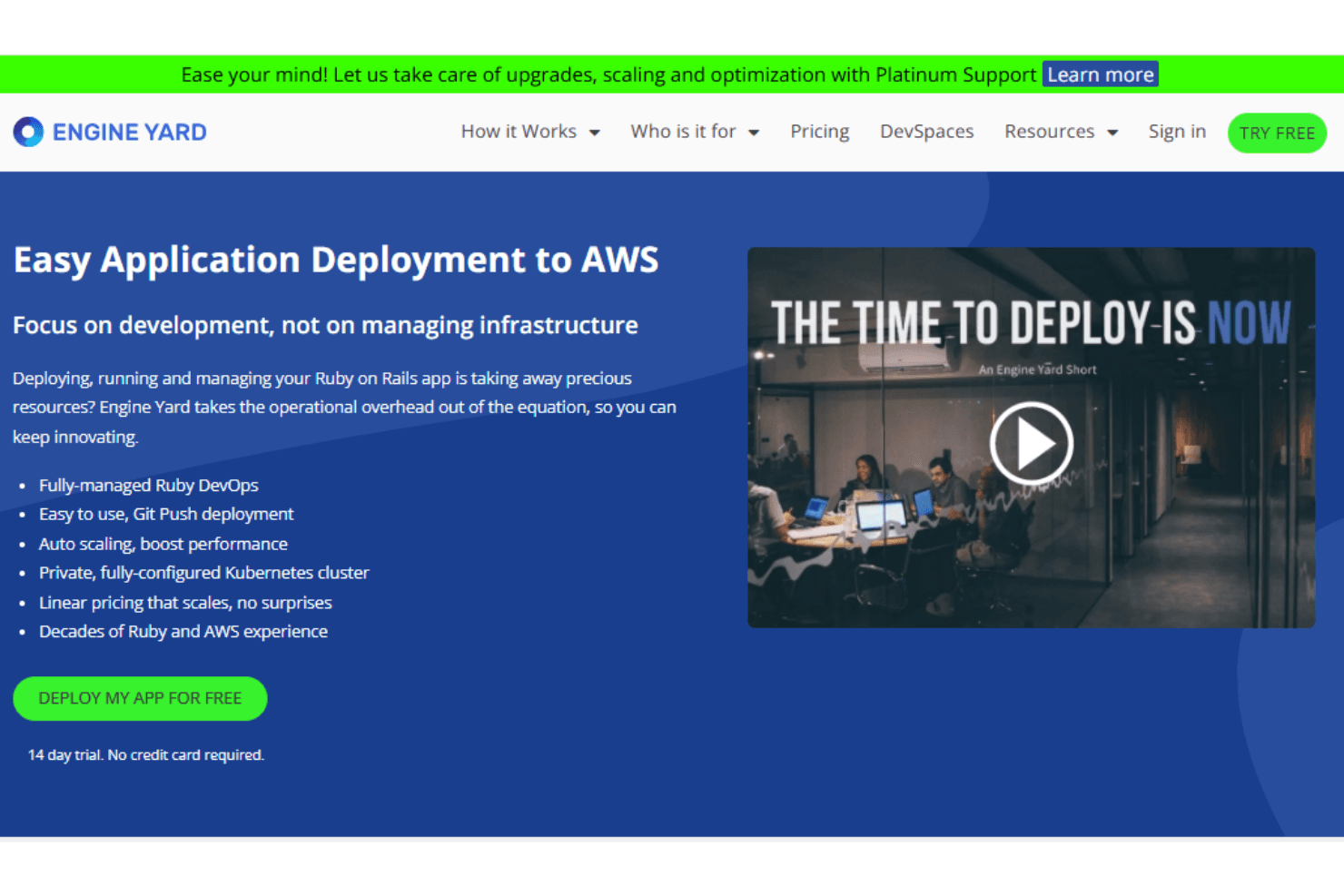
Engine Yard is a PaaS software for development teams that need managed infrastructure for deploying and scaling Ruby on Rails and PHP applications on AWS. I'd mainly consider it if your team wants more infrastructure visibility and control than Heroku gives you, but doesn't want to own every layer of the stack outright. Engine Yard sits in a useful middle ground—more configurable than Heroku, with dedicated support options that matter when you're running production workloads and need someone who actually knows your environment.
Engine Yard Evaluation Summary
3.8/5
- From $270/month
- 14-day free trial
Why Trust Our Software Recommendations
6,700+
Reviews
20
Industry experts
16+
Evaluation factors
14
Years
Our team has been testing and reviewing software since 2012. As tech leaders ourselves, we know how difficult—and important—it is to choose the right software.
For this guide, we evaluated tools using hands-on testing and independent research, scoring tools using our selection criteria.
Our reviews reflect our human editorial judgment, not a sales pitch.
Expert reviewers:
- Paulo Gardini MiguelTech Director
 Tim FisherVP of AI
 Gabriel RosasTech Lead & Software Architect
 Christhian GruhnTech Lead & Platform Architect

Engine Yard Overview
In my opinion, Engine Yard stands out with its user-friendly interface and solid customer support, making it a reliable choice for small to medium-sized development teams. While it may not have the extensive feature set of some competitors, it excels in providing strong support and accessibility. Engine Yard is particularly well-suited for teams that prioritize a straightforward deployment process and need reliable support without a steep learning curve. However, if your team needs advanced customization or integration options, you might find other platforms more fitting. Overall, Engine Yard is a good choice for teams looking for a balanced PaaS solution.
Pros
- The customer support team is responsive and helpful.
- Your team will find the platform easy to use.
- It provides reliable application deployment for your work.
Cons
- You might miss more advanced customization options.
- The feature set feels limited compared to some competitors.
- It may not suit teams needing extensive integration capabilities or complex Kubernetes cluster orchestration.
Is Engine Yard Right For Your Needs?
Who Would be a Good Fit for Engine Yard?
Engine Yard is a great fit for small to medium-sized tech startups and development teams that use Git-based workflows and need dependable support and easy deployment. If your team values straightforward processes without the need for extensive customization, Engine Yard's capabilities can meet those needs. Its accessible interface and reliable customer support make it suitable for teams without dedicated DevOps resources that want to focus on development rather than infrastructure management.
- Tech StartupsEngine Yard's easy deployment and reliable support make it perfect for startups focused on rapid development.
- Small BusinessesIf you're a small business that needs efficient app deployment without provisioning infrastructure, Engine Yard may be a good fit.
- Development TeamsYour team benefits from Engine Yard's straightforward interface, allowing you to focus on coding.
- Non-DevOps CompaniesEngine Yard is ideal if you lack a dedicated DevOps team, as it simplifies deployment and management.
- Educational InstitutionsFor educational tech projects, Engine Yard offers ease of use, letting you concentrate on learning outcomes.
- Consulting FirmsConsulting firms can leverage Engine Yard's support to manage client projects without heavy DevOps involvement.
Who Would be a Bad Fit for Engine Yard?
Engine Yard isn't ideal for large enterprises or teams needing advanced customization and extensive integration options. If your work involves complex infrastructure or requires specific integrations that Engine Yard doesn't support, you'll likely find it lacking. It's not suited for businesses that require a high level of customization or those with dedicated DevOps teams that prefer more control over their deployment processes.
- Large EnterprisesIf you're part of a large enterprise, Engine Yard's limited customization might not meet your complex needs.
- Highly Customized AppsFor apps requiring extensive customization, Engine Yard lacks the flexibility you need.
- Advanced DevOps TeamsIf your team has advanced DevOps capabilities, you might find Engine Yard's simplicity limiting.
- Integration-Heavy WorkProjects with numerous integrations won't find Engine Yard's capabilities sufficient.
- Financial SectorThe financial sector often needs advanced security and customization, which Engine Yard doesn't fully support.
- Healthcare OrganizationsHealthcare organizations require strict compliance and customization, areas where Engine Yard may fall short.
Our Review Methodology
How We Test & Score Tools
We’ve spent years building, refining, and improving our software testing and scoring system. The rubric is designed to capture the nuances of software selection and what makes a tool effective, focusing on critical aspects of the decision-making process.
Below, you can see exactly how our testing and scoring works across seven criteria. It allows us to provide an unbiased evaluation of the software based on core functionality, standout features, ease of use, onboarding, customer support, integrations, customer reviews, and value for money.
Core Functionality (25% of final scoring)
The starting point of our evaluation is always the core functionality of the tool. Does it have the basic features and functions that a user would expect to see? Are any of those core features locked to higher-tiered pricing plans? At its core, we expect a tool to stand up against the baseline capabilities of its competitors.
Standout Features (25% of final scoring)
Next, we evaluate uncommon standout features that go above and beyond the core functionality typically found in tools of its kind. A high score reflects specialized or unique features that make the product faster, more efficient, or offer additional value to the user.
We also evaluate how easy it is to integrate with other tools typically found in the tech stack to expand the functionality and utility of the software. Tools offering plentiful native integrations, 3rd party connections, and API access to build custom integrations score best.
Ease of Use (10% of final scoring)
We consider how quick and easy it is to execute the tasks defined in the core functionality using the tool. High scoring software is well designed, intuitive to use, offers mobile apps, provides templates, and makes relatively complex tasks seem simple.
Onboarding (10% of final scoring)
We know how important rapid team adoption is for a new platform, so we evaluate how easy it is to learn and use a tool with minimal training. We evaluate how quickly a team member can get set up and start using the tool with no experience. High scoring solutions indicate little or no support is required.
Customer Support (10% of final scoring)
We review how quick and easy it is to get unstuck and find help by phone, live chat, or knowledge base. Tools and companies that provide real-time support score best, while chatbots score worst.
Customer Reviews (10% of final scoring)
Beyond our own testing and evaluation, we consider the net promoter score from current and past customers. We review their likelihood, given the option, to choose the tool again for the core functionality. A high scoring software reflects a high net promoter score from current or past customers.
Value for Money (10% of final scoring)
Lastly, in consideration of all the other criteria, we review the average price of entry level plans against the core features and consider the value of the other evaluation criteria. Software that delivers more, for less, will score higher.
Core Features
Application Deployment: Engine Yard simplifies app deployment by automating the process, saving your team time and effort. With its straightforward interface, you can deploy apps without extensive technical knowledge, whether you're working with Ruby on Rails apps or cross-language stacks.
Scalability: You can easily scale your applications up or down, depending on your needs, ensuring optimal performance. Engine Yard adjusts resources automatically, so you don't have to constantly monitor usage.
Monitoring Tools: Engine Yard's built-in monitoring tools, including actionable metrics, keep track of your application's performance. This helps you quickly identify and resolve issues, maintaining smooth operations.
Backup and Recovery: Its reliable backup and recovery options protect your data. Your team can restore data quickly in the event of any disruptions, minimizing downtime.
Security: Engine Yard includes basic security features to protect your applications. It ensures that your data remains secure, giving you peace of mind.
Environment Management: You can manage different environments for development, testing, and production. This feature lets you keep your projects organized and maintain control over the development process.
Ease of Use
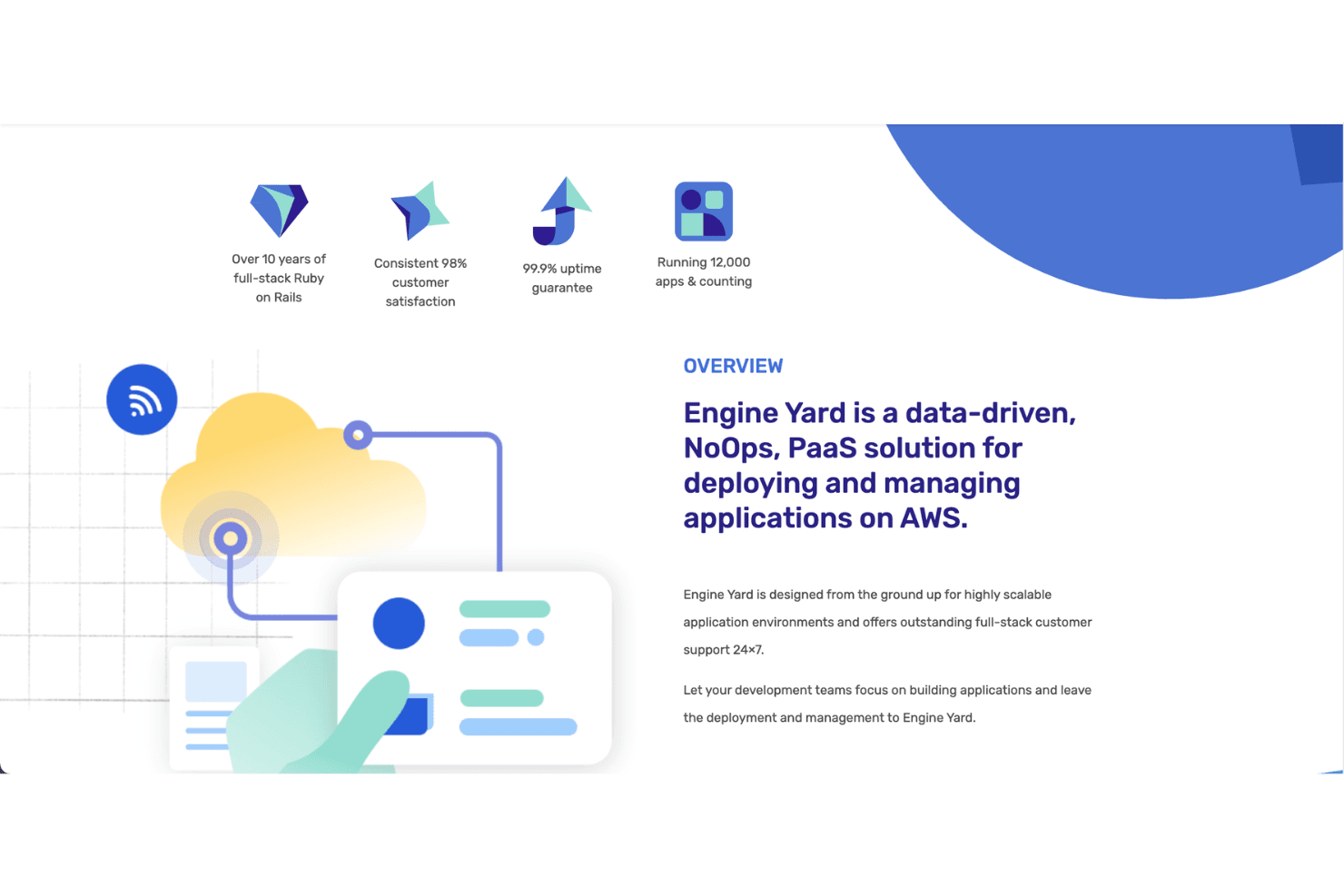
Engine Yard is user-friendly, making it accessible even if your team doesn't have extensive technical expertise. Its intuitive interface means you can deploy and manage web applications without hassle. Users appreciate the simplicity of navigating tasks, allowing them to focus more on development rather than infrastructure management. Compared to many other solutions, such as Heroku, Engine Yard stands out for its ease of use, which is a big plus if you're looking for an uncomplicated deployment process.
Integrations
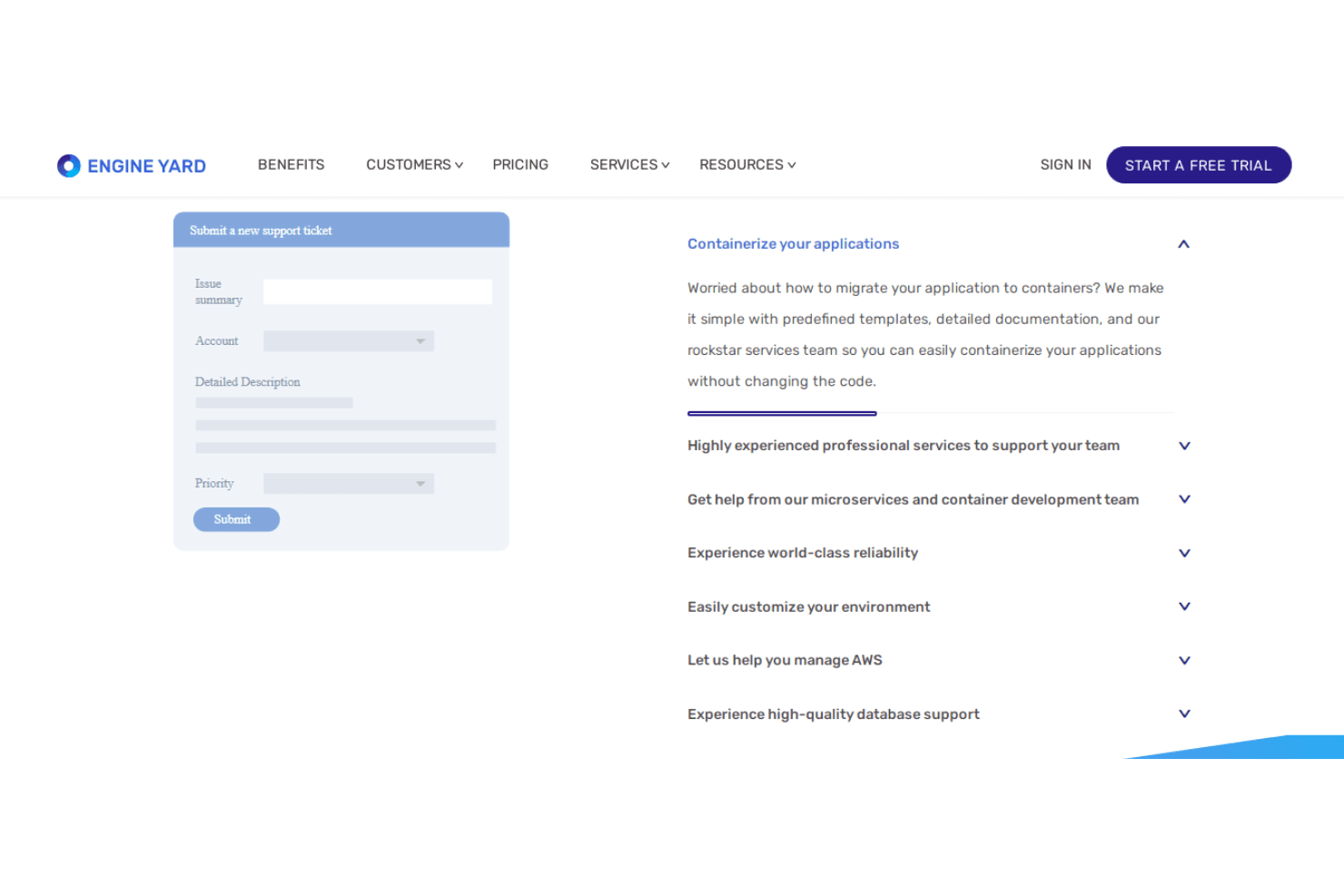
Engine Yard integrates with Amazon Web Services (AWS), GitHub, Bitbucket, New Relic, Papertrail, SendGrid, Rollbar, Honeybadger, Scout, and Logentries.
Engine Yard also provides an application programming interface, or API, for custom integrations and connects with third-party integration tools.
Engine Yard Specs
- Access Management: Yes
- API: Yes
- Bug Tracking: Yes
- Data Export: Yes
- Data Import: Yes
- Developer Tools: Yes
- External Integrations: Yes
- History/Version Control: Yes
- Multi-User: Yes
- Notifications: Yes
- Project Management: Yes
- Release Management: Yes
- Task Scheduling/Tracking: Yes
- Test Management: Yes


