
Crosscheck Networks SOAPSonar -arvostelu 2026: ominaisuudet, hyvät ja huonot puolet sekä hinnoittelu
Crosscheck Networks SOAPSonar on API-testaustyökalu, joka on suunniteltu tietoturva-, suorituskyky- ja toiminnalliseen testaukseen. Selvitä, miten sen ominaisuudet auttavat tiimejä validoimaan ja parantamaan API-rajapintojen luotettavuutta.

We review tools independently, and commissions help fund our testing. See our transparency policy, our methodology, or suggest a tool.
Crosscheck Networks SOAPSonar is an API testing tool built specifically for SOAP and REST web services. I'd consider it if your team needs to run functional, load, and security tests against web service endpoints. It's particularly useful in enterprise environments where SOAP protocol depth matters. If you've used SoapUI, SOAPSonar covers similar ground but goes further with built-in security testing and compliance-focused reporting. That makes it a stronger fit for teams with stricter validation requirements.
Crosscheck Networks SOAPSonar Evaluation Summary
0/5
- From $20.75/month (billed annually)
- Free demo available
Why Trust Our Software Recommendations
6,700+
Reviews
20
Industry experts
16+
Evaluation factors
14
Years
Our team has been testing and reviewing software since 2012. As tech leaders ourselves, we know how difficult—and important—it is to choose the right software.
For this guide, we evaluated tools using hands-on testing and independent research, scoring tools using our selection criteria.
Our reviews reflect our human editorial judgment, not a sales pitch.
Expert reviewers:
- Paulo Gardini MiguelTech Director
 Tim FisherVP of AI
 Gabriel RosasTech Lead & Software Architect
 Christhian GruhnTech Lead & Platform Architect

Crosscheck Networks SOAPSonar Overview
When I judge SOAPSonar as an API testing tool, I think its granular security testing and protocol coverage easily beat many others, especially for SOAP-heavy or highly regulated projects. While the interface feels dated and integrations are limited, its powerful endpoint validation and automation are clear strengths.
If your team needs strong compliance, layered testing, or legacy support, SOAPSonar should be high on your list, though you may want to weigh onboarding and integration tradeoffs before choosing it.
Pros
- Advanced support for SOAP, REST, and legacy web services
- Detailed security testing features for comprehensive validation
- Automated regression testing for repeated API checks
Cons
- Outdated user interface compared to modern competitors
- Limited integration options with CI/CD and modern toolchains
- Sparse community presence and fewer updated learning resources
Is Crosscheck Networks SOAPSonar Right For Your Needs?
Who Would be a Good Fit for Crosscheck Networks SOAPSonar?
SOAPSonar delivers the most value for organizations that require advanced security validation, strict protocol compliance, or need to support SOAP alongside modern and legacy web services. Teams in healthcare, banking, and the public sector that manage sensitive data or regulated environments should find its security testing and policy enforcement features compelling.
Enterprises with legacy infrastructure, compliance-driven IT departments, and roles focused on integration or regression testing will get the most from its specialized capabilities.
- Healthcare ComplianceHealthcare IT teams need SOAPSonar’s security and compliance validation to test APIs touching patient or insurance data.
- Financial ServicesBanks and fintech companies benefit from detailed regression and security tests across legacy SOAP and mixed-protocol environments.
- Government AgenciesPublic sector teams handling regulated data get value from SOAPSonar’s policy enforcement and audit features.
- Enterprise IntegrationsLarge companies with complex, multi-system workflows can tackle regression, load, and security scenarios within one dedicated tool.
- QA DepartmentsDedicated QA roles who require automated regression and data-driven test coverage appreciate SOAPSonar’s customizable test scenarios.
- Regulated UtilitiesUtilities working under strict cybersecurity mandates need tools like SOAPSonar for in-depth vulnerability assessment and compliance tracking.
Who Would be a Bad Fit for Crosscheck Networks SOAPSonar?
Smaller organizations, agile teams, or those heavily invested in microservices and cloud-first architectures may find SOAPSonar unnecessarily complex or lacking integration breadth. Teams relying on broad third-party integrations, rapidly evolving tech stacks, or needing extensive user community support can encounter friction in ramp-up and day-to-day usage.
Startups, marketing teams, modern app developers, or roles needing maximum ease of use will find its interface and manual processes challenging compared to newer solutions.
- Small StartupsStartups with limited resources might find SOAPSonar’s interface and learning curve too steep compared to lighter solutions.
- Agile Dev TeamsAgile software teams focused on CI/CD and rapid iteration will miss built-in modern integrations and intuitive UI.
- Marketing DepartmentsMarketing or non-technical users need easier, more visual tools than SOAPSonar provides.
- Modern App DevelopersTeams building REST-first, serverless, or GraphQL APIs want native support for newer protocols and cloud features.
- Educational InstitutionsUniversities and schools benefit more from simpler tools with wider documentation and community resources.
- E-commerce SMBsSmall- to mid-size ecommerce businesses don’t usually need the depth of security and compliance features provided by SOAPSonar.
Our Review Methodology
How We Test & Score Tools
We’ve spent years building, refining, and improving our software testing and scoring system. The rubric is designed to capture the nuances of software selection and what makes a tool effective, focusing on critical aspects of the decision-making process.
Below, you can see exactly how our testing and scoring works across seven criteria. It allows us to provide an unbiased evaluation of the software based on core functionality, standout features, ease of use, onboarding, customer support, integrations, customer reviews, and value for money.
Core Functionality (25% of final scoring)
The starting point of our evaluation is always the core functionality of the tool. Does it have the basic features and functions that a user would expect to see? Are any of those core features locked to higher-tiered pricing plans? At its core, we expect a tool to stand up against the baseline capabilities of its competitors.
Standout Features (25% of final scoring)
Next, we evaluate uncommon standout features that go above and beyond the core functionality typically found in tools of its kind. A high score reflects specialized or unique features that make the product faster, more efficient, or offer additional value to the user.
We also evaluate how easy it is to integrate with other tools typically found in the tech stack to expand the functionality and utility of the software. Tools offering plentiful native integrations, 3rd party connections, and API access to build custom integrations score best.
Ease of Use (10% of final scoring)
We consider how quick and easy it is to execute the tasks defined in the core functionality using the tool. High scoring software is well designed, intuitive to use, offers mobile apps, provides templates, and makes relatively complex tasks seem simple.
Onboarding (10% of final scoring)
We know how important rapid team adoption is for a new platform, so we evaluate how easy it is to learn and use a tool with minimal training. We evaluate how quickly a team member can get set up and start using the tool with no experience. High scoring solutions indicate little or no support is required.
Customer Support (10% of final scoring)
We review how quick and easy it is to get unstuck and find help by phone, live chat, or knowledge base. Tools and companies that provide real-time support score best, while chatbots score worst.
Customer Reviews (10% of final scoring)
Beyond our own testing and evaluation, we consider the net promoter score from current and past customers. We review their likelihood, given the option, to choose the tool again for the core functionality. A high scoring software reflects a high net promoter score from current or past customers.
Value for Money (10% of final scoring)
Lastly, in consideration of all the other criteria, we review the average price of entry level plans against the core features and consider the value of the other evaluation criteria. Software that delivers more, for less, will score higher.
Core Features
Automated Regression Testing
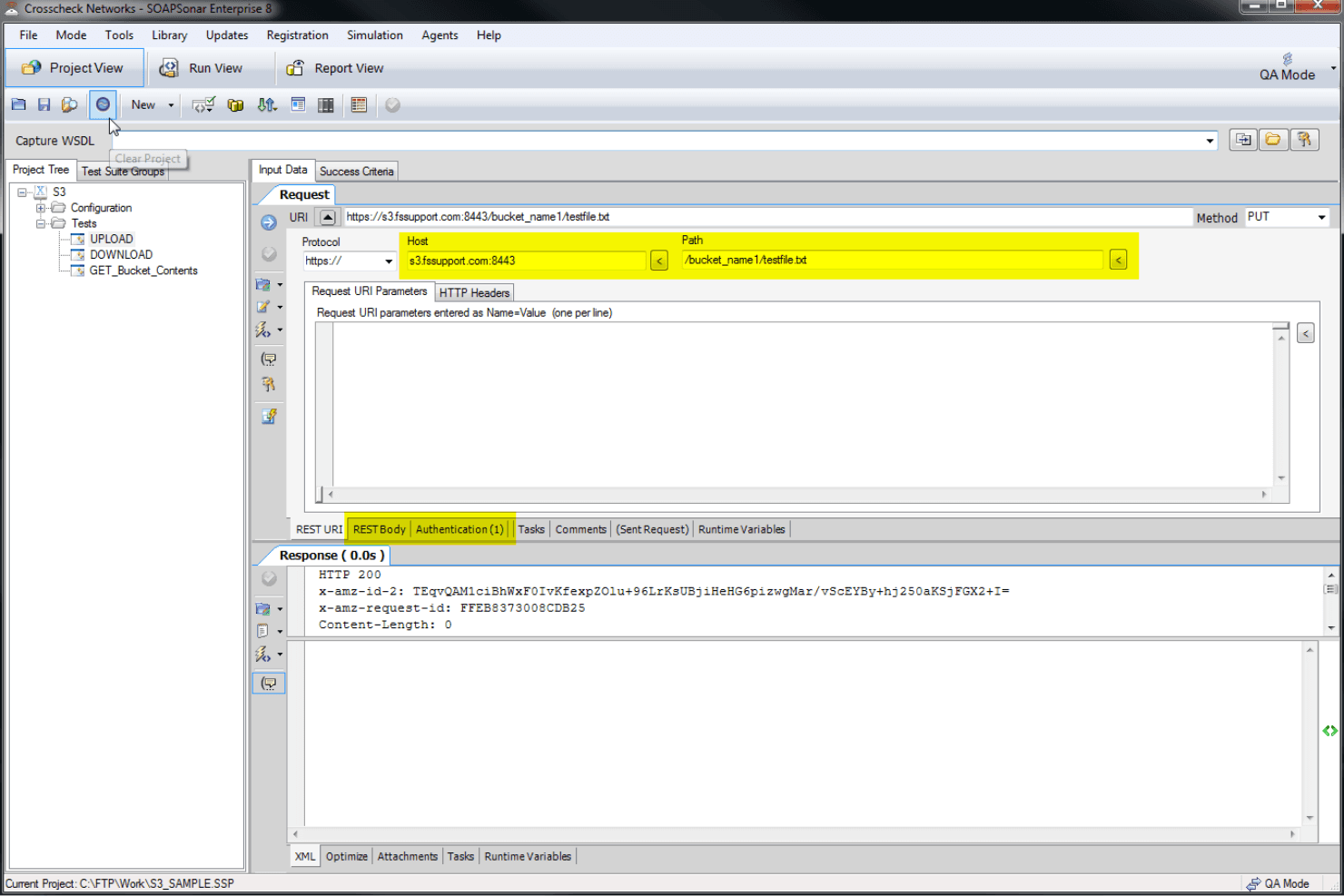
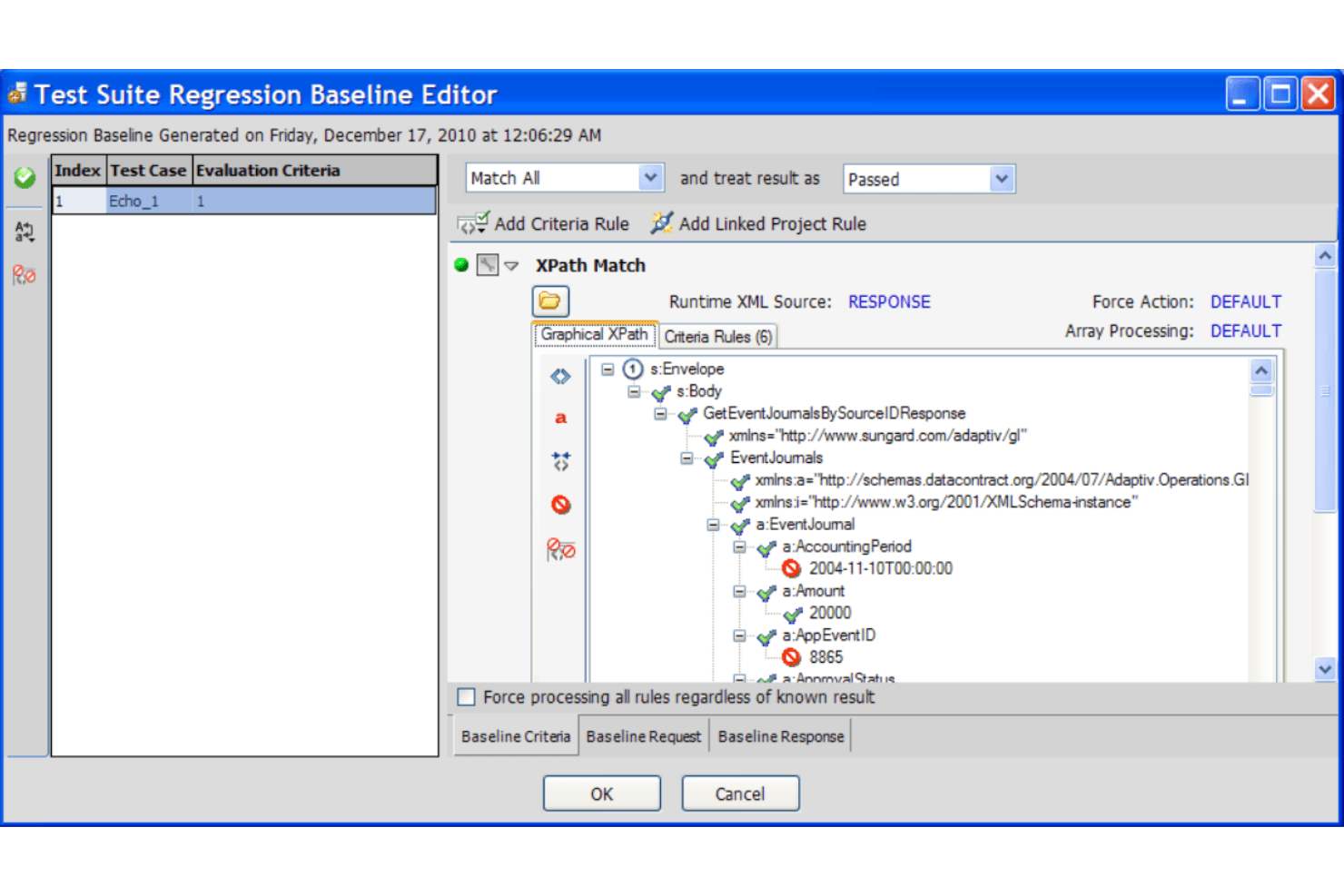
Run large API test suites on a schedule to detect errors after updates or releases. SOAPSonar helps teams validate changes without manually repeating the same test cycles.
Security Vulnerability Assessment
Identify API security risks, including injection attacks, XML threats, and other vulnerabilities. Teams can use detailed reports to find weaknesses and improve protection.
Performance and Load Testing
Simulate different traffic levels to measure API stability, speed, and reliability under pressure. SOAPSonar helps teams identify bottlenecks before they impact users.
Data-Driven Testing
Run API tests with different data sets to validate multiple scenarios and conditions. This helps teams improve coverage for complex workflows and endpoint logic.
Compliance and Policy Validation
Validate APIs against internal policies and security standards like WS-Security. Teams can check requirements directly within their testing process.
SOAP and REST Protocol Support
Test SOAP, REST, and mixed web services from one platform. SOAPSonar supports complex API structures, authentication, and legacy service requirements.
Ease of Use
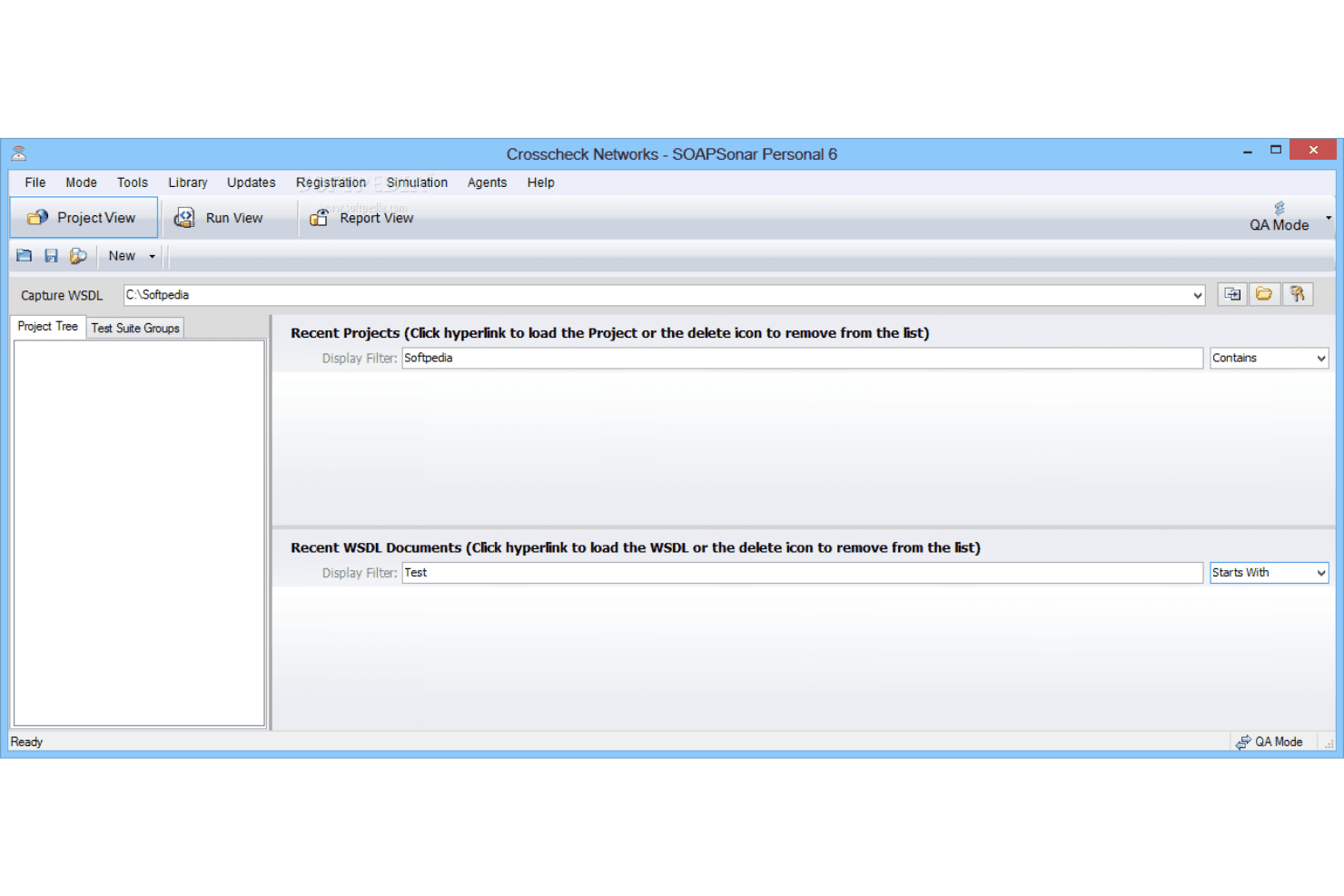
SOAPSonar’s interface feels dated, and some menu structures can be unintuitive, which users frequently mention. However, the platform balances this with powerful automation and visual test builders, making it easier to design complex workflows once you’re familiar with its approach.
I think experienced testers working in compliance or legacy-heavy environments will get the most from its feature depth.
Integrations
Crosscheck Networks SOAPSonar integrates with CloudPort, Amazon AWS API, Excel, Database tables, Windows Certificate Store, Java Keystore, SmartCard readers, SAML authentication providers, OAuth providers, and Kerberos authentication.
SOAPSonar does not offer a public API for third-party integrations and does not natively connect with third-party integration tools.
Crosscheck Networks SOAPSonar Specs
- A/B Testing: Yes
- API: Yes
- Automated Testing: Yes
- Browser Compatibility Testing: No
- Bug Tracking: No
- Calendar Management: No
- CI/CD Integration: Yes
- Dashboard: Yes
- Data Export: Yes
- Data Import: Yes
- Data Visualization: Yes
- Developer Tools: Yes
- External Integrations: Yes
- History/Version Control: No
- Manual Testing: Yes
- Multi-User: Yes
- Notifications: Yes
- Performance Testing: Yes
- Regression Testing: Yes
- Scheduling: Yes
- Status Notifications: Yes
- Third-Party Plugins/Add-Ons: Yes


