

Reseña de Vertex AI 2026: Ventajas, Desventajas, Características y Precios

Revisamos herramientas de forma independiente y las comisiones ayudan a financiar nuestras pruebas. Consulta nuestra política de transparencia, nuestra metodología o sugiere una herramienta.
Vertex AI is a machine learning software from Google Cloud for data science and ML engineering teams that need a single platform to build, train, and deploy models at scale. I'd consider it over AWS SageMaker if your infrastructure is already on Google Cloud—the native integrations with BigQuery and Vertex AI Pipelines give you a more connected workflow than you'd get piecing together SageMaker's separate services.
Vertex AI Evaluation Summary
4.3/5
- Pricing upon request
- Free plan available
Por qué confiar en nuestras recomendaciones de software
6,700+
Reviews
20
Industry experts
16+
Evaluation factors
14
Years
Nuestro equipo lleva probando y evaluando software desde 2012. Como líderes tecnológicos, sabemos lo difícil —y lo importante— que es elegir el software adecuado.
Para esta guía, evaluamos las herramientas mediante pruebas prácticas e investigación independiente, puntuando las herramientas según nuestros criterios de selección.
Nuestras reseñas reflejan nuestro criterio editorial humano, no un discurso de ventas.
Revisores expertos:
- Paulo Gardini MiguelDirector técnico
 Tim FisherVP de IA
 Gabriel RosasTech Lead y arquitecto de software
 Christhian GruhnTech Lead y arquitecto de plataforma

Vertex AI Overview
Vertex AI is a computer vision and machine learning software platform on Google Cloud that brings together model training, deployment, generative AI, and MLOps in one managed environment. It offers access to Gemini and other models, along with scalable infrastructure for production AI workloads.
Its strengths include deep cloud integration and enterprise governance, though its usage-based pricing and cloud setup may require careful cost monitoring and technical familiarity.
Pros
- Managed pipelines automate model training and deployment.
- AutoML supports custom model creation without deep coding.
- Model monitoring tools help track drift and performance.
Cons
- Pricing structure is complex and hard to predict.
- Onboarding is challenging for teams new to Google Cloud.
- Limited transparency in resource usage and billing details.
Is Vertex AI Right For Your Needs?
Who Would be a Good Fit for Vertex AI?
Vertex AI is well suited for organizations running AI initiatives at scale, especially those operating within Google Cloud. It supports predictive and generative AI workloads, managed training pipelines, and enterprise MLOps across departments. Teams that require scalable infrastructure, centralized governance, and integration across cloud services will benefit most.
- AI & Generative AI TeamsTeams building large language models, multimodal systems, or AI agents can leverage managed training, evaluation, and Gemini model access.
- Healthcare & Life Sciences DepartmentsOrganizations handling sensitive clinical or research data can use Google Cloud’s compliance-backed infrastructure and monitoring tools.
- Retail & Ecommerce Data TeamsSupports demand forecasting, personalization, and computer vision workflows at scale.
- Financial Services & Insurance DivisionsModel monitoring, governance, and scalable compute align with regulated AI initiatives.
- Logistics & Supply Chain OperationsEnables predictive analytics and optimization models using large, distributed datasets.
- Government & Public Sector ProgramsAgencies running secure, cloud-based AI initiatives can leverage Google Cloud’s infrastructure and certifications.
- Budget-Constrained Educational ProgramsVariable cloud pricing may be difficult to manage for classroom environments.
Who Would be a Bad Fit for Vertex AI?
Vertex AI may not be ideal for teams with limited cloud experience, small-scale AI needs, or environments requiring fully on-prem deployment. Its pay-as-you-go pricing and cloud-native design are best suited for organizations prepared to manage cloud infrastructure.
- Small Teams with Limited AI ScopeThe platform’s scale and complexity may exceed basic project needs.
- Solo Developers or FreelancersEnterprise-level infrastructure and billing may not align with individual workloads.
- Organizations Requiring Fully On-Prem AIVertex AI is designed for Google Cloud and not intended for standalone on-prem deployment.
- Low-Volume Annotation ProjectsTeams needing simple labeling or lightweight workflows may not require full cloud AI infrastructure.
- Rapid Prototype-Only InitiativesTeams seeking minimal setup experimentation may prefer simpler, tool-specific platforms.
Nuestra metodología de revisión
Cómo probamos y puntuamos las herramientas
Hemos invertido años construyendo, refinando y mejorando nuestro sistema de pruebas y puntuación de software. La rúbrica está diseñada para captar los matices de la selección de software y lo que hace a una herramienta efectiva, enfocándose en aspectos críticos del proceso de toma de decisiones.
A continuación, puedes ver exactamente cómo nuestro sistema de prueba y puntuación funciona a través de siete criterios. Esto nos permite ofrecer una evaluación imparcial del software basada en funcionalidad central, características destacadas, facilidad de uso, incorporación, soporte al cliente, integraciones, reseñas de clientes y relación calidad-precio.
Funcionalidad principal (25% de la puntuación final)
El punto de partida de nuestra evaluación siempre es la funcionalidad central de la herramienta. ¿Tiene las características y funciones básicas que un usuario esperaría encontrar? ¿Alguna de esas funciones principales está limitada a planes de precios superiores? Esperamos que una herramienta esté a la altura de las capacidades básicas de sus competidores.
Características destacadas (25% de la puntuación final)
Luego, evaluamos las características poco comunes y sobresalientes que van más allá de la funcionalidad principal que normalmente se encuentra en herramientas de su tipo. Una puntuación alta refleja características especializadas o únicas que hacen el producto más rápido, eficiente o que ofrecen valor adicional al usuario.
También evaluamos qué tan fácil es integrar con otras herramientas que normalmente forman parte del ecosistema tecnológico para expandir la funcionalidad y utilidad del software. Las herramientas que ofrecen abundantes integraciones nativas, conexiones de terceros y acceso API para crear integraciones personalizadas obtienen la mejor puntuación.
Facilidad de uso (10% de la puntuación final)
Consideramos cuán rápido y sencillo es ejecutar las tareas definidas por la funcionalidad principal usando la herramienta. El software con mejor puntuación está bien diseñado, es intuitivo, ofrece aplicaciones móviles, proporciona plantillas y hace que tareas relativamente complejas parezcan sencillas.
Incorporación (10% de la puntuación final)
Sabemos lo importante que es la adopción rápida por parte del equipo para una nueva plataforma, por lo que evaluamos cuán fácil es aprender y usar una herramienta con entrenamiento mínimo. Evaluamos cuán rápido un miembro del equipo puede configurarla y comenzar a utilizarla sin experiencia previa. Las soluciones con mayor puntuación requieren poco o ningún soporte.
Soporte al cliente (10% de la puntuación final)
Revisamos qué tan rápido y sencillo es resolver dudas y encontrar ayuda por teléfono, chat en vivo o base de conocimientos. Las herramientas y compañías que proporcionan soporte en tiempo real obtienen la mejor puntuación, mientras que los chatbots obtienen la peor.
Reseñas de clientes (10% de la puntuación final)
Además de nuestras pruebas y evaluaciones, consideramos la puntuación neta de promotores por parte de clientes actuales y anteriores. Revisamos la probabilidad de que elijan la herramienta de nuevo para la funcionalidad principal. Una puntuación alta refleja una alta puntuación neta de promotores actuales o pasados.
Relación calidad-precio (10% de la puntuación final)
Por último, considerando todos los demás criterios, revisamos el precio promedio de los planes de nivel básico comparado con las funciones principales y consideramos el valor de los demás criterios de evaluación. El software que ofrezca más, por menos, obtendrá una puntuación mayor.
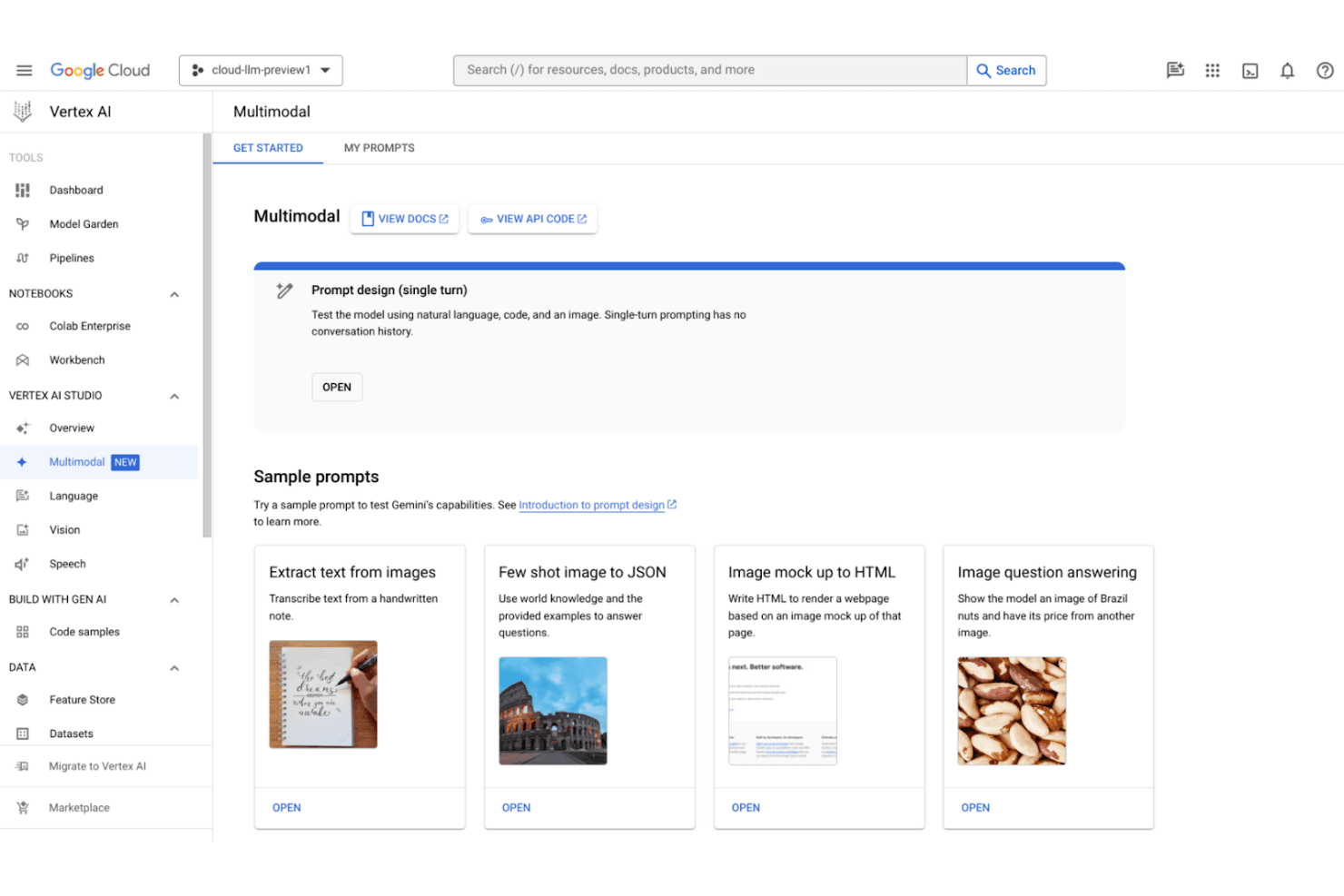
Core Features
Gemini Multimodal Models
Access Google’s Gemini models for text, image, video, code, and multimodal generation. Developers can prompt, test, and build applications using Gemini through Vertex AI Studio and APIs.
Model Garden
Choose from 200+ first-party, third-party, and open models, including Gemini, Imagen, Claude, and Llama. Models can be tuned and customized for specific enterprise use cases.
Managed Training & Prediction
Train custom machine learning models using managed infrastructure and deploy them to production with scalable prediction services.
Integrated Notebooks & BigQuery
Work within Vertex AI Workbench or Colab Enterprise, with native BigQuery integration to unify data, experimentation, and deployment workflows.
MLOps & Model Lifecycle Management
Use built-in tools like Pipelines, Model Registry, Feature Store, and Evaluation to manage, automate, and monitor models across their lifecycle.
AI Agent Development
Build, deploy, and govern enterprise AI agents powered by Gemini models, designed for scalable, production-ready applications.
Ease of Use
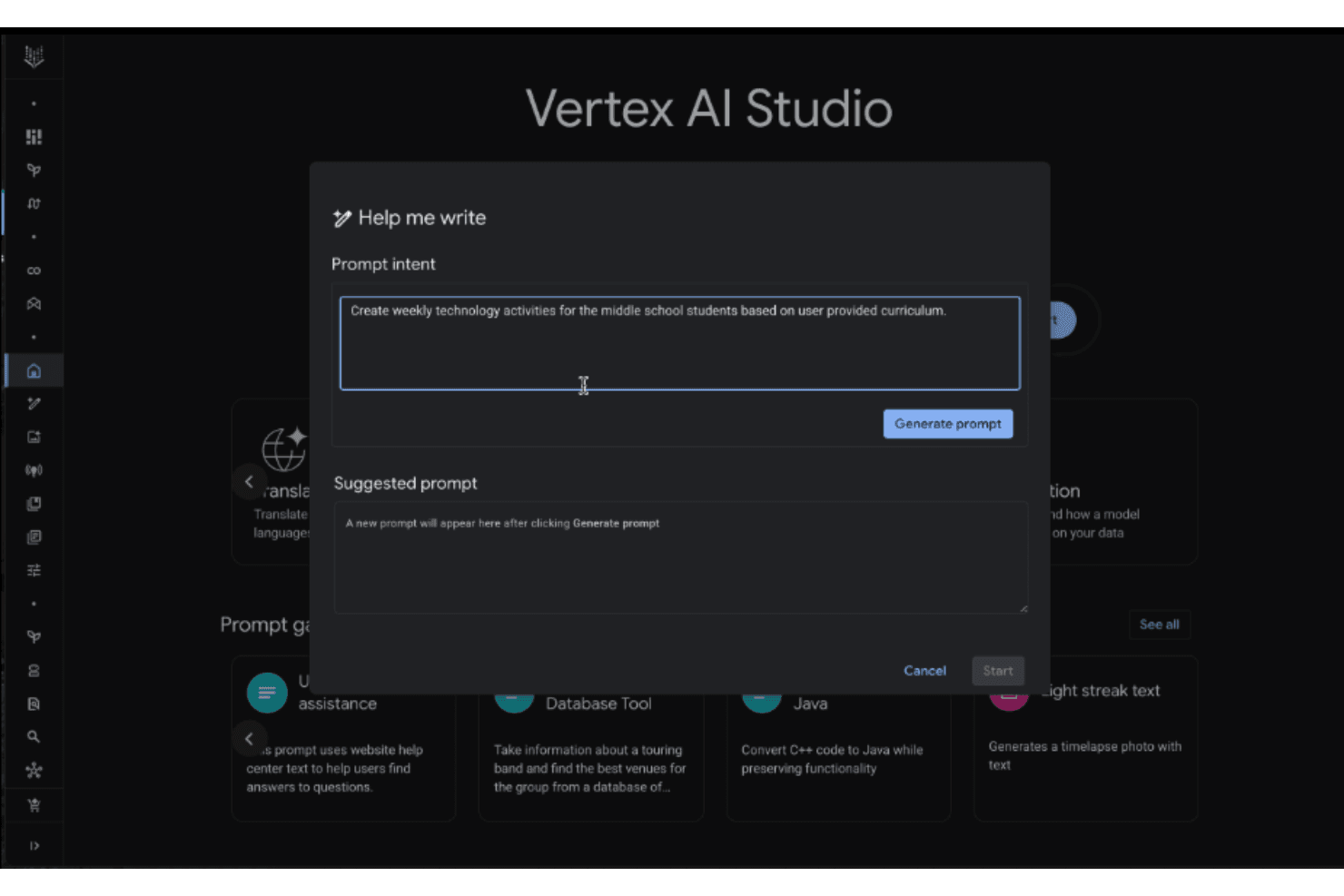
Vertex AI offers a polished interface and guided workflows, but its usability depends heavily on your familiarity with Google Cloud. Many users appreciate the streamlined AutoML and Workbench environments for rapid prototyping, yet the platform’s depth and configuration options can feel overwhelming for newcomers. Documentation is thorough, but onboarding often requires cloud expertise and time to navigate the full range of features, making it best suited for technically proficient teams.

Integrations
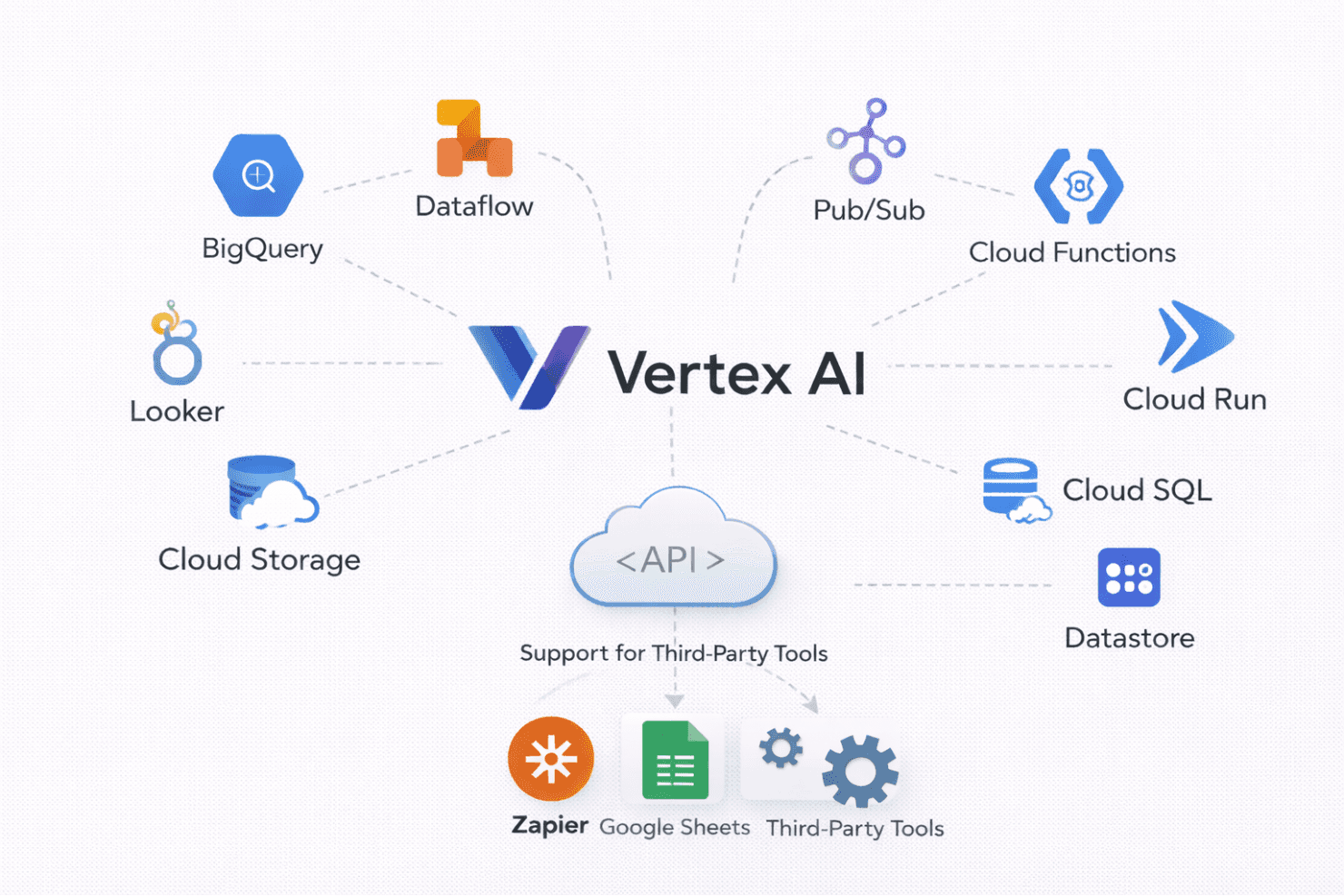
Vertex AI integrates with BigQuery, Dataflow, Dataproc, Looker, Cloud Storage, Pub/Sub, Cloud Functions, Cloud Run, Cloud SQL, and Datastore, among others.
Vertex AI also offers a robust API and supports connections with third-party integration tools.
Vertex AI Specs
- A/B Testing: No
- Analytics: Yes
- API: Yes
- Big Data: Yes
- Cloud Deployment: Yes
- Dashboard: Yes
- Data Export: Yes
- Data Import: Yes
- Data Mining: Yes
- Data Visualization: Yes
- External Integrations: Yes
- Local Deployment: No
- Multi-User: Yes
- Optimized Search Processing: No
- SAP Integration: No
- Sentiment Analysis: No


