

Zoho Sprints Test: Vorteile, Nachteile, Funktionen und Preisgestaltung erklärt
Ich habe Zoho Sprints auf Herz und Nieren geprüft—wenn Sie agile Tools suchen, die sich tatsächlich an Ihren Workflow anpassen (und nicht umgekehrt), sollten Sie sehen, was es im 2026 so besonders macht.

Wir bewerten Tools unabhängig; Provisionen helfen, unsere Tests zu finanzieren. Siehe unsere Transparenzrichtlinie und unsere Methodik.
Zoho Sprints is an agile software development tool built around scrum—giving development teams a dedicated space for sprint planning, backlog management, and velocity tracking. It's worth a close look if your team wants to move away from Jira but doesn't want to deal with its configuration overhead and licensing costs. Zoho Sprints keeps things lean without stripping out the features that matter for sprint-based delivery.
Zoho Sprints Evaluation Summary
4.2/5
- From $1/user/month (12 user minimum)
- 15-day free trial
Warum Sie unseren Software-Empfehlungen vertrauen können
6,700+
Reviews
20
Industry experts
16+
Evaluation factors
14
Years
Unser Team testet und bewertet Software seit 2012. Als Tech-Führungskräfte wissen wir selbst, wie schwierig – und wichtig – es ist, die richtige Software auszuwählen.
Für diesen Leitfaden haben wir Tools mithilfe von praktischen Tests und unabhängiger Recherche bewertet und dabei unsere Bewertungskriterien angewendet.
Unsere Bewertungen spiegeln unser menschliches redaktionelles Urteilsvermögen wider, keine Verkaufsstrategie.
Expertenprüfer:
- Paulo Gardini MiguelTech-Direktor
 Tim FisherVP für KI
 Gabriel RosasTech Lead & Software-Architekt
 Christhian GruhnTech Lead & Plattform-Architekt

Zoho Sprints Overview
When judging Zoho Sprints, I think its clean user interface, simple onboarding, and flexible boards make it easy to choose for agile teams new to agile project management. The pricing is fair for the features you get, and the integrations cover most needs, though deeper dev tool integrations would help. Compared to options like Trello or Asana, I find Zoho Sprints outperforms in usability and core functionality but can underperform on advanced customization. I’d recommend selecting it for small to mid-sized teams or organizations adopting agile methodologies, prioritizing clarity and fast adoption over niche configuration.
Pros
- Sprint planning and backlog management are straightforward for teams.
- Customizable scrum boards support unique team workflows well.
- Built-in reports and notifications help track progress and flag bottlenecks in real-time.
Cons
- Mobile app features are limited compared to desktop.
- Notifications lack granular controls, making it hard to tune alerts without noise.
- Advanced permissions are less flexible for large agile organizations.
Is Zoho Sprints Right For Your Needs?
Who Would be a Good Fit for Zoho Sprints?
Zoho Sprints is a great choice for startups, agile software teams, and digital agencies that want an easy-to-learn, affordable agile platform. Its simple backlogs and sprint planning make it ideal for fast-moving product teams. Smaller IT departments, SaaS companies, and consulting firms looking for quick onboarding and high flexibility will find features like Kanban views, timesheets, and customization options especially appealing.
- Agile Product TeamsSprint planning, backlog management, and progress tracking for iterative product development are well supported.
- Small Tech StartupsLow entry cost and intuitive onboarding make Zoho Sprints ideal for small businesses building products without complex tool configuration.
- Digital AgenciesClient management, permissions, and time tracking fit fee-for-service and project-based work.
- IT DepartmentsSimple ticketing, workflow customization, and reporting help track internal projects efficiently.
- SaaS ProvidersSmooth integrations and DevOps tooling connect code, releases, and support easily.
- Consulting FirmsFlexible project templates and user roles enable tailored agile processes for different clients.
Who Would be a Bad Fit for Zoho Sprints?
Larger enterprises, manufacturing, or non-technical teams that need deep portfolio management or process mapping beyond standard agile methodologies will miss enterprise-level features. Regulated industries, construction, and organizations stuck in traditional project management may find it lacking audit trails, resource forecasting, or waterfall-style planning. Zoho Sprints also isn’t built for cross-departmental programs—teams often compare it against platforms like Asana for broader enterprise needs.
- Large EnterprisesMissing advanced portfolio management, roadmap planning, and resource management for high-scale projects.
- Manufacturing CompaniesDoesn’t offer built-in Gantt charts, critical path analysis, or physical asset tracking needed for factory project planning.
- Finance DepartmentsLacks robust compliance tracking, advanced approval workflows, and regulatory audit features.
- Construction TeamsNo native support for field reporting, site management, or complex scheduling and dependency mapping.
- Waterfall-Only TeamsAgile-focused design and terminology make traditional, linear project management cumbersome.
- Non-Technical StaffKanban, sprint, and backlog concepts can feel overly complex for business teams outside IT or software.
Unsere Bewertungsmethodik
Wie wir Werkzeuge testen & bewerten
Wir haben Jahre damit verbracht, unser System zur Softwareprüfung und -bewertung aufzubauen, zu verfeinern und zu verbessern. Das Bewertungsraster ist darauf ausgelegt, die Feinheiten der Softwareauswahl und Effektivität eines Tools einzufangen, wobei wir uns auf kritische Aspekte des Entscheidungsprozesses konzentrieren.
Nachfolgend sehen Sie genau, wie unser Test- und Bewertungssystem anhand von sieben Kriterien funktioniert. Es ermöglicht uns eine unparteiische Bewertung der Software basierend auf Grundfunktionalität, besonderen Funktionen, Benutzerfreundlichkeit, Onboarding, Kundensupport, Integrationen, Kundenbewertungen und Preis-Leistungs-Verhältnis.
Grundfunktionalität (25 % der Endbewertung)
Der Ausgangspunkt unserer Bewertung ist immer die Grundfunktionalität des Werkzeugs. Verfügt es über die grundlegenden Funktionen und Merkmale, die ein Benutzer erwarten würde? Sind grundlegende Funktionen auf höherpreisige Tarife beschränkt? Im Kern erwarten wir, dass ein Tool den Basisfähigkeiten seiner Konkurrenten standhält.
Besondere Features (25 % der Endbewertung)
Anschließend bewerten wir ungewöhnliche, herausragende Funktionen, die über die typische Grundfunktionalität von Tools dieser Art hinausgehen. Eine hohe Bewertung zeigt spezialisierte oder einzigartige Eigenschaften, die das Produkt schneller, effizienter oder für den Nutzer wertvoller machen.
Wir bewerten außerdem, wie einfach sich das Tool mit anderen üblichen Werkzeugen im Technologie-Stack integrieren lässt, um die Funktionalität und den Nutzen der Software zu erweitern. Tools mit vielen nativen Integrationen, Drittanbieter-Anbindungen und API-Zugang zur Erstellung kundenspezifischer Integrationen erhalten die besten Bewertungen.
Benutzerfreundlichkeit (10 % der Endbewertung)
Wir betrachten, wie schnell und einfach Aufgaben aus dem Bereich der Grundfunktionalität mit dem Tool erledigt werden können. Gut bewertete Software ist durchdacht gestaltet, intuitiv bedienbar, bietet mobile Apps, Vorlagen und lässt relativ komplexe Aufgaben einfach erscheinen.
Onboarding (10 % der Endbewertung)
Wir wissen, wie wichtig die schnelle Einführung eines neuen Tools für das Team ist, daher bewerten wir, wie leicht sich ein Werkzeug mit minimalem Training erlernen und nutzen lässt. Wir bewerten, wie schnell ein Teammitglied ohne Vorerfahrung anfangen kann. Hoch bewertete Lösungen benötigen wenig bis gar keine Unterstützung.
Kundensupport (10 % der Endbewertung)
Wir prüfen, wie schnell und einfach man bei Problemen Hilfe per Telefon, Live-Chat oder Wissensdatenbank erhält. Tools und Anbieter mit Echtzeit-Support werden besser bewertet, während Chatbots schlechter abschneiden.
Kundenbewertungen (10 % der Endbewertung)
Neben unserer eigenen Prüfung beziehen wir den Net Promoter Score aktueller und ehemaliger Kunden mit ein. Wir bewerten, wie wahrscheinlich es ist, dass sie sich erneut für das Werkzeug entscheiden würden. Hoch bewertete Software weist einen hohen Net Promoter Score auf.
Preis-Leistungs-Verhältnis (10 % der Endbewertung)
Abschließend vergleichen wir unter Berücksichtigung aller Kriterien den durchschnittlichen Preis der Einstiegspakete mit den Grundfunktionen und bewerten den Mehrwert aus den anderen Bewertungsbereichen. Software, die mehr fürs gleiche Geld bietet, schneidet besser ab.
Core Features
Scrum Boards
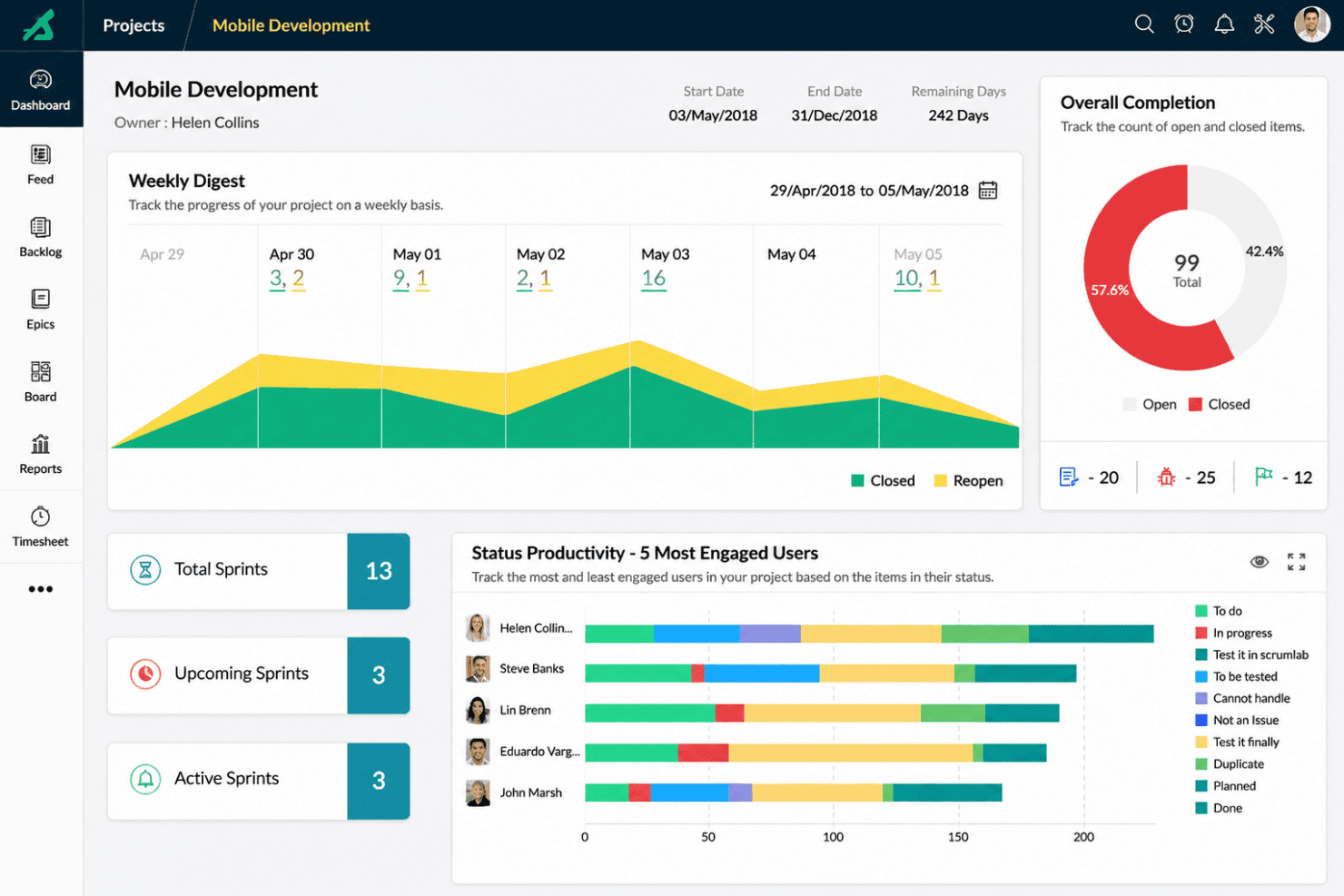
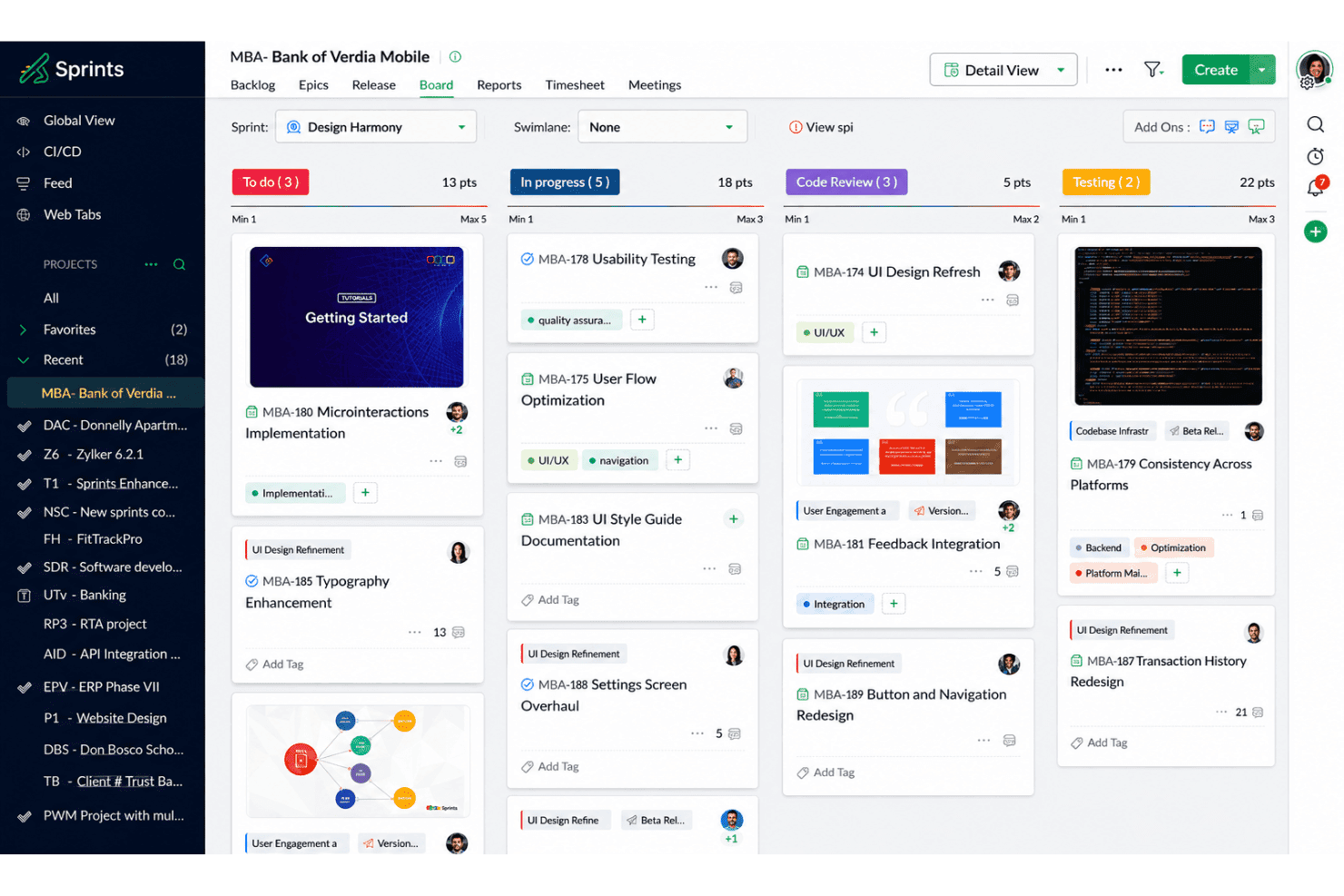
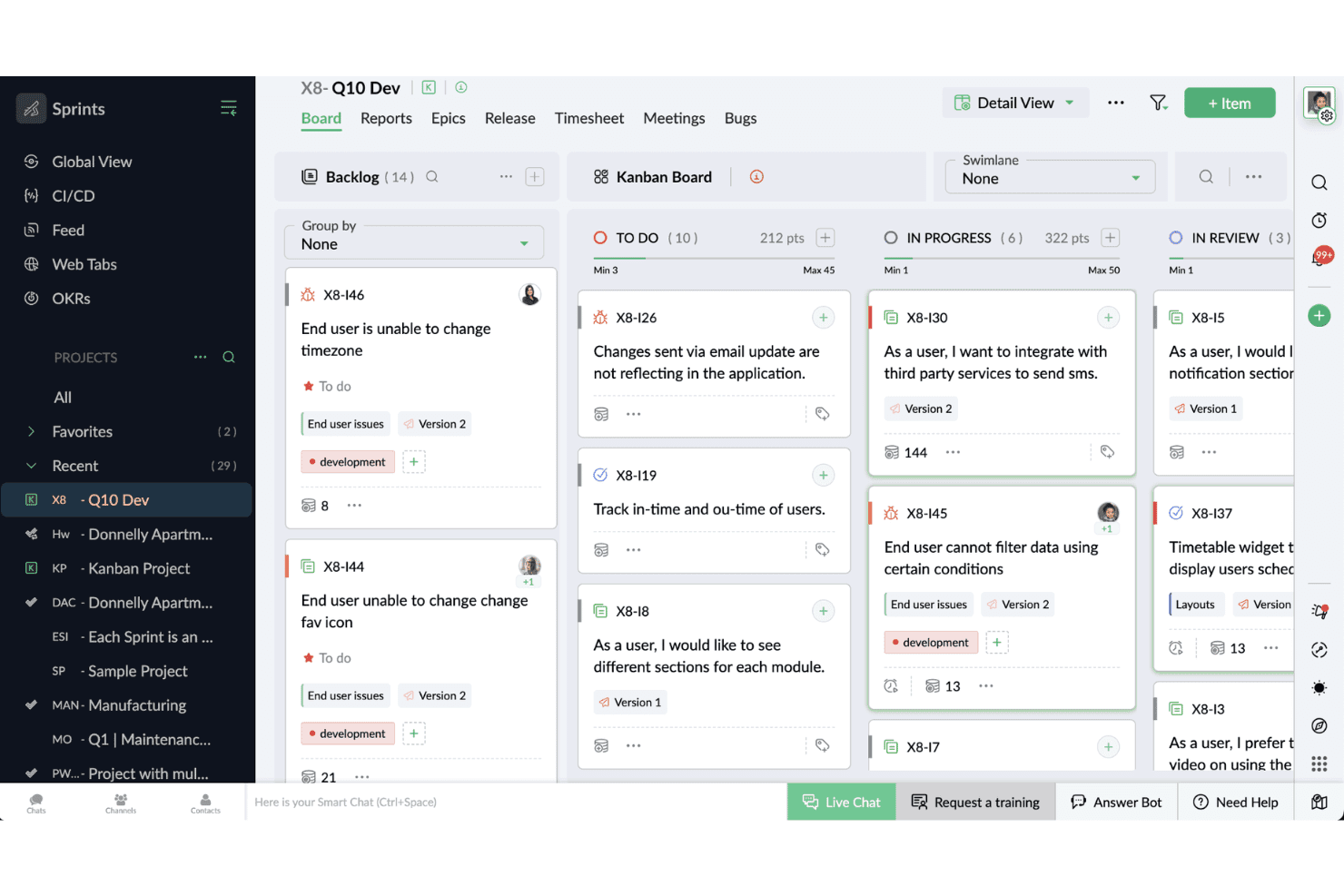
Task management is visual—arrange cards across custom columns to track all in-progress work. Teams get real-time visibility into work in progress and catch bottlenecks at a glance.
Backlog Management
Prioritize, sort, and refine user stories in a drag-and-drop list. This keeps planned work organized for agile development and ready for sprints.
Sprint Planning
Set sprint goals, enable automation for recurring tasks, and assign work in one place. Sprints can be adjusted mid-cycle—enabling prioritization of urgent work as needs evolve.
Timesheet Tracking
Log effort and time for each task with built-in timesheets. Managers review progress and spot under- or over-utilization easily.
Velocity Charts
Track team speed with automatic velocity and burndown charts. Teams compare past sprints using burnup alongside burndown data to better estimate future workload.
Custom Workflows
Tailor fields, statuses, and board layouts to suit product management or development team needs.Scrum teams control how their process flows from start to finish.
Ease of Use
Zoho Sprints stands out for its user-friendly navigation and drag-and-drop boards, which let teams adapt quickly without lengthy onboarding. I’ve noticed that even new users can easily manage backlogs, sprints, and reports thanks to its clean, logical layout. The mobile app is less robust, but for web use, the simplicity wins out for busy tech teams looking to avoid unnecessary complexity.
Integrations
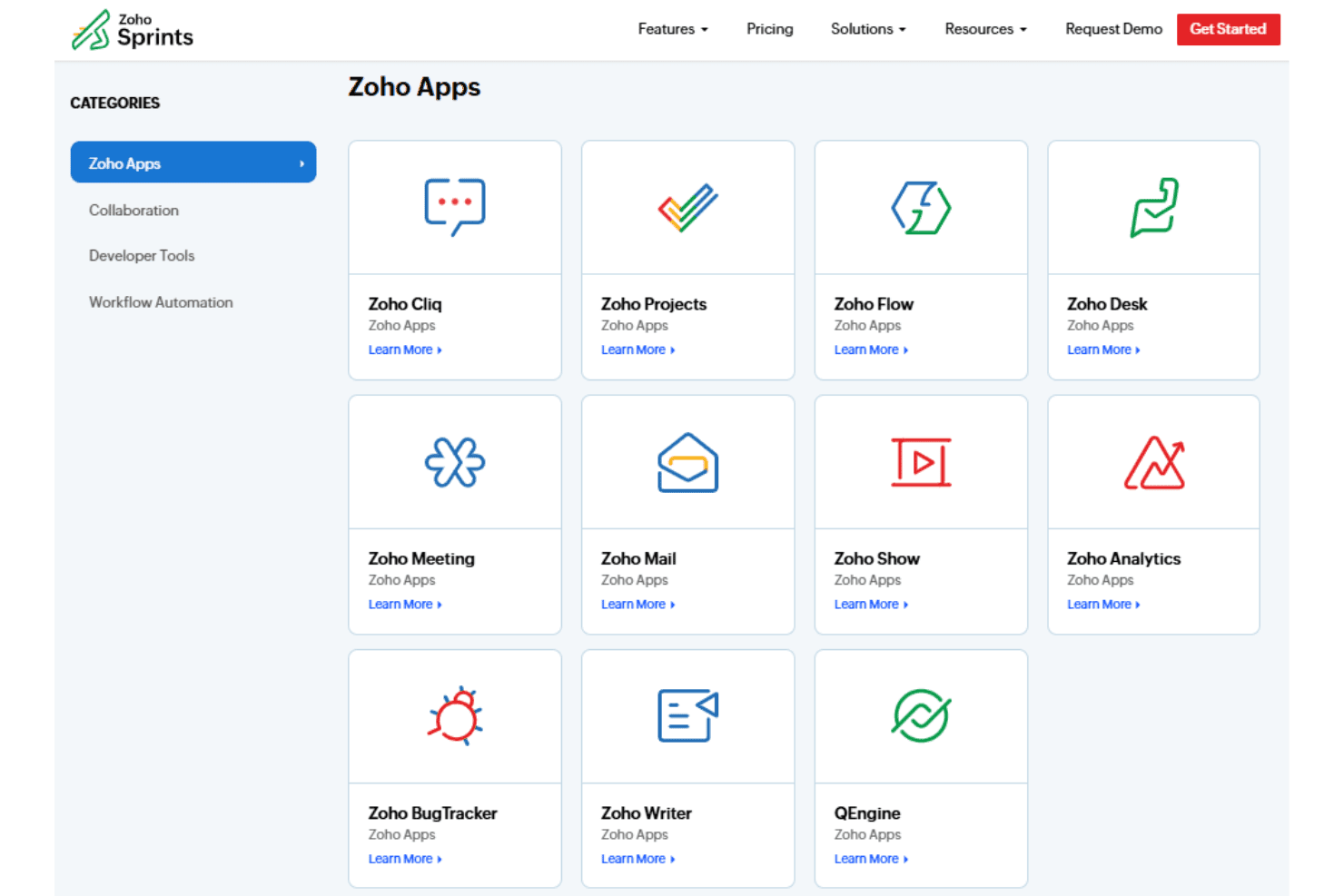
Zoho Sprints integrates with Zoho Cliq, Zoho Projects, Zoho Flow, Zoho Desk, Zoho Analytics, Microsoft Teams, Google Workspace, Jira, GitHub, and GitLab, among others.
Zoho Sprints also provides a REST API and supports third-party integration tools such as Zapier.
Zoho Sprints Specs
- API: Yes
- Approval Workflows: Yes
- Batch Permissions & Access: Yes
- Budgeting: Yes
- Calendar Management: Yes
- Contact Management: Yes
- Contact Sharing: Yes
- Custom Reports: Yes
- Customer Management: Yes
- Dashboard: Yes
- Dashboards: Yes
- Data Export: Yes
- Data Import: Yes
- Data Visualization: Yes
- Document Management: Yes
- Expense Tracking: Yes
- External Integrations: Yes
- Gantt Charts: Yes
- Multi-User: Yes
- Notifications: Yes
- Process Modeling: Yes
- Project Management: Yes
- Resource Management: Yes
- Risk Assessment: Yes
- Roadmapping: Yes
- Scheduling: Yes
- Task Scheduling/Tracking: Yes
- Third-Party Plugins/Add-Ons: Yes
- Travel Management: Yes
- Workflow Management: Yes