

BugBug Test 2026: Vorteile, Nachteile, Funktionen und Preise
In meiner Karriere habe ich viele Automatisierungstest-Tools verwendet, darunter auch BugBug. Lassen Sie mich Sie durch die Funktionen dieses Tools, Alternativen und mehr führen.

Wir bewerten Tools unabhängig; Provisionen helfen, unsere Tests zu finanzieren. Siehe unsere Transparenzrichtlinie und unsere Methodik.
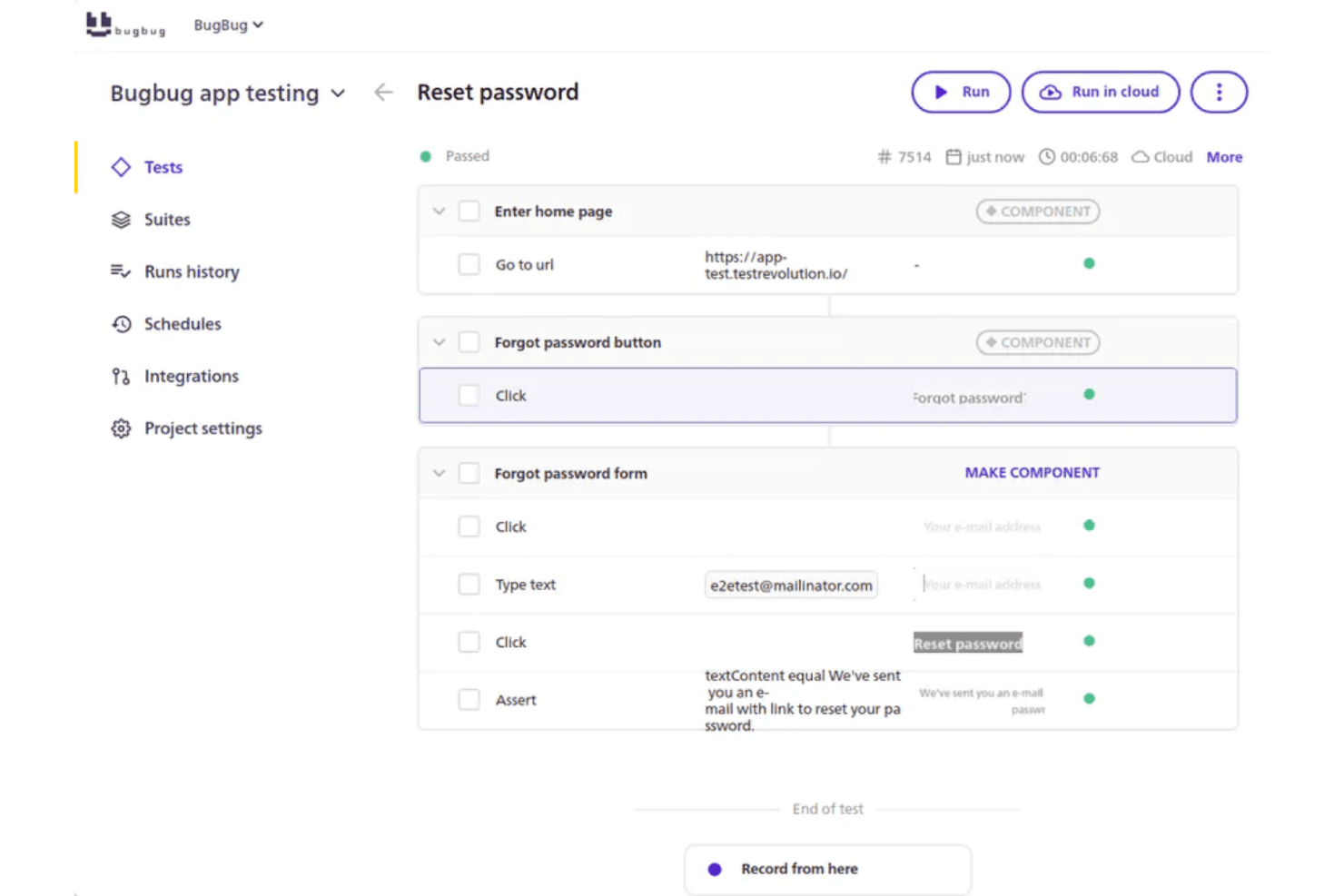
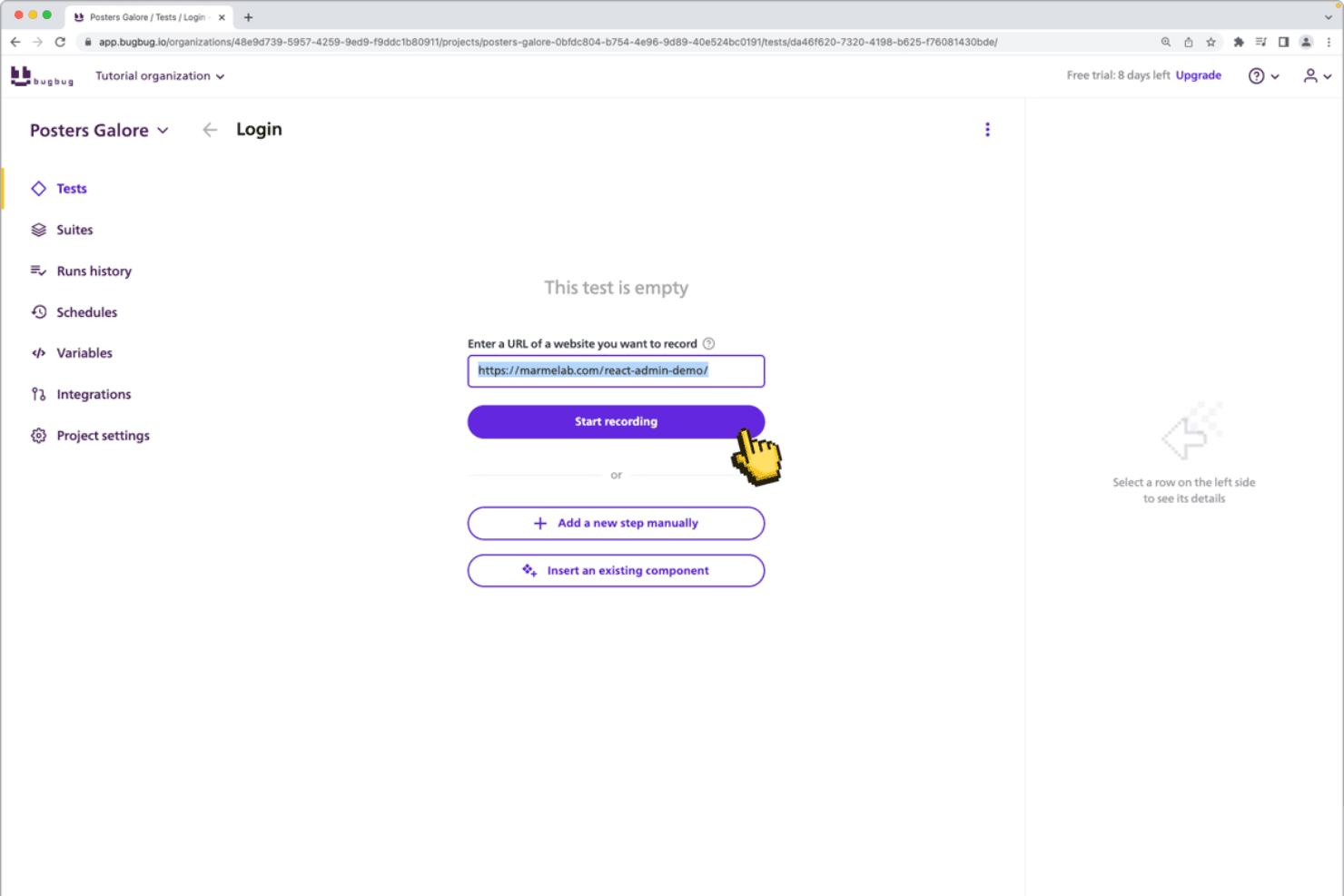
BugBug is a no-code automation testing tool for teams that need to record, manage, and run browser tests without writing code. I'd consider it if your team wants reliable test coverage but doesn't have the bandwidth for tools like Selenium, where getting started means configuring environments and writing scripts before you can test anything. BugBug lets you go from zero to running tests much faster, which makes it a practical fit for leaner teams where developers aren't dedicated to QA.
BugBug Evaluation Summary
4.8/5
- From $99/month (billed annually)
- 14-day free trial + free plan available
Warum Sie unseren Software-Empfehlungen vertrauen können
6,700+
Reviews
20
Industry experts
16+
Evaluation factors
14
Years
Unser Team testet und bewertet Software seit 2012. Als Tech-Führungskräfte wissen wir selbst, wie schwierig – und wichtig – es ist, die richtige Software auszuwählen.
Für diesen Leitfaden haben wir Tools mithilfe von praktischen Tests und unabhängiger Recherche bewertet und dabei unsere Bewertungskriterien angewendet.
Unsere Bewertungen spiegeln unser menschliches redaktionelles Urteilsvermögen wider, keine Verkaufsstrategie.
Expertenprüfer:
- Paulo Gardini MiguelTech-Direktor
 Tim FisherVP für KI
 Gabriel RosasTech Lead & Software-Architekt
 Christhian GruhnTech Lead & Plattform-Architekt

BugBug Overview
When judging BugBug as an automation testing tool, its intuitive interface and fast onboarding set it apart for teams new to automation or those prioritizing speed over complexity. The pricing is transparent and competitive, and support is responsive, though advanced integrations and deep customization options are limited compared to some alternatives.
If you’re selecting a tool for quick browser test automation, especially in agile or small-to-midsize environments, BugBug’s straightforward workflow and easy maintenance make it a strong contender.
Pros
- Your team will find BugBug's interface intuitive and easy to navigate.
- BugBug helps your work with its robust bug-tracking capabilities without unnecessary complexity.
- You can quickly set up BugBug, saving your team time and effort.
Cons
- Your team might find BugBug's advanced reporting options limited.
- BugBug lacks some customization features you might need for specific workflows.
- You may encounter occasional performance issues during high-traffic periods.
Is BugBug Right For Your Needs?
Who Would be a Good Fit for BugBug?
BugBug is perfect for small to medium-sized tech startups and agile development teams that need a straightforward bug tracking solution. If your team values simplicity and efficiency without the burden of complex systems, BugBug’s intuitive interface and robust bug-tracking capabilities will meet your needs. QA departments in software companies can also benefit from BugBug’s quick setup and ease of use, allowing you to focus on testing and delivering high-quality software.
- Tech StartupsYour startup will benefit from BugBug’s simplicity and efficiency, making it easy to manage bugs without a steep learning curve.
- Agile TeamsBugBug supports your agile processes with its straightforward tracking, helping you adapt quickly to changes and improve velocity.
- QA DepartmentsYour QA team will appreciate BugBug’s intuitive interface, enabling you to quickly identify and resolve issues.
- Software DevelopmentBugBug’s robust bug-tracking capabilities will enhance your development workflow, ensuring you deliver quality software.
- Freelance DevelopersAs a freelancer, you’ll find BugBug’s ease of use and quick setup ideal for managing projects independently.
- Educational InstitutionsBugBug is a great tool for teaching software testing concepts, offering students a hands-on experience with real-world bug tracking.
Who Would be a Bad Fit for BugBug?
Large enterprises or teams needing advanced customization and reporting features might find BugBug lacking. If your work involves complex workflows and data analytics, BugBug’s more straightforward approach and limited reporting options won’t meet your needs. Companies in industries that require detailed customization and integration with other complex systems may struggle with BugBug’s simplicity.
- Large CorporationsYour corporation might need more advanced features and customization than BugBug can provide.
- Data-Driven TeamsIf your team relies on detailed analytics, BugBug’s limited reporting won’t suffice.
- Complex WorkflowsFor workflows that need extensive customization, BugBug may fall short.
- Enterprise IT DepartmentsYour IT department may find BugBug’s simplicity limiting for complex system integrations.
- Financial InstitutionsThe lack of advanced security features might make BugBug unsuitable for your industry.
- Regulated IndustriesIf you work in a highly regulated industry, BugBug’s basic compliance features might not meet your requirements.
Unsere Bewertungsmethodik
Wie wir Werkzeuge testen & bewerten
Wir haben Jahre damit verbracht, unser System zur Softwareprüfung und -bewertung aufzubauen, zu verfeinern und zu verbessern. Das Bewertungsraster ist darauf ausgelegt, die Feinheiten der Softwareauswahl und Effektivität eines Tools einzufangen, wobei wir uns auf kritische Aspekte des Entscheidungsprozesses konzentrieren.
Nachfolgend sehen Sie genau, wie unser Test- und Bewertungssystem anhand von sieben Kriterien funktioniert. Es ermöglicht uns eine unparteiische Bewertung der Software basierend auf Grundfunktionalität, besonderen Funktionen, Benutzerfreundlichkeit, Onboarding, Kundensupport, Integrationen, Kundenbewertungen und Preis-Leistungs-Verhältnis.
Grundfunktionalität (25 % der Endbewertung)
Der Ausgangspunkt unserer Bewertung ist immer die Grundfunktionalität des Werkzeugs. Verfügt es über die grundlegenden Funktionen und Merkmale, die ein Benutzer erwarten würde? Sind grundlegende Funktionen auf höherpreisige Tarife beschränkt? Im Kern erwarten wir, dass ein Tool den Basisfähigkeiten seiner Konkurrenten standhält.
Besondere Features (25 % der Endbewertung)
Anschließend bewerten wir ungewöhnliche, herausragende Funktionen, die über die typische Grundfunktionalität von Tools dieser Art hinausgehen. Eine hohe Bewertung zeigt spezialisierte oder einzigartige Eigenschaften, die das Produkt schneller, effizienter oder für den Nutzer wertvoller machen.
Wir bewerten außerdem, wie einfach sich das Tool mit anderen üblichen Werkzeugen im Technologie-Stack integrieren lässt, um die Funktionalität und den Nutzen der Software zu erweitern. Tools mit vielen nativen Integrationen, Drittanbieter-Anbindungen und API-Zugang zur Erstellung kundenspezifischer Integrationen erhalten die besten Bewertungen.
Benutzerfreundlichkeit (10 % der Endbewertung)
Wir betrachten, wie schnell und einfach Aufgaben aus dem Bereich der Grundfunktionalität mit dem Tool erledigt werden können. Gut bewertete Software ist durchdacht gestaltet, intuitiv bedienbar, bietet mobile Apps, Vorlagen und lässt relativ komplexe Aufgaben einfach erscheinen.
Onboarding (10 % der Endbewertung)
Wir wissen, wie wichtig die schnelle Einführung eines neuen Tools für das Team ist, daher bewerten wir, wie leicht sich ein Werkzeug mit minimalem Training erlernen und nutzen lässt. Wir bewerten, wie schnell ein Teammitglied ohne Vorerfahrung anfangen kann. Hoch bewertete Lösungen benötigen wenig bis gar keine Unterstützung.
Kundensupport (10 % der Endbewertung)
Wir prüfen, wie schnell und einfach man bei Problemen Hilfe per Telefon, Live-Chat oder Wissensdatenbank erhält. Tools und Anbieter mit Echtzeit-Support werden besser bewertet, während Chatbots schlechter abschneiden.
Kundenbewertungen (10 % der Endbewertung)
Neben unserer eigenen Prüfung beziehen wir den Net Promoter Score aktueller und ehemaliger Kunden mit ein. Wir bewerten, wie wahrscheinlich es ist, dass sie sich erneut für das Werkzeug entscheiden würden. Hoch bewertete Software weist einen hohen Net Promoter Score auf.
Preis-Leistungs-Verhältnis (10 % der Endbewertung)
Abschließend vergleichen wir unter Berücksichtigung aller Kriterien den durchschnittlichen Preis der Einstiegspakete mit den Grundfunktionen und bewerten den Mehrwert aus den anderen Bewertungsbereichen. Software, die mehr fürs gleiche Geld bietet, schneidet besser ab.
Core Features
Bug Tracking
BugBug lets you easily log and track bugs with a clear interface, helping your team stay organized. You can update bug status and assign tasks quickly, ensuring nothing falls through the cracks.
Local and Cloud Test Runs
Execute tests on your local machine or in the cloud, depending on your needs. This flexibility supports both development workflows and continuous integration pipelines.
Test Scheduling
Schedule tests to run automatically at set intervals or specific times. This helps teams catch regressions early by running tests overnight or before deployments.
Detailed Reporting
Access clear, visual reports with step-by-step screenshots and logs for each test run. This makes it easy to pinpoint where and why a test failed.
Notification System
Stay informed with customizable notifications that alert you and your team to changes or updates. This ensures that important updates never go unnoticed.
Search and Filter
Quickly find specific bugs or issues using the search and filter options, saving your team valuable time. This feature helps you focus on what matters most.
Ease of Use
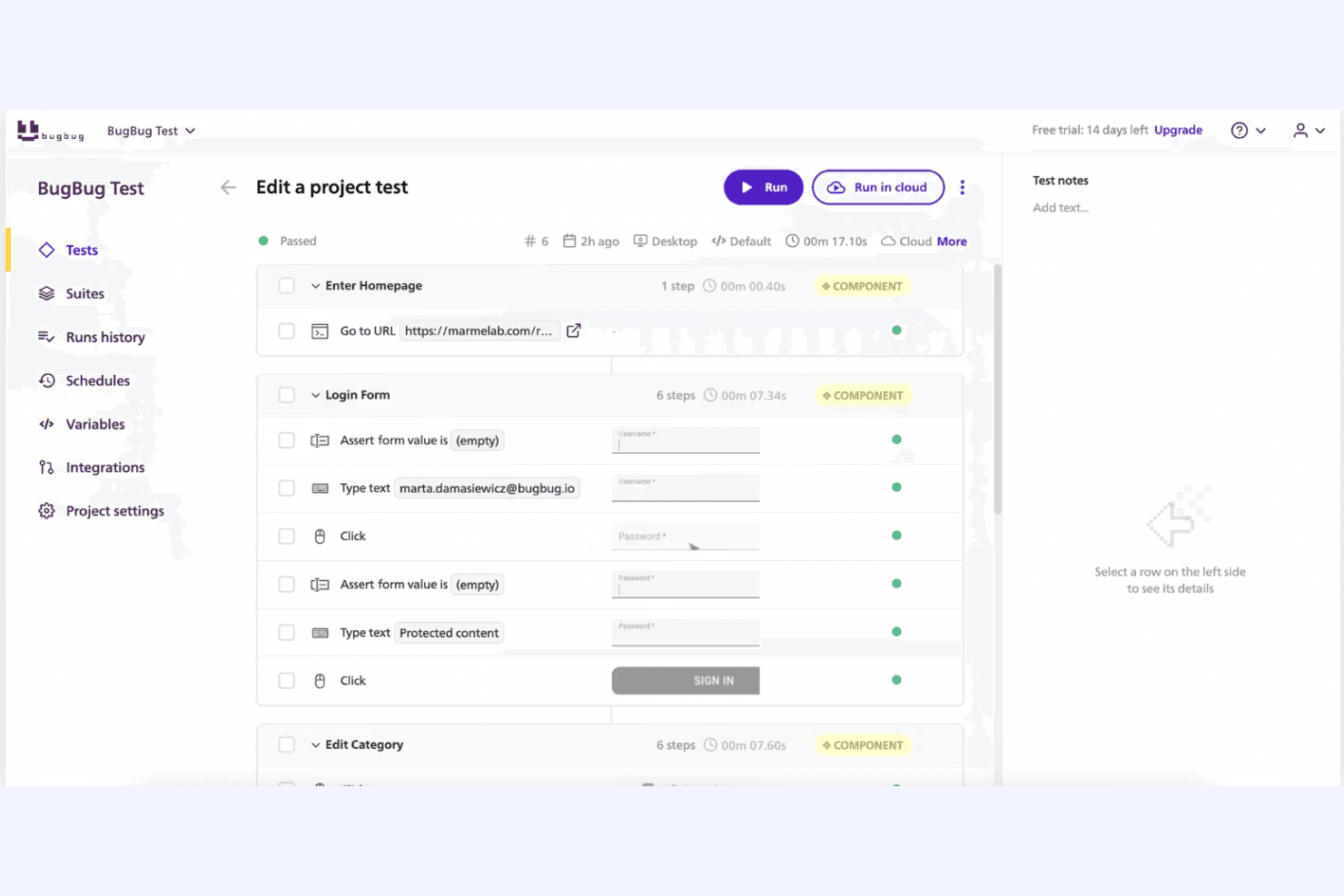
BugBug stands out for its user-friendly interface and straightforward setup, making it a breeze for your team to start tracking bugs without hassle. Its intuitive design means you won’t waste time learning complex systems, and even non-technical members will find it easy to navigate. The dashboard provides a clear overview of tasks, helping you manage issues efficiently. With real-time collaboration and quick search features, BugBug ensures your team can work effectively and stay organized.
Integrations
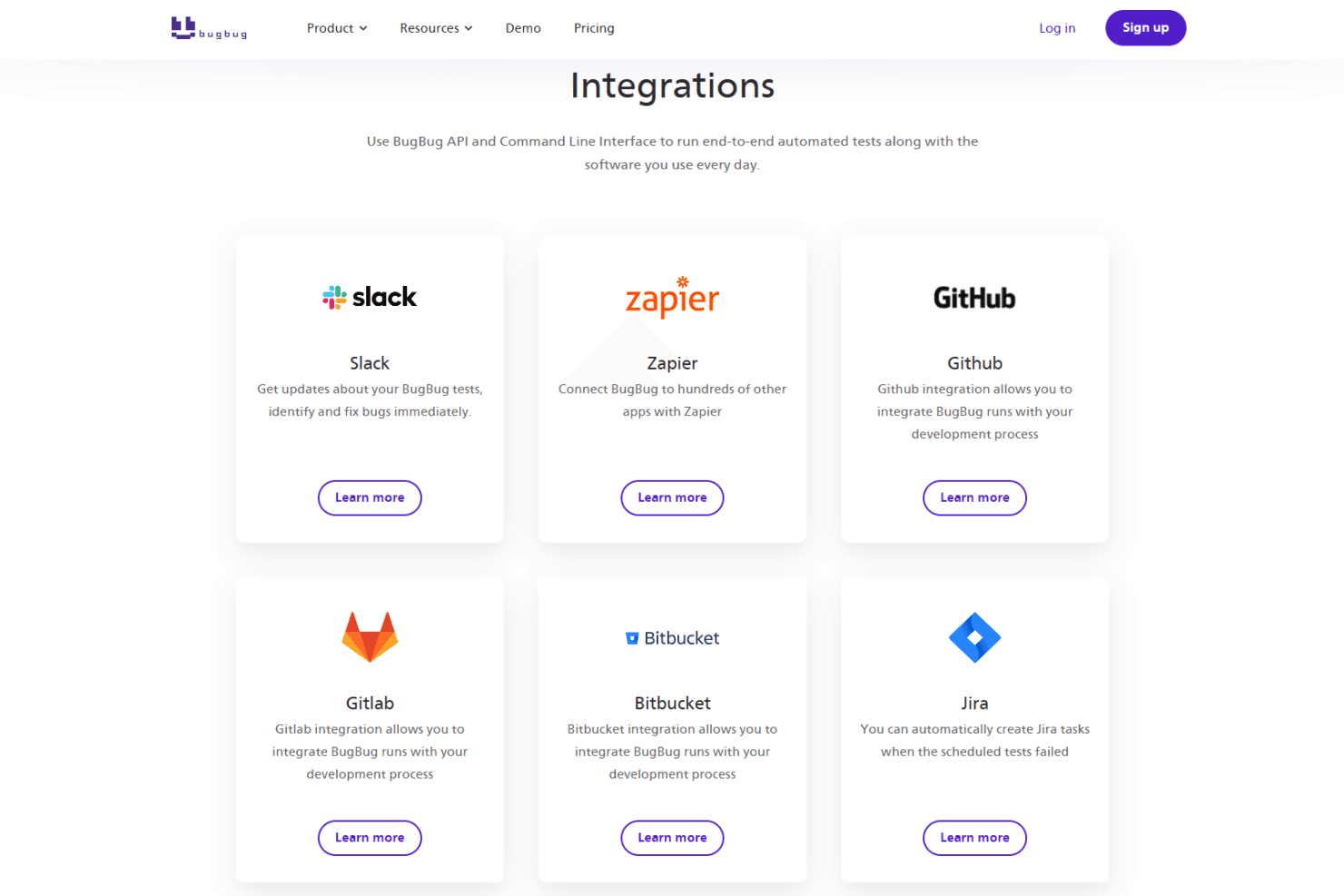
BugBug integrates with Slack, Zapier, Github, Gitlab, Bitbucket, Jira, and Trello.
BugBug also offers an API and a command line interface (CLI) for custom workflows and CI/CD pipeline integration.
BugBug Specs
- A/B Testing: No
- API: Yes
- Automated Testing: Yes
- Browser Compatibility Testing: Yes
- Bug Tracking: Yes
- Calendar Management: No
- CI/CD Integration: Yes
- Dashboard: Yes
- Data Export: Yes
- Data Import: Yes
- Data Visualization: Yes
- Developer Tools: Yes
- External Integrations: Yes
- History/Version Control: Yes
- Manual Testing: No
- Multi-User: Yes
- Notifications: Yes
- Performance Testing: No
- Regression Testing: Yes
- Scheduling: Yes
- Status Notifications: Yes
- Third-Party Plugins/Add-Ons: Yes


