

Bubble Test 2026: Hauptfunktionen, Vorteile, Nachteile und Preise
Bubble befähigt Nicht-Programmierer dazu, visuell leistungsstarke Web-Apps zu erstellen, doch die hohe Flexibilität bringt eine Lernkurve und Skalierungsgrenzen im Vergleich zu traditionellen Coding-Plattformen mit sich.

Wir bewerten Tools unabhängig; Provisionen helfen, unsere Tests zu finanzieren. Siehe unsere Transparenzrichtlinie und unsere Methodik.
Bubble is an application development software for teams that need to build and ship functional web apps without writing code. It gives you a visual editor for designing interfaces alongside a logic and database layer for handling real app behavior. I'd consider it over something like OutSystems if you want that same flexibility to build custom workflows and data structures, but without the enterprise pricing and heavy implementation overhead that comes with it.
Bubble Evaluation Summary

4.4/5
- From $29/month (billed annually)
- Free plan + free trial available
Warum Sie unseren Software-Empfehlungen vertrauen können
6,700+
Reviews
20
Industry experts
16+
Evaluation factors
14
Years
Unser Team testet und bewertet Software seit 2012. Als Tech-Führungskräfte wissen wir selbst, wie schwierig – und wichtig – es ist, die richtige Software auszuwählen.
Für diesen Leitfaden haben wir Tools mithilfe von praktischen Tests und unabhängiger Recherche bewertet und dabei unsere Bewertungskriterien angewendet.
Unsere Bewertungen spiegeln unser menschliches redaktionelles Urteilsvermögen wider, keine Verkaufsstrategie.
Expertenprüfer:
- Paulo Gardini MiguelTech-Direktor
 Tim FisherVP für KI
 Gabriel RosasTech Lead & Software-Architekt
 Christhian GruhnTech Lead & Plattform-Architekt

Bubble Overview
When judging Bubble against other development software, its visual editor and no-code logic make it a top pick for rapid prototyping and launching MVPs. The pricing is transparent, and the interface is approachable for non-developers, though advanced integrations and scaling can be limiting. Onboarding is straightforward, with strong documentation and community support. Bubble excels for startups, internal tools, and teams prioritizing speed over deep customization.
If you’re selecting a platform for quick iteration and easy updates, Bubble stands out, but those needing complex backend logic or high-traffic scalability may find its limits sooner than with code-based solutions.
Pros
- Active community and extensive documentation for troubleshooting
- Built-in hosting, security, and database management included
- Visual editor supports full-stack web and mobile app creation
Cons
- Pricing increases sharply as app usage scales
- Performance can lag with complex or high-traffic apps
- No source code export creates vendor lock-in
Is Bubble Right For Your Needs?
Who Would be a Good Fit for Bubble?
Startups and small businesses looking to quickly prototype and launch web apps without heavy investment in development teams would thrive with Bubble. Marketing teams can benefit from its visual editor to tailor campaigns, while HR departments can create internal portals without coding expertise. Bubble’s ability to customize apps aligns well with industries that require specific workflows, such as education or healthcare. Its no-code platform empowers non-tech-savvy users to bring ideas to life, making it ideal for entrepreneurs with limited resources.
- FreelancersFreelancers can deliver client web apps quickly using Bubble’s templates and plugins.
- Education TechnologyEducators can create interactive learning platforms without coding resources.
- Product ManagementProduct managers can test features and gather feedback before full-scale development.
- Small BusinessesOwners can launch customer portals or booking systems without hiring developers.
- Internal ToolsDepartments can build custom dashboards and workflows without IT bottlenecks.
- Startup MVPsBubble enables fast prototyping and iteration for early-stage product validation.
Who Would be a Bad Fit for Bubble?
Large enterprises needing highly scalable, complex applications might struggle with Bubble due to its limited scalability options. Tech-heavy industries like fintech or gaming, which require intricate backend processes and real-time data handling, could find Bubble’s no-code approach insufficient. Development teams focused on building highly customized and performance-intensive applications may also find the platform restrictive, as Bubble’s performance can lag with complex apps.
- Large EnterprisesYou might find Bubble’s scalability limitations a hindrance for growing applications.
- DevOps TeamsNo direct access to infrastructure or source code for custom workflows.
- Game DevelopmentBubble does not support real-time graphics or game engine features.
- Complex SaaS ProductsAdvanced backend logic and custom APIs are harder to implement.
- Regulated IndustriesLimited support for HIPAA, SOC 2, or other strict compliance standards.
- Large EnterprisesBubble lacks advanced compliance and scalability for enterprise-grade deployments.
Unsere Bewertungsmethodik
Wie wir Werkzeuge testen & bewerten
Wir haben Jahre damit verbracht, unser System zur Softwareprüfung und -bewertung aufzubauen, zu verfeinern und zu verbessern. Das Bewertungsraster ist darauf ausgelegt, die Feinheiten der Softwareauswahl und Effektivität eines Tools einzufangen, wobei wir uns auf kritische Aspekte des Entscheidungsprozesses konzentrieren.
Nachfolgend sehen Sie genau, wie unser Test- und Bewertungssystem anhand von sieben Kriterien funktioniert. Es ermöglicht uns eine unparteiische Bewertung der Software basierend auf Grundfunktionalität, besonderen Funktionen, Benutzerfreundlichkeit, Onboarding, Kundensupport, Integrationen, Kundenbewertungen und Preis-Leistungs-Verhältnis.
Grundfunktionalität (25 % der Endbewertung)
Der Ausgangspunkt unserer Bewertung ist immer die Grundfunktionalität des Werkzeugs. Verfügt es über die grundlegenden Funktionen und Merkmale, die ein Benutzer erwarten würde? Sind grundlegende Funktionen auf höherpreisige Tarife beschränkt? Im Kern erwarten wir, dass ein Tool den Basisfähigkeiten seiner Konkurrenten standhält.
Besondere Features (25 % der Endbewertung)
Anschließend bewerten wir ungewöhnliche, herausragende Funktionen, die über die typische Grundfunktionalität von Tools dieser Art hinausgehen. Eine hohe Bewertung zeigt spezialisierte oder einzigartige Eigenschaften, die das Produkt schneller, effizienter oder für den Nutzer wertvoller machen.
Wir bewerten außerdem, wie einfach sich das Tool mit anderen üblichen Werkzeugen im Technologie-Stack integrieren lässt, um die Funktionalität und den Nutzen der Software zu erweitern. Tools mit vielen nativen Integrationen, Drittanbieter-Anbindungen und API-Zugang zur Erstellung kundenspezifischer Integrationen erhalten die besten Bewertungen.
Benutzerfreundlichkeit (10 % der Endbewertung)
Wir betrachten, wie schnell und einfach Aufgaben aus dem Bereich der Grundfunktionalität mit dem Tool erledigt werden können. Gut bewertete Software ist durchdacht gestaltet, intuitiv bedienbar, bietet mobile Apps, Vorlagen und lässt relativ komplexe Aufgaben einfach erscheinen.
Onboarding (10 % der Endbewertung)
Wir wissen, wie wichtig die schnelle Einführung eines neuen Tools für das Team ist, daher bewerten wir, wie leicht sich ein Werkzeug mit minimalem Training erlernen und nutzen lässt. Wir bewerten, wie schnell ein Teammitglied ohne Vorerfahrung anfangen kann. Hoch bewertete Lösungen benötigen wenig bis gar keine Unterstützung.
Kundensupport (10 % der Endbewertung)
Wir prüfen, wie schnell und einfach man bei Problemen Hilfe per Telefon, Live-Chat oder Wissensdatenbank erhält. Tools und Anbieter mit Echtzeit-Support werden besser bewertet, während Chatbots schlechter abschneiden.
Kundenbewertungen (10 % der Endbewertung)
Neben unserer eigenen Prüfung beziehen wir den Net Promoter Score aktueller und ehemaliger Kunden mit ein. Wir bewerten, wie wahrscheinlich es ist, dass sie sich erneut für das Werkzeug entscheiden würden. Hoch bewertete Software weist einen hohen Net Promoter Score auf.
Preis-Leistungs-Verhältnis (10 % der Endbewertung)
Abschließend vergleichen wir unter Berücksichtigung aller Kriterien den durchschnittlichen Preis der Einstiegspakete mit den Grundfunktionen und bewerten den Mehrwert aus den anderen Bewertungsbereichen. Software, die mehr fürs gleiche Geld bietet, schneidet besser ab.
Core Features
Visual Editor
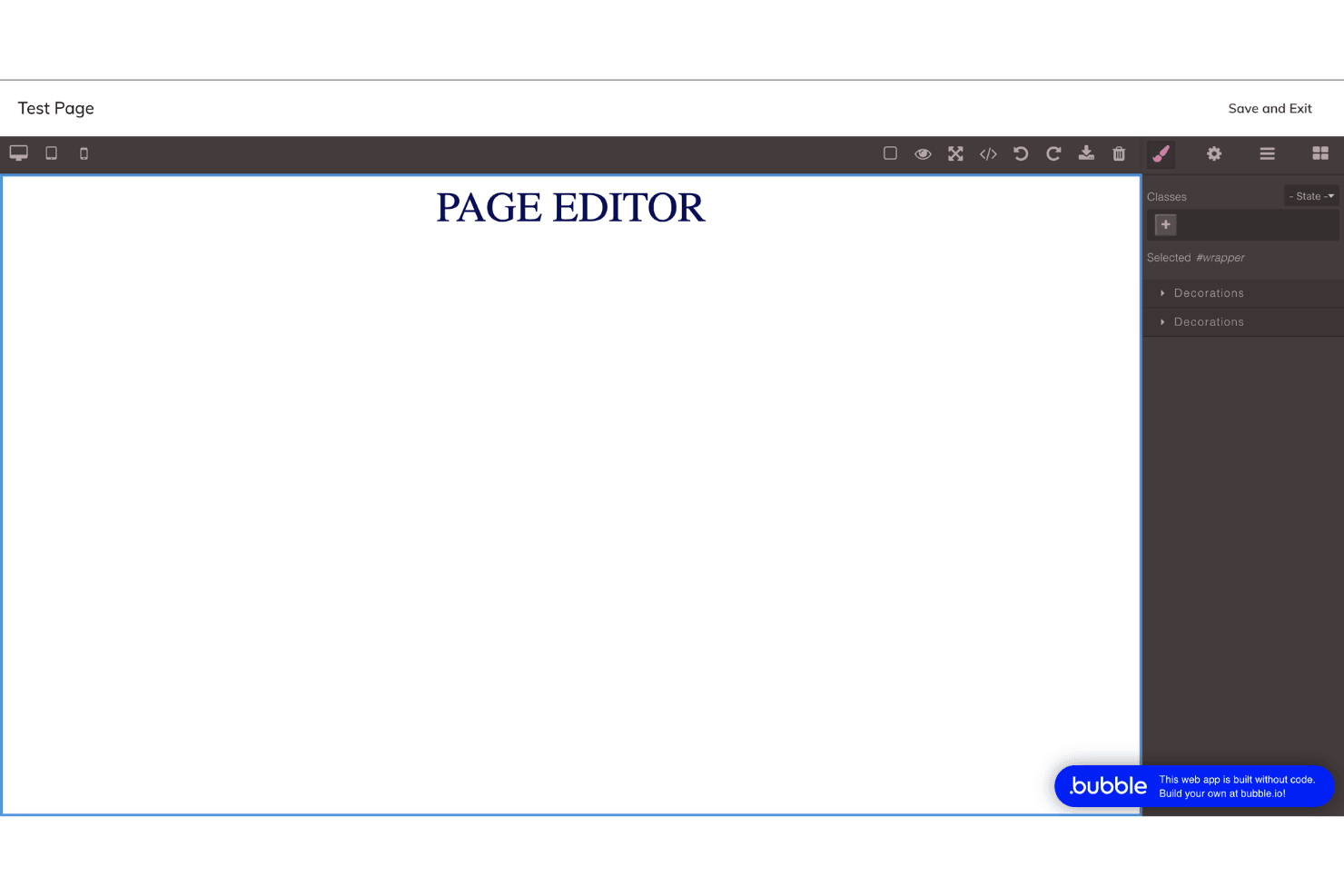
Design web app interfaces by dragging and dropping elements onto a canvas. Users can customize layouts, workflows, and logic without writing code.
Workflow Automation
Set up custom workflows to automate app logic, user actions, and data processing. Trigger events based on user input, scheduled times, or system changes.
Built-In Database
Create, manage, and query structured data directly within Bubble’s platform. Store user profiles, transactions, or any custom data types securely.
Responsive Design Tools
Adjust layouts for different devices using Bubble’s responsive settings. Preview and fine-tune how your app looks on mobile, tablet, and desktop.
User Authentication
Add sign-up, login, and password reset flows with built-in authentication. Control user access and roles without external plugins.
Hosting and Deployment
Launch your app to the web instantly with Bubble’s managed hosting. No need to configure servers or manage infrastructure.
Ease of Use
Bubble stands out for its approachable drag-and-drop interface and visual workflow builder, making app creation accessible to non-developers. Users consistently praise the clear documentation and active community, which help flatten the initial learning curve. While mastering advanced features takes time, most users find the platform intuitive for building prototypes and launching simple apps.
The ability to see changes in real time and avoid manual coding makes Bubble notably user-friendly compared to traditional development tools.

Integrations
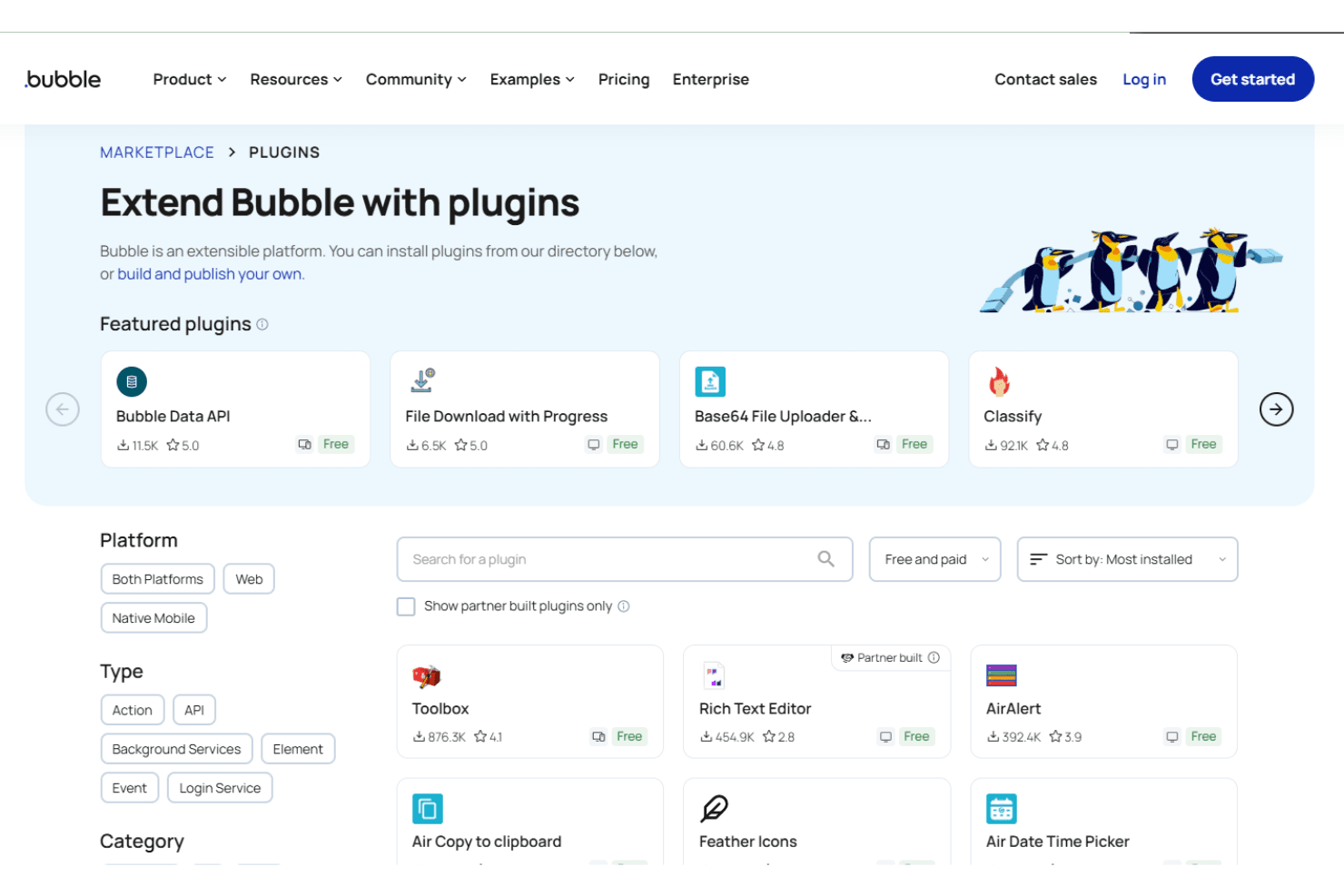
Bubble integrates with Stripe, Google Analytics, Mailchimp, Airtable, Algolia, Twilio, SendGrid, Slack, Facebook, and Google Maps, among others.
Bubble also provides a Data API and supports connecting with third-party integration tools for custom workflows and external data sources.
Bubble Specs
- Analytics: No
- API: Yes
- Calendar Management: No
- Chat: No
- Click-to-Dial: No
- CRM Integration: No
- Customer Management: No
- Customer Service: No
- Dashboard: Yes
- Dashboards: Yes
- Data Export: Yes
- Data Import: Yes
- Data Visualization: No
- External Integrations: Yes
- Feedback Management: No
- Knowledge Base: No
- Lead Management: No
- Lead Scoring: No
- Multi-Source Feedback: No
- Multi-User: Yes
- Net Promoter Score: No
- Notifications: Yes
- Omnichannel Referrals: No
- Online Surveys: No
- Review Moderation: No
- Scheduling: No
- Sentiment Analysis: No
- Social Media Monitoring: No


