

Oracle Hybrid Cloud-anmeldelse 2026: Fordele, ulemper, funktioner og priser

We review tools independently, and commissions help fund our testing. See our transparency policy, our methodology, or suggest a tool.
Oracle Hybrid Cloud is a cloud computing platform for organizations that need to bridge on-premises infrastructure with public cloud resources. For IT teams managing complex environments, Oracle Hybrid Cloud offers unified management, strong security controls, and deep integration with Oracle applications.
In this review, you’ll find a breakdown of Oracle Hybrid Cloud’s features, pricing, pros and cons, and the types of use cases where it delivers the most value.
Oracle Hybrid Cloud Evaluation Summary

4.6/5
- Pricing upon request
- Free plan available
Why Trust Our Software Recommendations
6,700+
Reviews
20
Industry experts
16+
Evaluation factors
14
Years
Our team has been testing and reviewing software since 2012. As tech leaders ourselves, we know how difficult—and important—it is to choose the right software.
For this guide, we evaluated tools using hands-on testing and independent research, scoring tools using our selection criteria.
Our reviews reflect our human editorial judgment, not a sales pitch.
Expert reviewers:
- Paulo Gardini MiguelTech Director
 Tim FisherVP of AI
 Gabriel RosasTech Lead & Software Architect
 Christhian GruhnTech Lead & Platform Architect

Oracle Hybrid Cloud Overview
If you’re judging cloud computing platforms on integration with existing Oracle workloads, Oracle Hybrid Cloud is a top pick. Its unified management, strong security, and flexible deployment options make it a smart choice for enterprises with complex hybrid needs. Pricing can be less transparent than some competitors, and the interface may feel dense for new users, but support and onboarding resources are solid.
I’d suggest Oracle Hybrid Cloud is best for organizations prioritizing Oracle application compatibility and needing to balance on-premises and cloud resources—especially in regulated or data-sensitive environments.
Pros
- Unified monitoring across on-premises and cloud resources.
- Flexible deployment for regulatory and data residency needs.
- Deep integration with Oracle databases and applications.
Cons
- Advanced features may require specialized Oracle expertise.
- Limited third-party ecosystem compared to some competitors.
- Pricing structure can be complex and less transparent.
Is Oracle Hybrid Cloud Right For Your Needs?
Who Would be a Good Fit for Oracle Hybrid Cloud?
Oracle Hybrid Cloud is a strong choice for organizations that need to integrate on-premises systems with cloud resources, especially when Oracle applications are central to their operations. Enterprises in regulated industries, large-scale IT departments, and global businesses with strict data residency requirements will find its hybrid deployment and unified management especially valuable.
Teams that rely on Oracle databases or need to modernize legacy Oracle workloads can take advantage of its deep compatibility and security features.
- Oracle-Centric BusinessesDelivers seamless integration with existing Oracle databases and applications.
- IT Operations TeamsProvides centralized monitoring and automation for hybrid environments.
- Government AgenciesOffers secure, on-premises options for confidential workloads and data.
- Large EnterprisesHandles complex, multi-region infrastructure with unified management tools.
- Healthcare ProvidersSupports sensitive data handling and regulatory requirements for patient information.
- Financial ServicesMeets strict compliance and data residency needs with hybrid deployment.
Who Would be a Bad Fit for Oracle Hybrid Cloud?
Oracle Hybrid Cloud isn’t ideal for organizations that want a broad third-party ecosystem, need simple pricing, or don’t rely on Oracle technologies. Smaller businesses, startups, and teams focused on open-source or non-Oracle stacks may find it less appealing.
If your workloads are cloud-native or you need rapid, low-cost scaling, other platforms may be a better match.
- Open-Source FocusedNot optimized for teams prioritizing open-source stacks and tools.
- Retail SMBsLimited value for businesses without legacy Oracle systems or compliance needs.
- Creative AgenciesDoesn’t prioritize rapid deployment or low-cost, short-term projects.
- DevOps-First TeamsFewer native tools for cloud-native, containerized, or serverless workflows.
- Non-Oracle WorkloadsLacks deep integration for non-Oracle databases and applications.
- Small StartupsPricing and complexity are overkill for limited infrastructure needs.
Core Features
Oracle Cloud Infrastructure (OCI) Integration
Connects on-premises and cloud resources for unified management. Lets you move workloads between environments without rearchitecting.
Autonomous Database
Automates patching, tuning, and scaling for Oracle databases. Reduces manual database administration and downtime risks.
Cloud@Customer Deployment
Brings Oracle Cloud services directly to your data center. Supports regulatory and data residency requirements without sacrificing cloud capabilities.
Unified Monitoring and Management
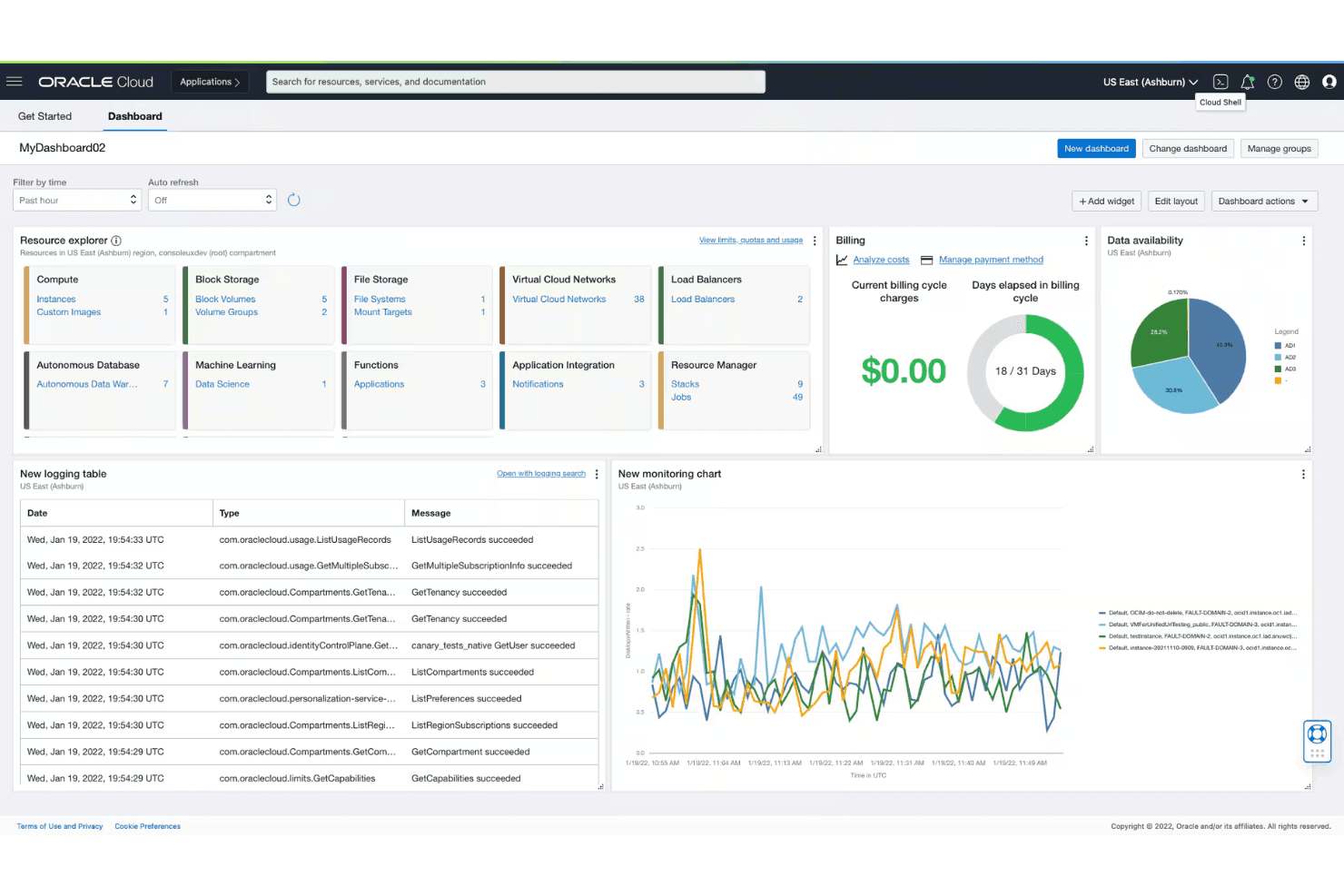
Centralizes visibility across hybrid and multi-cloud environments. Enables real-time monitoring, alerting, and automation from a single dashboard.
Advanced Security Controls
Offers encryption, identity management, and compliance tools built-in. Protects sensitive data and supports industry-specific regulations.
Disaster Recovery and Backup
Provides automated backup and failover for critical workloads. Minimizes downtime and data loss with built-in recovery options.

Ease of Use
Oracle Hybrid Cloud’s interface is feature-rich but can feel overwhelming, especially for teams new to Oracle’s ecosystem. Many users mention that setup and navigation require specialized knowledge, particularly when configuring hybrid deployments or advanced security. However, once you’re familiar with the platform, unified dashboards and automation tools make ongoing management straightforward.
Experienced Oracle admins will find it efficient, but newcomers should expect a steeper learning curve.
Integrations
Oracle Hybrid Cloud integrates with Oracle E-Business Suite, Oracle Fusion Financials, Oracle Data Safe, Oracle Identity Cloud Service, Oracle Cloud VMware Solution, Oracle Cloud Observability and Management, Oracle Cloud Infrastructure FastConnect, Exadata Cloud@Customer, Oracle Cloud@Customer, and Roving Edge Infrastructure, among others.
Oracle Hybrid Cloud also offers a robust API and supports connections with third-party integration tools.

Oracle Hybrid Cloud Specs
- 2-Factor Authentication: No
- Anti-Virus: No
- API: Yes
- Bug Tracking: No
- Dashboard: Yes
- Data Export: Yes
- Data Import: Yes
- Data Visualization: Yes
- Email Integration: No
- External Integrations: Yes
- File Sharing: No
- File Transfer: No
- Firewall: No
- Google Apps Integration: No
- Inventory Tracking: Yes
- Malware Protection: No
- Multi-User: Yes
- Network Device Performance Monitoring: No
- Network Traffic Monitoring: No
- Network Visualization: No
- Notifications: Yes
- Project Management: No
- Scheduling: Yes
- Third-Party Plugins/Add-Ons: No


